Introduction
Welcome to the final module of the course, where we translate your deep understanding of anatomy and biomechanics into the practical art of coaching. In our last lesson, you learned how to apply anatomical principles to select and modify exercises, a crucial skill for minimizing joint stress and ensuring training longevity. We established that respecting a lifter's unique structure is the foundation of a safe and effective program.
Today, we build directly on that foundation. This lesson is designed to help you master the learning outcome: Formulate effective coaching cues using anatomical intent (e.g., 'drive your elbow toward your hip') rather than generic instructions.
If knowing anatomy is the "what," and programming is the "how," then cueing is the "how-to-instruct." It is the direct interface between your knowledge and your client's performance. Generic cues like "squeeze the muscle" are often ineffective because they don't teach the client how to move. A cue with anatomical intent, however, is like a precise instruction in a programming language—it directs the body to execute a specific motor pattern that produces the desired outcome: maximal tension on the target muscle.
1. Internal vs. External Focus: The Science of Cueing
Before we craft our cues, we need to understand the two primary types of attentional focus in training:
- Internal Focus: Directing attention to the action of your own body. This is the classic "mind-muscle connection," where you think about the muscle contracting, stretching, and working. Example: "Squeeze your biceps."
- External Focus: Directing attention to the effect of your movement on the environment. Example: "Push the floor away from you."
For decades, bodybuilders have championed an internal focus, while some performance coaches have advocated for an external focus. As is often the case, the optimal approach is nuanced and depends on the goal.
How To Use The Mind-Muscle Connection for Growth (What The Science Says)
To understand the evidence-based application of each cueing style, let's watch this excellent video by Jeff Nippard. He reviews a key 2018 study that directly compared the hypertrophic outcomes of internal versus external focus.
Watch the video from the beginning to 04:53, and then the summary from 05:59 to 06:56. Pay close attention to: The difference between the two approaches. The study's finding that internal focus led to more biceps growth, but not quad growth, in untrained subjects. The final recommendations on when to use each type of cue.
Key Scientific Takeaways:
- For Hypertrophy & Isolation: An internal focus (mind-muscle connection) appears to be superior for increasing muscle activation and growth, especially in smaller muscle groups (like biceps) or on isolation exercises where the goal is to bias a single muscle.
- For Strength & Performance: An external focus tends to be superior for producing maximal force and power, particularly in heavy, multi-joint compound exercises like squats and deadlifts. The body seems to organize itself more efficiently when focused on an external task.
For our purposes as hypertrophy-focused coaches, learning to formulate powerful internal cues is a primary skill. These are the cues built on anatomical intent.
2. The Principle of Anatomical Intent: Cueing the Global Movement
Knowing you need an internal cue is one thing; creating an effective one is another. A common mistake is to simply list a muscle's anatomical functions ("I need to adduct, flex, and internally rotate"). This overcomplicates the process and can lead to awkward, unnatural movements.
A more effective method is to focus on the global movement of the muscle—the path the insertion takes to move toward the origin.
Applying Functional Anatomy with Coaches Kassem Hanson & Eugene Teo
Coaches Kassem Hanson and Eugene Teo provide a masterclass in this concept. They argue against thinking in terms of a 'laundry list' of muscle functions and instead advocate for visualizing and cueing the overall path of motion.
Watch the clip from 00:00 to 04:15. Focus on their core argument: Understand the 'global movement' from the fully stretched to the fully shortened position. Realize that individual joint actions (like internal rotation) will happen automatically if the global movement is correct. Use external-sounding cues ('bring your arm over to here') to guide the client toward the correct internal feeling and motor pattern.
The core principle is this: An effective anatomical cue describes the path of the limb to which the muscle attaches. Instead of telling the client what to feel, you tell them how to move to create that feeling.
Let's apply this to the chest.
Chest Training for Maximal Muscle Growth
This article from Dr. John Rusin on chest training provides a perfect, practical example of an anatomical cue. Before we get to the cue, let's quickly review the anatomy.
First, quickly read the 'Pectoralis Major & Minor' section to refresh your memory on the origin, insertion, and fiber direction. Then, read 'Tip #3: Drive with Your Elbows'.
Here's the breakdown of that cue: "Drive with your elbows."
- Anatomy: The pectoralis major originates on the sternum and clavicle and inserts on the humerus (upper arm bone). Its primary function is to pull the humerus across the body.
- Generic Cue: "Squeeze your pecs." (Vague)
- Anatomical Intent Cue: "Act like you don’t have forearms/hands...focus on driving your elbows as closely as possible on each repetition."
- Why it Works: This cue forces the lifter to focus on the movement of the humerus, which is the bone the pec actually moves. By mentally removing the hands, you reduce the tendency to "push" with the triceps and shoulders and instead encourage the "fly" or "adduction" function driven by the pecs. It cues the global movement.
3. A Library of Anatomical Cues
Let's build a reference library of cues for major muscle groups, applying this principle of cueing the limb's path.
A. Latissimus Dorsi (Lats)
- Anatomy: Originates broadly on the spine and pelvis, sweeping up to insert on the front of the humerus.
- Global Movement: Pulls the humerus down and back towards the spine.
- Generic Cue: "Pull down."
- Anatomical Cue: "Imagine your hands are just hooks. Initiate the movement by driving your elbows down towards your back pockets."

B. Upper Chest (Clavicular Pectoralis)
- Anatomy: Originates on the clavicle (collarbone) and inserts on the humerus. The fibers run in a diagonal, upward direction.
- Global Movement: Pulls the humerus up and across the body, on a low-to-high diagonal path.
- Generic Cue: "Use an incline bench."
- Anatomical Cue: "As you press, think about driving your bicep up and into your collarbone." or "Imagine you're trying to slide your upper arm across and up your chest."
The Best Upper-Chest Workout for Getting Defined Pecs - Onnit
The article 'The Best Upper-Chest Workout' explains this concept of arm path in detail. It connects the muscle's fiber orientation directly to the movement you need to perform.
Read the sections 'How Do You Target the Upper Chest?' and 'What Muscles Are In The Upper Chest?'. Note the emphasis on 'arm path' and the 'low to high' line of pull for the clavicular fibers. This is the anatomical basis for our cue.
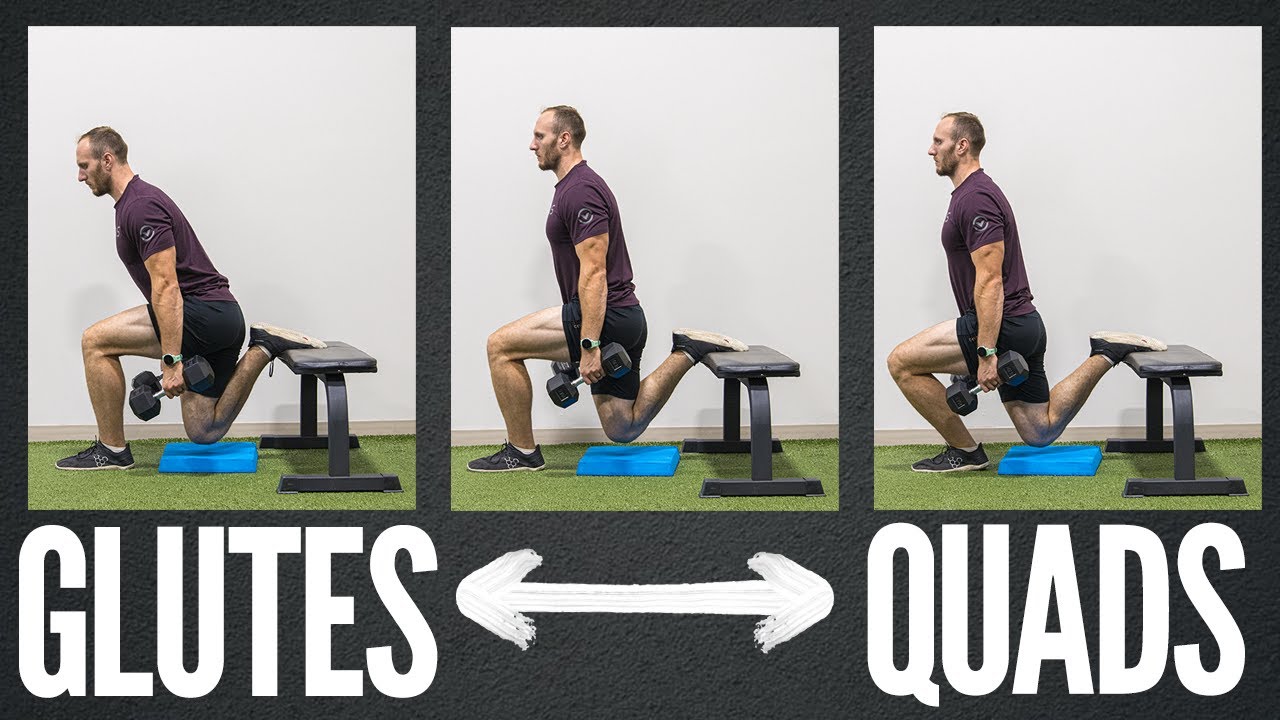
C. Glutes vs. Quads
Often, the same exercise can be biased toward different muscles simply by altering the setup and the corresponding cue.
- Anatomy: Glutes are primary hip extensors. Quads are primary knee extensors.
- Global Movement (Glute Bias): Maximize hip flexion/extension (more forward lean).
- Global Movement (Quad Bias): Maximize knee flexion/extension (more upright torso).
- Exercise: Bulgarian Split Squat.
- Glute Cue: "Think about pushing your hips back as you go down, and then drive your hips forward as you come up."
- Quad Cue: "Keep your torso as upright as possible. Think of it as an elevator going straight down and straight up. Drive the floor away with your front foot."
Coach's Notes: The Art of Application
Formulating the perfect cue is just the first step. Delivering it effectively is an art.
- Keep it Simple: Even though the cue is based on complex anatomy, the language should be simple and evocative. "Drive your elbows to your back pockets" is better than "Depress your scapula and adduct and extend your humerus."
- The Cueing Hierarchy:
- Show: Demonstrate the movement correctly yourself.
- Tell: Use a simple, anatomical intent cue.
- Touch: If the client still isn't getting it, ask for permission to provide a tactile cue. Tapping the target muscle or guiding the limb through the correct path can create a powerful connection.
- Internal for Learning, External for Performing: Use anatomical/internal cues when teaching a new movement or when a client struggles to feel the target muscle. Once the pattern is learned, you might switch to an external cue for a set where they are pushing for performance (e.g., "Explode up!").
- Be a Detective: If a cue isn't working, don't just repeat it louder. Try a different one. Every client's brain interprets language differently. Your job is to find the words that unlock the right pattern for them.
Conclusion
You now possess one of the most valuable tools in a coach's arsenal: the ability to translate complex anatomical knowledge into simple, powerful instructions that get results. This skill is what separates a knowledgeable enthusiast from a truly effective coach.
Key Takeaways:
- Cue with Intent: Base your coaching cues on the anatomical function of the target muscle, specifically the path its insertion takes to meet its origin.
- Cue the Limb, Not the Muscle: Formulate cues that describe the path of the client's limb (e.g., elbow, upper arm) rather than just naming the muscle you want them to feel.
- Use the Right Tool for the Job: Prioritize internal/anatomical cues for hypertrophy-focused isolation and machine work. Use external cues for heavy, performance-based compound lifts.
- Simplify for the Client: Your understanding should be complex, but your communication must be simple, clear, and actionable.
Preview of the Next Lesson
You've learned how to instruct movement correctly, but how do you know what movements a client is prepared to perform safely and effectively in the first place? In our next lesson, we will address this by exploring client assessment. You will learn to define the purpose of a movement screen and identify key assessments relevant to hypertrophy training, allowing you to spot potential issues before they become problems.