Hello! Welcome to the first lesson in our new module, "Designing Narrative-Driven Campaigns."
In our last lesson, we gave our brand a personality by designing a mascot, "Elara" for "The Storysmith's Guild." We created a character with a backstory and a role. Now, we'll explore how that character and the brand's overarching story can live and evolve across different interactions with an audience.
Today's learning outcome is to define 'continuous narrative' in the context of a multi-touchpoint brand campaign. We're shifting our focus from crafting a single, isolated story to architecting a narrative experience that unfolds over time and across various platforms, creating a cohesive and engaging journey for the customer.
1. From Isolated Moments to a Cohesive Journey
A customer's relationship with a brand is rarely built on a single interaction. It's a series of moments—seeing an ad, visiting a website, reading an email, unboxing a product. Each of these moments is a brand touchpoint. The problem is that many brands treat these touchpoints as separate events, leading to a fragmented and disjointed experience.
A continuous narrative aims to solve this by weaving these individual moments into a single, coherent story.
To understand this better, let's first clarify the difference between touchpoints and the broader customer journey.
Boost Customer Experience: How to Align Brand Touchpoints with the Customer Journey
This video from Brand Master Academy, 'Boost Customer Experience,' provides an excellent foundation. It defines brand touchpoints and explains how they combine to form the customer journey.
Please watch from the beginning to 05:37. Pay close attention to: The definition of touchpoints as 'every single interaction' a customer has with a brand. The distinction between touchpoints (individual interactions) and the customer journey (the complete path). The excellent analogy of touchpoints being like single TV episodes, while the customer journey is like binging the entire season.
As the video explains, if each episode of a series feels disjointed, the experience is disorienting. The same is true for a brand. A continuous narrative is the thread that connects each episode, or touchpoint, ensuring they all feel like part of the same overarching story.
2. Defining Continuous Narrative
Now let's formally define the core concept.
A continuous narrative is a storytelling approach where a brand's core message and story evolve and unfold consistently across all customer touchpoints and over time. It transforms a series of disconnected marketing activities into a single, unified saga.
The article "Narrative-Driven Customer Experiences" highlights the problem a continuous narrative solves.
Narrative-Driven Customer Experiences: Turning Conversions into Chapters
This article from The Brink Agency frames the issue perfectly. It contrasts 'isolated wins' in marketing with a cohesive narrative journey.
Please read the short section titled 'The Problem with Isolated Wins.' Notice how it describes a common marketing setup where ads, content, and user experience (UX) each 'run their own race,' resulting in a fragmented brand story.
A continuous narrative ensures that the ad that grabs a customer's attention, the landing page they visit, and the follow-up email they receive all work together as progressive chapters in a larger story.
Unlike a novel or a film with a clear beginning, middle, and end, a brand's narrative is often perpetually evolving.
The Power of Storytelling: Building Brands That Connect and Endure
The article 'The Power of Storytelling' from Pastilla expands on this idea, comparing brand-building to creating a cinematic universe.
Read the section titled 'Building brand loyalty through storytelling.' Focus on the idea that 'brand storytelling is more intricate, perpetually evolving through the purchasing process and beyond. It’s a continuous narrative that doesn’t have to end.' The comparison to franchises like Marvel or Harry Potter is particularly relevant here.
This "cinematic universe" approach is the essence of a continuous narrative. Each product launch, ad campaign, or social media post is like a new film or episode that enriches the world and deepens the audience's connection to it.
3. Narrative, Story, and the Customer's World
To effectively build a continuous narrative, it's helpful to distinguish between a few key terms: the overarching Brand Narrative, the individual Brand Stories, and the broader Customer Story.
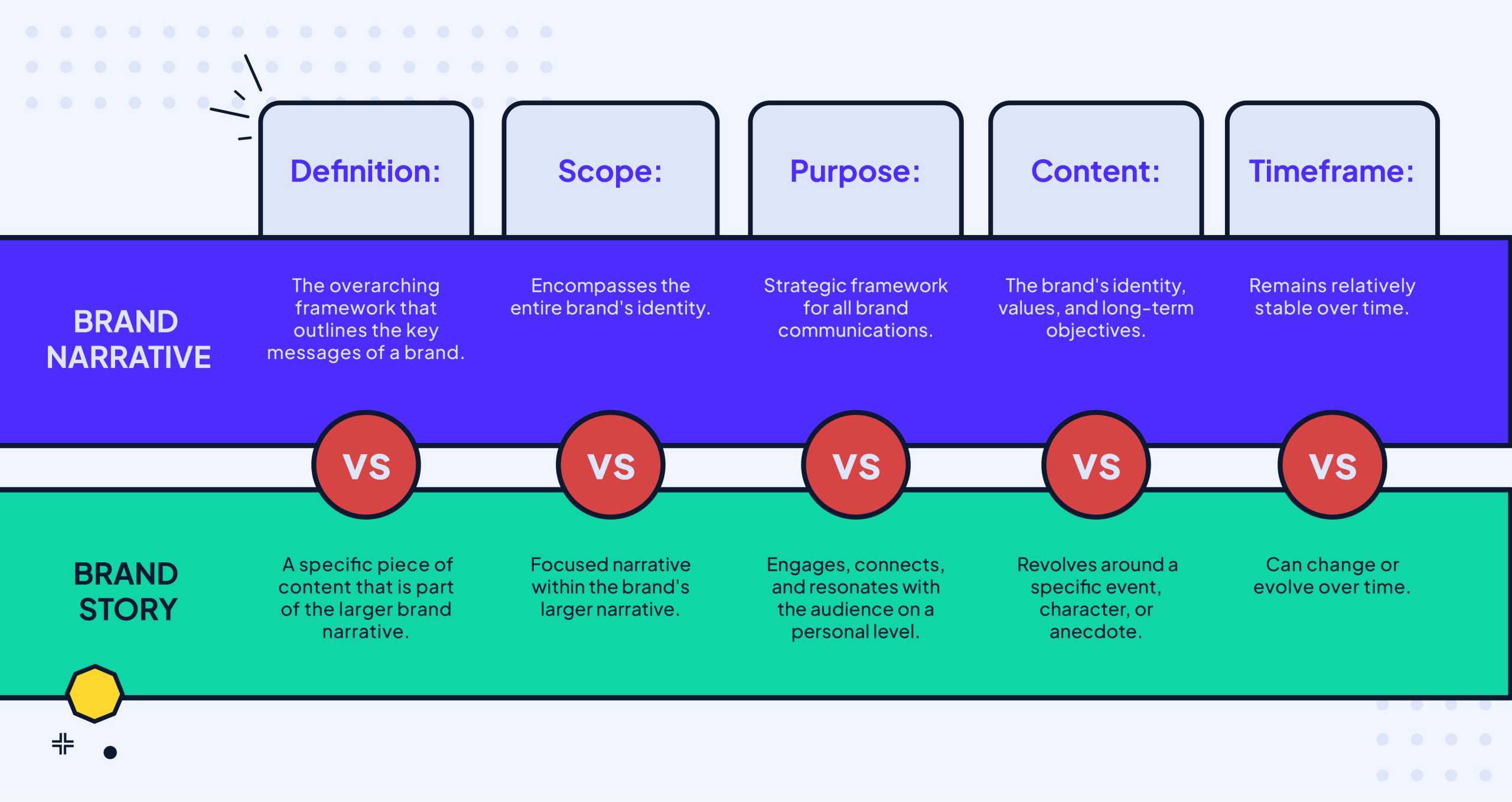
- Brand Narrative: This is the big-picture strategic framework. It’s the stable, core message about who the brand is, what it values, and what it promises. It’s the "constitution" for all brand communications.
- Brand Story: This is a specific "episode" or piece of content—an ad, a blog post, a customer testimonial—that operates within the larger Brand Narrative.
A continuous narrative is the strategic execution that ensures all your individual Brand Stories are consistent with the Brand Narrative and connect logically from one touchpoint to the next.
Crucially, this narrative doesn't exist in a vacuum. It must connect with the customer's own life story.
Customer Journey Map vs Customer Story
This next video, 'Customer Journey Map vs Customer Story,' makes a vital distinction. It explains that the customer's story extends far beyond their interactions with your brand.
Please watch from 01:25 to 04:29. Focus on how the video defines the 'customer story' as including their life before the problem, during the journey to solve it, and after the resolution. This provides the full context for your brand's role.
An effective continuous narrative acknowledges this bigger picture. It meets customers where they are in their story and shows how the brand can play a meaningful role in their journey toward a better future.
4. The 'Multi-Touchpoint' Campaign
Finally, let's tie this to the idea of a multi-touchpoint campaign. This is a campaign that intentionally deploys its story across various channels or media. The goal is for each channel to contribute a unique piece to the puzzle, creating a richer, more immersive experience. This is sometimes called transmedia storytelling.
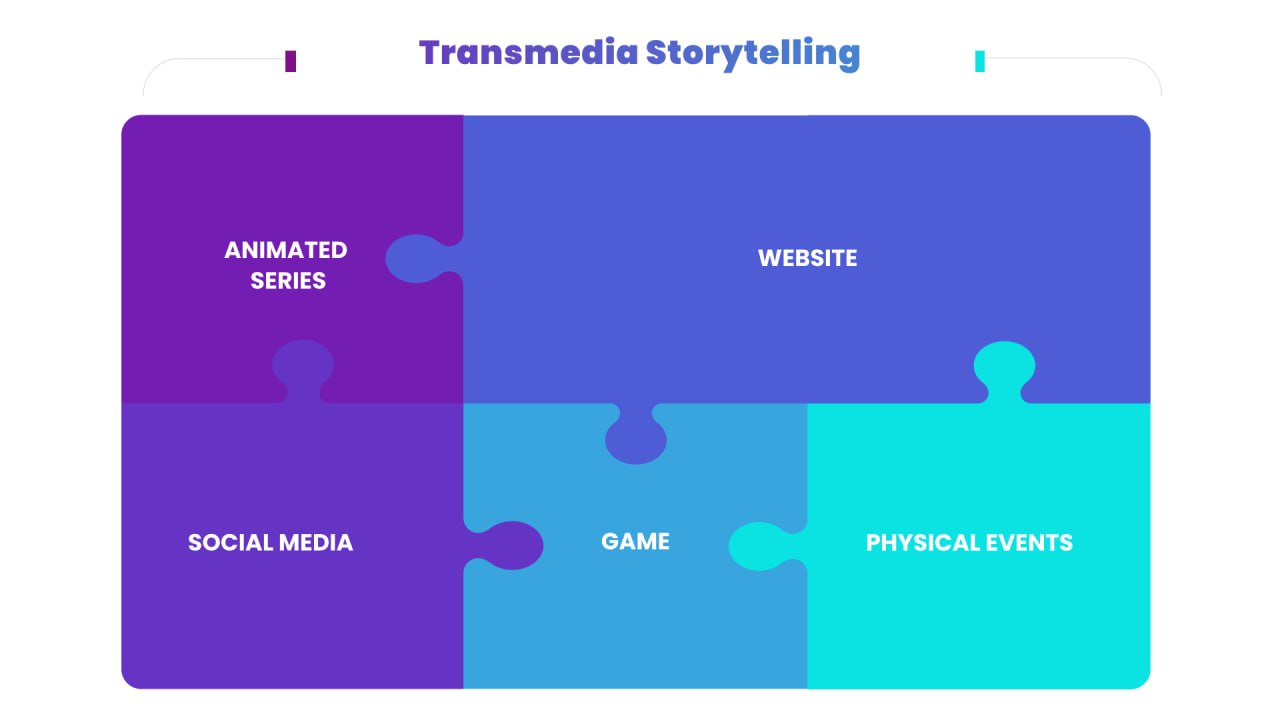
For example, a brand might:
- Introduce a conflict or question in a short video ad on social media.
- Explore the backstory of that conflict in a long-form article on its website/blog.
- Send a personalized email showing how its product is the solution.
- Use its product packaging to deliver the final piece of the story upon arrival.
Each touchpoint advances the plot. The customer isn't just seeing repetitive ads; they are participating in an unfolding narrative.
Test your understanding!
Let's return to "The Storysmith's Guild" and its mascot, Elara, the "Keeper of Unfinished Stories."
Imagine the Guild is launching a campaign for a new feature: an AI-powered tool that helps writers overcome "writer's block."
Briefly describe how Elara's story could unfold continuously across these three touchpoints:
- Instagram Reel (The Hook): What would the short video show or say?
- Blog Post (The Deeper Dive): What would the blog post, linked from the Reel, be about?
- Welcome Email (The Personal Guide): What would Elara "say" in the welcome email to a user who signs up for the new feature?
Show answer
Here is one possible approach:
- Instagram Reel: A short, dramatic clip shows a writer staring at a blank page. Suddenly, Elara (as swirling ink) appears on the screen. Her voice whispers, "Every story deserves an ending. Don't let the blank page win." The final shot reveals the name of the new feature: "The Oracle."
- Blog Post: Titled "The Ancient Curse of the Blank Page," the post is "written" by Elara. She tells a short, allegorical story about a great library where brilliant ideas were trapped in unfinished books. She introduces "The Oracle" not as a simple tool, but as a magical key she has forged to unlock these trapped ideas.
- Welcome Email: The subject line reads, "Elara has a message for you." The email is written in her voice: "Welcome, Storysmith. I am Elara. Like you, I know the frustration of a story that wishes to be told. I've given you access to The Oracle. Use it not as a crutch, but as a compass when you are lost in the woods of your own creation. Now, let's finish your story, together."
Notice how the narrative progresses: the Reel introduces the problem and a hint of magic, the blog post provides the lore and context, and the email makes the solution personal and continues the mentor-student relationship.
Conclusion
Today we've defined a crucial concept for modern branding. A continuous narrative is far more than just consistent messaging; it's a commitment to telling a single, evolving story across every point of customer contact.
Key Takeaways:
- A continuous narrative connects individual brand touchpoints (like ads, website visits, and emails) into a cohesive customer journey.
- It functions like a TV season or cinematic universe, where each interaction is an "episode" that advances a larger plot, rather than a disconnected event.
- This approach avoids the "fragmented" feeling of many marketing campaigns, where different channels seem to be telling different stories.
- An effective continuous narrative acknowledges the customer's own story—their life before, during, and after interacting with the brand—and positions the brand as a helpful character within it.
Preview of the Next Lesson:
Now that we understand what a continuous narrative is and why it's important, how do we actually build one? In our next lesson, we will learn how to "Outline a multi-stage campaign that uses a narrative arc to guide the customer journey." We will take the principles of story structure we've learned, like the three-act structure, and apply them to the timeline of a campaign.