Hello! Welcome to the first lesson in our new module, "Applying Character Arcs to Brand Stories."
In our last lesson, you masterfully crafted an emotion-driven story for a fictional brand by focusing on the customer's journey. We used the Character-Want-Obstacle framework to create a narrative that made the audience feel something.
Today, we're shifting our focus from the customer as the hero to another pivotal character in a brand's universe: the founder. Our learning outcome is to analyze a founder's story to identify its core character arc and narrative purpose. While a customer story demonstrates a product's value, a founder's story reveals the brand's soul. It answers the crucial question, "Why does this brand exist?" and transforms a faceless company into a human endeavor driven by passion and purpose.
1. What is a Founder's Story?
A founder's story is the origin story of a company, told through the personal journey of the individual who created it. It's not just a timeline of business milestones; it's a narrative that frames the founder as the brand's first protagonist, whose experiences and transformation give the company its meaning.
To understand its strategic importance in branding, please read the first part of the following article.
How to craft a powerful founder's story (even if you're not the ...
This article from Meredith Farley's newsletter, 'How to craft a powerful founder's story,' clearly defines the concept and explains its function as a cornerstone of brand messaging.
Please read from the beginning down to the heading 'How do you create an impactful founder’s story?'. Focus on the distinction between a story that simply recounts events and one that humanizes the brand and communicates its 'why'.
As the article highlights, a well-crafted founder's story connects with us because it taps into a fundamental narrative structure—often a version of the Hero's Journey—that we are all wired to understand and remember. It establishes the brand's mission not as a corporate statement, but as the resolution to a deeply personal quest.
2. The Engine of the Story: The Character Arc
To analyze a founder's story effectively, we first need to be precise about what a character arc is. It's the internal journey of transformation a character undergoes. This transformation is what makes a story compelling and meaningful.
The following video provides an excellent and concise breakdown of character arcs and their core components. Given your background in literature, you'll recognize these concepts, but the video presents them in a way that is highly applicable to the structured world of brand storytelling.
Character Arcs, Flaws, & Lies Don't Need to Be Confusing (Writing Advice)
In 'Character Arcs, Flaws, & Lies Don't Need to Be Confusing,' writer Brandon McNulty demystifies the mechanics of character transformation.
Please watch from 00:41 to 06:33. Pay close attention to the definitions of: Character Arc: The journey of transformation. The Lie: The misguided belief the character holds. The three main types of arcs: Positive Change, Flat, and Negative Change.
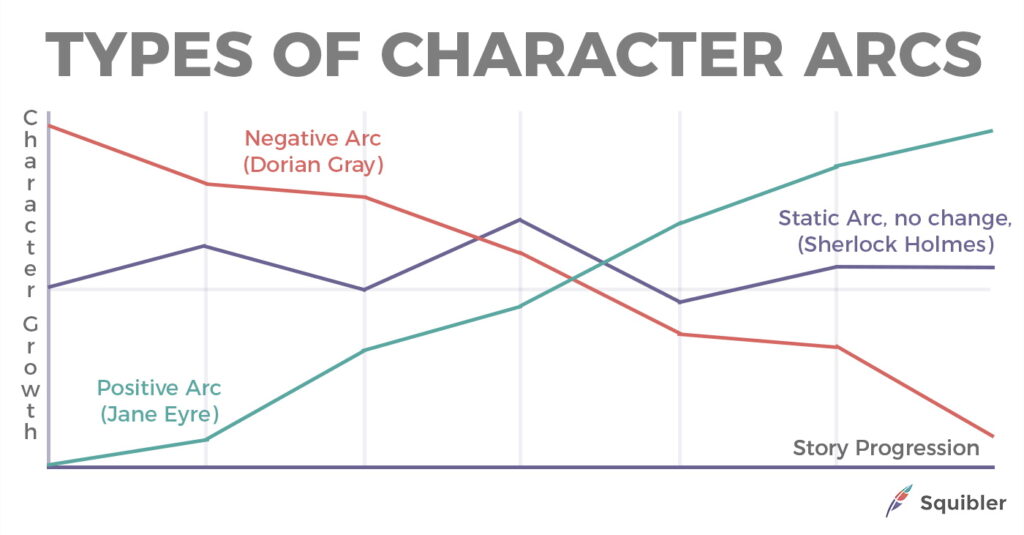
To summarize the key types of arcs:
- Positive Change Arc: The character overcomes a flaw or abandons a lie to embrace a new truth. This is a story of growth and is the most common arc for founder stories.
- Flat Arc: The character already holds a truth and their journey is about changing the world around them by staying true to their beliefs, despite challenges. This can be seen in stories of steadfast visionaries.
- Negative Change Arc: The character succumbs to a flaw or embraces a lie, leading to a tragic downfall. While rare in branding, it can be used in cautionary tales.
3. The Blueprint for a Founder's Story
Now that we have the language of character arcs, let's look at how this applies to the specific structure of a founder's narrative. Most effective founder stories follow a pattern that naturally creates a positive change arc.
The article we looked at earlier provides a fantastic four-beat framework for this.
How to craft a powerful founder's story (even if you're not the ...
Let's return to Meredith Farley's article to examine the narrative blueprint she outlines.
Please read the section under the heading 'How do you create an impactful founder’s story?,' focusing on the four beats: The Painful Gap, The Aha Moment, The Trial of Effort, and The Happy Current Moment.
This four-beat structure is a practical application of a positive change arc:
- The Painful Gap in the Market: The "before" snapshot. The world is flawed, and the founder is experiencing a problem. This is the source of their internal "lie" (e.g., "This problem is unsolvable," or "I'm powerless to fix this").
- The Aha Moment: The inciting incident that challenges the lie. The founder realizes they can be the one to create a solution.
- The Trial of Effort: The rising action. The founder confronts obstacles, demonstrating their dedication and proving their new belief. This is where transformation occurs.
- The Happy Current Moment: The "after" snapshot. The founder has transformed, the problem is solved by their creation, and they now live in the "truth" that their efforts have made a positive impact.
This structure strongly echoes a classic story shape that author Kurt Vonnegut identified called "Man in a Hole," where a character gets into trouble and then gets out of it. As the article "The Simple Shapes of Great Stories" notes, this is the favored structure for viral founder stories because it's a deeply satisfying and universal narrative of struggle and triumph.
4. Analysis in Action: Deconstructing a Founder's Story
It's time to apply these frameworks. We're going to watch a talk by Ameen Haque, a story coach, where he opens by telling his own founder's story. Your task is to analyze it.
The Art of Business Storytelling | Ameen Haque | Talks at Google
In this opening to his 'Talks at Google,' Ameen Haque shares the personal journey that led him to create his storytelling consultancy. This is a perfect, real-world example of a founder's story in action.
Please watch the first 7 minutes of the video (00:00 - 07:12). As you watch, listen for the key moments of his transformation, from a shy child with a stammer to a professional storyteller.
Now that you've watched the story, let's analyze it together. Use the concepts we've discussed to break down the narrative.
Test your understanding!
Based on Ameen Haque's story, answer the following questions:
1. What is the core character arc?
- Describe his "before" and "after" state.
- Which of the three arc types (Positive, Flat, Negative) does this represent?
2. Can you map his story to the four-beat framework?
- The Painful Gap: What was the problem he faced?
- The Aha Moment: What was the turning point or realization?
- The Trial of Effort: What challenges did he face and what actions did he take?
- The Happy Current Moment: Where is he now as a result of his journey?
3. What is the narrative purpose of this story?
- What does telling this story achieve for his personal brand and his business? What does it communicate to his audience (in this case, Google employees)?
Show answer
1. The Character Arc:
- Before: A shy child who stammered, was reserved, and felt isolated. His "lie" could be interpreted as the belief that his voice wasn't worthy or effective.
- After: A confident, professional story coach who uses his voice to help others and stands on a stage at Google. He has embraced the "truth" that his unique journey with words is his greatest strength.
- Arc Type: This is a clear Positive Change Arc.
2. The Four-Beat Framework:
- The Painful Gap: His struggle with stammering and the social anxiety it caused.
- The Aha Moment: While there isn't one single "aha," it's a gradual process. His mother enrolling him in speech, drama, and debate was the inciting incident, and his subsequent love for theater was the key realization that he could master language and performance.
- The Trial of Effort: His long journey balancing two tracks: a "day track" in advertising and marketing, and an "evening track" in theater, poetry, and cinema. He spent 18 years honing his craft in both worlds.
- The Happy Current Moment: He has plunged "into the world of storytelling as a story coach" to bridge the gap he identified between stories and their application in business and education.
3. Narrative Purpose:
- Authenticity and Credibility: His story proves he isn't just a consultant who read a book; he is a storyteller whose expertise was born from a deep, personal struggle and a lifelong passion. His journey is his qualification.
- Empathy and Connection: It humanizes him and makes him relatable. By sharing his vulnerability (stammering, his "pathetic" first play), he builds trust with the audience.
- Demonstrates the Power of Story: His own life is the ultimate case study for what he teaches—the transformative power of narrative.
Conclusion
In this lesson, you've learned to look beyond the surface of a founder's story and analyze its underlying mechanics. By dissecting its character arc and narrative structure, you can uncover its true purpose: to forge a powerful, human connection between a brand and its audience.
Key Takeaways:
- A founder's story is a strategic branding tool that gives a company its "why."
- Most founder stories are built on a positive change arc, showing the founder's transformation from struggle to success.
- We can analyze these stories using a four-beat structure: The Painful Gap, The Aha Moment, The Trial of Effort, and The Happy Current Moment.
- The narrative purpose is to build authenticity, establish credibility, and create an emotional bond by communicating the brand's core values through a personal journey.
Preview of the Next Lesson:
We've now seen how character arcs can frame the story of a founder. In our next lesson, we will shift our focus back to the customer. You will learn to outline a customer success story that follows a clear character arc of transformation. This will allow you to position the customer as the hero and the brand as the guide that enables their powerful transformation.