Hello! Welcome back to our course on designing Ayurvedic research.
In our last lesson, we established the critical importance of randomization and blinding in minimizing bias and ensuring the internal validity of a clinical trial. You learned why we need these principles and the different techniques used to implement them.
Today, we move from understanding individual principles to applying them as an integrated whole. We will build a complete study blueprint from the ground up. This lesson will guide you through the process of outlining a clinical trial, transforming a research idea into a structured, testable protocol. Our learning outcome is to outline the design of a hypothetical randomized controlled trial (RCT) for an Ayurvedic intervention. This skill is the bridge between having a clinical question and being able to answer it with scientific rigor.
1. The Anatomy of a Clinical Trial
Before we design our own, let's understand the fundamental components of any clinical trial. A trial is not just an experiment; it's a meticulously planned investigation where every step is predefined to ensure the results are reliable and meaningful.
To get a comprehensive overview from an expert, please watch the following video from the National Institutes of Health (NIH).
IPPCR 2015: Overview of Clinical Study Design
Dr. Laura Lee Johnson, a biostatistician, provides an excellent overview of clinical study design. This video will introduce the key vocabulary and the thought process behind constructing a trial.
Please watch from 00:19:46 to 00:32:25. Focus on these key points: The definition of different study types (interventional vs. observational). The basic vocabulary: study arms, superiority, equivalence, etc. The distinction between different types of observational studies and experimental studies (clinical trials). The phases of clinical trials (Phase 0 through Phase 4).
The video provides a solid framework for the journey of a new intervention. For our purposes today, we will be focusing on designing a Phase 3 efficacy trial, the type of study most people think of when they hear "RCT."
A well-designed RCT protocol must clearly define several key elements. Think of these as the essential chapters in your study's story.
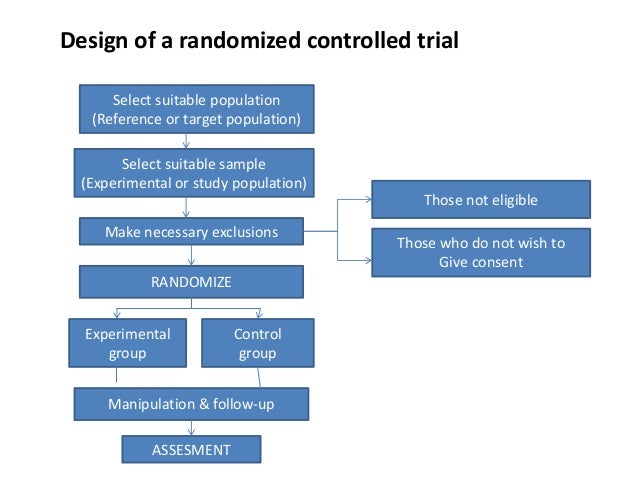
Based on this flow, every robust RCT protocol should contain at least the following sections:
- Research Question: The "PICO" framework we discussed previously. It must be clear, specific, and answerable.
- Study Design: A summary statement, e.g., "A randomized, double-blind, placebo-controlled, parallel-group clinical trial."
- Participants:
- Inclusion Criteria: The characteristics a person must have to be in the study.
- Exclusion Criteria: The characteristics that would disqualify someone from participating (often for safety reasons or to reduce confounding variables).
- Interventions: A precise description of what each group will receive.
- Experimental Group: The Ayurvedic drug or therapy being tested.
- Control Group: The comparator (e.g., placebo, standard allopathic drug, another Ayurvedic drug).
- Outcomes (Endpoints): What will be measured to assess the intervention's effect.
- Primary Outcome: The single most important measurement that will determine the trial's success.
- Secondary Outcomes: Other important effects to measure (e.g., other clinical benefits, safety markers, quality of life).
- Methodology:
- Randomization: The specific method used (e.g., blocked, stratified).
- Allocation Concealment: How the randomization sequence will be hidden from those enrolling participants.
- Blinding: Who will be blinded (e.g., single, double) and how it will be maintained.
- Sample Size: How many participants are needed to have a statistically powerful result (we will not delve into the calculation, but it's a critical component).
- Data Analysis Plan: How the data will be analyzed (e.g., using an "intention-to-treat" analysis).
- Ethical Considerations: How participants' rights and safety will be protected, including the informed consent process.
2. Designing an Ayurvedic RCT: A Step-by-Step Walkthrough
Now, let's apply this structure to a topic relevant to your interests: metabolic disorders. We will design a hypothetical RCT to evaluate a well-known Ayurvedic formulation for Type 2 Diabetes Mellitus (Madhumeha).
Our goal is not just to design a trial, but to design a high-quality one that avoids the common pitfalls seen in many published studies. A recent systematic review on Ayurvedic medicines for T2DM highlighted frequent methodological flaws.
Effectiveness and Safety of Ayurvedic Medicines in Type 2 ...
To appreciate the importance of good design, please read the 'Recommendations for Research' from a major systematic review on Ayurvedic medicines for T2DM. This will give us a checklist of what to do right.
Read the section titled 'Recommendations for Research'. Pay close attention to the list of issues that future RCTs must address, starting from 'true randomization' and 'allocation concealment' to 'adequate blinding' and 'proper sample size calculation'. We will use this list as our guide.
Let's design a trial that explicitly addresses these recommendations.
Hypothetical Trial: Efficacy of Nishamalaki Churna in Managing Early Type 2 Diabetes
1. Research Question (PICO)
- P (Population): Drug-naïve adults (age 30-65) with recently diagnosed, uncomplicated Type 2 Diabetes Mellitus.
- I (Intervention): Nishamalaki Churna (a combination of Haridra and Amalaki), given alongside standard lifestyle advice.
- C (Comparison): An identical-looking placebo, given alongside the same standard lifestyle advice.
- O (Outcome): Change in Glycated Hemoglobin (HbA1c) levels.
- T (Time): Over a 12-week period.
Question: In drug-naïve adults with early T2DM, does treatment with Nishamalaki Churna plus lifestyle advice lead to a greater reduction in HbA1c at 12 weeks compared to a placebo plus lifestyle advice?
2. Study Design
A 12-week, two-arm, parallel-group, randomized, double-blind, placebo-controlled clinical trial.
3. Participants
- Inclusion Criteria:
- Male and female, age 30-65 years.
- Diagnosis of T2DM within the last year as per American Diabetes Association (ADA) criteria (e.g., HbA1c between 6.5% and 8.5%).
- Not currently taking any oral antidiabetic drugs (drug-naïve).
- Willing to provide informed consent.
- Exclusion Criteria:
- Diagnosis of Type 1 Diabetes.
- History of severe diabetic complications (e.g., proliferative retinopathy, nephropathy with significant renal impairment).
- Severe liver or kidney disease.
- Pregnant or lactating women.
- Concurrent use of other herbal products known to affect blood glucose.
4. Interventions
- Experimental Arm: Standardized Nishamalaki Churna, 3g administered twice daily before meals. The powder will be placed in opaque, sealed capsules to facilitate blinding.
- Control Arm: Placebo powder (e.g., roasted rice flour with a non-caloric bittering agent to mimic taste), 3g administered twice daily. The placebo will be in identical opaque capsules.
- Co-intervention: All participants in both groups will receive standardized counseling on diet and exercise appropriate for T2DM management.
Design Note: By encapsulating the powders, we are directly addressing the challenge of blinding Ayurvedic medicines, a key point from our last lesson.
5. Outcomes (Endpoints)
- Primary Outcome: The mean change in HbA1c from baseline (Day 0) to the end of the study (Week 12).
- Secondary Outcomes:
- Mean change in Fasting Blood Glucose (FBG) and 2-hour Post-Prandial Blood Glucose (PPBG).
- Change in lipid profile (Total Cholesterol, LDL, HDL, Triglycerides).
- Change in Body Mass Index (BMI).
- Safety assessment: Liver Function Tests (LFT) and Kidney Function Tests (KFT) at baseline and week 12.
- Incidence of self-reported adverse events.
6. Methodology
- Randomization & Allocation Concealment: A computer-generated randomization sequence will be created by a third-party statistician. We will use blocked randomization (e.g., in blocks of 6) to ensure groups remain balanced in size. To make the groups even more comparable, we could use stratified randomization, creating two strata based on baseline HbA1c (6.5-7.5% and 7.6-8.5%) and then performing blocked randomization within each stratum. Allocation will be concealed using a central, web-based system; the enrolling clinician will enter the patient's details and will only receive the participant's unique trial number, with no knowledge of the group assignment.
- Blinding: The trial will be double-blind. The participant, the treating physician/investigator, and the outcome assessor will all be unaware of the treatment allocation. The encapsulated, identical-looking interventions are key to maintaining the blind.
3. The Bigger Picture: RCTs in Ayurveda
This "single-drug, placebo-controlled" design is the classic RCT model. It's excellent for demonstrating the specific effect of a single Dravya or formulation, which is a crucial first step in building an evidence base.
However, it's important to acknowledge that this design doesn't capture the full complexity of Ayurvedic practice, which often involves individualized multi-component therapies (diet, multiple drugs, Panchakarma).
RCTs and other clinical trial designs in Ayurveda
The paper 'RCTs and other clinical trial designs in Ayurveda' discusses this very issue and presents alternative models. Understanding this context is vital for a nuanced view of Ayurvedic research.
Please read the sections 'Why current RCT models are incompatible with Ayurveda' and 'Modified RCTs and other designs'. Focus on understanding: The conflict between standardized RCT protocols and personalized Ayurvedic treatment. The concept of a 'black box' RCT, which compares the entire system of care (Ayurveda vs. Allopathy) without standardizing the individual treatments within the Ayurvedic arm.
The "black box" or "pragmatic" trial design mentioned in the article is another valid and powerful way to conduct research. It answers a different question: "Is the Ayurvedic approach to this condition effective in a real-world setting?" For today, our focus remains on mastering the foundational RCT design, which is essential for testing specific interventions like Nishamalaki.
Test your understanding!
You want to design a trial for an Ayurvedic oil for Sandhigata Vata (Osteoarthritis of the knee). A colleague proposes a design where one group gets the oil massage and the other group gets no treatment at all.
- What is a major problem with using a "no treatment" control group in this case?
- What kind of bias might this introduce, and what would be a better control group?
Show answer
- The problem with a "no treatment" control is that it doesn't account for the non-specific effects of the intervention. The act of massage itself, the attention from a therapist, and the participant's expectation of benefit (placebo effect) could all contribute to pain relief, independent of the oil's specific properties.
- This would introduce significant bias, as you cannot distinguish the effect of the medicinal oil from the effect of the massage and attention. A much better control group would be an "attention control" or "sham control". For example, the control group could receive a massage with a placebo oil (an inert carrier oil like mineral oil or coconut oil without the active herbs). This ensures both groups receive the same amount of physical manipulation and attention, isolating the effect of the specific Ayurvedic herbs in the oil.
Conclusion
Today, you've taken the theoretical principles of trial design and applied them to create a concrete, rigorous plan for an Ayurvedic RCT. This is a formidable and essential skill for bringing evidence-based validation to Ayurvedic medicine.
Key Takeaways:
- A high-quality RCT is built on a detailed protocol that pre-specifies the research question (PICO), participants, intervention, control, outcomes, and methodology.
- By following best practices for randomization, allocation concealment, and blinding, we can design trials that avoid the common pitfalls highlighted in existing Ayurvedic research literature.
- Designing a trial for an Ayurvedic intervention requires careful thought about practical challenges, such as how to create a suitable placebo to maintain blinding.
- The standard RCT design is excellent for testing specific formulations, but other designs like pragmatic or "black box" trials are available for evaluating whole-system Ayurvedic care.
Preview of the Next Lesson:
In our hypothetical trial, we specified using a "standardized" Nishamalaki Churna. But what does that actually mean? How do we ensure that the first capsule of the trial is identical to the last? How do we guarantee that the drug being tested is of high quality and consistent potency?
Our next lesson directly addresses this: "Describe standardization methods for herbal drugs required for clinical trial protocols." We will explore the pharmacognostic and phytochemical techniques that form the bedrock of reproducible and reliable herbal drug research.