Welcome back! In our last lesson, we explored how to identify individual research gaps within the vast landscape of classical Ayurvedic literature by adopting a researcher's mindset. We learned to spot ambiguities, contradictions, and areas ripe for new application.
Today, we elevate that skill from finding a single path to mapping the entire territory. This lesson addresses the learning outcome: Define the principles and steps of a systematic review as applied to classical Ayurvedic texts. A systematic review is one of the most powerful tools in evidence-based medicine. It allows us to move beyond relying on a few familiar studies or shlokas and instead build a comprehensive, unbiased understanding of all available evidence on a topic. This is a cornerstone skill for designing high-impact research that is grounded in tradition and validated by modern methods.
1. What is a Systematic Review?
At its core, a systematic review is a type of research that aims to find, appraise, and synthesize all the available evidence that answers a specific research question. It is fundamentally different from a traditional "narrative review" or literature summary.
| Narrative Review | Systematic Review |
|---|---|
| Question: Often broad and general. | Question: Specific and focused (often using PICO). |
| Search: Not necessarily comprehensive; can be selective. | Search: Comprehensive and explicit, designed to find all relevant studies. |
| Selection: Prone to selection bias (authors may pick studies they know or that support their view). | Selection: Based on pre-defined, explicit criteria. |
| Appraisal: Quality of included studies may not be formally assessed. | Appraisal: Methodological quality of included studies is rigorously assessed. |
| Synthesis: Often a qualitative summary. | Synthesis: Can be qualitative (narrative synthesis) or quantitative (meta-analysis). |
| Reproducibility: Low. | Reproducibility: High, because the method is transparently documented. |
The following resource provides a brief but clear rationale for why systematic reviews are considered a superior form of evidence.
A protocol for systematic reviews of Ayurveda treatments
The paper 'A protocol for systematic reviews of Ayurveda treatments' introduces why systematic reviews are considered the 'best evidence in biomedical health care' and highlights the specific need for them in Ayurveda.
Please read the 'INTRODUCTION' section. Focus on the distinction made between systematic reviews and narrative reviews, and the rationale for creating a specific protocol for Ayurvedic research.
For Ayurveda, this systematic approach is invaluable. It allows us to:
- Synthesize scattered knowledge: Information on a single herb or disease can be spread across the Brihatrayi, Laghutrayi, Nighantus, modern clinical trials, and phytochemical studies. A systematic review brings it all together.
- Objectively assess contradictions: As we discussed, texts may differ on the Vipaka of Pippali or the best treatment for a certain condition. A systematic review maps these contradictions clearly, paving the way for research to resolve them.
- Identify true research gaps: By comprehensively mapping what is known, a systematic review definitively reveals what is unknown.
2. The Key Steps of a Systematic Review
Conducting a systematic review is a structured process. This flowchart provides a high-level overview of the entire journey, which is typically divided into three phases: planning, conducting, and documenting the review.
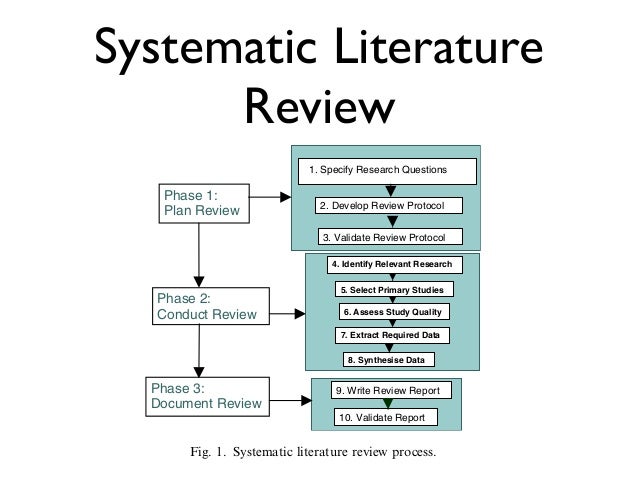
Let's break down the core steps in the first two phases.
Phase 1: Planning the Review
-
Formulate a Focused Question (PICO): As we've seen, a good research question is the foundation. In systematic reviews, we almost always use the PICO framework:
- Population/Problem: Who are the patients or what is the problem?
- Intervention: What treatment, exposure, or concept are we studying?
- Comparison: What is the alternative? (e.g., placebo, another drug, no treatment)
- Outcome: What is the effect we are measuring?
-
Develop a Review Protocol: Before the search begins, the entire plan is documented in a protocol. This pre-specifies the PICO question, search strategy, inclusion/exclusion criteria, and analysis plan. This crucial step ensures transparency and minimizes bias. The paper you read earlier (
resource_id: [LINK](https://pmc.ncbi.nlm.nih.gov/articles/PMC3059450/)) is a perfect example of such a protocol.
Phase 2: Conducting the Review
-
Develop and Execute a Comprehensive Search Strategy:
This is perhaps the most challenging step in Ayurvedic research. Your goal is to find all relevant literature, both published and unpublished ("grey literature"). Because Ayurvedic knowledge is so dispersed, a simple PubMed search is insufficient.The following paper is an excellent guide to the specific challenges and strategies for conducting literature searches in Ayurveda.
Literature searches on Ayurveda: An update - PMC
The paper 'Literature searches on Ayurveda: An update' details the practical challenges of finding Ayurvedic research and provides an updated list of the most important databases and search techniques.
Please read the 'Results', 'Discussion', and 'Conclusion' sections of this paper. As you read, focus on: The five key databases recommended for Ayurvedic literature. Why it is mandatory to search multiple databases. The difficulties posed by Sanskrit terminology, varied spellings, and database limitations. The importance of 'hand searching' and grey literature (like theses).
To summarize the key points from the paper:
*   **Multi-database approach is essential:** You must search a combination of databases, including:
    *   **Ayurvedic Portals:** AYUSH Research Portal, DHARA (Digital Helpline for Ayurveda Research Articles).
    *   **Specialized Databases:** ABIM (Annotated Bibliography of Indian Medicine).
    *   **Biomedical Databases:** PubMed, DOAJ (Directory of Open Access Journals).
*   **Search terms are complex:** Your search strategy must include a mix of biomedical terms (e.g., "Diabetes Mellitus"), Ayurvedic terms (*Prameha*, *Madhumeha*), synonyms, and various English spellings (*Kushta*, *Kustha*, *Kushtha*).
*   **Hand-searching is critical:** A significant portion of Ayurvedic literature, especially older journals and postgraduate theses, is not indexed online. This requires manually searching journal archives and thesis databases like "The Researches in Ayurveda."
4. Screen Studies and Select for Inclusion:
Once the search is complete, you will have a large number of records. The review team (usually at least two people to reduce bias) screens them in stages: first by title and abstract, and then by reading the full text of potentially relevant articles. This process is meticulously tracked.
The **PRISMA flow diagram** is the standard way to report this process, showing how you went from thousands of initial records to the final handful of included studies.

-
Assess Methodological Quality:
Not all studies are created equal. Before synthesizing the results, you must critically appraise the quality of each included study. For example, a well-conducted Randomized Controlled Trial (RCT) provides stronger evidence than a small case series. Resource LINK discusses how to assess quality in an Ayurvedic context, considering concepts like "black box design" where the entire intervention package is studied. -
Extract and Synthesize Data:
Data from the included studies are extracted into a standardized form. The results are then synthesized. If the studies are very similar in terms of PICO, their quantitative results might be pooled in a meta-analysis. If they are too different (heterogeneous), their findings are described and compared in a narrative synthesis.
3. Applying the Systematic Review Method to Classical Texts
So far, we've discussed reviewing modern research papers. But what about the learning outcome's focus on "classical Ayurvedic texts"? The same principles apply, but the "database" and "data" change. This is essentially a "Systematic Review of Classical Literature."
Let's imagine you want to systematically review what the classical texts say about the use of Guduchi (Tinospora cordifolia) for treating Jwara (fever).
-
PICO Question:
- P (Problem): Jwara
- I (Intervention): Guduchi (as a single drug or part of a formulation)
- C (Comparison): Could be comparisons of its use across different texts (Charaka Samhita vs. Sushruta Samhita) or compared to other anti-pyretic herbs.
- O (Outcome): Mentioned properties (Guna), actions (Karma), specific types of Jwara it's indicated for, dosage forms, and Phalashruti (stated therapeutic benefits).
-
Search Strategy:
- Your "databases" are the primary sources: Charaka Samhita, Sushruta Samhita, Ashtanga Hridaya, Bhava Prakasha, Sharangadhara Samhita, etc.
- Your "search" involves systematically reading the chapters on Jwara Chikitsa and using indices to find every single shloka that mentions Guduchi in the context of fever.
-
Data Extraction & Synthesis:
- You would create a data extraction sheet to record, for each reference:
- Text, Chapter, Shloka Number
- Name used for Guduchi (Amrita, Chinnaruha, etc.)
- Context (e.g., Sama Jwara, Jeerna Jwara)
- Formulation (e.g., Guduchi Swarasa, Guduchi Satva, Sanshamani Vati)
- Anupana (adjuvant)
- Stated Karma (e.g., Pachana, Jwaraghna, Dahaprashamana)
- Synthesizing this data would give you a complete map of classical knowledge, highlighting consensus (e.g., it is widely used) and revealing gaps (e.g., is it more indicated for Pitta Jwara? Are there contraindications?).
- You would create a data extraction sheet to record, for each reference:
Test your understanding!
In the last lesson, we discussed Medoroga (obesity). Imagine you want to conduct a systematic review of the classical texts to understand the role of Triphala in its management. Outline the PICO components for this review.
Show answer
Here is one possible PICO framework:
- P (Problem): Medoroga (and related concepts like Sthaulya).
- I (Intervention): Triphala, mentioned as a single formulation or as individual components (Haritaki, Vibhitaki, Amalaki) for this condition.
- C (Comparison): Comparing its indications/actions with other Medohara (fat-reducing) drugs like Guggulu or Shilajatu mentioned in the same contexts. Or, comparing its description across different Samhitas.
- O (Outcome): Stated Karma (e.g., Lekhana, Medohara, Kledahara), dosage forms (e.g., churna, kwatha), specific Anupanas recommended (e.g., with honey), and any described Phalashruti related to weight reduction or metabolic improvement.
Conclusion
Today, we have demystified the process of the systematic review and tailored it to the unique landscape of Ayurvedic knowledge. You now understand that it is a rigorous, transparent methodology for evidence synthesis, not just a simple literature summary.
Key Takeaways:
- A systematic review uses a structured and reproducible methodology to minimize bias and provide a comprehensive summary of evidence.
- Conducting reviews in Ayurveda requires a specialized search strategy that spans multiple databases (both biomedical and Ayurvedic) and includes non-digitized "grey literature."
- The PICO framework is essential for framing a focused question, and it must be adapted to include Ayurvedic terminology.
- The principles of systematic review can be powerfully applied directly to classical texts to systematically map traditional knowledge, identify consensus, and uncover gaps for future research.
Preview of the Next Lesson:
We have now defined the principles and overall steps. In the next lesson, we will get practical and focus on two of the most critical steps from today's discussion. The learning outcome will be to "Design a search strategy and data extraction form for a Dravyaguna-related research question." This will be a hands-on exercise in building the core components of a review protocol.