Hello and welcome to our next lesson.
In our previous session, we evaluated Guduchi and Amalaki, establishing a method for analyzing Dravyas by bridging their classical Rasa-Karma profiles with modern phytochemistry. We saw how Guduchi acts as a metabolic corrector and Amalaki as a systemic protector in Madhumeha.
Today, we will continue this evidence-based exploration. The learning outcome for this lesson is to evaluate Jambu and Haridra as anti-diabetic Dravyas through Rasa-Karma and phytochemistry. These two herbs are staples in the management of Prameha, each offering a distinct mechanism of action that targets different aspects of the disease's pathogenesis (Samprapti).
By the end of this lesson, you will be able to differentiate the specific roles of Jambu and Haridra and understand when to prioritize one over the other in a clinical setting.
1. Jambu (Syzygium cumini): The Glycemic Regulator
Jambu, commonly known as Jamun or Black Plum, is a fruit and herb praised throughout the classical texts for its effectiveness in Prameha. The seed, in particular, is highly valued for its potent anti-diabetic properties.
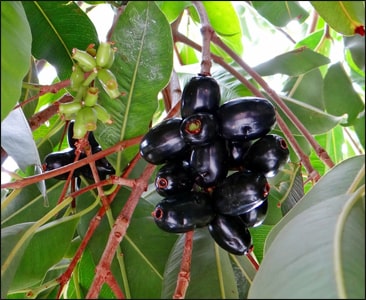
Classical Perspective: Rasa-Karma Analysis
Let's begin with the classical pharmacodynamics of Jambu Beeja (the seed):
Rasa(Taste): PrimarilyKashaya(Astringent), with anAnurasa(secondary taste) ofMadhura(Sweet).Guna(Quality):Laghu(Light),Ruksha(Dry).Veerya(Potency):Shita(Cold).Vipaka(Post-digestive effect):Katu(Pungent).Doshakarma(Action on Doshas):Kapha-Pitta Shamaka(pacifiesKaphaandPitta).
How do these properties work to counter the Samprapti of Madhumeha?
- Controlling
KledaandMeda: The dominantKashayarasa, combined withLaghuandRukshagunas, givesJambua strong drying and absorbing quality. This directly counteracts the excessKleda(pathological moisture) and liquidMeda(fat tissue) that are central to theKapha-dominant pathogenesis ofPrameha. - Reducing
Prabhuta Mutrata(Excessive Urination): TheKashayarasa also imparts aGrahi(absorbent/binding) andStambhana(stopping) action. This is clinically significant for controlling polyuria, one of the cardinal symptoms ofMadhumeha. - Pacifying
Pitta: ItsShita Veeryahelps to pacify thePittadosha, which can become aggravated in later stages ofPrameha, leading to inflammatory complications (Dhatu Paka) like burning sensations.
Therefore, from a classical viewpoint, Jambu is an ideal Kapha-Pitta pacifying Dravya that dries up excess bodily fluids and helps stabilize urinary output.
Modern Perspective: Phytochemistry and Mechanisms
Modern science has identified specific biochemical pathways that explain Jambu's classical Pramehaghna (anti-diabetic) action.
“ANTI-DIABETIC HERBS IN DRAVYAGUNA AND ...
To understand these mechanisms, let's consult the review article 'ANTI-DIABETIC HERBS IN DRAVYAGUNA AND PHARMACOLOGY: AN INTEGRATIVE REVIEW'. This paper provides a concise summary of the key phytochemicals and actions of several herbs, including Jambu.
Please read the following sections in this document: Under the heading 'Classical Ayurvedic perspective': Note that Jambu (Syzygium cumini) seeds and bark are described as Pramehaghna. Under 'Phytochemistry and pharmacological actions', find the subsection for 'Syzygium cumini (Jamun)': Focus on the listed constituents and, most importantly, the described mechanisms of action. In the 'DISCUSSION' section: Observe how the paper explicitly mentions that 'jamboline delays carbohydrate digestion.' This will provide a clear picture of the evidence-based mechanisms behind Jambu's anti-diabetic effect.
From the research, we can extract the following key points:
- Key Phytochemicals: The seeds contain alkaloids like Jamboline and Jambosine, as well as flavonoids, ellagic acid, and anthocyanins.
- Primary Mechanism: Enzyme Inhibition:
Jambuextract is a potent inhibitor of two key digestive enzymes:α-amylaseandα-glucosidase. These enzymes are responsible for breaking down complex carbohydrates into simple sugars in the intestine. By inhibiting them,Jambuslows down the rate of glucose absorption into the bloodstream. This is particularly effective at reducing post-prandial hyperglycemia (the spike in blood sugar after a meal). - Other Mechanisms: It also demonstrates antioxidant activity and is believed to increase glycogen storage, further helping to regulate blood glucose levels.
The action of α-glucosidase inhibitors is a well-established therapeutic strategy in modern diabetology, with drugs like Acarbose working on the same principle. Jambu offers a natural and historically validated approach to achieve this effect. The classical Grahi and Stambhana karmas can be seen as the macroscopic observation of this microscopic effect of slowing down intestinal absorption.
2. Haridra (Curcuma longa): The Systemic Anti-Inflammatory
Haridra (Turmeric) is revered in Ayurveda not just as a spice but as a potent medicine. Its role in Prameha is profound, targeting the metabolic and inflammatory roots of the disease. It is so fundamental that the combination of Haridra and Amalaki (Nishamalaki) is a cornerstone of Prameha management.

Classical Perspective: Rasa-Karma Analysis
Haridra's properties give it a strong action on the core pathology of Kapha and Meda.
a classical ayurveda review on haridra
The paper 'A classical ayurveda review on haridra' provides an exhaustive look at its properties as described across various classical texts. It's an excellent resource for understanding its Rasa Panchaka and therapeutic uses.
Please review this document, focusing on the following: Introduction: Notice the mention of its use in Prameha from the outset. Tables 4, 5, 6, 7, and 8: These tables systematically present Haridra's Rasa, Guna, Veerya, Vipaka, and Doshakarmata according to multiple classical sources. Synthesize a consensus view of its properties. Table 10 ('Rogaghnata'): Confirm that Prameha is a primary indication across almost all major texts. This review will give you a solid, text-based foundation for Haridra's classical pharmacology.
Synthesizing from the classical texts, we find Haridra has the following profile:
Rasa(Taste):Tikta(Bitter),Katu(Pungent).Guna(Quality):Ruksha(Dry),Laghu(Light).Veerya(Potency):Ushna(Hot).Vipaka(Post-digestive effect):Katu(Pungent).Doshakarma(Action on Doshas): PredominantlyKapha-hara(pacifiesKapha). WhileUshnain potency, itsTiktarasa also gives itPitta-pacifying properties, making itKapha-Pitta Shamakain many contexts.
How does this profile address Madhumeha?
- Potent
KaphaandMedaReduction: The combination ofTikta-Katurasa,Ruksha-Laghuguna,Ushna Veerya, andKatu Vipakais powerfully antagonistic toKapha. This makes it highly effective for resolving the sticky, heavy qualities of vitiatedKaphaandMeda. Lekhana Karma(Scraping Action):Haridrais classified by Charaka in theLekhaniya Mahakashaya(group of ten scraping herbs). This action is crucial for scraping away theBahu Abaddha Medas(abnormal, loosely-bound fat) that obstructs theSrotas(channels) and contributes to insulin resistance.- Blood Purification and Channel Cleansing: Its
Rakta Shodhaka(blood purifying) andVishaghna(anti-toxic) properties help in clearingAma(metabolic toxins) from the circulation, further improving metabolic function.
Modern Perspective: Phytochemistry and Mechanisms
Modern research on Haridra has focused intensely on its active constituents, the curcuminoids, revealing why it is so effective in metabolic diseases.
- Key Phytochemicals: The therapeutic effects are largely attributed to a group of polyphenols called curcuminoids, of which curcumin is the most famous and well-researched.
- Primary Mechanisms:
- Anti-inflammatory Action: Curcumin is a powerful anti-inflammatory agent. It inhibits multiple inflammatory pathways, most notably the NF-κB (nuclear factor kappa B) pathway, which is a master regulator of inflammation. Since chronic low-grade inflammation is a key driver of insulin resistance, this is a primary anti-diabetic mechanism.
- Improved Insulin Sensitivity: By reducing inflammation and oxidative stress in tissues like muscle, liver, and fat, curcumin helps to improve their sensitivity to insulin, allowing for more efficient glucose uptake from the blood.
- Antioxidant Effect: Curcumin is also a potent antioxidant, protecting pancreatic beta-cells from the oxidative damage that can impair their function and lead to their death.
The "ANTI-DIABETIC HERBS..." review (LINK) you looked at earlier also confirms this, stating that Curcuma longa's curcumin "reduces inflammation and improves insulin sensitivity."
The classical Lekhana karma of Haridra can be understood in a modern context as its ability to resolve the pathological state of insulin resistance and dyslipidemia, effectively "scraping" away the metabolic dysfunction at a cellular level.
Test your understanding!
A 45-year-old patient with newly diagnosed Type 2 Diabetes presents with a chief complaint of a significant spike in blood sugar about an hour after every meal. His fasting glucose is only mildly elevated. Another 55-year-old patient with long-standing diabetes has elevated blood sugar, high cholesterol, and complains of generalized body aches and a feeling of "heaviness," indicating a state of chronic inflammation and Ama.
Based on their primary presentation, which herb—Jambu or Haridra—would you consider a more specific intervention for each patient, and why?
Show answer
-
For the patient with post-prandial spikes:
Jambuwould be the more specific choice. His primary issue is rapid glucose absorption from food.Jambu's mechanism as anα-glucosidaseinhibitor directly targets this problem by slowing down carbohydrate digestion. This aligns perfectly with its classical use to control glycemic levels. -
For the patient with inflammation and dyslipidemia:
Haridrais the more indicated herb. His symptoms point towards a deeper metabolic issue involving insulin resistance, dyslipidemia (Medo Dhatuderangement), and chronic inflammation (AmaandPittainvolvement).Haridra's potent anti-inflammatory (NF-κBinhibition) andLekhana(scraping/metabolic clearing) properties are ideal for addressing this underlying systemic pathology.
Conclusion
Today we have dissected the therapeutic actions of Jambu and Haridra, adding two more powerful tools to our Prameha management arsenal. We've seen how their classical descriptions are remarkably consistent with their modern, evidence-based mechanisms.
Key Takeaways:
- Jambu (
Syzygium cumini) primarily acts as a glucose absorption modulator. ItsKashayarasa andShita Veeryaare classically used to controlKapha-Pittaand reduce polyuria. This is explained by its modern role as anα-glucosidaseinhibitor, making it exceptionally useful for managing post-prandial hyperglycemia. - Haridra (
Curcuma longa) acts as a systemic metabolic and anti-inflammatory agent. ItsTikta-Katurasa,Ushna Veerya, andLekhanakarma target the coreKaphaandMedapathology. This is validated by curcumin's powerful anti-inflammatory and insulin-sensitizing effects, making it crucial for addressing the root cause of insulin resistance. - Complementary Roles: These herbs are not interchangeable.
Jambuoffers targeted control over meal-time glucose spikes, whileHaridraworks on a deeper level to reverse the inflammatory state that drives metabolic disease.
Preview of the Next Lesson:
Having now analyzed four key anti-diabetic Dravyas (Guduchi, Amalaki, Jambu, Haridra), we are ready to move from understanding individual components to constructing a complete therapeutic strategy. In our next lesson, we will design a treatment protocol for Type 2 Diabetes, integrating Nidana Parivarjana (avoiding causative factors), diet, and these herbal interventions.