Hello and welcome back.
In our last lesson, we constructed a detailed picture of the pathogenesis (Samprapti) of Madhumeha. We saw that it's a disease of metabolic collapse, beginning with Kapha and Agni dysfunction, and culminating in Vata dominance, which depletes the body's vital essence, Ojas. We also differentiated the two key pathways: Avarana (obstruction) in obese patients and Dhatu Kshaya (depletion) in lean patients.
Today, we transition from understanding the problem to exploring the solutions. The learning outcome for this lesson is to evaluate Guduchi and Amalaki as anti-diabetic Dravyas through Rasa-Karma and phytochemistry. These two herbs are pillars of Prameha management. We will analyze how their classical properties (Rasa Panchaka) and their modern, scientifically-validated phytochemical actions directly counteract the Samprapti we just studied.
1. Guduchi (Tinospora cordifolia): The Amrita for Metabolic Health
Guduchi, also known as Amrita or "the divine nectar," is revered for its profound healing and balancing effects. In the context of Madhumeha, it acts as a multi-pronged therapeutic agent.
Classical Perspective: Rasa-Karma Analysis
Let's begin by examining Guduchi's classical pharmacodynamics, which explain its utility in Prameha.
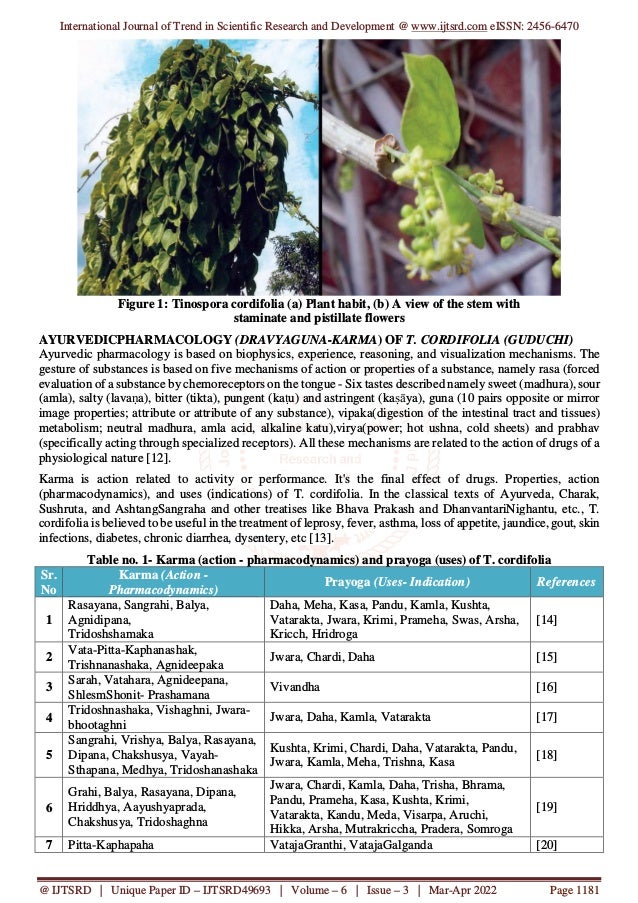
Guduchi has the following properties:
Rasa(Taste):Tikta(Bitter),Kashaya(Astringent)Guna(Quality):Laghu(Light)Veerya(Potency):Ushna(Hot)Vipaka(Post-digestive effect):Madhura(Sweet)Karma(Action):Tridosha Shamaka(pacifies all threeDoshas),Agnideepana(kindles digestive fire),Rasayana(rejuvenative),Pramehaghna(anti-diabetic).
How do these properties work together to counteract the Samprapti of Madhumeha?
- Counteracting
Kapha: TheTiktaandKashayatastes, along with theLaghuquality, are antagonistic toKapha. They help to dry up excessKleda(pathological moisture) and scrape awayBahu Abaddha Medas(abnormal fat tissue), addressing the root cause ofAvarana(obstruction). - Restoring
Agni: TheTiktataste andUshna Veeryacombine to create a powerfulDeepana(agni-stimulating) andPachana(digestant ofAma) effect. This directly targets theJatharagniandDhatvagnidysfunction that lies at the heart ofPrameha. - Balancing
Vataand ProtectingDhatus: This is whereGuduchi's genius lies. While its primary tastes and hot potency are excellent forKapha, they could potentially aggravateVata. However, itsMadhura Vipaka(sweet post-digestive effect) provides a nourishing, anabolic, andVata-pacifying effect. This unique combination allowsGuduchito clear the channels (Srotoshodhana) without causing excessive tissue depletion (Dhatu Kshaya). It acts as aRasayana, protecting theDhatuseven as it corrects metabolism.
Modern Perspective: Phytochemistry and Mechanisms
Modern research has validated these classical insights, identifying the specific compounds and mechanisms responsible for Guduchi's anti-diabetic effects. To explore this, let's examine a review on Guduchi's properties.
Immunomodulatory and Therapeutic Profile of Tinospora Cordifolia Linn.
The paper 'Immunomodulatory and Therapeutic Profile of Tinospora Cordifolia Linn.' provides an excellent bridge between classical knowledge and modern research. It details both the Ayurvedic properties and the scientific evidence for Guduchi's actions.
Please read the following sections in this document: Section 3.1, 'Pharmacology of Guduchi': Note the classical properties and the major phytochemicals listed. Section 3.2, 'Guduchi for Health and Diseases as per Ayurvedic Classics': Observe how classics like Sushruta and Vagbhata classify it as Pramehaghna (see Table 3). Section 3.3.2, 'Anti-diabetic property': Focus on the modern mechanisms described here. Section 4, 'DISCUSSION': Pay attention to the paragraph connecting its Tridosha Shamaka properties and the roles of its phytochemicals like alkaloids and flavonoids. This will help you connect the classical Karma with its scientifically validated actions.
From the research, we can synthesize the following key points:
- Key Phytochemicals:
Guduchicontains alkaloids (like berberine), diterpenoid lactones, glycosides, and steroids. - Anti-diabetic Mechanisms:
- Hypoglycemic Action: It promotes insulin secretion from the pancreas.
- Metabolic Regulation: It inhibits gluconeogenesis (synthesis of glucose in the liver) and glycogenolysis (breakdown of glycogen into glucose).
- Antioxidant Effect: It mitigates oxidative stress, which is a key driver of beta-cell damage and diabetic complications.
Berberine, a major alkaloid in Guduchi, is particularly well-researched and functions almost like the drug Metformin by activating an enzyme called AMP-activated protein kinase (AMPK), which is a master regulator of cellular energy metabolism.
This beautifully aligns with the classical understanding. The Agnideepana action of Guduchi is the classical way of describing its ability to regulate metabolism at the cellular level, as seen with AMPK activation. Its Rasayana effect corresponds directly to its antioxidant and cell-protective properties.
2. Amalaki (Phyllanthus emblica): The Supreme Rasayana
Amalaki, or Indian Gooseberry, is perhaps the most celebrated Rasayana in Ayurveda. While Guduchi is a powerful metabolic corrector, Amalaki excels in protecting the body from the degenerative consequences of Madhumeha.
Classical Perspective: Rasa-Karma Analysis
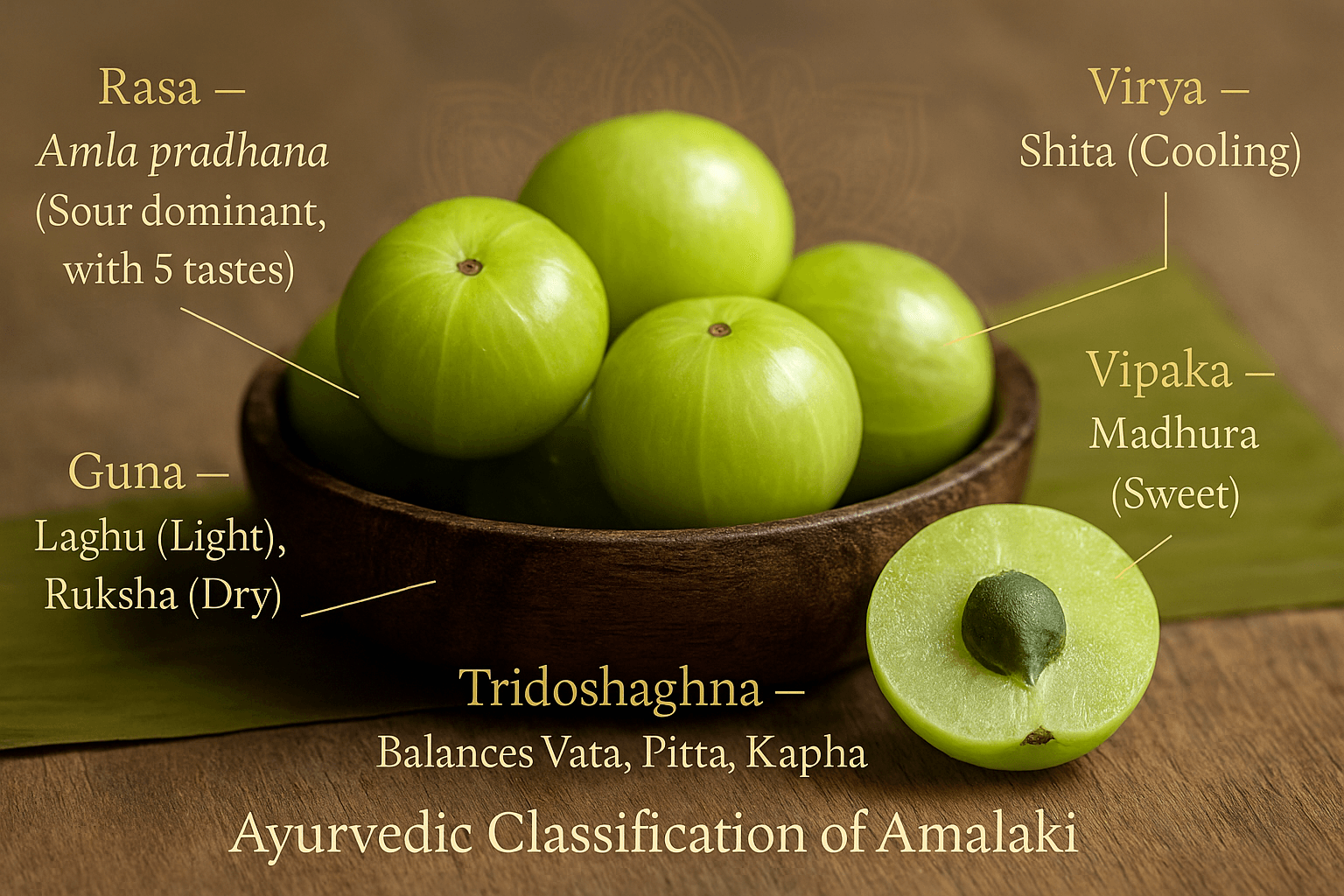
Amalaki's properties are:
Rasa(Taste):Amla(Sour) dominant, contains all five tastes exceptLavana(Salty).Guna(Quality):Laghu(Light),Ruksha(Dry)Veerya(Potency):Shita(Cold)Vipaka(Post-digestive effect):Madhura(Sweet)Karma(Action):Tridoshaghna(especiallyPitta-pacifying),Rasayana,Chakshushya(good for eyes),Pramehaghna.
Amalaki's role in Madhumeha is unique:
- Managing
Pittaand Inflammation: AsPramehaprogresses,Pittaoften becomes involved, leading to inflammatory complications (Dhatu Paka).Amalaki'sShita Veeryais exceptional for pacifyingPitta, cooling inflammation, and preventing complications like neuropathy, nephropathy, and retinopathy. - Nourishing and Protecting
Ojas: TheMadhura Vipakaand overallRasayananature directly nourish allDhatusand replenishOjas, counteracting the core pathogenic action ofVatainMadhumeha. It helps to stop the draining of vitality from the body. - Gentle Metabolic Support: The
Amla(sour) taste stimulatesAgniin a gentle, non-aggravating way. TheKashaya(astringent)Anurasa(secondary taste) helps to reduce the excessive flow of urine (Prabhuta Mutrata).
Modern Perspective: Phytochemistry and Mechanisms
Let's explore the modern evidence for Amalaki's potent anti-diabetic effects.
How Amla Is Useful In Diabetes? How To Use?
First, let's watch a video from Dr. Manasa of Easy Ayurveda. She provides a concise explanation of how Amalaki is used in diabetes from a classical and integrative perspective.
Watch the video from 0:46 to 5:57. Pay attention to how she links Amla's qualities (astringent, sweet, cold) to its actions on Kapha and Pitta in diabetes, and its role in managing complications like nephropathy and neuropathy.
Now, let's look at a direct comparison of Amalaki with a conventional diabetes drug.
This video from NutritionFacts.org presents the striking results of a clinical study comparing Amla powder to a standard diabetes medication.
Watch the entire video (it's short). Note the effects of Amla on blood sugar, cholesterol, and triglycerides compared to the drug Glibenclamide.
These videos demonstrate Amalaki's powerful clinical effects. The underlying mechanisms are rooted in its rich phytochemistry, which protects the body from the oxidative stress that drives diabetes.
Do plants mediate their anti-diabetic effects through anti-oxidant and anti-apoptotic actions?
To understand the mechanism at a cellular level, let's look at the scientific paper 'Do plants mediate their anti-diabetic effects through anti...'. This study investigated how Amalaki protects pancreatic beta-cells.
Please read the following parts of this paper: Abstract and Introduction: This will give you a quick overview of the study's purpose, which is to see if Amalaki's anti-diabetic effect is due to its antioxidant and anti-apoptotic (anti-cell-death) properties. The first two paragraphs under 'Effect on lipid peroxidation': Note how Phyllanthus emblica (Amalaki) protects cells from STZ-induced oxidative damage. The second paragraph under 'The second variable studied was...': See how Amalaki protects cells from STZ-induced apoptosis (cell death). The first paragraph under the 'From the above results...' heading: This section lists the key phytochemicals believed to be responsible for these effects. Focus on how Amalaki protects pancreatic cells from the very damage that causes diabetes.
Synthesizing the modern evidence:
- Key Phytochemicals:
Amalakiis rich in Vitamin C, tannins, and polyphenols like Gallic acid and Ellagic acid. - Anti-diabetic Mechanisms:
- Powerful Antioxidant: It neutralizes the reactive oxygen species (ROS) that cause oxidative stress, protecting pancreatic beta-cells, nerves, kidney filters, and retinal blood vessels.
- Anti-apoptotic: It prevents the programmed cell death of pancreatic beta-cells, thus preserving the body's ability to produce insulin.
- Lipid Management: As seen in the video, it significantly lowers LDL ("bad") cholesterol and triglycerides while raising HDL ("good") cholesterol, addressing the dyslipidemia common in metabolic syndrome.
The classical description of Amalaki as a supreme Rasayana and Chakshushya is a perfect reflection of these powerful antioxidant and cytoprotective (cell-protecting) effects.
Test your understanding!
A 50-year-old patient with Type 2 Diabetes (Sthula Pramehi) presents with high blood sugar, significant channel obstruction (Srotorodha), and low digestive fire (Agni Mandya). Another 60-year-old patient (Krisha Pramehi) has long-standing diabetes and now suffers from burning neuropathy and early signs of retinopathy (Pitta and Vata symptoms with Dhatu Kshaya).
Which of the two herbs, Guduchi or Amalaki, would you prioritize for each patient as a primary intervention, and why?
Show answer
-
For the 50-year-old
Sthula Pramehi:Guduchiwould be the more appropriate primary choice. ItsTiktataste andUshna Veeryaare ideal for clearing theKaphaandMeda-based obstruction (Avarana). ItsAgnideepanaproperty will directly address theAgni Mandya. WhileAmalakiis also beneficial,Guduchiis stronger for the initial "debulking" and metabolic correction needed in thisKapha-dominant stage. -
For the 60-year-old
Krisha Pramehi:Amalakiwould be the priority. His condition is dominated byDhatu Kshayaand inflammatoryPittasymptoms (burning neuropathy).Amalaki'sShita Veeryawill pacify the burning (Daha), and its profoundRasayanaeffect (Madhura Vipaka) will nourish the depletedDhatusandOjas. ItsChakshushyaproperty is specifically indicated for the retinopathy.Guduchi's hot potency might be too aggravating for the existingPittasymptoms in this case.
Conclusion
Today, we have evaluated two of Ayurveda's most important anti-diabetic herbs, not just as a list of properties, but as targeted tools to dismantle the Samprapti of Madhumeha.
Key Takeaways:
Guduchiis a metabolic corrector. Its unique combination ofTiktaRasa,Ushna Veerya, andMadhura Vipakaallows it to stimulateAgni, clearKapha-based obstruction, and regulate blood sugar, all while providing a nourishingRasayanaeffect. This aligns with modern findings on its ability to enhance insulin secretion and regulate glucose metabolism via pathways like AMPK.Amalakiis a systemic protector. ItsShita Veeryaand potentRasayanaaction make it unparalleled for pacifyingPitta, preventing inflammatory complications, and rebuildingOjas. Its action is validated by modern research showing it is a powerful antioxidant and anti-apoptotic agent that protects the pancreas, nerves, and blood vessels from diabetic damage.- Synergistic Use: In clinical practice,
GuduchiandAmalakiare often used together (e.g., in formulations likeNishamalaki) to provide both metabolic correction and systemic protection, offering a comprehensive approach to managingMadhumeha.
Preview of the Next Lesson:
We have now evaluated two key single Dravyas. In the next lesson, we will continue this exploration by evaluating Jambu and Haridra as anti-diabetic Dravyas through Rasa-Karma and phytochemistry. This will further expand your therapeutic toolkit and deepen your understanding of how different herbs target different facets of Prameha.