Hello.
In our last lesson, we established the macro-structure for your book, sequencing the chapters to create a safe emotional journey for your reader—a "long, perilous hike" with peaks of intensity and valleys of reflection. Now, we will zoom in from the trail map to the terrain of a single path.
Today's lesson addresses the learning outcome: Design chapter structures that introduce heavy topics while providing cognitive 'rest points' for the reader. This is about managing the emotional and cognitive load within a chapter, especially a "peak" chapter that deals with acute pain like identity loss or deep-seated anger. Your goal is to guide the reader through this difficult territory without leaving them overwhelmed, building a structure that allows them to breathe.
1. Pacing as a Tool for Regulation
In writing, pacing is the speed at which the reader experiences events and takes in information. As an author crafting a book on such a sensitive topic, you can consciously manipulate pacing to regulate the reader's emotional state. A relentless, uniform pace—whether fast or slow—can be exhausting. The key is to create a varied rhythm.
To understand the mechanics of this, let's explore how sentence structure and other devices control the reader's experience.
On Writing: How to Master Pacing!
The video 'On Writing: How to Master Pacing!' by Hello Future Me provides an excellent breakdown of pacing at the sentence level. It distinguishes between the techniques used to create speed and those used to create slowness and reflection.
Please watch two key segments: Minutiae of Pacing (01:29 - 03:37): Pay attention to the contrast between Robert Ludlum's short, punchy, action-oriented sentences and the longer, more introspective sentences in the second example. This demonstrates the fundamental way prose can either rush a reader forward or invite them to slow down. Stretching Emotional Tension (04:14 - 06:45): This section is crucial. Note the argument that emotional beats require slower pacing to allow the reader to "simmer" in them. This is the foundation of creating a reflective rest point.
As the video illustrates, you have two primary modes:
- Accelerated Pace: Short sentences, simple syntax, and a focus on action or information. This can be useful for presenting facts or moving through a summary quickly.
- Decelerated Pace: Longer, more complex sentences rich with introspection, description, or metaphor. This slows the reader down, giving them the cognitive and emotional space to process a feeling.
A well-structured chapter on a heavy topic will intentionally shift between these modes, creating a rhythm of tension and release.
2. Structural Breathing Room
Beyond the sentence level, you can use the very form of your chapter to create "rest points." This involves breaking up dense, emotionally charged material with different types of content and visual pauses.
Technique 1: Shifting Narrative Distance
In the previous lesson, we referenced Aggie Stewart's essay "Bringing Dark Events to Light." Her analysis of Maya Angelou's memoir provides a perfect model for modulating intensity within a chapter.
Bringing Dark Events to Light: Emotional Pacing in ...
Let's revisit Aggie Stewart's essay, this time focusing on the specific techniques she identifies for creating emotional pacing within a single narrative sequence.
Please re-read the section analyzing I Know Why the Caged Bird Sings. Focus on the passage that begins, 'The principle technique involves manipulating narrative distance as if she were adjusting the lens of a movie camera...' and read through to '...appreciate or reflect on it.' Notice how Angelou toggles between: Narration (Zoom In): The intense, immediate perspective of her child-self, living through a traumatic event. Exposition/Commentary (Zoom Out): The reflective, wiser perspective of her adult-self, providing context and meaning. This is the 'rest point.'
This "zoom in, zoom out" method is an ideal framework for your book. You can immerse the reader in the visceral experience of a feeling (e.g., the phrase "I feel like I'm drowning and no one even notices") and then "zoom out" to an authorial voice that explains the psychological or social context of that feeling. This shift from pure emotion to cognition provides a necessary break and deepens the reader's understanding.
Technique 2: Using Breaks and White Space
Sometimes, the most effective rest point is a literal one. The physical structure of the text—section breaks, short chapters, and even empty space on the page—can signal a pause and give the reader a moment to breathe before continuing.
One writer who uses this effectively is Nick Johnstone.
How existing mental health narratives help a neurotic write from their ...
In 'How existing mental health narratives help a neurotic write from their own experience,' Chris Westoby analyzes Nick Johnstone's memoir A Head Full of Blue and praises its structure for making heavy content manageable.
Please read the section that analyzes A Head Full of Blue. It begins, 'Nick Johnstone’s A Head Full of Blue (2002) is titled A Memoir...' Focus on the description of the 'tiny chapters' and how this structure 'adds literal breaks to what could have been a slog to read.'
For your e-book, this could mean:
- Breaking a long chapter into several shorter, numbered parts.
- Using a simple separator (like
***) to signal a shift in thought or a pause. - Keeping paragraphs relatively short, especially during intense passages, to make the page feel less dense and overwhelming.
These structural choices are not merely aesthetic; they are empathetic, acknowledging that your reader may have limited emotional energy.
3. Weaving in Grounding Passages
A "grounding technique" is a psychological tool used to pull someone out of an overwhelming emotional state (like anxiety or dissociation) by focusing their attention on the present moment through their senses. As an author, you can build these techniques directly into your prose to help your reader stay present and safe.
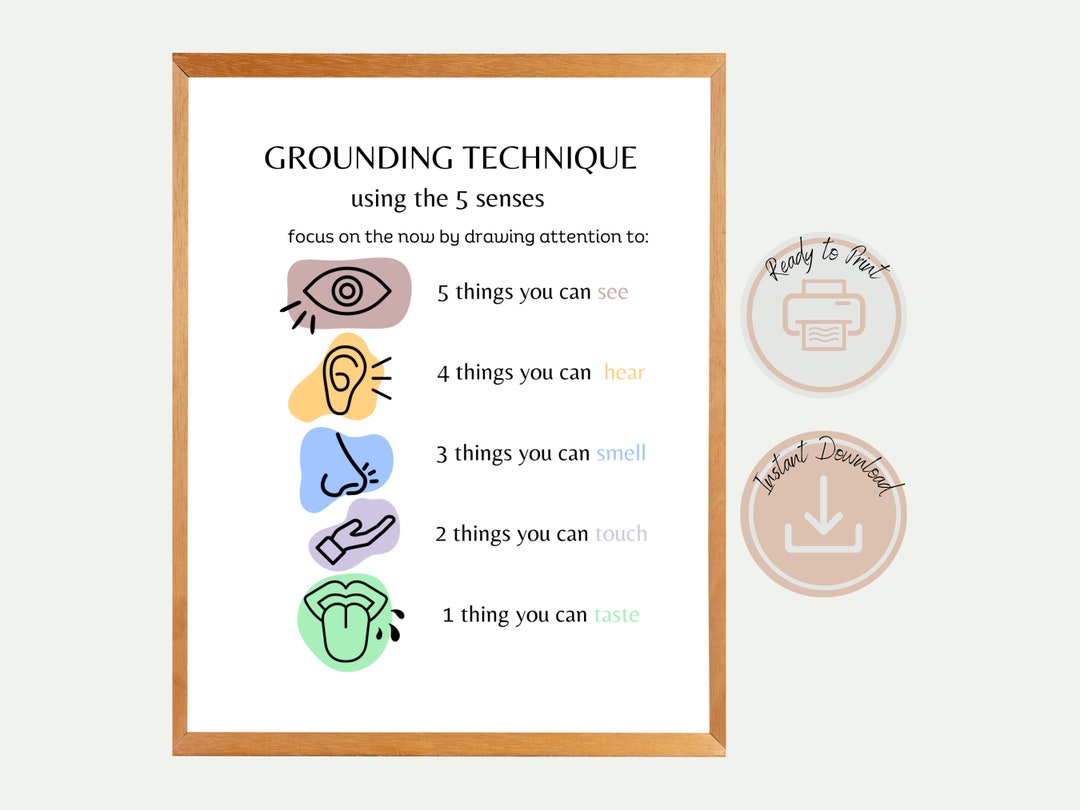
How does this translate to your text? After a passage that explores a deeply internal, disorienting feeling—like the phrase "I don’t even feel real lately"—you can write a "grounding passage" that shifts the focus to simple, external, sensory details.
Example:
The world felt thin, like a movie playing on a distant screen. You were an actor who had forgotten your lines, a ghost in your own life. The feeling of not being real was a thick fog, threatening to swallow everything.
But the mug in your hands was real. It was warm, solid. You could feel the smooth, glazed ceramic against your fingertips. You could see the steam rising in wisps, catching the morning light. You could hear the quiet, mechanical hum of the refrigerator, a steady sound in the silent kitchen. The bitter scent of coffee filled the air. One sip. The hot, dark liquid was a jolt, a reminder of the body you were in.
This passage serves as a cognitive rest point. It acknowledges the overwhelming feeling and then gently guides the reader back to a place of physical reality and safety before moving on.
Your Task: Outline a "Peak" Chapter
Now, let's apply these principles. Choose one of the emotionally intense "peak" chapter themes you identified in the last lesson (e.g., "Identity Loss," "Anger and Resentment," or "The Fear of Asking for Help").
Your task is to create a structural outline for that chapter, showing how you would manage its emotional intensity.
Instructions:
- State your chosen chapter theme.
- Create a bullet-point outline of the chapter's internal structure. This is not about writing the full text, but about planning the flow.
- For each point in your outline, specify the technique you are using. Indicate where you would "zoom in" with narration/story, "zoom out" with exposition/explanation, insert a structural break, or use a grounding passage.
Example Outline:
- Chapter Theme: The Anatomy of "Broken" (based on "I'm not lazy, I'm just broken")
- Outline:
- Part 1: The Weight of Judgment.
- Technique: Zoom In (Narration). Open with a short, relatable story of being misunderstood—a time when exhaustion was labeled as laziness by a boss, family member, or even oneself. Use short, tired-sounding sentences.
- Part 2: The Science of Depletion.
- Technique: Zoom Out (Exposition). Shift to the authorial voice. Explain the concept of nervous system burnout in simple, non-clinical terms (e.g., the 'battery' being drained). Use longer, more explanatory paragraphs. This is the first rest point.
***(Structural Break)- Part 3: The Feeling of Fragmentation.
- Technique: Zoom In (Metaphorical Description). Describe the internal feeling of being "broken"—fragmented, unable to piece thoughts together. Use visceral, emotional language.
- Part 4: Grounding in the Physical.
- Technique: Grounding Passage. After the intense description above, shift to a simple, sensory passage focusing on the character’s immediate surroundings to bring the reader back to a state of calm.
- Part 5: Redefining 'Broken'.
- Technique: Zoom Out (Reframing). Conclude the chapter by reframing "broken" not as a personal failure, but as an understandable consequence of prolonged stress—a system that has been overloaded and requires rest, not fixing.
- Part 1: The Weight of Judgment.
This exercise will help you move from thinking about what you want to say to how you can say it in the safest, most impactful way.
Conclusion
Designing a chapter is like composing a piece of music. It requires a sense of rhythm, dynamics, and intentional rests. By varying your pace, shifting your narrative distance, and using structural and grounding techniques, you create an experience that allows your reader to confront difficult truths without being consumed by them. You are calibrating the emotional journey, not just presenting information.
Key Takeaways:
- Vary Your Pace: Use sentence and paragraph length to speed up for information and slow down for reflection.
- Shift Narrative Distance: Alternate between "zoomed-in" emotional narration and "zoomed-out" cognitive exposition to create rest points.
- Use Structural Breaks: Employ white space, section breaks, and shorter chapters to give the reader literal breathing room.
- Incorporate Grounding Passages: After intense emotional content, guide the reader back to safety by focusing on simple, sensory details.
In our next lesson, we will build directly on this foundation by focusing on the prose itself. We will apply techniques such as white space, paragraph length, and grounding passages to regulate emotional intensity, moving from the structural outline to the written word.