Hello.
In our last lesson, we focused on the architecture of your chapters, outlining how to sequence heavy topics and create "rest points" by shifting narrative distance. We designed the blueprint for a safe emotional journey. Today, we move from that blueprint to the craft of the prose itself, focusing on the texture and rhythm of your writing.
This lesson directly addresses the learning outcome: Apply techniques such as white space, paragraph length, and grounding passages to regulate emotional intensity. You will learn to use the physical appearance and flow of your text as deliberate tools to manage the reader's experience, ensuring they feel held and understood, not overwhelmed.
1. The Power of White Space as a "Rest Point"
In visual art, the empty area around a subject is called "negative space." It’s not just blankness; it’s an essential part of the composition that directs focus and creates balance. In writing, white space—the blank parts of the page—serves the same crucial function. It acts as a pause, a breath, a moment for the reader to process emotionally-charged content.
Let's explore how to use this "negative space" intentionally.
Defining Negative Space in Story
The article 'Defining Negative Space in Story' by Jane Friedman offers a beautiful and practical metaphor for using white space in writing. It provides clear techniques for controlling rhythm and flow.
Please read the following sections from the article: Start with 'Using negative space—literally' and read through to the end of that subsection. Notice how the return key is framed as a 'road sign' for the reader. Continue to 'Varying sentence and paragraph length.' Pay close attention to how the author describes the different feeling a reader has when a page is dense versus when it contains shorter paragraphs. Finally, read the section 'Making space.' The analogy of rests in music offering 'relief and adding suspense' is particularly relevant to your work. Focus on how these physical formatting choices are, in fact, emotional pacing tools.
As the article suggests, white space isn't passive. It actively shapes the reader’s experience:
- Line Breaks: A simple line break between paragraphs can serve as a mental pause, allowing a heavy thought to settle before the next one is introduced.
- Short Paragraphs: During an intense passage, breaking the text into shorter paragraphs makes the page look less daunting. It provides visual entry points and signals to the reader that the information is manageable. A single-sentence paragraph can land with immense power, forcing a moment of reflection.
- Section Dividers: A simple divider (like
***) creates a more definitive pause. It tells the reader, "We have finished with that difficult thought. Take a breath before we move on."
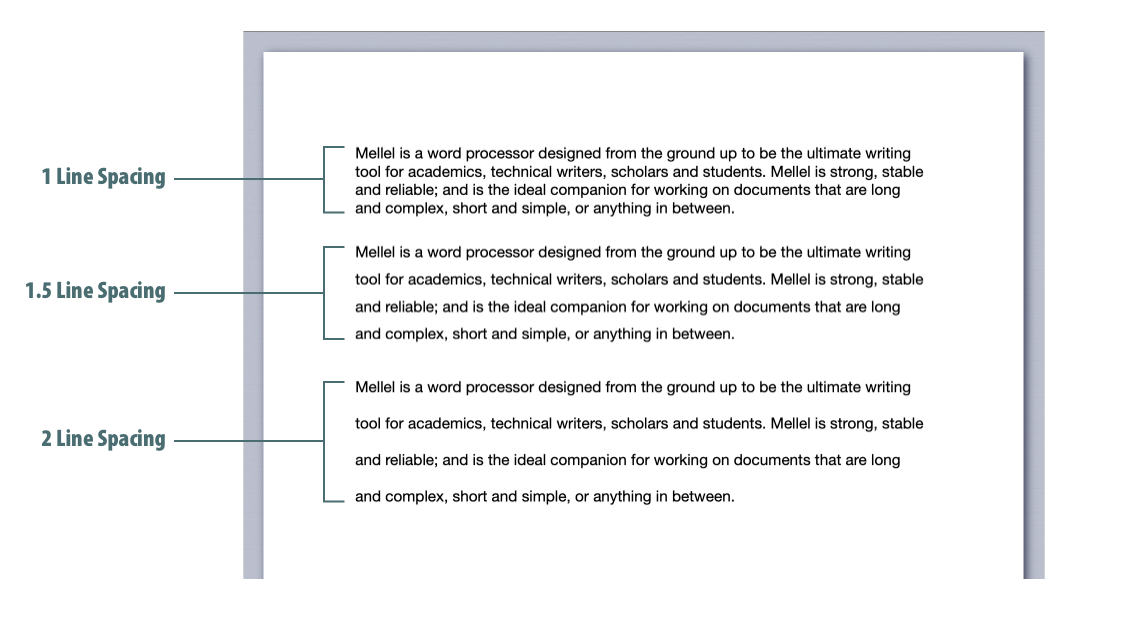
2. Varying Sentence and Paragraph Length to Control Pace
Just as white space creates rhythm, the length and structure of your sentences dictate the pace at which a reader moves through a passage. In the previous lesson, we discussed fast vs. slow pacing conceptually. Now, let's look at the mechanics of creating it in your prose.
On Writing: How to Master Pacing!
Let's revisit a key segment from 'On Writing: How to Master Pacing!' This time, watch it with an eye for how to construct sentences that either create a sense of breathlessness or a feeling of slow, deep introspection.
Please watch the segment from 01:29 to 03:37. As you watch the contrast between the 'Bourne Identity' example (short, punchy sentences) and the second example (long, introspective sentences), consider how you would apply these to your book's themes. Long, complex sentences are ideal for exploring the nuanced, tangled internal worlds of feelings like loneliness or identity loss. Short, simple sentences can be used to state a hard truth with clarity and force, or to describe a grounding sensory detail.
For your book, this means being a conductor of the reader’s emotional state:
- To explore dissociation ("I don't even feel real lately"): Use long, flowing sentences with multiple clauses that mimic a drifting, disconnected train of thought.
- To state a moment of profound exhaustion ("I'm not sad, I'm just... done."): A short, declarative sentence, perhaps isolated in its own paragraph, can deliver the emotional weight with stark finality.
This technique of modulating sentence and paragraph structure is a hallmark of masterful writing on trauma. In her analysis of Mary Karr’s The Liars' Club, Aggie Stewart (whose essay we reviewed in the last lesson) notes how Karr shifts to shorter, staccato sentences during the most horrific scenes, mirroring the fragmented, snapshot-like way traumatic memories are often encoded. This is a powerful, advanced application of the principle.
3. Crafting Grounding Passages with Sensory Detail
In our last lesson, we introduced the concept of a grounding passage. Now, we'll focus on how to write one. The key is shifting from the internal world of abstract feeling to the external world of concrete sensory detail. This gently pulls the reader back to the present moment, offering a point of stability.
The most effective way to access emotion—and to ground a reader from overwhelming emotion—is through the senses.
A Masterclass in Narrative Nonfiction with Ben Rawlence
In this clip from 'A Masterclass in Narrative Nonfiction,' author Ben Rawlence explains that the fundamental way to create an emotional experience for the reader is by engaging their senses.
Please watch the following two short segments: Engaging Emotions Through Senses (01:58 - 02:44): Note the emphasis on describing how a place looks, feels, smells, and sounds to create an emotional journey. Immersion Requires Detail (04:37 - 05:59): Listen to how Rawlence describes recreating a scene by focusing on specific details to bring the reader into the picture. This is the exact technique you will use to write grounding passages.
A grounding passage acts as an anchor. After exploring a disorienting feeling like identity loss ("I don't even know who I am anymore"), you can anchor the reader by writing a passage that focuses entirely on simple, observable, sensory facts.
The Method:
- Acknowledge the Internal State: Briefly describe the overwhelming feeling.
- Pivot to the External: Use a line break or section divider.
- Engage the Senses: Write a few short, simple sentences describing the physical environment. Focus on one sense at a time.
- Sight: The way light hits a wall. The pattern on a fabric.
- Sound: The hum of an appliance. The distant sound of traffic.
- Touch: The texture of a wooden table. The warmth of a cup.
- Smell/Taste: The scent of coffee. The cool taste of water.
This technique provides a cognitive 'off-ramp' from an intense emotional spiral, reinforcing the safety you are creating for your reader.
Your Task: A Practical Application
Let's put these three techniques—white space, sentence variation, and grounding—together.
Instructions:
- Choose one of the emotionally charged phrases from your source material, such as "I’m scared I’ll never be able to love someone again," or "I feel like I'm watching my life pass me by."
- Write a short passage (5-7 sentences total) that follows this structure:
- Part 1 (The Feeling): Write one or two longer, more complex sentences that delve into the internal, abstract nature of the feeling.
- Part 2 (The Break): Insert a line break or a
***divider. - Part 3 (The Grounding): Write a few shorter, simpler sentences that pivot to concrete, sensory details from the immediate environment.
- Pay attention to the rhythm and the visual look of the text on the page.
Example using "I don't even feel real lately":
There are days when the world seems to be playing on a screen just beyond your reach, a film where you are the main character but have forgotten all your lines, leaving you to drift through scenes that feel both familiar and impossibly foreign. The connection between your thoughts and your body feels stretched thin, a signal that is fading in and out of existence.
The window is cool against your forehead. A car passes, its tires hissing on the wet pavement. You can smell the damp earth from the potted plant on the sill. You watch a single drop of rain trace a path down the glass, and for a moment, that is the only thing that is real.
This exercise will help you internalize the process of modulating emotional intensity at the sentence and paragraph level.
Conclusion
You are crafting a book that delves into profound emotional pain. Your skill as a writer is not just in articulating that pain, but in creating a container strong and safe enough to hold it. The techniques we covered today are the very fabric of that container.
Key Takeaways:
- White space is an active tool: Use it to create deliberate pauses and make dense content feel more approachable.
- Sentence and paragraph length control the pace: Use long sentences for introspection and short sentences for clarity and grounding.
- Grounding passages provide an anchor: Shift from abstract feeling to concrete sensory detail to regulate emotional intensity and keep your reader safe.
In our next lesson, we will use these precise techniques as we begin calibrating your authorial voice. We will focus on how to craft opening passages that establish immediate emotional safety and non-judgmental authority, setting the tone for the entire book from the very first page.