Hello! Welcome to the next lesson in your journey to understand ESOPs.
In our last lesson, we discussed the two most famous "grand finale" liquidity events: the Initial Public Offering (IPO) and a Merger or Acquisition (M&A). These are the massive, company-wide events that can turn your paper wealth into real cash.
But what if the company is doing well and growing, but an IPO or a sale is still years away? Are you stuck holding illiquid options until then? Not necessarily. Today, we'll explore the alternatives that allow employees to get liquidity sooner. This lesson will explain alternative liquidity options like ESOP buyback programs and secondary sales.
The Waiting Game: When IPOs and M&A are Far Away
Startups are staying private for longer than ever before. This means employees might have to wait many years for a traditional exit like an IPO or acquisition. To keep employees motivated and show them that their equity is valuable, many successful private companies have started offering other ways for employees to cash in on their vested ESOPs.
Let's look at the two most common methods: ESOP Buybacks and Secondary Sales.
1. The Company Buys Back: ESOP Buybacks
The simplest way to get liquidity is if the company itself offers to buy your shares back from you. This is called an ESOP Buyback.
- Simple Analogy: Imagine your company gave you an IOU (your vested options) for your hard work. In a buyback, the company comes back to you and says, "That IOU you're holding? We'd like to buy it back from you now, for cash."
A buyback is an official, company-organized program to purchase shares from its employees.
ESOP Buybacks: A Complete Guide
To understand the fundamentals of a buyback, let's read an article from EquityList that explains what it is and why companies do it.
Please read the sections 'What is an ESOP buyback?' and 'Why do companies offer ESOP buybacks?'. Pay attention to the core idea: a buyback is a company-initiated process to provide liquidity to employees.
As you just read, companies offer buybacks for several reasons:
- To reward employees and make the value of ESOPs feel real.
- To boost morale and retain talented people.
- To "clean up" the ownership structure by buying back shares from former employees.
The process is usually straightforward. The company announces a buyback program, sets a price for the shares (often based on the last funding round's valuation), and defines the rules, like how many shares each employee can sell.
Real-World Examples in India
ESOP buybacks are very common in the Indian startup ecosystem.
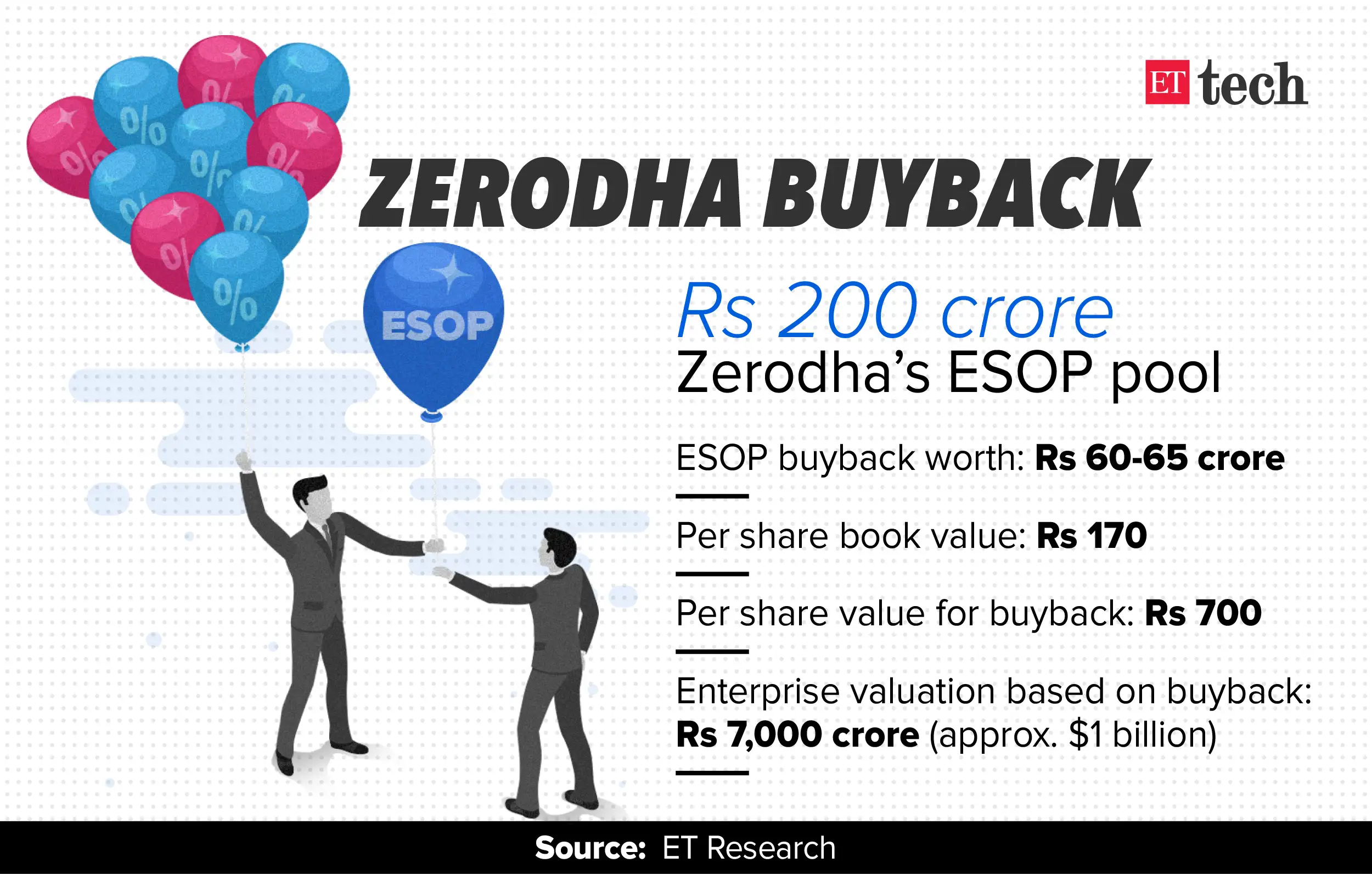
Another company famous for its regular buyback programs is Urban Company.

2. Someone Else Buys: Secondary Sales
What if the company doesn't have the cash for a buyback, but you still want to sell your shares? The other path to liquidity is a secondary sale.
In a secondary sale, you sell your shares not to the company, but to a third party—another investor, a private equity fund, or sometimes even other individuals.
- Simple Analogy: Let's go back to the IOU. In a secondary sale, the company isn't buying it back. Instead, you find another person who believes the IOU will be valuable later and is willing to pay you cash for it right now.
Secondary Share Sale: What Every Founder Should Know
The article 'Secondary Share Sale: What Every Founder Should Know' explains this concept well.
Please read the sections 'What Are Secondary Share Sales?' and 'Impact on Employees'. Focus on the key difference: the money comes from an external buyer, not the company's own cash reserves.
Secondary sales can be initiated in a few ways:
- An investor might approach the company and offer to buy shares from existing employees.
- The company might organize a "structured secondary" event, connecting employees who want to sell with investors who want to buy.
- In some cases, employees might find buyers on their own through specialized platforms (though this is more complex and always requires company approval).
Let's watch a short video that discusses this growing "pre-IPO" market where such transactions happen.
How ESOPs Are Creating India's New Millionaires
The video 'How ESOPs Are Creating India's New Millionaires' from Capitalmind touches on how employees can get liquidity before an IPO through secondary sales.
Please watch from 18:46 to 20:30. The speaker explains how an employee at a growing private company can sell their shares to an outside investor who wants to 'get a piece of this action' before the company lists publicly.
Real-World Case Studies in India
You specifically asked for real-world case studies, and secondary sales have been a massive part of the wealth creation story in India's startup scene.
Secondary Share Sale: What Every Founder Should Know
The same article on secondary sales provides excellent, recent examples from top Indian startups.
Please read the 'Case Study: Examples of Secondary Sales' section. This directly addresses your goal by showing how companies like Swiggy, Urban Company, and Zepto have used secondary sales to provide massive liquidity to their employees and founders.
These examples show that secondary sales are not just a theory; they are a frequent and significant source of wealth for startup employees in India today.
Buyback vs. Secondary Sale: A Quick Comparison
It's crucial to understand the difference between these two options. Both give you cash, but they work differently.
| Feature | ESOP Buyback | Secondary Sale |
|---|---|---|
| Who is the Buyer? | The company itself. | An external party (new or existing investor). |
| Source of Funds | The company's own cash. | The buyer's cash. |
| Who Initiates? | Almost always the company. | Can be initiated by the company, an investor, or an employee. |
| Impact on Ownership | The company consolidates ownership. The total number of shareholders may decrease. | A new investor joins the company's list of shareholders (cap table). |
The article you read on buybacks also has a great summary of this distinction.
ESOP Buybacks: A Complete Guide
For a final clarification, let's revisit the EquityList article which has a dedicated section comparing the two.
Read the section titled 'ESOP buyback vs secondary sales'. This will reinforce the key differences we just discussed.
Test your understanding!
Your friend works at a fast-growing startup called "QuickPay". She tells you about two liquidity events that happened at her company.
Event 1: Last year, QuickPay used the money from its latest funding round to offer to purchase up to 15% of vested shares from all employees who had been with the company for more than two years.
Event 2: This year, a large global investment fund, "Global Growth Investors," partnered with QuickPay to buy shares directly from early employees and founders in a special transaction.
Which event was an ESOP buyback, and which was a secondary sale?
Show answer
- Event 1 was an ESOP Buyback. The key clue is that QuickPay (the company) used its own funds to purchase shares from employees.
- Event 2 was a Secondary Sale. The key clue is that an external party ("Global Growth Investors") was the one buying the shares from the employees.
Conclusion
Key Takeaways
- You don't always have to wait for an IPO or M&A to get cash from your ESOPs.
- An ESOP Buyback is when your company uses its own money to buy your vested shares back from you.
- A Secondary Sale is when you sell your vested shares to an external party, like an investor or a fund.
- Both are becoming increasingly common in the Indian startup ecosystem, providing valuable, periodic liquidity to employees long before a final company exit.
Preview of the Next Lesson
Buybacks and secondary sales are fantastic opportunities, but they are not guaranteed. They only happen if a company is successful and chooses to offer them. This brings us to a very important point: the risk of ESOPs. In our next lesson, we will confront the other side of the coin and identify the primary risk of ESOPs: they can become worthless if the company fails to secure a liquidity event.