Welcome to the first lesson in our module on Pakistan's national security. In our previous module, we concluded by examining Pakistan's diplomatic role on the global stage, particularly within the United Nations. Today, we turn our focus inward to confront the complex and persistent internal security challenges that have shaped the country's modern history and continue to define its strategic landscape.
This lesson is designed to help you analyze Pakistan's internal security challenges, including religious extremism, sectarianism, and ethno-nationalist movements. This is a core topic in the CSS syllabus, frequently appearing in exam questions that demand a nuanced understanding of the origins, key actors, and dynamics of these multifaceted threats. We will dissect the ideological roots of religious militancy, the distinct grievances fueling ethno-nationalist insurgencies, and the state's often-troubled response to both.
The Anatomy of Internal Threats: A Dual Challenge
Pakistan's internal security landscape is not monolithic. It is defined by two fundamentally different, though sometimes overlapping, categories of violent non-state actors. As experts like former NACTA coordinator Ihsan Ghani emphasize, it is crucial to distinguish between:
- Religious/Ideological Militancy: Groups driven by a transnational religious ideology, aiming to overthrow the state system and impose their interpretation of Sharia.
- Ethno-Nationalist Insurgency: Movements rooted in localized political, economic, and cultural grievances, seeking greater autonomy or outright secession for a specific ethnic group.
Understanding this distinction is the first step toward a sophisticated analysis, as the motivations, strategies, and potential solutions for each are vastly different.
1. Religious Extremism and Sectarianism: The Ideological Scourge
The rise of religious extremism in Pakistan is not an accident of history but a consequence of specific policy choices and historical trajectories. To understand groups like the Tehreek-e-Taliban Pakistan (TTP), we must first trace the ideological currents that enabled their emergence.
A short documentary provides an excellent overview of how religion became intertwined with politics, how state policies fostered radicalism, and how this has manifested in society.
The Rise & Reign of Religious Extremism In Pakistan | Full Documentary
This documentary, "The Rise & Reign of Religious Extremism In Pakistan," traces the historical and legal roots of intolerance and militancy in the country.
Please watch the following segments to build a foundational understanding of this complex issue: Introduction: Watch the opening first minute to see a contemporary example of extremism. The Seeds of Division: From the beginning, understand how the politics of Partition created an unstable foundation where religion and political identity became linked. Zia's Islamization: Pay close attention to the section on General Zia-ul-Haq's regime from Zia's impact, which details the systematic Islamization of law and society. The Afghan Jihad and its Blowback: Watch from Jihad as foreign policy to see how the Soviet-Afghan War created a nexus of arms, funding, and radical ideology that would later turn inward. Legalizing Intolerance: Finally, see how extremism was codified into law through the blasphemy and anti-Ahmadi legislation, from legal extremism to the end of the segment.
The documentary highlights a critical process: the transformation of political Islam into a state-sponsored project, which then mutated into violent extremism that the state itself struggles to contain.
Key Actors: TTP, its Affiliates, and ISKP
The Lal Masjid siege in 2007 is often cited as a major catalyst for the formation of the Tehreek-e-Taliban Pakistan (TTP), which unified various militant factions under a single anti-state banner. The group's primary objective is to overthrow the Pakistani state and establish a Sharia-based government.
The Pakistan Institute for Conflict and Security Studies (PICSS) provides the most detailed and up-to-date public data on these groups. Their 2024 annual report offers a granular look at the operational capacity and activities of the key players in religious militancy.
[PDF] PICSS-Annual-Report-2024-Final.pdf
This report contains a comprehensive analysis of the major militant groups active in Pakistan, backed by statistical data from 2024.
Please navigate to the section titled "Most Active Militant Groups in 2024" (page 18 of the PDF). Read the detailed assessments for the following groups: Analysis of TTP’s Activities and Their Impact in 2024: Focus on its operational areas, internal divisions, and the state's counter-offensives. Hafiz Gul Bahadur Group: Understand its role in North Waziristan and its complex relationship with the TTP. Lashkar-e-Islam: Resurgence in 2024: Note its re-emergence and use of new technologies like quadcopters. Decline in Islamic State Activity in Pakistan in 2024: Read about the activities of both ISKP and ISPP, their geographical focus, and the reasons for their decline.
As the PICSS report shows, the TTP and its affiliates remain the most potent threat, concentrated in Khyber Pakhtunkhwa. Their resilience is partly due to safe havens in Afghanistan and their ability to adapt tactics. In contrast, the Islamic State Khorasan Province (ISKP) represents a rival ideological force, often competing with the TTP for recruits and influence, particularly in the border regions.
Societal Manifestation: Intolerance and Mob Violence
Beyond organized militancy, a more pervasive challenge is the rise of societal intolerance, often linked to accusations of blasphemy. This form of extremism, while less structured, is equally destructive to the social fabric.

The PICSS report also documents this disturbing trend.
[PDF] PICSS-Annual-Report-2024-Final.pdf
This section of the report details specific incidents of mob violence and extrajudicial killings related to blasphemy accusations in 2024.
Please find the section titled "State of Intolerance and Extremism in Pakistan During 2024" (page 39 of the PDF) and read it in its entirety. Note the incidents in Sargodha, Swat, and Quetta, and the report's analysis of institutional weaknesses.
These incidents reveal how extremist narratives have permeated society, leading to a breakdown of rule of law where mobs, and sometimes even law enforcement officials, engage in extrajudicial violence. This directly connects to the legal framework established during the Zia era, which you explored in the documentary.
2. Ethno-Nationalist Movements: A Question of Rights and Resources
Distinct from religious militancy, ethno-nationalist insurgencies are driven by grievances related to political marginalization, economic exploitation, and cultural suppression. The most prominent and violent of these is the insurgency in Balochistan.
In the following podcast clip, Ihsan Ghani, with his extensive background in intelligence and counter-terrorism, clearly articulates the difference between these movements and religious terrorism.
Understanding The Rise Of Terrorism In Pakistan Ft. Ihsan Ghani | EP259
This segment from the "How Does It Work Podcast" features an expert distinguishing between the motivations of terrorist groups and sub-nationalist movements.
Please watch the clip from the discussion on Balochistan. Focus on the speaker's argument that the root causes are political and socio-economic, and that the state's response determines the movement's trajectory. He argues that Pakistan has not yet fully understood the core problem in Balochistan.
Key Actors: BLA, BLF, and SRA
The Baloch insurgency is led by several groups, each with its own areas of influence and operational methods. They primarily target state security forces, government infrastructure, and economic projects like CPEC, which they view as a tool of exploitation.
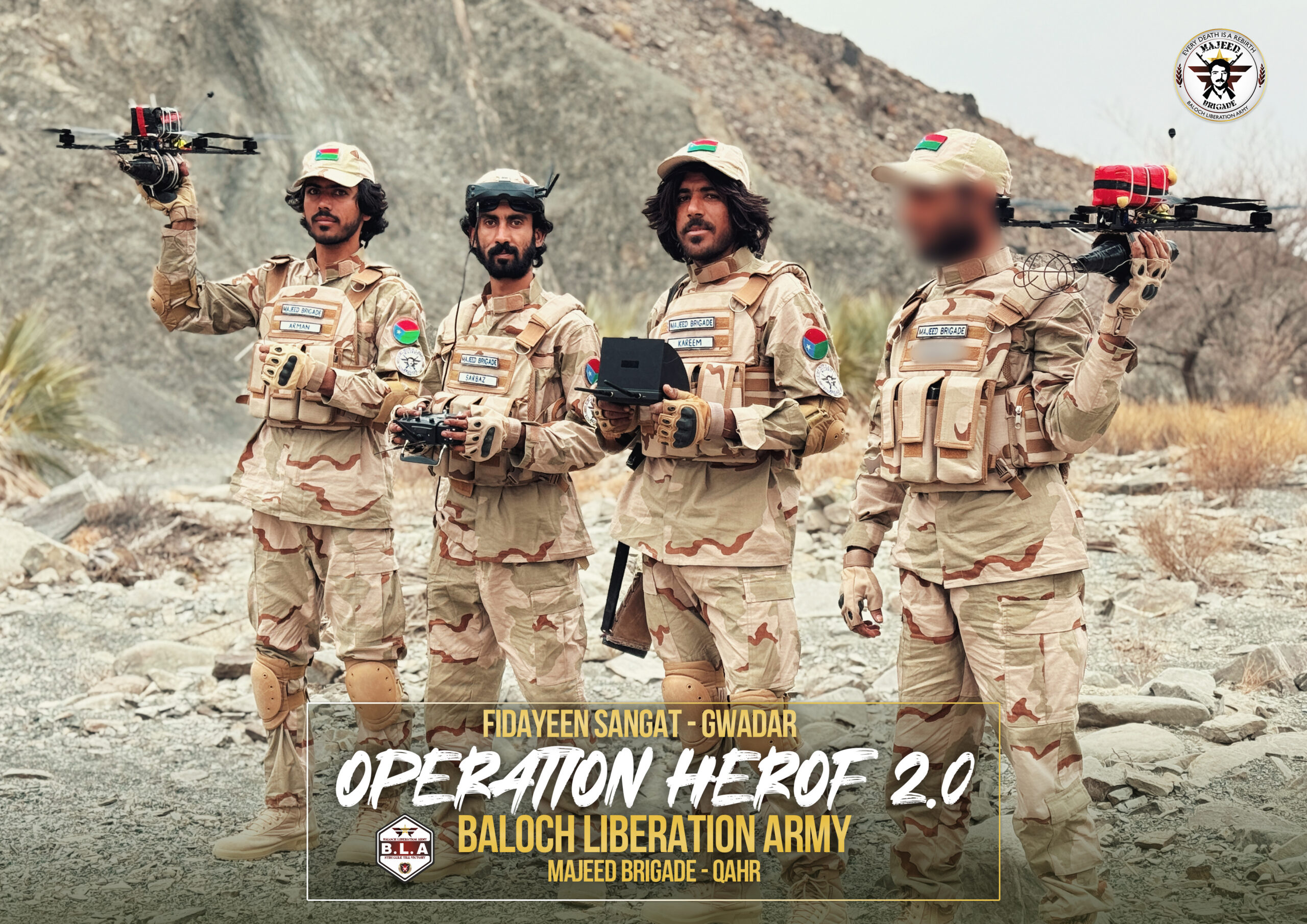
The PICSS report provides an excellent breakdown of these groups' activities in 2024.
[PDF] PICSS-Annual-Report-2024-Final.pdf
This report details the operational activities, targets, and strategies of the main ethno-nationalist groups.
Return to the section "Most Active Militant Groups in 2024" (starting on page 18 of the PDF). Now, read the subsections on: Annual Assessment of the Baloch Liberation Army (BLA) in 2024: Note its focus on high-profile attacks, CPEC-related targets, and the use of suicide bombing units like the Majeed Brigade. Baloch Liberation Front's (BLF) Activities in 2024: Focus on its geographical concentration in southern Balochistan. Resurgence of BRAS: Understand this umbrella organization that coordinates attacks between different Baloch groups. Assessment of Sindhudesh Revolutionary Army (SRA) Activities in 2024: Briefly review this to understand the smaller-scale Sindhi nationalist militancy and its anti-CPEC stance.
The data clearly shows that while the BLA is responsible for more sophisticated and high-casualty attacks, the BLF maintains a persistent, low-level presence across a wide area. Their targeting of Chinese nationals and CPEC projects is a deliberate strategy to internationalize their cause and increase the costs of these projects for the Pakistani state.
The State's Response: The "Hard State" Dilemma
How has the Pakistani state responded to these diverse threats? The dominant approach has been security-centric and kinetic, often described as a "hard state" model. However, critics argue this model fails to address the underlying grievances that fuel these movements, particularly ethno-nationalism.
This opinion piece from Dawn critiques Pakistan's reliance on a security-first approach and argues that it has exacerbated internal conflicts by neglecting democratic and political solutions.
Please read the entire article, from the introduction to the conclusion. Focus on the author's argument that a "hard state" approach, which prioritizes security over democratic imperatives, has failed to resolve the challenges in both KP and Balochistan and that the solution lies in federal democracy and justice.
This critique aligns with the expert opinion in the podcast (LINK), where Ihsan Ghani describes Pakistan's counter-terrorism policies as largely "reactive" and lacking a sustained, holistic strategy. Operations like Zarb-e-Azb and Radd-ul-Fasaad achieved short-term gains, but the militant groups have proven resilient, regrouping and adapting their strategies. For ethno-nationalist movements, a purely military response without a political settlement has only deepened the cycle of violence.
Conclusion
Pakistan's internal security is challenged by a complex web of threats with deep historical roots. A clear-eyed analysis, crucial for your CSS exam preparation, must differentiate between the ideologically-driven religious extremists and the politically-motivated ethno-nationalist insurgents.
Key Takeaways:
- A Duality of Threats: Pakistan faces two distinct internal security challenges: religious extremism (TTP, ISKP) aiming to impose a radical ideology, and ethno-nationalist insurgencies (BLA, BLF) demanding political and economic rights.
- Roots in Policy and History: Religious extremism is a direct blowback from historical state policies, particularly Zia-ul-Haq's Islamization and the strategic use of jihad during the Soviet-Afghan War. Ethno-nationalism stems from long-standing grievances of political and economic marginalization.
- Key Actors and Tactics: The TTP remains the most formidable religious militant group, concentrated in KP. The BLA has emerged as the most sophisticated ethno-nationalist group, conducting high-profile attacks in Balochistan, often targeting CPEC.
- The "Hard State" Conundrum: The state's response has been predominantly security-centric. While necessary to contain violence, this approach has often failed to address the root causes of the conflicts, leading to their persistence and evolution.
In our next lesson, we will shift our gaze to Pakistan's borders and analyze the external security challenges, including cross-border militancy and the evolving dynamics of hybrid warfare. You will see how these internal and external threats are deeply interconnected.