Welcome to the final lesson of our module on Pakistan's foreign policy. In our last discussion, we navigated the complexities of Pakistan's multilateral relationships with the OIC and the EU, contrasting a partnership of identity with one based on transactions and norms. Today, we ascend to the highest tier of global governance to examine Pakistan's engagement with the United Nations, the cornerstone of the post-war international system.
This lesson is designed to help you analyze Pakistan's role, diplomatic contributions, and key positions within the United Nations system. This is a crucial topic for your CSS preparation, as questions on Pakistan's role in the UN appear frequently, testing your ability to synthesize its diplomatic advocacy, on-the-ground contributions, and principled stances on global issues. We will explore how Pakistan leverages the UN to project its foreign policy, defend its national interests, and contribute to global peace and security.
Diplomatic Engagement at the Heart of the UN
For Pakistan, the United Nations is the primary arena for multilateral diplomacy. It provides a platform to engage with the global community, advocate for its core interests, and uphold the principles of the UN Charter. Pakistan's role is most visible in its active participation in the UN's principal organs, particularly the General Assembly (UNGA) and the Security Council (UNSC).
Having been elected as a non-permanent member of the UNSC for eight terms, Pakistan has had a front-row seat to global crises. Its recent tenure in 2025 provides a compelling case study of how it navigates the complex and often-paralyzed dynamics of the Council.
This 2025 report from Dawn provides an excellent analysis of Pakistan's performance during a particularly challenging year on the UN Security Council. It details how Pakistan responded to major international and regional crises.
Please read the article in its entirety, from the introduction to the conclusion titled "A year that defined the test". As you read, focus on three key aspects of Pakistan's diplomatic strategy: De-escalation in South Asia: Note how Pakistan utilized the UNSC's formal and informal mechanisms ("closed consultations," "backdoor diplomacy") to internationalize the May 2025 conflict with India and press for restraint. Principled Advocacy on Palestine: Observe the firm, legally-grounded language used by Pakistan's representatives to condemn the "genocidal onslaught" in Gaza and challenge the Council's inaction. Strengthening Multilateralism: Pay attention to Pakistan's successful effort to sponsor a resolution on peaceful dispute settlement during its UNSC presidency, showcasing a commitment to the UN's foundational principles.
The analysis in the Dawn article demonstrates several key facets of Pakistan's diplomatic role at the UN:
- A Voice for the UN Charter: In a world increasingly defined by power politics, Pakistan consistently anchors its arguments in international law, humanitarian principles, and the UN Charter. This was evident in its calls for accountability in Gaza and its promotion of dialogue and mediation.
- Champion of Core Foreign Policy Interests: The UN remains the most important international forum for Pakistan to raise the issues of Jammu and Kashmir and Palestine. By consistently keeping these issues on the agenda, Pakistan ensures they are not forgotten by the international community.
- Strategic Use of UN Platforms: Pakistan skillfully uses a variety of UN forums. When the Security Council is deadlocked due to veto power, Pakistan leverages the "bully pulpit" of the UN General Assembly, as seen in Prime Minister Shehbaz Sharif's address, to take its case directly to the world.

A Pillar of Global Peace: Pakistan's Role in UN Peacekeeping
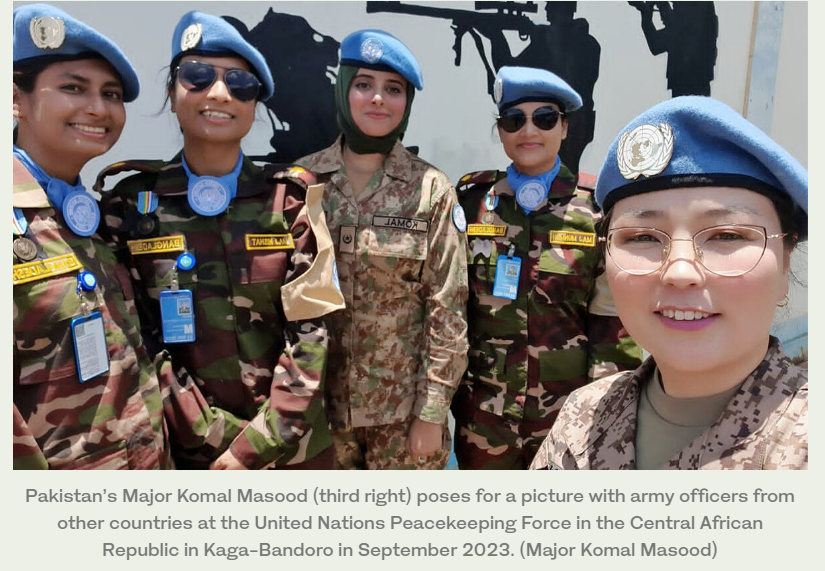
Beyond the diplomatic chambers of New York and Geneva, Pakistan's most tangible and widely respected contribution to the UN system is its role in peacekeeping. For over six decades, Pakistani soldiers, police, and civilians have served in some of the most dangerous and complex conflict zones around the world, earning a reputation for professionalism, courage, and discipline.
This contribution is not just a matter of numbers; it is a fundamental pillar of Pakistan's foreign policy, demonstrating its commitment to global peace and positioning it as a responsible and indispensable global stakeholder.
Pakistan’s Enduring Leadership In United Nations Peacekeeping Missions
This article from The Friday Times, published in March 2026, offers a comprehensive overview of Pakistan's historic and ongoing contributions to UN peacekeeping.
Please read the article from the beginning to the conclusion. Focus on understanding: The Scale of Contribution: Note the impressive statistics—over 235,000 personnel, 48 missions, and Pakistan's consistent ranking as a top troop-contributing country. Institutional Commitment: Pay attention to the establishment of the Centre for International Peace and Stability (CIPS) and other training initiatives, which show a long-term investment in enhancing the quality of its peacekeepers. Global Recognition: Absorb the high praise from figures like former UN Secretaries-General Ban Ki-moon and Antonio Guterres, which underscores the international goodwill generated by this role.
The key takeaways from Pakistan's peacekeeping contributions are manifold and crucial for a CSS-level analysis:
- Soft Power and Moral Authority: This role provides Pakistan with significant soft power and credibility within the international system. It allows Pakistan to engage on global security issues from a position of a contributor, not just a recipient of international attention.
- Commitment to Multilateralism: Peacekeeping is multilateralism in action. Pakistan's consistent participation underscores its faith in collective security and the UN system, even when it is critical of the political shortcomings of bodies like the UNSC.
- Inclusion and Professionalism: Pakistan's efforts to increase the participation of women peacekeepers and its investment in state-of-the-art training institutions like CIPS highlight a modern, professional approach that aligns with contemporary UN priorities.
Principled Diplomacy in Action: A Voice for De-escalation
Pakistan often leverages its diplomatic experience and relationships to play a constructive role in mediating and de-escalating regional conflicts, even those in which it is not a direct party. The UN provides the ideal platform to articulate these positions, which are typically grounded in calls for dialogue and adherence to international law. A recent example is Pakistan's response to rising tensions in the Middle East.
Pakistan’s Statement on the Strait of Hormuz, #un #unga April 16, 2026
Watch this statement delivered by Pakistan's representative to the UN in April 2026 regarding the escalating crisis around the Strait of Hormuz. It exemplifies how Pakistan uses the UN platform to advocate for regional stability and international law.
Please watch the full statement. Pay attention to how the representative frames Pakistan's position by focusing on three key themes: Advocacy for De-escalation: Notice the emphasis on a "return to dialogue for a peaceful diplomatic solution," including Pakistan's own role in hosting talks (Islamabad process). Upholding International Law: Listen for the call to ensure "swift and safe passage of civilian ships" and the focus on the global economic consequences of disrupting a vital shipping lane (Strait of Hormuz). Constructive Engagement: Observe how Pakistan positions itself as a facilitator of dialogue between major powers, reflecting a "principled, dialogue-oriented diplomacy" (constructive diplomatic engagement).
This statement serves as a clear illustration of Pakistan's diplomatic posture at the UN. Rather than taking sides in a zero-sum geopolitical contest, Pakistan advocates for a rules-based order, emphasizes the shared consequences of conflict, and offers its good offices to facilitate peaceful resolution. This constructive role is a key, if often understated, diplomatic contribution.
Conclusion
Your analysis of Pakistan's role in the UN should be multifaceted. It is a nation that simultaneously champions the UN's ideals while also highlighting its failures and double standards, particularly within the Security Council.
Key Takeaways:
- A Dual Role: Pakistan acts as both a vocal critic and a committed partner of the UN. It uses the UNGA and UNSC for powerful advocacy on issues like Kashmir and Palestine, while its armed forces serve as a backbone for UN Peacekeeping operations on the ground.
- Source of Soft Power: Pakistan's extensive and professional contributions to UN peacekeeping are its most significant source of international respect and soft power within the UN system.
- Proponent of a Rules-Based Order: Through its diplomatic statements and initiatives, Pakistan consistently positions itself as a defender of the UN Charter, an advocate for peaceful dispute resolution, and a constructive actor in regional de-escalation efforts.
Understanding this complex and dynamic relationship is essential to grasping the full spectrum of Pakistan's foreign policy.
In our next lesson, we will pivot from the external dimension of foreign policy to the internal one, beginning our module on national security. We will start by analyzing the complex internal security challenges that Pakistan has faced, including extremism, sectarianism, and ethno-nationalist movements.