Introduction
In our last lesson, you transformed your research into a tangible customer avatar, giving a face and a story to the ideal user for your potential digital product. This avatar currently represents a set of well-educated hypotheses about your audience's pain points and goals. Today, we will bridge the gap between hypothesis and evidence. This lesson will guide you through the process of validating your product idea by creating and distributing a customer survey. Your background in marketing and consumer studies provides a strong foundation for this, as we'll be applying research principles to gather actionable data directly from your target audience.
The objective is to design a short, effective survey that confirms whether the problems you identified are real, urgent, and worth solving. We will cover how to formulate questions that elicit honest insights, choose the right tools to build your survey, and select the most effective channels to distribute it. This step is crucial for de-risking your side hustle and ensuring you invest your time in building a product that people genuinely need.
From Hypothesis to Data: The Role of Validation Surveys
Before you invest weeks or months building an online course or a no-code app, you need proof that your idea resonates with real people. A validation survey is one of the most efficient ways to gather this proof. It's not about asking people if they like your idea; it's about confirming that the problem you aim to solve is significant enough that they would seek out a solution.
The article "How to Validate a Digital Product Idea" from Stan provides an excellent framework for this, emphasizing that the goal is to find real evidence before you create. We'll focus on their guidance for conducting audience research through surveys.
How to Validate a Digital Product Idea Before You Build It
This article explains how to conduct audience research to confirm your idea resonates beyond your own assumptions.
Please read the section "Validate With Audience Research". Pay close attention to the example questions under the "Conduct Quick Polls or Surveys" subsection. Notice how they are designed to uncover pain, urgency, and past behavior, rather than asking a simple, hypothetical question like "Would you buy this?"
As the article points out, strong validation comes from understanding the nuances of your audience's struggles. To do this effectively, you can employ a variety of question formats.

A good survey typically includes a mix of:
- Closed-ended questions (e.g., multiple-choice, rating scales) to gather quantitative data that is easy to analyze.
- Open-ended questions (e.g., text boxes) to collect qualitative insights—the "why" behind the numbers, expressed in your audience's own words.
Crafting Effective Survey Questions
The quality of your data depends entirely on the quality of your questions. A poorly worded question can lead to ambiguous or misleading answers. Your goal is to write questions that are clear, unbiased, and easy for your audience to answer truthfully.
The video "7 tips for good survey questions" from Elon University Poll is a concise and brilliant guide to the fundamentals of question design. It covers common mistakes and provides simple rules to follow.
7 tips for good survey questions
This short video provides a masterclass in avoiding common pitfalls when writing survey questions, ensuring your data is reliable.
Watch the entire video (7 tips). As you watch, consider one of the key pain points you identified for your customer avatar in the last lesson. How could you rephrase a question about that pain point to be more specific and to avoid social desirability bias?
The key takeaways from the video are crucial:
- Be Clear and Specific: Everyone should interpret the question the same way.
- Avoid "Double-Barreled" Questions: Ask one thing at a time.
- Minimize Bias: Be mindful of leading words or phrasing.
- Ensure Respondents Can Answer: Ask questions they have the knowledge to answer.
- Pre-test Your Questions: Always get feedback before a full launch.
Building and Distributing Your Survey
Once you have your questions drafted, you need to choose a tool to build the survey and a strategy to distribute it.
Building the Survey:
For a side hustle, simplicity and cost-effectiveness are key.
- Google Forms: A free, powerful, and easy-to-use tool that is perfect for this task.
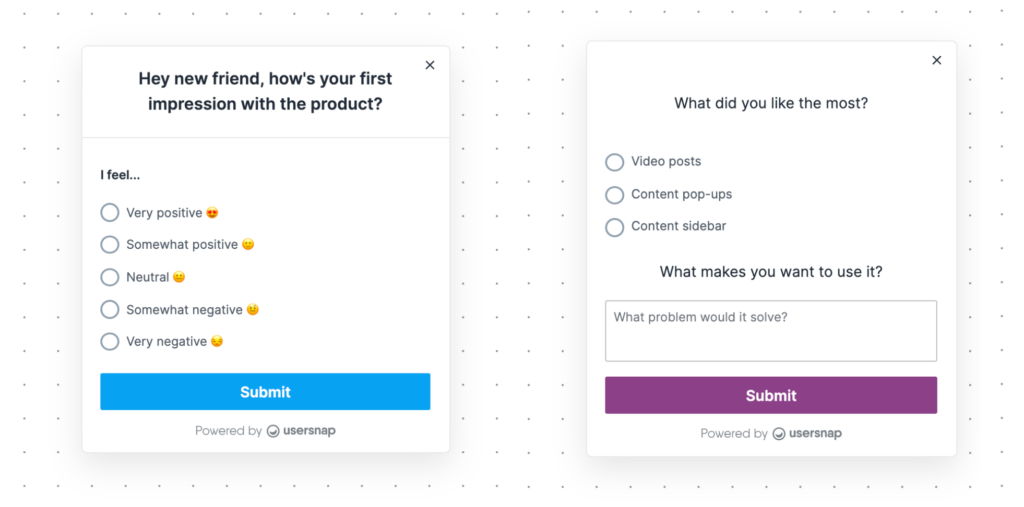
- Typeform: Offers a more conversational, visually appealing interface, which can sometimes improve response rates (has a free tier with limitations).
The goal is to create a clean, simple interface that is easy to navigate, especially on mobile devices.
Distributing the Survey:
This is where your digital marketing expertise is a significant advantage. The challenge is not just to get responses, but to get responses from people who match your customer avatar. The Formbricks article below provides a comprehensive overview of your options.
8 Essential Survey Distribution Methods for 2025 - Formbricks
This article from Formbricks provides a fantastic strategic overview of different ways to get your survey in front of the right people. Given your background, you will find the strategic breakdown of channels particularly useful.
First, briefly review the eight distribution methods to understand your options. Next, study the Comparison Matrix for a quick, high-level summary of the trade-offs. Finally, focus on the section "How to Choose the Right Survey Distribution Method". This provides a decision framework to help you select the best channels to reach your specific avatar.
For validating a new digital product idea, the most effective low-cost channels are often:
- Social Media: Posting in relevant Facebook Groups, LinkedIn Groups, or Subreddits where your avatar spends their time. This is a direct follow-up to the "detective work" you did in the last lesson.
- Email Distribution: If you have an existing email list, even a small one, this is a highly effective channel.
- Personal Outreach: Directly messaging a small, curated list of people on platforms like LinkedIn who fit your avatar profile.
Action Plan: Create and Launch Your Validation Survey (25-35 minutes)
Now it's time to put these concepts into practice. You will create and distribute a short survey to validate the core problem your product idea aims to solve.
-
Draft 5-7 Survey Questions:
- Refer back to the customer avatar you created.
- Write 3-4 closed-ended questions (multiple-choice, scale of 1-5) to gauge the frequency and severity of their pain points.
- Example (for a productivity app idea): "On a scale of 1-5, how challenging is it for you to manage project deadlines?"
- Write 1-2 open-ended questions to understand their current situation and desired outcomes.
- Example: "What tools or methods are you currently using to solve this problem? What do you like or dislike about them?"
- Include one question to screen for your target audience (e.g., asking about their profession or a key characteristic of your avatar).
- Review your questions against the "7 tips" from the video.
-
Build Your Survey:
- Use Google Forms to create your survey.
- Keep the design clean and simple. Include a brief introduction explaining the purpose (e.g., "This 2-minute survey is for a research project to better understand...") and the estimated time to complete.
-
Select Your Distribution Channels:
- Based on the Formbricks article and your avatar's profile, choose 2-3 distribution channels. Good starting points are the online communities (Reddit, Facebook Groups) you previously identified.
-
Launch Your Survey:
- Craft a short, polite message to accompany your survey link. Be transparent about who you are and what you're trying to learn.
- Post your survey. Your goal is to gather 15-20 quality responses. This is a sufficient number to spot initial patterns without needing a massive sample size.
This action plan provides the first real-world test of your idea. The feedback you receive will be invaluable.
Conclusion
In this lesson, you've learned how to translate the assumptions in your customer avatar into a structured survey designed to gather real-world data. By focusing on crafting clear, unbiased questions and selecting the right distribution channels, you are taking a critical step to validate your digital product idea. This process moves you from "I think people have this problem" to "I have evidence that people have this problem and are looking for a solution."
In our next lesson, we will move to the ultimate form of validation: testing purchase intent. You will learn how to set up a simple landing page with an email sign-up form. While a survey measures interest, getting someone to give you their email address in anticipation of a solution is a much stronger signal that you have a product worth building.