In our previous lesson, you conducted a competitive analysis to map out the existing landscape for your digital product idea. This gave you a crucial external view of the market. Today, we shift our focus inward, from the broad market to the specific individual you aim to serve. Building on your background in marketing and consumer studies, we will apply these concepts in a highly practical way.
This lesson is dedicated to creating a customer avatar—a detailed, semi-fictional profile of your ideal customer. The goal is to move beyond abstract demographics and build a tangible representation of a real person. We will place special emphasis on identifying their specific challenges and "pain points," as these are the very problems your online course or no-code app will be designed to solve. This avatar will become your north star, guiding every decision you make, from product features to marketing copy.
The Customer Avatar: Giving Your Audience a Face
A customer avatar, also known as a buyer persona, is a detailed profile of a single, ideal customer. While you are already familiar with this concept from your master's studies, our focus here is on creating a practical tool that directly informs the development of a digital product. Instead of a theoretical exercise, you will create a one-page document that brings this person to life.
A well-crafted avatar helps you:
- Develop Empathy: It forces you to think about your customer's daily life, motivations, and frustrations.
- Guide Product Development: Every feature in your app or module in your course should address a specific need of your avatar.
- Refine Marketing: It tells you what language to use, what benefits to highlight, and where to find your audience online.
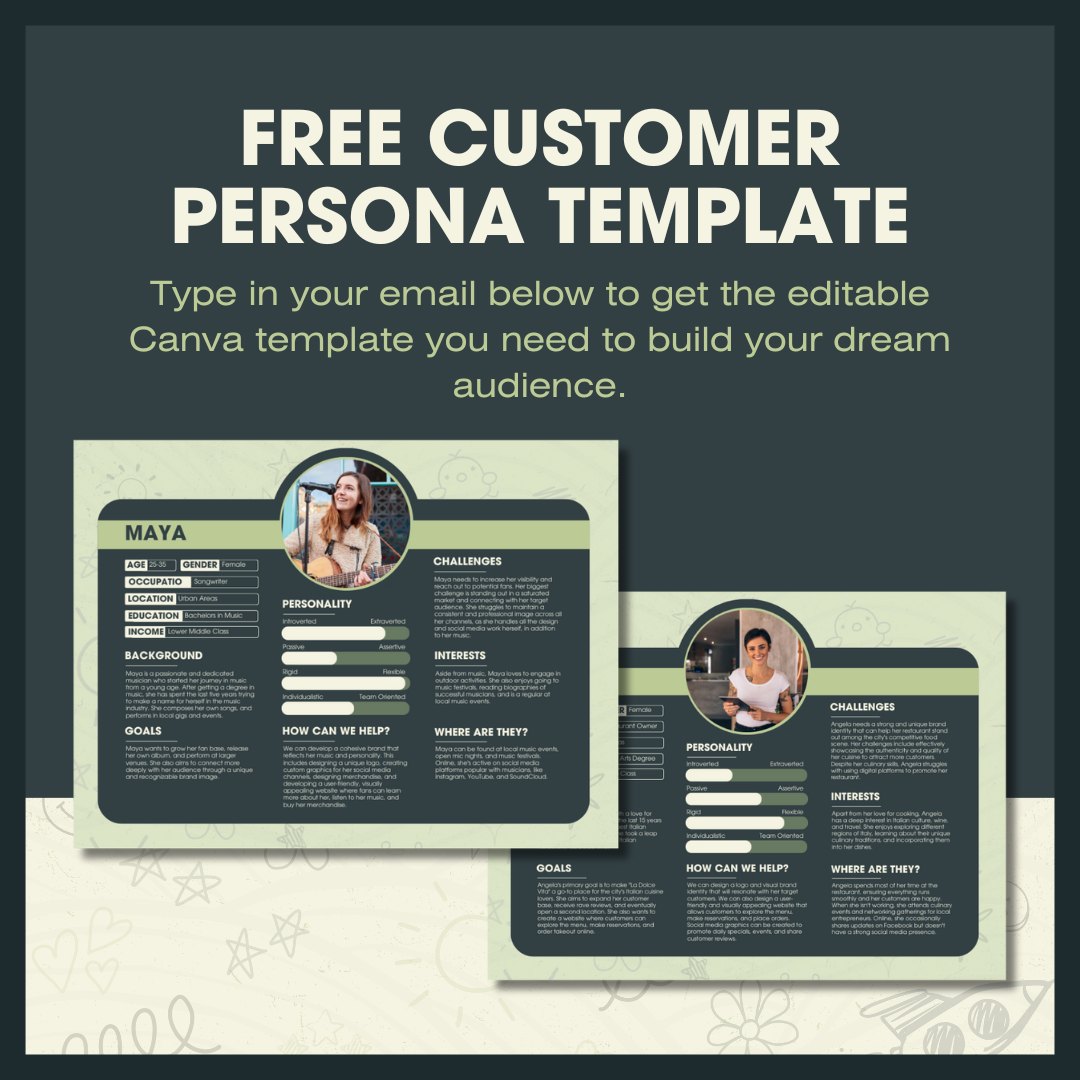
Here is an example of what a finished customer avatar can look like. It combines demographic data with goals, challenges, and personality traits to paint a complete picture.
The Core of the Avatar: Pain Points vs. Solutions
The most critical component of your avatar is a deep understanding of their problems. It's easy to confuse what customers say they want (a solution) with the underlying problem they are trying to solve (their pain point). Your role as a product creator is to be a detective and uncover the true source of their frustration.
This simple illustration makes the distinction clear:

For example, a potential customer for a no-code app might say, "I need an app to track my freelance projects." That's a solution. The underlying pain points could be:
- "I feel overwhelmed and disorganized, and I'm afraid I'll miss a deadline." (A productivity/process pain point)
- "I'm losing money because I forget to bill for all my hours." (A financial pain point)
To help you structure your thinking, the following article introduces four main types of customer pain points.
How To Build Personas Based On Pain Points
This article from M Accelerator explains why focusing on pain points is essential for creating effective personas.
Read the section from the start of the section. Pay close attention to the table that defines the four types of pain points: Financial, Process, Support, and Productivity. Think about how these categories could apply to the problems your own digital product might solve.
Finding Your Avatar's Pain Points and Goals
Now that you know what you're looking for, how do you find this information? You need to go where your potential customers gather and listen to their conversations. Your experience analyzing consumer values will be invaluable here.
The HubSpot Marketing video below offers a fantastic, practical guide to this "detective work," showing how to use online communities to uncover the exact language people use to describe their challenges.
How to Find Your Target Audience in 2025 6 Step Framework + Free Templates
This video provides a modern, hands-on approach to audience research.
Watch the segment on going into "detective mode" from this timestamp. The speaker explains how to use platforms like Reddit and Quora to find common questions, desires, and pain points. This is a powerful, no-cost way to gather authentic customer insights.
Assembling the Complete Avatar
Once you have a solid grasp of your customer's pain points and goals, you can build out the rest of their profile. A complete avatar typically includes demographics, motivations, and sources of information.
The following video from DigitalMarketer outlines a simple, 5-step process for creating a customer avatar. We'll use it to structure the creation of your document.
Create a Customer Avatar in 5 Steps | Marketing Mastery with Justin Rondeau
This video provides a clear, step-by-step framework for building your avatar.
Watch these key sections to understand the components of a complete avatar: Introduction: This section quickly sets the stage for why an avatar is crucial. Goals and Values: Step 1 will help you define what drives your customer. Sources of Information: Step 2 shows how to identify where your customer spends their time online, which is vital for marketing. Demographics: Step 3 covers the basic personal information that makes your avatar feel like a real person. Challenges & Pain Points: Step 4 reinforces the core focus of our lesson today.
Action Plan: Create Your Customer Avatar (35-45 minutes)
Now it's time to build your own customer avatar. For this task, you will create a one-page document based on the niche you chose in the previous lesson. The Lectera article below provides an excellent, comprehensive checklist to guide you.
Customer avatar - what is it, how to create, examples - Lectera
This article offers a detailed, step-by-step guide and a fantastic template for building your avatar.
First, read through the section "How to create a customer avatar". This provides a clear process. Next, use the checklist under "Customer avatar template" as the structure for your own document. This is your main guide for the action plan. Finally, review the concrete example of 'Stephanie Frisby' to see how all the pieces come together.
Follow these steps for your action plan:
- Start with Research: Spend 15-20 minutes doing the "detective work" described in the HubSpot video. Go to Reddit, Quora, or relevant Facebook groups for your niche. Look for recurring questions, frustrations, and goals.
- Draft Your Avatar: Open a document (Google Docs, Word, or even Canva, which you're familiar with). Use the comprehensive checklist from the Lectera article to structure your avatar.
- Give Them a Name and Face: Find a royalty-free stock photo to represent your avatar. Giving them a name and a face makes the profile much more tangible.
- Focus on Pain Points: In the "Problems and Pain Points" section, list at least 3-5 specific challenges. Try to categorize them as Financial, Process, Support, or Productivity pain points. Crucially, phrase these in your customer's own words (e.g., "I'm overwhelmed by..." instead of "Customer needs better organization").
- Complete the Profile: Fill out the other sections of the checklist (Demographics, Goals & Values, Sources of Information, etc.) based on your research.
Your final deliverable is a single-page document that you can refer back to throughout the rest of this course.
Conclusion
Congratulations! You have now created a detailed customer avatar, turning a vague target market into a relatable individual. By focusing intensely on their pain points, you've laid the groundwork for a product that doesn't just offer features, but provides real solutions to genuine problems. This document is the bridge between your product idea and the person who will ultimately pay for it.
In our next lesson, we will take the assumptions you've made in your avatar and put them to the test. You will learn how to validate your digital product idea by creating and distributing a customer survey, ensuring your product is built on a foundation of real data, not just intuition.