Hello! In our last lesson, we focused on the art of storytelling by looking at how to structure and tell a personal anecdote. This is a fantastic skill for sharing your experiences. Today, we'll explore the other, equally important, side of the conversation: being an excellent listener.
A great conversation is like a game of catch—one person throws the ball (shares a story or idea), and the other catches it and throws it back. Your goal for this lesson is to master the "catch and throw back" part. Specifically, you will learn how to ask natural follow-up questions to demonstrate active listening and keep a conversation going. This skill is essential for building rapport with your friends and is also a critical tool in professional settings, from networking events to client meetings.
Part 1: The Foundation of Good Conversation: Active Listening
Before we get into asking questions, let's talk about the mindset behind it: active listening. It’s the difference between simply hearing words and truly engaging with what the other person is saying. It involves showing, through both your words and actions, that you are present and interested. When you listen actively, the pressure to always have something interesting to say yourself is much lower, which can be a great way to manage speaking anxiety.
This infographic provides a great visual summary of the key strategies involved in active listening.
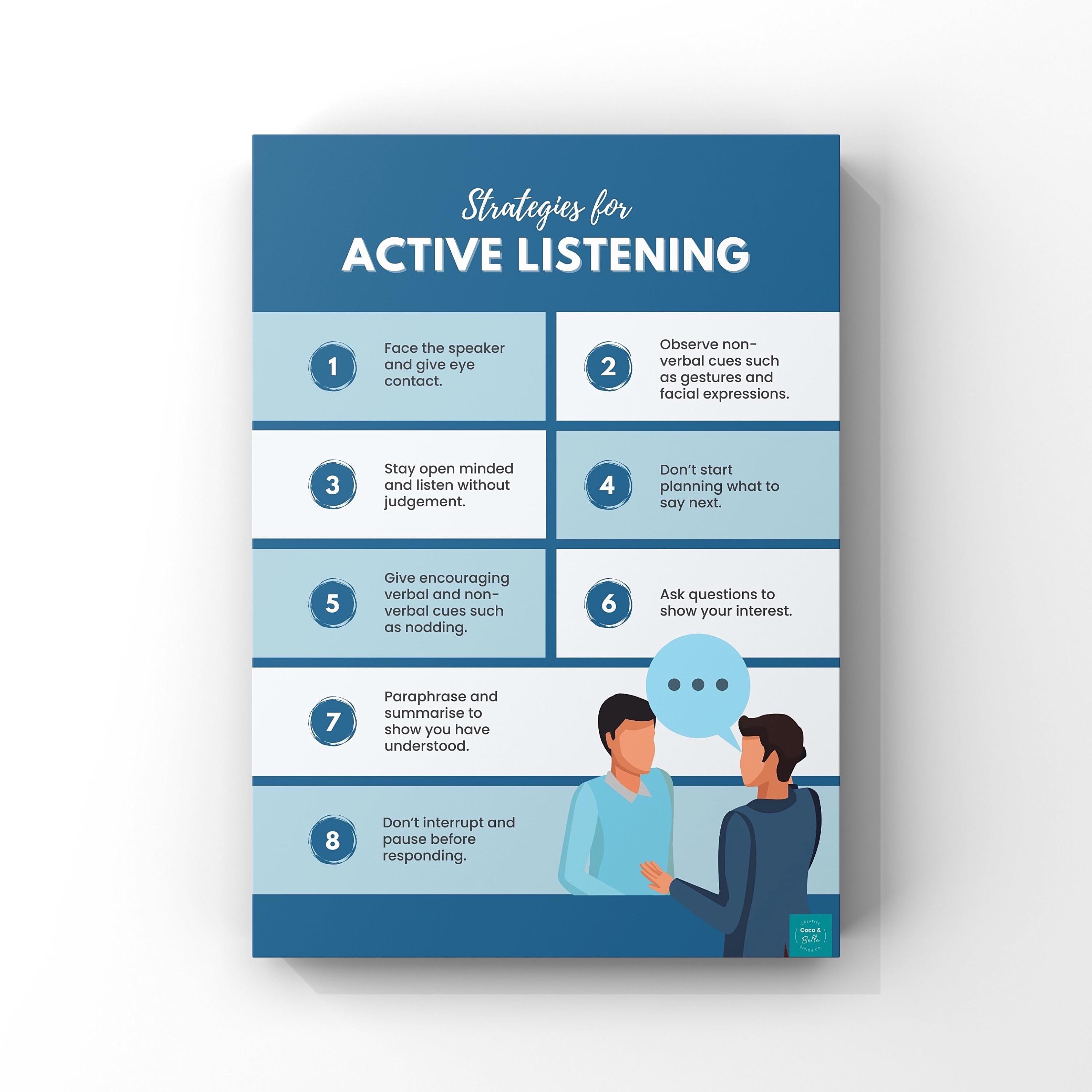
As you can see, asking questions isn't just about getting information; it's a fundamental way to show you care about the conversation.
Part 2: Your Toolkit for Keeping Conversations Going
So, how do you ask questions that keep a conversation flowing naturally? Let's build a toolkit of simple but powerful techniques. A fantastic video from the mmmEnglish channel breaks these down clearly. We'll watch it in parts to focus on each technique.
SMALL TALK | How to keep a conversation going in English
This video, "SMALL TALK | How to keep a conversation going in English," provides several practical techniques you can use immediately.
We will explore four key techniques from this video. Open vs. Closed Questions: This is the most important tool in your kit. Watch the section from the beginning of this segment to understand the power of "WH" words (Who, What, Where, When, Why, How). Open questions invite a detailed story, while closed questions often stop a conversation with a simple "yes" or "no". Question Tags and Echo Questions: These are brilliant, simple ways to show you're listening and encourage the other person to continue. First, watch the explanation of question tags (e.g., "...isn't it?", "...have we?"). Next, watch the segment on echo questions (e.g., "Is he?", "Did you?"). These are incredibly effective for showing surprise or interest with very little effort. Short Affirmations: Sometimes, you don't even need a full question. Simple words or phrases show you're engaged. Watch the part on using short affirmations like "I see," "Really?", and "Sure." Paraphrasing: This is a technique you may already be familiar with from your work in UX design. When you restate a user's feedback to confirm your understanding ("So, what I'm hearing is..."), you're paraphrasing. You can do the exact same thing in a conversation. Watch how this is explained from this section on paraphrasing.
To summarise, your main tools are:
- Open Questions: Use WH-words to ask for details.
- Echoes & Tags: Use short, reactive questions to show you're listening.
- Paraphrasing: Repeat what you heard to confirm understanding and prompt more detail.
Part 3: Turning Statements into Conversations
Let's look at how to apply these tools. A conversation often begins with a simple statement. Your job is to find the interesting part of that statement and ask a question about it.
Your guide to small talk topics, phrases and openers in ...
This article from the British Council provides a perfect, simple example of how follow-up questions work.
Please find the heading "Follow-up techniques" and read the short section. Pay close attention to the example provided. Notice how a simple statement, "I went hiking," can lead to two different types of follow-up questions: "Where did you go?" (An open WH- question asking for more detail) "Do you go hiking often?" (A question about habits or frequency) This shows there's no single "correct" question, but many ways to show interest.
Part 4: Seeing it in Action
Now that you know the techniques, let's observe them in a natural conversation. We'll listen to a dialogue between two new colleagues, Sarah and David. As you listen, try to identify the different types of follow-up questions they use to get to know each other.
Intermediate English Conversations! | Daily English Podcast for Learners!
This podcast-style video, "Intermediate English Conversations!", features a realistic dialogue that is perfect for analysis.
First, watch the conversation between Sarah and David, which starts at this timestamp. Don't worry about understanding every single word. Instead, focus on how they keep the conversation flowing. After you've watched it, listen to the hosts' analysis from this point. They highlight exactly how follow-up questions created a connection. For example, when David said his old job was stressful, Sarah didn't just say "Oh." She related it to her own experience and kept the conversation moving.
Part 5: Your Turn to Practice
Let's put your new toolkit to use. For each statement below, write down two or three different follow-up questions you could ask. Try to use a variety of techniques (open questions, echo questions, questions about feelings, etc.).
-
Your friend says: "I just got back from a trip to Italy."
- Example answers: "Italy? That's amazing! Where exactly did you go?" (WH- question) or "You went to Italy? Was it your first time?" (Echo question + Yes/No)
-
Your colleague says: "This new design software is really frustrating to use."
- Your questions:
- ...
- ...
-
A friend tells you: "I'm thinking about starting my own podcast."
- Your questions:
- ...
- ...
-
Someone in a meeting says: "Our user engagement on Instagram has dropped this month."
- Your questions:
- ...
- ...
Take a moment to write down your answers. Think about how your questions can invite the other person to tell a story, share an opinion, or explain a problem. This is how you build a real connection.
Conclusion
Today, we've shifted our focus from speaking to listening, and you've learned that being a good listener is an active, not passive, role. By asking thoughtful follow-up questions, you not only keep conversations alive but also show genuine interest, which makes people feel valued and understood.
Key Takeaways:
- Active listening is a skill: It involves showing you're engaged through techniques like asking questions and paraphrasing.
- Open questions are powerful: Use WH-words (Who, What, Where, Why, How) to invite detailed responses.
- Small reactions make a big difference: Echo questions, question tags, and short affirmations like "Really?" are simple ways to keep the momentum going.
- Every statement is an opportunity: Listen for key details in what someone says and use them as the basis for your next question.
In our next lesson, we will build on this by learning how to make and respond to suggestions and invitations in a friendly, social context. This will move us from keeping a conversation going to using conversation to make plans and build friendships.