Welcome back. In our last lesson, we engineered a weighted scoring model to systematically select the single "hero image" for our plunge bra campaign. By prioritizing "Narrative Surprise," we chose the image that best embodies the "Reclaimed Sensuality" brand strategy, giving us the powerful payoff for our story.
Today, we will build the narrative architecture that leads to that payoff. A powerful reveal is wasted without a masterful build-up. This lesson is about designing that build-up. We will plan a content release sequence—a teaser, a build-up, and a reveal—designed to maximize audience engagement and control the narrative.
This task draws directly on your expertise in Operations Research. You can think of a content campaign as a dynamic system. Our goal is to schedule the release of information packets (our content) over a fixed period to optimize a target variable: audience anticipation and engagement. We will move from the psychology of narrative structure to a concrete, operational timeline.
1. The Architecture of Anticipation
Before we schedule posts, we must understand why a sequence works. A single, isolated post might be seen, but a well-designed sequence is felt. It creates a narrative arc that pulls the audience along, transforming them from passive viewers into active participants in the story.
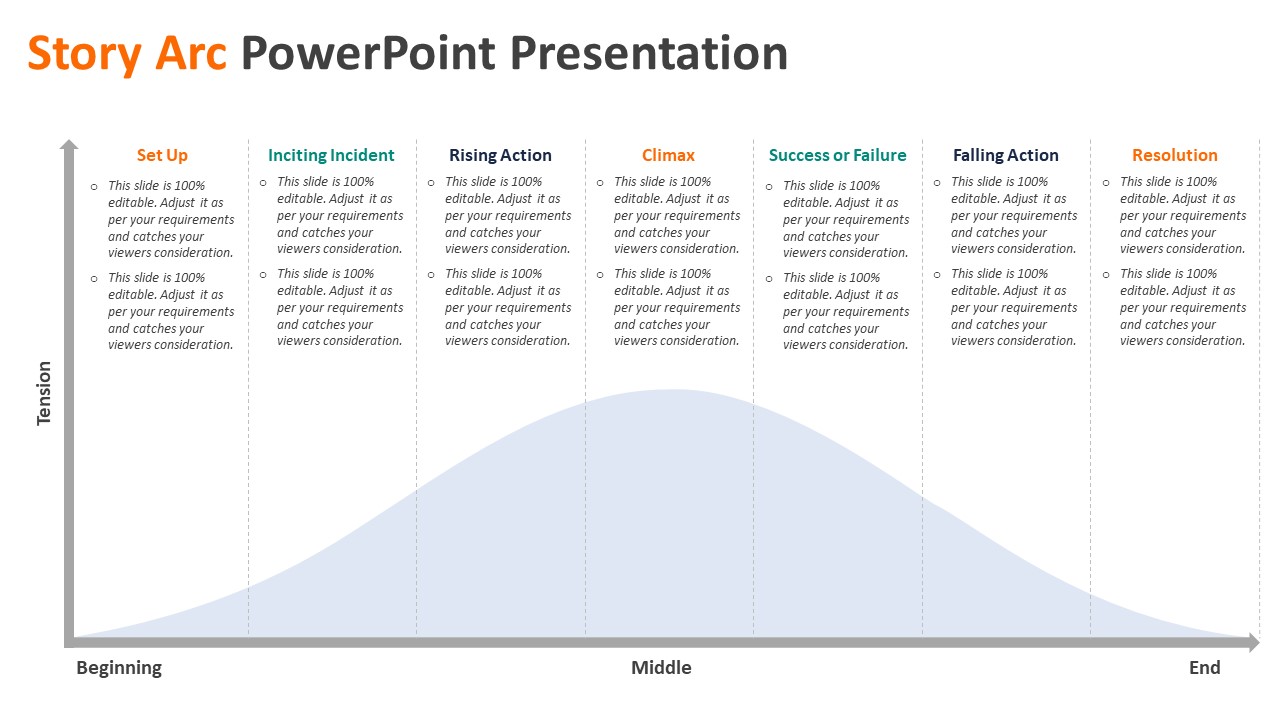
The effectiveness of this arc is rooted in psychology. By releasing information incrementally, we create two powerful effects:
- The Curiosity Gap: This is the tension between what someone knows and what they want to know. Our sequence will intentionally create this gap and then satisfyingly close it, which is inherently rewarding for the human brain.
- The Zeigarnik Effect: This principle states that people remember unfinished or interrupted tasks better than completed ones. A good teaser campaign opens a "loop" in the audience's mind, and they will crave the conclusion you promise to provide.
However, this is a delicate balance. If the gap is too wide or the loop is left open for too long, curiosity turns into frustration, and you lose trust.
Is Your Teaser a Hook… or Just a Delay Tactic?
This article from Zoomsphere powerfully explains the psychological tightrope of a teaser campaign. It contrasts effective "scarcity" with audience "starvation" and details the cognitive effects at play.
Read the first three sections: The Teaser Paradox, How the Brain Responds, and When Teasers Trigger Distrust. Pay close attention to the distinction between creating a "hook" and simply "testing patience."
As the article emphasizes, a poorly managed sequence doesn't just fail to build hype; it can actively damage the brand by creating unmet expectations. Our goal is to engineer a sequence that escalates, not inflates.
2. A Framework for Sequential Storytelling
To structure our campaign, we need a reliable framework. While there are many models for sequential storytelling, the Tease-Amplify-Echo model provides a clear, three-act structure that is perfect for our needs.
How to Create Sequential Storytelling Ads (With ...
This article from inBeat outlines several types of storytelling sequences and provides a step-by-step guide to planning them. We will adopt one of its core frameworks.
First, read the section Types of Storytelling Sequences, focusing on the Tease-Amplify-Echo model. Then, review the section Break the Story into Distinct Moments, which maps the story to the customer journey phases of Awareness, Consideration, Validation, and Action.
Let's adapt this framework for our photoshoot:
- Tease (Awareness): We create intrigue and establish the initial state of our transformation narrative—the "modest" persona. We hint that something is coming but withhold the details. The goal is to open the curiosity loop.
- Amplify (Consideration & Validation): This is the build-up. We deepen the story, introduce the core tension (e.g., the conflict between a reserved exterior and inner confidence), and provide "proof" in the form of behind-the-scenes content or narrative context. We might show cropped details of the product to raise the stakes.
- Echo (Action & Reveal): This is the climax and resolution. We reveal the hero image, closing the loop with maximum impact. Subsequent posts "echo" this reveal, reinforcing the brand message and driving the call to action (e.g., "Shop the Look").
This structure prevents us from simply dropping random images. Each piece of content has a specific job within the larger system.
3. Operational Plan: The 10-Day Launch Sequence
Now, let's translate this framework into a concrete, 10-day operational schedule. This timeline respects the "10–14 day rule" mentioned in the Zoomsphere article, which is the sweet spot for maintaining attention without causing fatigue.
To populate our schedule, we will use three types of content, as defined in the video "WHAT CONTENT TO POST BEFORE LAUNCH DAY":
- Hype Content: Cinematic, high-impact visuals that build excitement.
- Connection Content: Relatable stories that build an emotional bond.
- Solution Content: Content that frames the product as the answer to a problem or desire.
Here is the 10-day release sequence for the plunge bra campaign:
Phase 1: Tease (Days 1-3) — Establishing the "Before"
- Goal: Create a curiosity gap by establishing the model's "modest" persona.
- Day 1 (Hype): Post a beautifully shot, atmospheric image of the model in the full saree. The setting is traditional, the mood is contemplative. The caption is a question: "What happens when the story you're told meets the one you want to write?" No mention of lingerie.
- Day 3 (Connection): Post a short, silent video clip. It shows a close-up of the model's hands gracefully adjusting her saree, then cuts to a close-up of her face with a shy, thoughtful expression. Caption: "It starts with a feeling." This reinforces the "before" state and builds empathy.
Phase 2: Amplify / Build-Up (Days 4-9) — The Rising Tension
- Goal: Deepen the narrative of transformation and hint at the solution.
- Day 4 (Solution): A text-based graphic or carousel post. Headline: "Confidence isn't loud. Sometimes, it's the secret you wear just for you." This post discusses the psychology of lingerie as a tool for self-empowerment, framing the idea of the product without showing it.
- Day 6 (Hype/Connection): A behind-the-scenes photo. It shows the stark contrast between the traditional saree set and the minimalist, modern set for the bra shots. Caption: "Two worlds. One story. We can't wait to show you." This visually represents the coming transformation.
- Day 8 (Hype): A macro/detail shot. An extreme close-up of the plunge bra's lace texture or a unique strap detail. The image is cropped so the full product is unrecognizable. Caption: "The details make the difference. 2 days." This is a direct, high-intrigue micro-reveal.
Phase 3: Reveal & Echo (Day 10+) — The Payoff
- Goal: Deliver the climax and drive conversion.
- Day 10 - LAUNCH (Hype/Action): Post the hero image we selected in the last lesson. The caption connects all the threads: "From hidden to seen. The transformation is here. Discover the 'Empower' Plunge Bra. Link in bio."
- Day 11+ (Echo): Follow up with the other strong "power pose" shots. Post carousels showing the "before" (saree) and "after" (bra) side-by-side. Encourage user engagement by asking, "What's your source of hidden confidence?"
This sequence doesn't just show a product; it guides the audience through an emotional journey, making the final reveal a satisfying and memorable conclusion.
4. Measuring the Sequence's Success
Your background in statistics makes you uniquely equipped to appreciate that a plan is only as good as its measurable outcomes. We must evaluate whether our carefully engineered sequence actually worked.
Is Your Teaser a Hook… or Just a Delay Tactic?
Let's return to the Zoomsphere article, this time focusing on its final section, which is dedicated to metrics.
Read the final section, How to Know If Your Teaser Was Actually a Hook. This provides a clear set of metrics for diagnosing the success of our sequence.
Based on this, here are the key performance indicators (KPIs) you should track to evaluate the effectiveness of the 10-day sequence:
- Engagement Velocity: For each post, how quickly did you reach the first 100 likes and comments? A fast velocity on Day 1 indicates a strong initial hook.
- Save/Share Rate: This is a measure of perceived value. A high save rate on the "Solution" content (Day 4) or the "Hype" content (Day 8) suggests the audience finds it valuable and is anticipating the launch.
- Reply Quality: Analyze the comments. Are they low-effort emojis, or are they specific questions ("When is this dropping?", "What color is that?") that indicate genuine curiosity? High-quality replies are a strong signal of success.
- Reveal-Day Engagement Lift: Compare the engagement (likes, comments, shares) on the Day 10 reveal post to your typical baseline. A significant lift proves that the build-up sequence successfully generated anticipation.
By tracking these metrics, you can objectively assess the performance of your narrative strategy, turning a creative campaign into a measurable experiment.
Conclusion
In this lesson, you have designed a complete, end-to-end content release strategy. You've moved from the psychology of anticipation to a practical, day-by-day operational plan, complete with a framework for measuring its success.
Key Takeaways:
- Effective content release strategies are structured like a narrative arc, using curiosity gaps and the Zeigarnik effect to build and sustain audience attention.
- The Tease-Amplify-Echo model provides a robust three-act structure for sequencing content from awareness to action.
- A concrete 10-day operational plan, populated with a mix of Hype, Connection, and Solution content, provides an actionable roadmap for execution.
- Success is not subjective; it can be measured through quantitative metrics like engagement velocity, save/share rates, and reveal-day lift.
You have now planned the narrative and the promotional rhythm of your campaign. In our next lesson, we will broaden our analytical lens. We will move beyond engagement metrics to define the overall quantitative success metrics for the campaign, such as brand recall and conversion goals, to fully evaluate your optimization efforts.