Welcome back. In our last lesson, we defined two distinct brand strategies—"Reclaimed Sensuality" and "Integrated Identity"—and mapped our saree-to-bra photoshoot concept to each one using a creative playbook. We now have a clear strategic direction for the campaign's message and visual world.
Today, we transition from strategic planning to decisive action. A photoshoot yields hundreds of images, but only one can be the "hero"—the primary image that greets the audience and carries the weight of the entire campaign. Your task is to choose that single image not by intuition, but through a systematic process.
This lesson directly addresses your expertise in Operations Research and efficiency. We will design hero image selection criteria using a prioritization framework that balances product clarity, figure impact, and narrative surprise. You will construct a quantitative tool, a weighted scoring model, to make an objective, data-informed creative decision that aligns perfectly with our strategic goals.
1. The Hero Image and the Logic of Prioritization
Before building our model, let's clarify the role of a hero image. In e-commerce, it's the first, most dominant visual a customer sees. It's responsible for the critical first impression that determines whether they engage further or leave.
Role of Hero Images in Product Page Conversion
This article from StylePhotos provides an excellent overview of the strategic importance of hero images and the elements that make them effective.
Please read the introduction, then the sections What Is a Hero Image, The Psychology Behind Hero Images, and What Makes a High-Converting Hero Image?. Focus on how visual clarity builds trust and the technical components of a successful image.
As the article highlights, a hero image must communicate value in an instant. Given the multiple, sometimes competing, goals of our photoshoot—showcasing the product, highlighting the model's physique, and telling a story—selecting the single best image is a classic multi-criteria decision problem. This is where prioritization frameworks become invaluable.
To situate our approach, it's useful to be aware of several common frameworks used in product management.
PRIORITIZATION FRAMEWORKS for your product | Make better decisions as a product manager?
This video from the "Inside The Product" channel gives a concise overview of several popular prioritization models. We'll focus on one in particular, but understanding the landscape is useful.
Please watch the segment on the Value vs. Effort framework. This simple 2x2 matrix is a foundational concept in prioritization. Then, watch the concluding thoughts on adapting frameworks, which aligns with our goal of creating a custom tool for our specific needs.
While Value vs. Effort is a powerful high-level tool, our task requires more granularity. We need to balance several specific criteria simultaneously. For this, the Weighted Scoring Model is the ideal tool. It allows us to translate our strategic priorities into a quantitative, transparent, and repeatable decision-making process.
2. Constructing Your Hero Image Scoring Model
A weighted scoring model is a systematic method for evaluating options against a set of criteria, where each criterion is assigned a weight based on its strategic importance. Your background in decision theory will make this process feel very familiar. We will follow the core implementation steps.
Weighted Scoring Model: Step-by-Step Implementation ...
This guide from Product School provides a clear, step-by-step process for building and using a weighted scoring model. We will adapt this methodology for our creative selection process.
Please read the section titled Steps to Implement a Weighted Scoring Model. Focus on understanding the logic behind each of the six steps, as we will be executing them directly.
Now, let's build our model specifically for the plunge bra photoshoot.
Step 1: Define the Criteria
Our criteria are derived directly from the project's causal drivers and commercial goals. I propose the following four:
- Product Clarity: How clearly and appealingly is the plunge bra itself presented? This criterion measures how well the image functions as a sales tool for the product. It assesses the visibility of texture, cut, fit, and key design features. A high score here reduces purchase anxiety and builds trust.
- Figure Impact: How effectively does the image showcase the model’s physique, specifically her "busty, toned figure"? This connects directly to one of the two core causal mechanisms of success we identified. It evaluates the power of the pose, the flattering nature of the lighting, and the camera angle.
- Narrative Surprise: How powerfully does the image convey the "persona subversion" narrative? This addresses the second causal mechanism. It assesses the model's expression, the emotional energy of the shot, and its ability to signal a dramatic transformation from the "modest" starting point. Techniques like creating "tension" or "clashing" aesthetics, as discussed in the Creative Director 101 video, can contribute to this score.
- Technical Excellence: This is a foundational, non-negotiable criterion. Is the image technically flawless? It assesses sharpness, resolution (for zooming), mobile-friendliness (vertical composition), and professional lighting. An image must score highly here to even be considered.
Step 2: Assign Weights
This is where strategy dictates the outcome. The weights must sum to 100% and will differ based on the brand messaging we choose to prioritize.
Let's assume we are proceeding with the "Reclaimed Sensuality" strategy from the previous lesson. This strategy emphasizes rebellion, boldness, and unapologetic self-expression. Therefore, the narrative and emotional impact are paramount.
A possible weight distribution for this strategy could be:
- Narrative Surprise: 40%
- Figure Impact: 30%
- Product Clarity: 20%
- Technical Excellence: 10% (Lower weight because it acts more as a "pass/fail" gate; if an image isn't technically excellent, it shouldn't be scored at all. The weight here is a final quality check).
Self-Correction: If we were using the "Integrated Identity" strategy, which values quiet confidence and authenticity, we might shift the weights to prioritize Product Clarity (40%) and a more subtle Figure Impact (30%), with Narrative Surprise (20%) being less critical.
Step 3: Score Each Option
We'll use a simple 1-to-5 scale, where 1 is poor and 5 is excellent. It is crucial to define what each score means for each criterion to ensure consistency. For example, for Narrative Surprise:
- 5: A "tipping point" image. The emotional shift is palpable and dramatic.
- 3: A confident, bold expression, but less of a story in a single frame.
- 1: A neutral or standard modeling pose with little emotional content.
3. Application: Scoring the Candidate Images
Let's put the model to work. Imagine we have shortlisted three potential hero images from the photoshoot.
- Candidate A: "The Product Shot" - A clean, well-lit studio shot. The model is posed to perfectly showcase the bra's lace detail and underwire construction. Her expression is neutral and professional.
- Candidate B: "The Reveal" - A dynamic shot capturing the moment of transformation. The model has a defiant, knowing smile. The lighting is dramatic. The bra is slightly less in focus than the model's face, but still clear.
- Candidate C: "The Power Pose" - A full-body shot emphasizing the model's physique. The pose is strong and confident, similar to the image below. The bra is clearly visible and looks great on the body, but fine details are less apparent than in Candidate A.
Now, we score them using our "Reclaimed Sensuality" weights:
| Criterion (Weight) | Candidate A Score | Candidate B Score | Candidate C Score |
|---|---|---|---|
| Product Clarity (20%) | 5 | 3 | 4 |
| Figure Impact (30%) | 3 | 4 | 5 |
| Narrative Surprise (40%) | 1 | 5 | 3 |
| Technical Excellence (10%) | 5 | 4 | 5 |
Finally, we calculate the weighted scores:
- Candidate A: (5 * 0.2) + (3 * 0.3) + (1 * 0.4) + (5 * 0.1) = 1.0 + 0.9 + 0.4 + 0.5 = 2.8
- Candidate B: (3 * 0.2) + (4 * 0.3) + (5 * 0.4) + (4 * 0.1) = 0.6 + 1.2 + 2.0 + 0.4 = 4.2
- Candidate C: (4 * 0.2) + (5 * 0.3) + (3 * 0.4) + (5 * 0.1) = 0.8 + 1.5 + 1.2 + 0.5 = 4.0
The structure of this analysis is similar to the weighted selection models used in project management, just with different criteria.
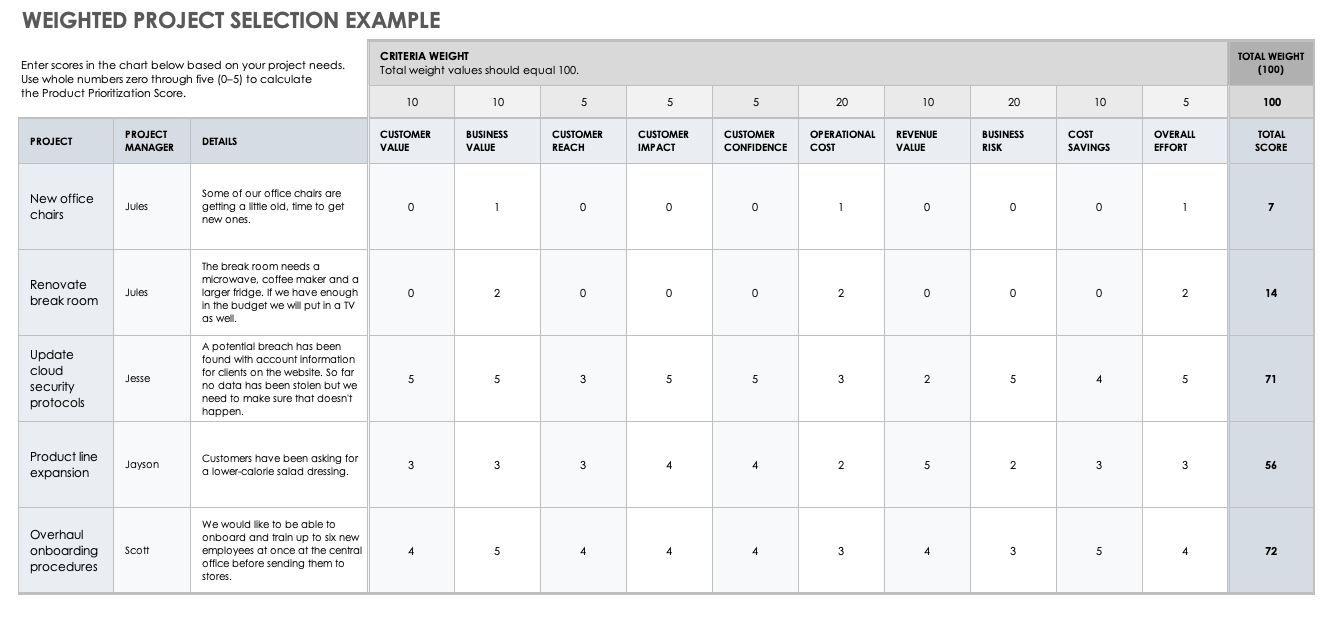
Analysis:
Based on our model, Candidate B ("The Reveal") is the optimal choice for a hero image. Although Candidate C scored highest on "Figure Impact" and Candidate A was perfect on "Product Clarity," Candidate B's exceptional score in "Narrative Surprise"—our most heavily weighted criterion for this strategy—makes it the winner. The framework successfully balanced the competing objectives and produced a decision directly aligned with our brand message.
Conclusion
In this lesson, you applied your analytical skills to a creative challenge, designing a robust system for a high-stakes decision. You have moved beyond simply understanding the causes of success to engineering a process that selects for it.
Key Takeaways:
- A hero image is the most critical visual asset on a product page, responsible for the first impression.
- A Weighted Scoring Model is an effective prioritization framework for making complex creative decisions by translating strategic goals into quantitative measures.
- The selection criteria—Product Clarity, Figure Impact, Narrative Surprise, and Technical Excellence—are derived directly from the project's causal mechanisms and commercial requirements.
- Adjusting the weights of the criteria allows the model to align with different brand strategies (e.g., "Reclaimed Sensuality" vs. "Integrated Identity").
You have now selected the centerpiece of your campaign. The next logical step is to build the promotional sequence around it. In our next lesson, we will focus on this outcome: Plan a content release sequence (teaser, build-up, reveal) to maximize audience engagement and control the narrative.