Introduction
Hello! In our last lesson, we learned how to make polite requests using the versatile phrase ... を おねがいします (...o onegaishimasu). You're now equipped to ask for items, services, and even the bill at a restaurant.
But what happens when someone asks you a question? Today, we'll cover the other side of that conversation: answering simple yes/no questions. This lesson focuses on two of the most fundamental words in any language: はい (hai) for "yes" and いいえ (iie) for "no".
However, it's not quite as simple as a direct translation. The Japanese usage of hai and iie follows a different logic than English "yes" and "no," especially with negative questions. By the end of this lesson, you will not only know the words but also understand the crucial cultural and logical context to answer questions correctly and avoid common mix-ups.
The Basics: Hai and Iie
At their most basic level, はい (hai) means "yes" and いいえ (iie) means "no". Let's start with a clear visual of these essential words.
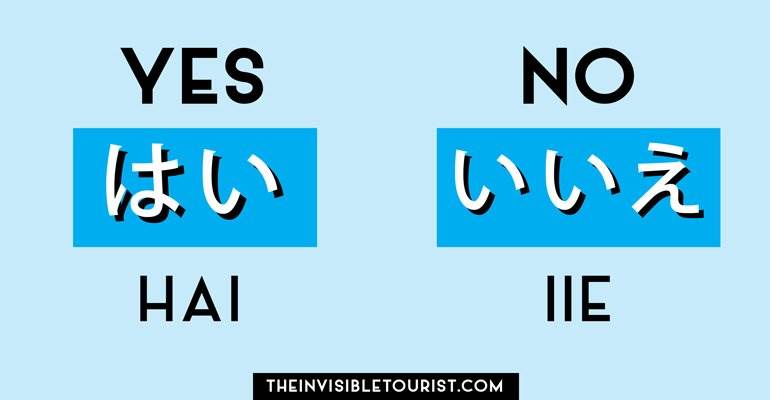
For simple, positive questions, they work just as you'd expect. For example, if someone asks you a question using the A wa B desu ka? pattern we've seen before:
- Question: これはペンですか。 (Kore wa pen desu ka?) - "Is this a pen?"
- If it is a pen, you answer: はい、そうです。 (Hai, sou desu.) - "Yes, that's right."
- If it's not a pen, you answer: いいえ、ちがいます。 (Iie, chigaimasu.) - "No, that's wrong."
そうです (sou desu) and ちがいます (chigaimasu) are very common and useful phrases to add after hai or iie.
The Core Concept: Agreeing with the Statement
This is the most important—and initially, most confusing—part of using hai and iie. In English, "yes" and "no" affirm or deny the reality of a situation. In Japanese, hai and iie agree or disagree with the statement made in the question.
Given your background in IT, you can think of it like evaluating a logical expression. Hai means "The statement you just made is TRUE." Iie means "The statement you just made is FALSE."
This difference becomes critical when answering negative questions.
Let's break it down:
-
Positive Question: "Is this a pen?" (Assertion: "This is a pen.")
- If it's a pen, the assertion is TRUE. You say: はい (Hai).
- If it's not a pen, the assertion is FALSE. You say: いいえ (Iie).
- (This matches English.)
-
Negative Question: "This isn't a pen, is it?" (Assertion: "This is not a pen.")
- If it's not a pen, the assertion is TRUE. You say: はい (Hai). (Literal meaning: "Yes, you are correct, it is not a pen.")
- If it is a pen, the assertion is FALSE. You say: いいえ (Iie). (Literal meaning: "No, you are incorrect, it is a pen.")
This is the opposite of English intuition. To explore this crucial concept further, please read the following short article.
The Many Meanings of “Hai”(Yes) - Bondlingo
The article 'The Many Meanings of Hai' from Bondlingo does an excellent job explaining how hai is used to confirm a statement, even if it's a negative one.
Please read the sections 'Hai(はい) Means “Yes”' and 'Hai(はい) Means “No”'. Focus on the example of the negative question, 'Ashita konai no?' (Aren’t you coming tomorrow?). This is the key to understanding the logic.
Cultural Nuance: Acknowledgment vs. Agreement
In Japan, communication prioritizes harmony. As a result, direct disagreement is often avoided. The word hai is frequently used not to mean "Yes, I agree," but rather "Yes, I hear you and understand what you're saying."
Likewise, a direct iie can sound blunt or confrontational. It's often softened with other phrases. For a traveler, one of the most useful ways to politely decline something is:
いいえ、けっこうです。 (Iie, kekkou desu.) - "No, thank you." / "No, I'm fine."
This phrase is perfect for when a shop clerk offers you a bag, or a waiter offers you more water.
The following resource provides more context on this cultural aspect.
15 Essential Japanese Phrases for Tourists - AA Japan Tours
The article '15 Essential Japanese Phrases for Tourists' provides some excellent cultural insights into how hai and iie are used in daily interactions.
Please read section 10, titled 'Hai (はい) – Yes / Iie (いいえ) – No'. Pay attention to the 'Cultural Insight' portion, which explains that hai can be for acknowledgment and that iie can be blunt.
Practice Scenarios for Your Trip
Let's apply this to situations you'll likely encounter.
Scenario 1: At a convenience store
The cashier holds up a plastic bag and asks:
袋はいりますか。 (Fukuro wa irimasu ka?) - "Do you need a bag?"
-
To say yes, you would answer:
はい、おねがいします。 (Hai, onegaishimasu.) - "Yes, please."
-
To say no, you would use the polite refusal:
いいえ、けっこうです。 (Iie, kekkou desu.) - "No, I'm fine."
Scenario 2: Someone thinks you don't understand
You're looking confused at a train map. A helpful local approaches and asks a negative question:
日本語は分かりませんね。 (Nihongo wa wakarimasen ne?) - "You don't understand Japanese, right?"
(The statement is: "You don't understand Japanese.")
Since their statement is TRUE (you don't understand), you agree with it by saying:
はい、分かりません。 (Hai, wakarimasen.) - "Yes, that's correct, I don't understand."
This is a perfect example where "Hai" translates to "Yes" but confirms a negative idea. Responding with Iie here would mean, "No, that's incorrect, I do understand Japanese."
Conclusion
Great work on tackling a simple but tricky topic! Understanding how to use hai and iie correctly is a significant step toward smoother communication in Japan.
Key Takeaways:
- The basic words are はい (hai) for "yes" and いいえ (iie) for "no".
- Crucially,
haiandiieagree or disagree with the statement made in a question, not the underlying reality. - In response to a negative question like "You don't have X?", answering
haimeans "Yes, you are correct, I don't have X." haiis often used simply to acknowledge you are listening ("I hear you").- To politely refuse something,
いいえ、けっこうです(iie, kekkou desu) is often better than a bluntiie.
Preview of the next lesson:
That last practice scenario leads us perfectly into our next topic. What do you do when you've confirmed you don't understand? In the next lesson, we will officially learn the phrase 分かりません (wakarimasen) - "I don't understand" - and the essential follow-up question, 英語を話せますか (eigo o hanasemasu ka?) - "Do you speak English?".