Introduction
Hello! In our last lesson, we walked through the process of buying a train ticket from a vending machine, a crucial step for getting around in Japan. You learned how to find your fare on the overhead map and use the machine to get your ticket.
Now that you have your ticket, the next logical challenge is finding the correct train. Large stations can have dozens of platforms and multiple train lines, so knowing how to ask for help is essential. This lesson will equip you with the key "plug-and-play" phrases you need to ask which train line or platform to use for your destination.
By the end of this lesson, you will be able to confidently ask a station employee or a fellow commuter for the correct line and platform, and confirm you're boarding the right train.
1. Key Vocabulary for Train Platforms
Before we jump into the full phrases, let's learn three essential pieces of vocabulary you will see on signs and hear in responses. Mastering these will make navigating stations much easier.
- 線 (sen): This means "line" as in a train line. You'll see this attached to line names, for example, 山手線 (Yamanote-sen), the famous loop line in Tokyo.
- 番線 (bansen): This means "platform number". The question "which platform?" uses this word, and signs will show a number followed by 番線 (e.g.,
3番線for Platform 3). - 行き (iki / yuki): This means "bound for" or "going to". This is one of the most useful kanji for a traveler. You will see it on signs and digital displays next to a destination name, like
新宿行き(Shinjuku-iki), meaning "Bound for Shinjuku".
Keep these three words in mind as we build our questions.
2. Asking for the Right Train or Line
You're in the station, you have your ticket to your destination (let's say, Shibuya), but you don't know where to go. You can ask a station attendant for help in a couple of ways.
The "Which Train?" Question
The most direct question is simply "Which is the train for [destination]?" This is a great all-purpose phrase.
Navigating Japan by Speaking the Language
The following resource provides a straightforward phrase for asking which train to take. We will focus on one key question from its table.
In the table under the 'Getting Help' section, find the third phrase: '[destination]行きの電車はどれですか?'. This is the phrase we'll focus on.
The phrase is:
[Destination] 行き の 電車 は どれ ですか?
[Destination]-iki no densha wa dore desu ka?
Which is the train for [Destination]?
You simply plug your destination into the start of the sentence. For example:
- 渋谷行きの電車はどれですか? (Shibuya-iki no densha wa dore desu ka?)
The "Which Line?" Question
Alternatively, you might want to know which specific train line to take. This is especially useful in major cities with multiple intersecting lines.
The Top 10 Survival Japanese Phrases When ... - Chatty Sensei
This next resource offers another essential question for finding your way. It focuses on asking for the train line.
Please read phrase #4 in the list: 'Which line should I take?' and the more specific version below it.
The phrase is:
どの 線 に 乗れば いい ですか?
Dono sen ni noreba ii desu ka?
Which line should I take?
This is a fixed phrase. The ...ni noreba ii desu ka? part can be thought of as a set pattern for "which ... should I board/take?".
3. Asking for the Platform Number
Once you know the line (e.g., the Yamanote Line), your next query is for the platform number.
The Top 10 Survival Japanese Phrases When ... - Chatty Sensei
The same resource provides the perfect, concise phrase for asking for the platform number.
Please read phrase #5: 'Which platform is it?'.
The question is short and direct:
何番線 ですか?
Nan-bansen desu ka?
Which platform number is it?
The answer will likely be a number followed by bansen, for example, 3番線です (san-bansen desu - It's platform 3). You can then look for the signs pointing to that platform.
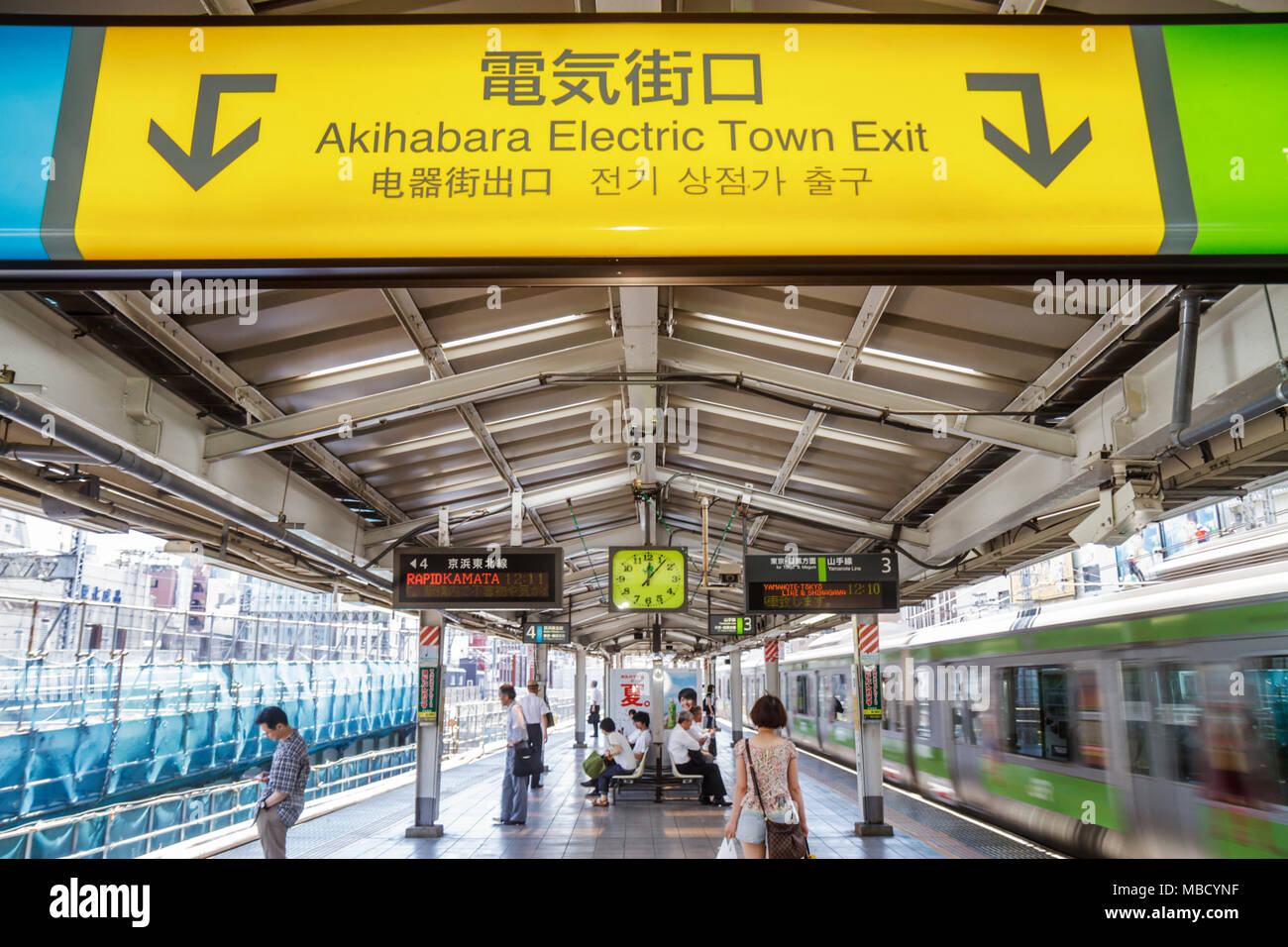
Look at the signs in the images below. You can see how the vocabulary we've learned (番線 and 線) is used in a real station.

4. The Final Check: Confirming Your Train
You've found the correct platform. A train arrives. To be absolutely sure before you board, you can ask someone on the platform a quick confirmation question.
The Top 10 Survival Japanese Phrases When ... - Chatty Sensei
Let's look at one more phrase from the 'Chatty Sensei' resource. This one is perfect for a final confirmation before you get on the train.
Please read phrase #7: 'Is this train going to ~?'.
The confirmation phrase is:
この 電車 は [Destination] に 行きますか?
Kono densha wa [Destination] ni ikimasu ka?
Does this train go to [Destination]?
You would point to the train and ask, for example:
この電車は新宿に行きますか?(Kono densha wa Shinjuku ni ikimasu ka?)
The answer will be a simple はい (hai - yes) or いいえ (iie - no).
5. Putting It All Together: A Practice Dialogue
Let's see how these phrases work together in a realistic scenario. Imagine you are at a large station and want to get to Shibuya.
The Top 10 Survival Japanese Phrases When ... - Chatty Sensei
The 'Chatty Sensei' article concludes with a sample dialogue that ties many of these phrases together. Reading through it will help you see the logical flow of the conversation.
Please read the short 'Quick Station Dialogue'. It shows how to chain these questions together to get all the information you need.
Here is a typical exchange you might have with a station attendant:
You: すみません。渋谷に行きたいです。
Sumimasen. Shibuya ni ikitai desu.
(Excuse me. I want to go to Shibuya.)
You: どの線に乗ればいいですか?
Dono sen ni noreba ii desu ka?
(Which line should I take?)
Staff: 山手線です。
Yamanote-sen desu.
(It's the Yamanote Line.)
You: 何番線ですか?
Nan-bansen desu ka?
(Which platform number is it?)
Staff: 3番線です。
San-bansen desu.
(It's platform 3.)
(You go to Platform 3 and a train arrives. You ask a person waiting.)
You: すみません。この電車は渋谷に行きますか?
Sumimasen. Kono densha wa Shibuya ni ikimasu ka?
(Excuse me. Does this train go to Shibuya?)
Person: はい、行きます。
Hai, ikimasu.
(Yes, it does.)
By memorizing this sequence, you have a reliable script for one of the most common travel situations you'll encounter.
Conclusion
Excellent work! You now have the essential phrases to navigate from the ticket gate to the correct train. This combination of buying a ticket (from the last lesson) and finding your platform (from this lesson) forms the backbone of independent train travel in Japan.
Key Takeaways:
- Memorize the key vocabulary: 線 (sen - line), 番線 (bansen - platform number), and 行き (iki - bound for).
- To ask which train or line:
[Destination]-iki no densha wa dore desu ka?(Which is the train for [Destination]?)Dono sen ni noreba ii desu ka?(Which line should I take?)
- To ask for the platform:
Nan-bansen desu ka?(Which platform number is it?)
- To confirm before boarding:
Kono densha wa [Destination] ni ikimasu ka?(Does this train go to [Destination]?)
Preview of the next lesson:
We are now finished with the "Navigation and Transportation" module. You've learned how to find your way, buy a ticket, and get on the right train. In our next module, "Reading Essential Public Signs," we will broaden your sign-reading ability beyond the train station. Our first lesson will cover some of the most common kanji you'll see on doors and in public spaces, such as 'push' (押) and 'pull' (引).