Introduction
Welcome! In our last few lessons, we focused on navigating Japan's excellent train system, from buying a ticket to finding the right platform. Now that you're comfortable getting around, we'll shift our focus to reading other essential signs you'll encounter everywhere in your daily travels. This module is all about "Reading Essential Public Signs."
Today, we'll start with something you'll see dozens of times a day: doors. By the end of this short lesson, you'll be able to instantly recognize the kanji for 'push' and 'pull', a simple but incredibly practical skill that will make moving through public spaces feel much smoother.
1. The Two Essential Door Kanji: Push and Pull
Almost every non-automatic door in Japan will be labeled with one of two kanji. Let's learn them.
Survival Japanese: 7 Must-Know Kanji
This article provides a great overview of several survival kanji. We will focus on just two for now: 'Push' and 'Pull'. Pay attention to the main kanji character and the different ways it can be written on a sign.
Please scroll down to the sections labeled 'Pull' and 'Push'. Read the main kanji and the common variations listed below each one. Don't worry about memorizing the longer phrases for now; just focus on recognizing the primary kanji characters.
From the reading, you saw the two key characters:
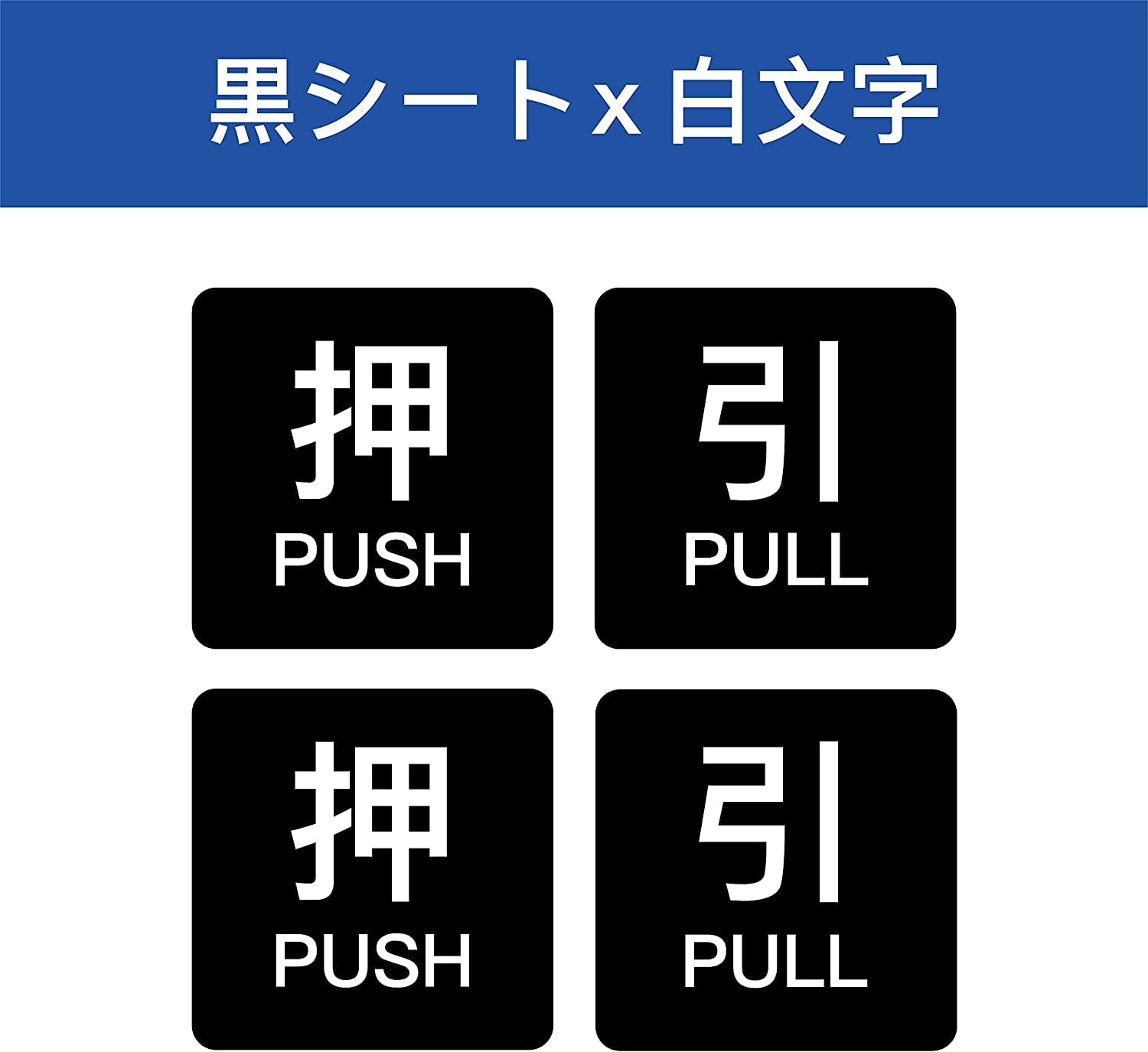
- 押 (osu): PUSH
- 引 (hiku): PULL
You'll often see just the single kanji on a sticker or plaque on the door.
2. Seeing Them in the Wild
Recognizing these characters on a webpage is one thing, but spotting them on an actual door is the real goal. Let's look at some examples of how they appear in the real world.

3. How to Tell Them Apart: A Simple Trick
At first glance, 押 and 引 can look similar. Here is a simple and effective mnemonic to permanently distinguish them. To do this, we'll look at a component of each character called a "radical," which often gives a clue to the kanji's meaning.
For PUSH: 押 (osu)
Look at the left side of the character: 扌. This shape is a common radical that means "hand".
You push a door with your hand.
- 扌 (hand) + 押 = PUSH
For PULL: 引 (hiku)
Now look at the left side of this character: 弓. This radical is also a standalone kanji that means "bow" (as in a bow and arrow).
You pull a bowstring.
- 弓 (bow) + 引 = PULL
By remembering "hand = push" and "bow = pull," you can instantly tell these two critical kanji apart.
4. Quick Practice
Imagine you are walking up to the entrance of a convenience store.
- The door you are approaching has the sign 引. What do you do?
(Answer: You pull the door.)
2. After you finish shopping, you head to the same door to leave. From the inside, it has the sign **押**. What do you do?
*(Answer: You push the door.)*
It's that simple! This small piece of knowledge prevents that awkward moment of pushing a pull door.
Conclusion
Great job! This was a short but very high-impact lesson. You can now confidently navigate one of the most common environmental interactions in Japan.
Key Takeaways:
- 押 (osu) means PUSH. Remember the hand radical (扌) on the left.
- 引 (hiku) means PULL. Remember the bow radical (弓) on the left.
- Look for these single characters on doors to know what to do.
Preview of the next lesson:
We will continue building your sign-reading skills by tackling another essential public facility: restrooms. In the next lesson, you'll learn to recognize the signs for 'restroom' (お手洗い / トイレ) and, crucially, how to distinguish between male (男) and female (女).