Introduction
Welcome back! In our last lesson, we learned how to read the kanji for 'push' (押) and 'pull' (引) on doors, a small but powerful skill for navigating public spaces smoothly.
Today, we continue building your sign-reading abilities by tackling another essential task: finding and correctly identifying restrooms. By the end of this lesson, you will be able to recognize the common words for 'restroom' and, most importantly, distinguish between the signs for 'male' and 'female', ensuring you can confidently find the right facilities during your trip to Japan.
1. How to Find a Restroom
First things first: you need to know what signs to look for. In Japan, there are two primary words used for "restroom." One is a modern loanword, and the other is a more traditional, polite term.
Let's start by reading a short guide that covers both of these, as well as the essential kanji for male and female.
This article from GaijinPot Study quickly covers the most important vocabulary for finding and using a restroom in Japan. We will focus on just the first part for now.
Please read the first three bolded points in the article. They are located right below the main photo. Focus on the words for 'toilet' and the kanji for 'men' and 'women'.
As you saw in the reading, the two main words to look for are:
- トイレ (toire): This is written in katakana and is the most common word for toilet, borrowed directly from English. Since you're familiar with katakana, this should be easy to spot.
- お手洗い (otearai): This is the more traditional and slightly more polite term, literally meaning "hand-washing place." You can think of it as the equivalent of "restroom" or "washroom."
While トイレ (toire) is universally understood, you will frequently see お手洗い (otearai) on signs in department stores, restaurants, and train stations.
2. Distinguishing Male from Female
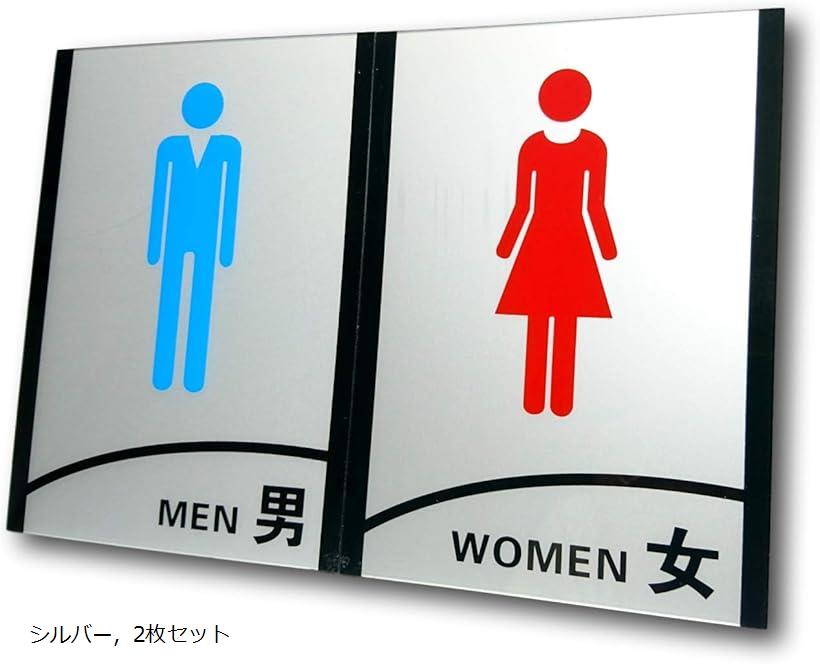
Once you've found the sign for a restroom, the next step is to choose the correct door. While many modern places use universal pictograms, it's very common, especially in older buildings, temples, or traditional restaurants, to see only kanji.
The two essential kanji you need to know are:
- 男 (otoko): Male
- 女 (onna): Female
Let's look at a typical example of how these appear on restroom doors.
A Mnemonic to Tell Them Apart
These two kanji can seem confusing at first, but there's a simple and memorable way to distinguish them by looking at their components. This is the same technique we used for 'push' and 'pull'.
For Male: 男 (otoko)
This kanji is made of two parts:
- 田 (ta): This top part means rice field.
- 力 (chikara): This bottom part means power or strength.
Mnemonic: A man (男) is the power (力) that works in the rice fields (田).
For Female: 女 (onna)
This character is a stylized pictogram. Many people see it as representing a woman kneeling or sitting elegantly.
Mnemonic: The character 女 looks like a pictogram of a woman.
By remembering "power in the fields" for male and the "kneeling person" for female, you'll be able to tell them apart instantly.
3. Reading More Complete Signs
Sometimes, the sign won't just have the single kanji. You might see a slightly longer word. Let's look at another common sign format.

Let's break down what you're seeing here:
- 男性トイレ (dansei toire): Male Restroom
- 女性トイレ (josei toire): Female Restroom
Here, the kanji 性 (sei) has been added, which means "gender." So, 男性 (dansei) literally means "male gender" and 女性 (josei) means "female gender." You already know トイレ (toire).
Even if you don't remember the full words dansei and josei, you can still succeed just by spotting the key kanji you learned: 男 for male and 女 for female.
As a final note, the resource "What Does 'Toire wa Doko Desu Ka' Mean?" also mentions the term 化粧室 (keshōshitsu), which means "powder room." You might see this in high-end department stores. It's good to be aware of, but トイレ and お手洗い are the most critical to know.
Conclusion
Excellent work. This is another incredibly practical skill that will make your travels in Japan much less stressful. You are now equipped to handle one of the most common needs when out and about.
Key Takeaways:
- Look for トイレ (toire) or お手洗い (otearai) to find a restroom.
- The kanji for male is 男 (otoko). Remember the mnemonic: power (力) in the rice fields (田).
- The kanji for female is 女 (onna). Remember it as a pictogram of a woman.
- You may see these combined into 男性 (dansei) for male and 女性 (josei) for female.
Preview of the next lesson:
Now that you can find your way through doors and to restrooms, we'll continue exploring essential public signs. In the next lesson, you'll learn how to read kanji that tell you what you can't do by recognizing signs for prohibition (禁止) and caution (注意).