Welcome to the next lesson in our Speaking module. In our last session, we focused on building a robust logical framework for your Part 3 answers using the Position-Reason-Example-Concession structure. This gave you a blueprint for organizing your thoughts coherently.
Today, we'll focus on the language you use to fill that framework. Our learning outcome is to use topic-specific vocabulary and natural collocations when discussing common IELTS themes. This is the heart of the "Lexical Resource" criterion, which accounts for 25% of your score. Mastering this skill is not just about showing off vocabulary; it's a direct strategy to reduce the "thinking delay" you've mentioned. When you have ready-made phrases for common topics, you can express complex ideas more fluently and precisely, much like using a pre-built function library in programming allows you to implement complex logic more efficiently.
1. Understanding Lexical Resource and the Power of Collocations
First, let's clarify what "Lexical Resource" truly means for a Band 7. It's not about using obscure words. It’s about using a wide range of appropriate vocabulary with precision and flexibility.

A key element that examiners look for is the natural use of collocations—words that frequently appear together. Getting these right makes your English sound fluent and authentic. Getting them wrong, even if grammatically correct, is a clear sign of a non-native speaker.
IELTS Collocations 2026: Master 200+ Essential Phrases for Band 7+
This article from Langogh provides an excellent breakdown of why collocations are a game-changer for your IELTS score. It explains the common pitfalls and why mastering them is so effective.
Start by reading the TL;DR section to get a quick overview. Then, read the sections "Why Do Test-Takers Fail?" and "What Are Collocations?" to understand the core concept and its importance in the exam. Finally, look at the section "Common Collocation Mistakes" to see concrete examples of what to avoid, such as the classic confusion between "do" and "make".
As the article highlights, errors like "do a decision" instead of "make a decision" are immediately noticeable. The goal is to build a mental repository of these natural word partnerships.
2. A Systematic Approach: Building Vocabulary by Topic
The most efficient way to build your vocabulary is not by memorizing random word lists, but by organizing your learning around the common themes that appear in the IELTS test. These topics—such as the environment, technology, education, and work—are predictable.
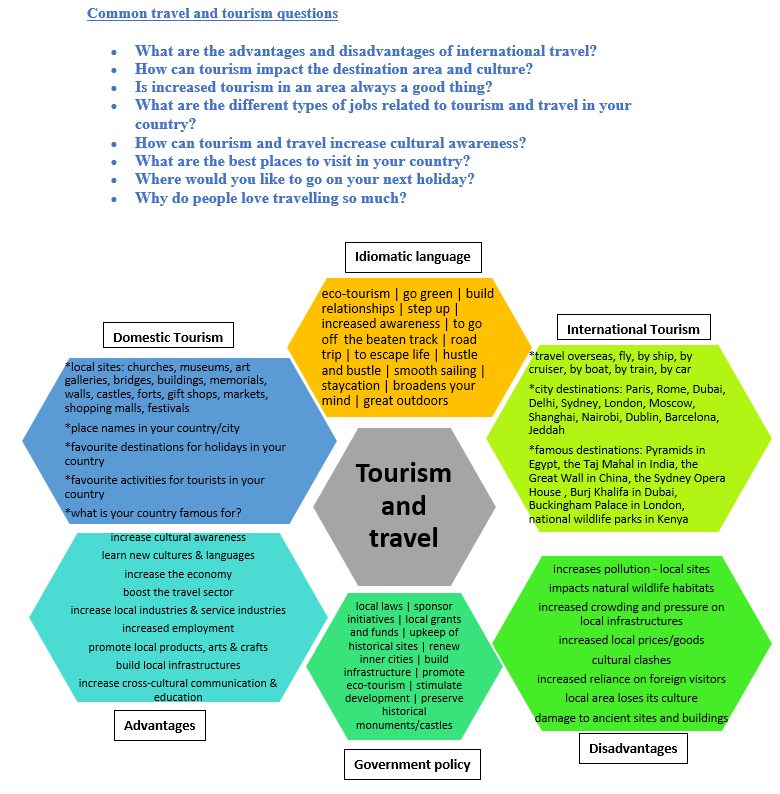
By focusing on one topic at a time, you build a "lexical set" of words and collocations that you can deploy confidently when that topic arises.
IELTS Vocabulary for Band 7+: 150 Essential Words, Collocations & Topic Lists
This guide from Open IELTS offers a fantastic, structured approach to topic-based vocabulary and explains why collocations are more valuable than single words.
Please read the section "Essential Vocabulary by IELTS Topic Area" and study the lists provided for the topics that are most relevant to you, especially Technology & Innovation, Work & Economy, and Education. Then, read the following section, "Why Collocations Are More Important Than Single Words". Focus on how correct collocations signal fluency.
To see how this works in a spoken context, let's watch a video that breaks down vocabulary for several key topics. Since technology and work are central to your professional life, these are areas where you can quickly build high-level vocabulary.
Most Common IELTS Speaking Topics in 2025 (with key vocabulary)
This video from English Speaking Success provides excellent examples of topic-specific vocabulary and collocations for some of the most common themes in the exam.
Pay close attention to the sections on Work (from this timestamp) and Technology (from this timestamp). As you watch, note down 3-4 powerful collocations from each topic that you find useful. For example: From 'Work': job security, career prospects, gender pay gap, work-life balance. From 'Technology': digital divide, digital native, online safety, rewiring our brains, short attention span.
3. Deep Dive into a Topic: 'Education'
Now, let's apply this method by focusing on one of the most frequent and abstract topics in Part 3: Education. Having a strong lexical set here is invaluable for discussing issues like traditional vs. modern teaching methods, the role of universities, or lifelong learning.
IELTS Vocabulary Band 7: 20 Essential Education Words + Practice Exercises
This video from IELTS Charlie introduces 20 essential words for the topic of Education. We won't cover all 20, but we will focus on a few high-impact ones.
Please watch the following short segments to learn the meaning and use of these key terms: Pedagogy (definition): The method and practice of teaching. Curriculum (definition): The subjects taught in a school or course. Cognitive (definition): Related to the process of thinking and understanding. Often used in cognitive skills or cognitive development. Critical thinking (definition): The skill of analyzing information clearly and logically. Engagement (definition): The level of interest or involvement a student has. These five terms alone can significantly elevate an answer about education. For example, instead of saying "the way teachers teach," you can say "the school's pedagogy." Instead of "subjects," you can use "the national curriculum."
4. Practice and Application
It's time to integrate this new vocabulary into the answer structure you learned in the previous lesson.
Your Task:
- Choose one of the Part 3 questions below.
- Take one minute to plan your answer using the Position-Reason-Example-Concession structure.
- While planning, consult the vocabulary lists from the resources above and select 3 to 5 collocations or topic-specific words you will try to use in your answer.
- Record yourself delivering the answer. Aim for a response of about 45-60 seconds.
- Listen back and evaluate your performance:
- Did you successfully use the target vocabulary?
- Did it sound natural, or forced?
- Did you use the words correctly in context?
Practice Questions:
-
Topic: Work
- Do you think having a good work-life balance is more important today than it was in the past?
(Potential vocabulary:work-life balance,stressed out,boost productivity,flexible working hours,sedentary lifestyle)
- Do you think having a good work-life balance is more important today than it was in the past?
-
Topic: Technology
- What are the greatest benefits that technology has brought to the workplace?
(Potential vocabulary:streamline processes,automate routine tasks,remote working,enhance collaboration,digital literacy)
- What are the greatest benefits that technology has brought to the workplace?
-
Topic: Education
- Some people think that the main purpose of university is to prepare students for a job, while others think it has a wider purpose. What is your opinion?
(Potential vocabulary:vocational training,critical thinking,holistic education,improve employability,acquire knowledge)
- Some people think that the main purpose of university is to prepare students for a job, while others think it has a wider purpose. What is your opinion?
This exercise is crucial. It moves you from passively recognizing words to actively producing them under pressure, which is exactly what you need for the test.
Conclusion
In this lesson, we have focused on equipping you with the high-quality language needed to score a Band 7 or higher in Lexical Resource. You now have a systematic, topic-based strategy for vocabulary acquisition.
Key Takeaways:
- Collocations are Key: Using natural word partnerships like "tackle a problem" or "sedentary lifestyle" is more effective than using single, complex words incorrectly.
- Learn by Topic: Organize your vocabulary learning around common IELTS themes like work, technology, health, and education. This is far more efficient than memorizing random lists.
- Active Production: You don't truly know a word until you can use it correctly in your own sentences. Practice integrating new vocabulary into your spoken answers.
In our next lesson, we will continue building your Lexical Resource by focusing on another crucial skill: "Paraphrase questions and use synonyms to demonstrate a flexible vocabulary." This will allow you to avoid repetition and show the examiner the full range of your vocabulary.