Welcome to your next lesson on mastering the IELTS Speaking test. In our previous session, we focused on building your lexical toolkit with topic-specific vocabulary and natural collocations, which is crucial for expressing ideas precisely. You learned a systematic way to build a "lexical set" for common themes like work and technology.
Today, we will focus on making that vocabulary flexible and dynamic. The learning outcome for this lesson is to paraphrase questions and use synonyms to demonstrate a flexible vocabulary. This skill is a powerful tool to directly address the "thinking delay" you mentioned. By rephrasing a question in your own words, you give yourself a crucial moment to organize your thoughts and simultaneously demonstrate a sophisticated command of English. Think of it as refactoring your language in real-time—expressing the same idea more effectively without changing its core meaning.
1. The Strategy of Paraphrasing
Paraphrasing in the IELTS Speaking test is much more than a simple vocabulary exercise; it's a strategic move. A well-executed paraphrase signals to the examiner that you have fully understood the question and have the linguistic ability to discuss it without simply repeating the words you were given.
To understand the core principles and importance of this skill across all IELTS modules, let's start with a foundational reading.
This article from IELTS Assistance provides a clear and concise overview of what paraphrasing is, why it's essential for a high score, and the primary techniques you can use.
First, read the sections "What is paraphrasing?" and "Why is paraphrasing important?" to solidify your understanding of its role. Pay special attention to the three ways it is useful in the Speaking section. Next, review the section "How can we paraphrase". This will introduce you to the three main techniques we'll be working on: Using synonyms: Replacing words with others of similar meaning. Changing word form: For example, using the noun analysis instead of the verb analyse. Changing sentence structure: Such as switching from an active to a passive voice or reordering clauses.
The key takeaway is that effective paraphrasing often involves a combination of these techniques. Simply swapping a few words for synonyms can sound unnatural. The goal is to re-state the idea fluently and correctly.
2. Building Your Synonym Toolkit
A rich vocabulary of synonyms is the foundation of effective paraphrasing. However, memorizing lists is inefficient. A more effective method is to learn synonyms in context and organize them around common words or ideas.
Visual aids can be very effective for this. For instance, you could group synonyms by a core concept, like the "Synonyms Emotion Wheel," or simply keep running lists for high-frequency words you tend to overuse.
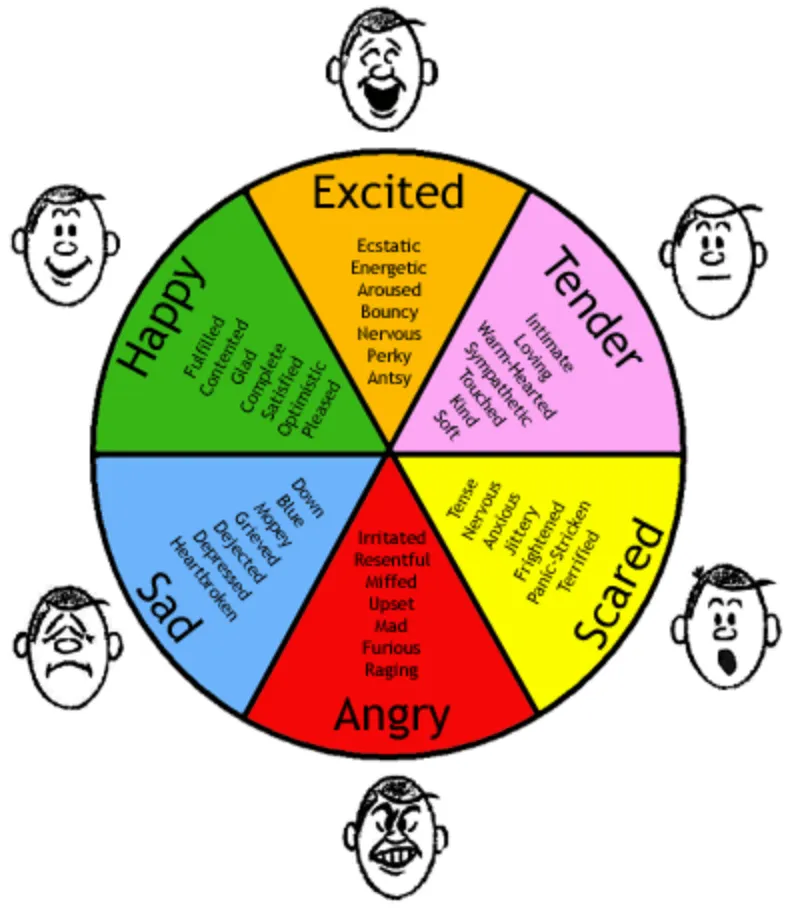

While topic-specific vocabulary is essential, a strong command of general-purpose words, linking phrases, and opinion language will improve your fluency across all topics. The following video offers excellent, natural-sounding alternatives to some of the most overused phrases in English.
40 Most Commonly Used Words with Synonyms in IELTS Speaking | BAND 7+ Vocabulary
This video from IELTS with Juva provides a list of 40 common words and their synonyms. We will focus on the sections dealing with general conversational phrases and linking words, as these are universally applicable.
Please watch the final two sections of the video: Natural Phrases (watch this segment): Pay close attention to the alternatives for phrases like "to be honest" (truthfully), "I disagree" (I beg to differ), and "in my opinion" (the way I see it). Linking Phrases (watch this segment): Note the more sophisticated options for "for example" (a prime example would be), "also" (not to mention), and "due to" (stemming from). Your goal is not to memorize all of them, but to select 3-4 that you feel comfortable using and start integrating them into your practice.
3. Paraphrasing in Action: From Drills to Strategy
Now let's move from theory to practice. The following exercises are designed to sharpen your mechanical paraphrasing skills before we apply them in a full speaking context.
[PDF] paraphrasing 1 exercises
This PDF contains a series of exercises to practice the mechanics of paraphrasing. It’s a great way to drill the techniques we discussed.
Please complete the following exercises on a piece of paper or in a document. Exercise A: Change the word form for the 10 items listed. This practices your ability to use different parts of speech. Exercise B: Complete the five sentences by changing word types and grammar. Exercise C: For the three items, compare the two paraphrases and decide which is more effective. This helps you develop an instinct for what sounds natural. You can check your work against the answers section at the end of the document.
With those mechanics sharpened, let's focus on the strategic use of paraphrasing at the start of your answers. Using set phrases to begin your response is an excellent way to buy thinking time and start strong.
IELTS Speaking– Most Common Ways to Start Your Answer
This video from IELTS Advantage analyzes how Band 7-9 candidates begin their answers to different types of questions. It provides a set of practical and natural-sounding "openers."
Focus on these specific strategies for starting your answers: For Opinion Questions (watch here): Instead of a simple "Yes" or "No," notice the use of fillers like "Well..." or "Actually..." followed by a clear opinion statement like "in my opinion..." or "it depends on...". For "It Depends" Questions (watch here): This is a powerful strategy for questions with two sides. Starting with "Well, it depends on..." allows you to explore both perspectives, demonstrating analytical skill. For Complex Part 3 Questions (watch here): Using a bridging phrase like "That's an interesting question..." acknowledges the question's complexity and gives you a moment to structure your thoughts before diving into your viewpoint.
4. Practice and Application
Now it's time to put everything together. Your task is to respond to an IELTS Part 3 question, focusing on demonstrating a flexible vocabulary through paraphrasing and synonyms.
Your Task:
- Choose one of the Part 3 questions below.
- Take one minute to plan your answer.
- Identify the keywords in the question.
- Brainstorm synonyms for those keywords.
- Choose a strategic opening phrase from the IELTS Advantage video.
- Record yourself delivering the answer (aim for 45-60 seconds).
- Listen back and evaluate your performance. Did you successfully paraphrase the question at the start? Did you avoid repeating keywords by using synonyms? Did it sound natural?
Practice Questions:
-
Topic: Technology & Work
- To what extent has technology made our working lives easier?
- Keywords: technology, working lives, easier.
- Synonyms: technological advancements, professional lives, simpler, more convenient, streamlined, less burdensome.
- Possible opening: "That's an interesting question. The way I see it, technological advancements have had a profound impact on our professional lives, but whether they've made them uniformly 'easier' is debatable..."
-
Topic: Education
- Do you think it is more important for schools to teach practical skills or academic subjects?
- Keywords: more important, schools, practical skills, academic subjects.
- Synonyms: higher priority, educational institutions, vocational training, hands-on abilities, theoretical knowledge, scholarly disciplines.
- Possible opening: "Well, it really depends on the ultimate purpose we believe education should serve. While some argue that the curriculum should prioritize vocational training..."
-
Topic: Society
- What are the main advantages of living in a multicultural society?
- Keywords: main advantages, multicultural society.
- Synonyms: primary benefits, key upsides, diverse community, cosmopolitan environment.
- Possible opening: "In my opinion, there are several primary benefits to living in a diverse community. A prime example would be the incredible exposure it offers to different cultures and perspectives..."
This active practice is the most important part of the lesson. It bridges the gap between knowing the techniques and being able to apply them fluently under pressure.
Conclusion
In this lesson, you have learned that paraphrasing is not just about avoiding repetition, but is a core strategy for demonstrating understanding, gaining thinking time, and showcasing a flexible vocabulary.
Key Takeaways:
- Paraphrase Strategically: Use opening phrases like "That's an interesting question..." or "The way I see it..." to start your answers smoothly and thoughtfully.
- Combine Techniques: The most natural paraphrasing combines synonyms, changes in word form, and altered sentence structure.
- Build Your Toolkit: Actively collect and practice using synonyms for common words and phrases, especially for opinions and linking ideas.
- Accuracy First: As the article from IELTS Assistance noted, if you are unsure about a synonym's meaning or a grammatical structure, it's better to stick with the original word than to make a mistake.
In our next lesson, we will shift our focus to the other half of the 'Lexical Resource & Pronunciation' module. We will explore how to apply correct word stress and sentence stress to emphasize key information and improve clarity, another critical component for achieving a Band 7+ score.