Welcome back. In our previous lesson, we established a strong foundation for IELTS Speaking Part 1 by focusing on the A.R.E. framework to extend your answers and the "idea bank" strategy to reduce thinking time. Now, we advance to Part 2, often called the "long turn," which presents a different kind of challenge.
Today's lesson is dedicated to mastering the crucial one minute of preparation time you are given before your two-minute talk. This isn't just about jotting down ideas; it's about creating a clear, logical structure that will guide you through a coherent and comprehensive monologue. Successfully using this minute is the key to speaking confidently for the full two minutes and hitting the high marks for fluency and coherence required for a Band 7.
1. Understanding the Part 2 Task
In Speaking Part 2, the examiner will hand you a cue card, a pencil, and some paper. The card will present a topic you need to talk about for one to two minutes. It also includes several bullet points to guide your response.
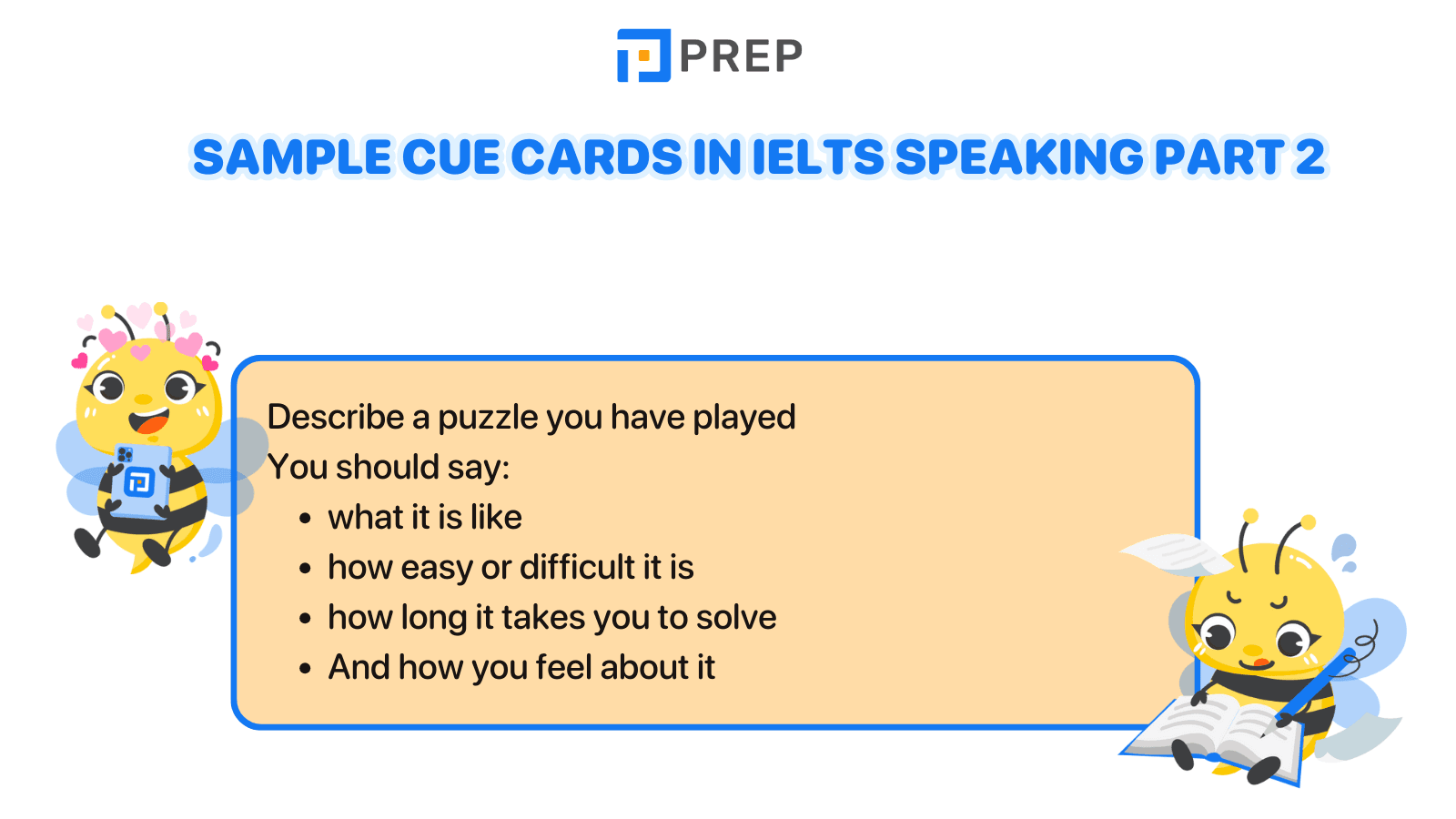
You will have exactly one minute to prepare and make notes. After that, you'll be expected to speak on the topic for up to two minutes. While the instruction says "one to two minutes," consistently speaking for closer to the full two minutes is essential for a high score, as it provides the examiner with a substantial sample of your language to assess.
Think of this task not as an impromptu speech, but as a rapid planning and execution exercise, similar to a sprint planning session where you must quickly outline deliverables based on a set of requirements.
2. A Systematic Approach to the Cue Card
The most common mistake test-takers make is wasting their preparation minute in indecision, trying to find the "perfect" story. The goal is to choose a topic quickly—often the first suitable idea that comes to mind—and dedicate the rest of the time to structuring your response.
A highly effective way to do this is to break down the cue card systematically. The article from E2 Language explains a powerful method called "Identify, Describe, Explain."
IELTS Speaking Part 2 - Strategy, Topics and Practice
This article provides a clear, structured way to deconstruct any Part 2 cue card, ensuring you cover all the necessary points and generate enough content for a two-minute talk.
First, read the section Understanding the Topic Card Structure. Pay close attention to the table that breaks the cue card into "talking points" and specifies your "note-taking focus." Then, review the next section with the sample answer for "something important to you" under the heading The 5 Talking Points. Notice how the sample answer directly addresses each point from the cue card in a logical sequence.
This structured approach transforms the cue card from a list of prompts into a logical narrative flow:
- Identify: State your main topic.
- Describe: Address the "who, what, where, when" bullet points.
- Explain: Tackle the "why" or "how you feel" part, which allows you to express opinions and feelings.
3. Note-Taking Strategies for Your Blueprint
Your one minute is for creating a blueprint, not a script. Writing full sentences is counterproductive; you will run out of time and be tempted to read from your notes, which harms fluency. Instead, you should use keywords and simple structures.
IELTS Jacky offers an excellent, systematic method for note-taking that builds directly on the cue card prompts.
IELTS Speaking Samples – Speaking Test Part 2
This resource demonstrates a clear, step-by-step note-taking method that is easy to remember and apply under pressure.
Read through the section titled Method 1 – Using Question Prompts. Focus on these three steps: Step 1: Learn how to identify the keywords (what, where, who, why) and the value of adding when and how. Step 2: Look at the example of how to make notes using these keywords as headlines. Notice they are just words and short phrases. Step 3: Understand how to quickly organise your notes by numbering them to create a logical sequence for your talk.
An alternative but equally effective way to organize your keyword notes is by creating a spider diagram. You can watch a former IELTS examiner explain this technique.
IELTS Speaking Part 2 | The Essential Guide
This video offers insights from an examiner's perspective, emphasizing rapid decision-making and visual note-taking.
Watch the segment on core strategies from this point, where the presenter introduces the idea of telling a story and using a spider diagram for notes. Then, watch the recap from here, which reinforces the importance of deciding quickly and organizing your ideas logically. A spider diagram can be excellent for visualizing connections between your ideas.
4. Flexible Frameworks: Past-Present-Future
What if you choose a topic but worry you won't have enough to say? Having flexible frameworks in your mental toolkit is key. The "Past, Present, Future" model is an excellent way to extend your talk and showcase a range of grammatical tenses. This can be particularly useful for topics related to your professional experience, technology, or skills.
This short video from E2 IELTS explains this method clearly.
2 Quick Methods for the IELTS Speaking 1-Minute Preparation Time
This video presents two clever strategies for your one-minute preparation to ensure you have enough material for your talk.
First, watch the method of choosing two examples instead of one as a safety net. Then, pay close attention to the Past, Present, Future method explained from this timestamp. Notice how discussing a topic (like Google) through its past, present, and future allows you to naturally use past tenses, present tenses, and future forms (like 'will' or 'might').
5. Bringing It All Together
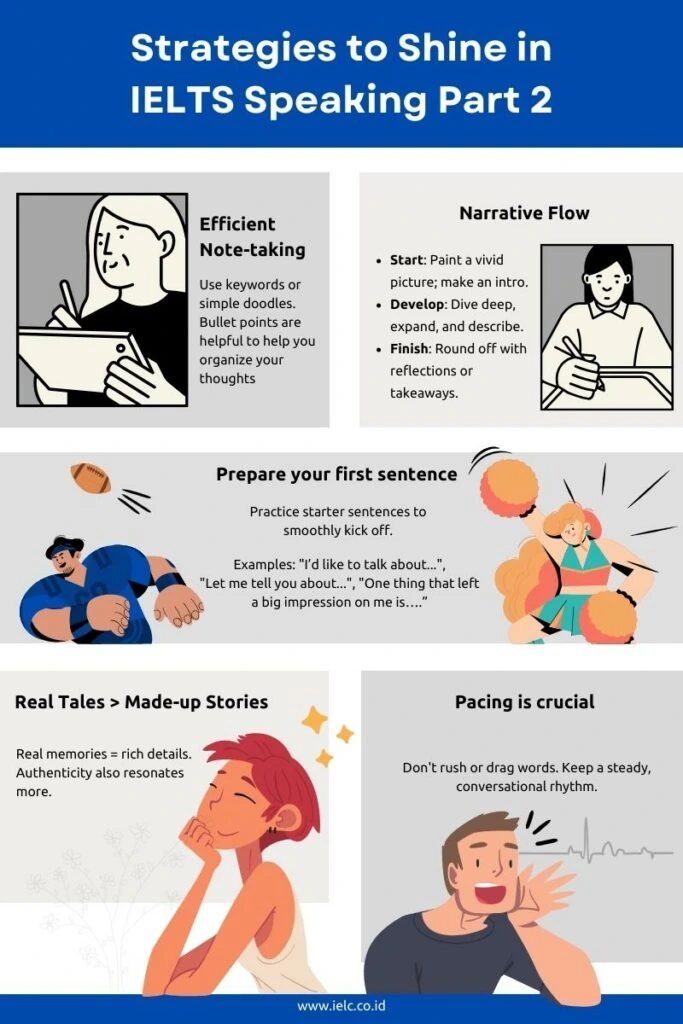
The strategies we've covered provide a comprehensive toolkit for acing the Part 2 preparation. This infographic summarizes the key elements for a successful long turn.
6. Practice Session
Now, let's apply these strategies. Your task is to use the 1-minute preparation time to structure an answer for the following cue cards. Use your phone to time yourself for exactly one minute for note-taking, then record yourself speaking for two minutes.
Instructions:
- Choose one of the cue cards below.
- Start a 1-minute timer and create your notes using either the Question Prompt method or a spider diagram.
- Immediately after the minute is up, start recording your voice and speak for two minutes, using your notes as a guide.
- Listen back to your recording. Did your notes help you maintain a logical flow? Did you speak for the full two minutes?
Practice Cue Card 1:
Describe a challenging project you worked on.
You should say:
- what the project was
- when you worked on it
- what made it challenging
and explain how you felt after completing it.
Practice Cue Card 2: (from the IELTS Jacky resource)
Describe an invention that has changed people’s lives.
You should say:
- what it is
- what it does
- how it has changed lives
and explain whether it is more positive or negative.
Try this exercise with both cue cards, perhaps using a different note-taking method for each to see which one feels more natural for you.
Conclusion
In this lesson, we have broken down the one-minute preparation for IELTS Speaking Part 2 into a manageable, systematic process. You now have the tools to turn a moment of potential panic into a focused planning session.
Key Takeaways:
- Decide Quickly: Don't waste time choosing a topic. Pick a suitable idea and commit to it.
- Use a Structure: Deconstruct the cue card using the prompts as a guide (e.g., Identify-Describe-Explain).
- Take Keyword Notes: Use the Question Prompt method or a spider diagram to create a blueprint, not a script.
- Have Backup Frameworks: Employ the "Past, Present, Future" or "Two Examples" model to ensure you have enough content and can demonstrate grammatical range.
Mastering this preparation phase is the most critical step toward delivering a fluent, coherent, and high-scoring two-minute talk.
In our next lesson, we will focus on the delivery itself: "Deliver a coherent 2-minute Part 2 talk, covering all points on the cue card with relevant detail." We'll work on using your notes effectively, connecting your ideas smoothly, and maintaining fluency throughout your monologue.