Welcome to the final lesson of our module on advanced harmony. In our last session, we delved into the controlled use of dissonance and chromaticism to create tension and release, particularly for builds and drops. We established that dissonance arises from both the physical "roughness" of sound waves and the cognitive violation of learned musical patterns.
Today, we take these concepts to their logical conclusion by exploring genres where tension and ambiguity are not just transitional tools, but the central aesthetic. This lesson focuses on the techniques used in industrial and noise music to manipulate harmonic ambiguity, a topic that directly aligns with your interest in these more experimental forms of electronic music. We will see how the principles of dissonance are weaponized to create disorienting, challenging, and powerful sonic landscapes.
By the end of this lesson, you will be able to analyze how artists in these genres use drones, noise, repetition, and atonality to subvert traditional harmonic expectations and generate sustained tension.
The Drone: A Foundation for Tension and Ambiguity
At the heart of much industrial and noise music lies the drone: a sustained tone or cluster of tones that creates a harmonic bedrock. While a drone can be consonant, in this context, it is often a vehicle for sustained dissonance, creating a field of tension that doesn't resolve but instead invites immersion.
Your physics background gives you a key insight here: a sustained sound is not static. As the composer La Monte Young's work demonstrates, holding a tone "for a long time" allows the listener to move beyond the fundamental and perceive the complex universe of overtones, undertones, and combination tones that shimmer within it. When the drone is built from a dissonant interval, this experience becomes one of exploring a landscape of perpetual roughness and instability.
The essay "The Eternal Drone" by Marcus Boon provides a fantastic perspective on this.
The Eternal Drone - Marcus Boon
This essay explores the historical and philosophical significance of the drone in music.
Please read the section that directly addresses the drone's role in creating tension and expressing alienation. Focus on the passage starting from this point and continuing to the end of the paragraph. The author specifically discusses how drones in industrial music imitate the "drone of the machinery of industrial society," creating an "utterly inhuman" quality that emphasizes mechanism and dissonance.
This idea is central. Industrial music uses drones not for spiritual calm, but to evoke the relentless, alienating, and oppressive sounds of the industrial world. The drone becomes a canvas for painting with tension.
The Industrial Toolkit: Techniques for Ambiguity
Industrial and noise music achieve their characteristic sound by systematically subverting the pillars of traditional harmony. This isn't random chaos; it's a deliberate set of techniques designed to create specific kinds of ambiguity and tension.
1. From Timbre to Tonality: The Primacy of Sound Character
In traditional music, we analyze harmony based on discrete pitches (notes). In industrial music, the timbre—the quality of the sound itself—is often more important than the note.
- Noise and Inharmonic Spectra: A guitar string or a piano note has a harmonic spectrum, where the overtones are integer multiples of the fundamental frequency. This is what makes intervals like the perfect fifth (3:2 ratio) sound consonant. However, the sounds of industrial music—a metal sheet being struck, a distorted synthesizer, a sample of a power tool—often have inharmonic spectra. Their overtones are not neatly related, creating a sound that is inherently dissonant and tonally ambiguous. It doesn't have a clear, single pitch.
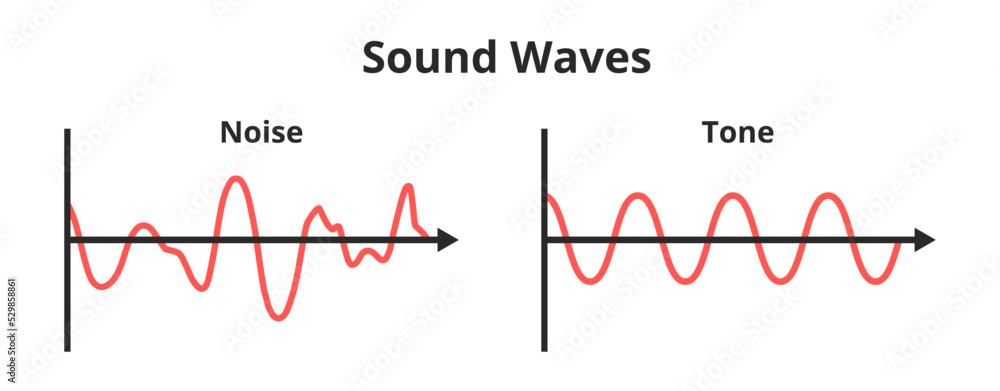
- Distortion and Detuning: As the "Music Theory for Techno" video demonstrates, distortion adds new, often inharmonic, overtones to a sound, increasing its roughness. Detuning two oscillators creates a constant beating—the very physical basis of sensory dissonance we discussed in the last lesson. These are not just effects; they are fundamental compositional tools for generating harmonic texture.
The video "Music Theory for Techno" offers practical production techniques that are directly applicable to industrial music.
Review these two segments: It's about the sound character: This section explains the importance of timbre, specifically demonstrating how detuning oscillators and applying heavy distortion are primary methods for creating a tense, "techno" sound. Rule 2 and 3 recap: Pay attention to the summary of Rule #2 ("embrace dissonance and repetition") and Rule #3 ("pay extra attention to the timbre and character of your sounds").
2. Ostinato: The Hypnosis of Repetition
How can a dissonant phrase be repeated for minutes on end without becoming unlistenable? The answer lies in the principle of ostinato, a term from classical music meaning a persistently repeated musical figure.
The core idea is that any pattern, no matter how dissonant, will eventually sound "correct" or intentional if repeated consistently. The listener's brain adapts and accepts the dissonant loop as the new normal. This creates a powerful, hypnotic tension that is very different from the build-and-release tension of functional harmony. Instead of anticipating a resolution that never comes, the listener is locked into a state of sustained intensity. This is a cornerstone of techno, industrial, and noise.
3. Atonality and Ambiguous Harmony
While some industrial tracks use recognizable (if non-functional) harmony, many embrace atonality, avoiding any sense of a key or tonal center.
- Power Chords and Ambiguous Voicings: The use of power chords (root and fifth only) removes the major/minor quality, making the harmony more ambiguous and stark.
- Chromaticism and Clusters: As we saw in the last lesson, chromatic movement creates tension. In industrial music, this is often taken to an extreme, with melodies and basslines that move unpredictably through all 12 tones, or the use of tone clusters (chords made of adjacent semitones) to maximize sensory roughness.
- Lack of Harmonic Movement: A track might be built entirely around a single, static harmonic center, using a drone or a repetitive bassline. Tension is then created through timbral changes, rhythmic complexity, and layering, rather than through chord changes.
Case Study: Nine Inch Nails - "Various Methods of Escape"
Trent Reznor's work with Nine Inch Nails masterfully blends rock and pop sensibilities with the experimental ethos of industrial music. The music theory analysis of "Various Methods of Escape" provides a perfect case study of these techniques in action.
"VARIOUS METHODS OF ESCAPE" - Nine Inch Nails // music theory analysis
This analysis by the "ixi" channel breaks down the harmonic and rhythmic tension in the song.
As you watch these sections, try to connect the analyst's observations to the concepts we've discussed (drone, ostinato, ambiguity, dissonance). The intro: Note the emphasis on rhythmic ambiguity (unclear downbeat), which immediately creates a sense of disorientation that complements the harmonic tension. The verse: The analyst points out there's essentially no harmonic movement, just a bassline existing in "F". This is a prime example of a drone/ostinato-based structure. The bassline itself is described as "ambiguous" and "bloopy," highlighting the importance of timbre. The vocal filter: Here, a filter is used to create an "F feeling" or drone that rings out with the vocal melody, anchoring everything to the tonic F even when the melody moves away. This creates a constant, subtle tension. The chorus: This section is crucial. The harmony finally moves, but the bassline stubbornly stays on the F pedal tone. This is a classic technique: the drone acts as an anchor, and the chords moving against it create immense tension. The analyst notes the harmony is built from power chords (no major/minor quality) and the "3 over 4" rhythm adds another layer of disorienting complexity. The bassline's effect: A recap of how the bass pedal tone creates a "drone feeling" where all chords are heard in direct, tense relationship to the tonic F. The bridge: The analyst describes this section as "weird bridge limbo." This is a perfect example of using ambiguous instrumentation ("doesn't have a very defined tonality"), inharmonic sounds ("metallic bell sound... out of tune"), and complex rhythm (7/16 pattern) to create maximum disorientation and ambiguity.
This analysis shows how a sophisticated producer combines multiple layers of ambiguity—rhythmic, timbral, and harmonic—to create a compelling and tense arrangement.
The Philosophy of Noise
It's important to understand that these techniques are not arbitrary. As the academic paper "EXPLORING THE EVOLUTION OF INDUSTRIAL MUSIC" details, the genre was born from a specific philosophical stance.
[PDF] EXPLORING THE EVOLUTION OF INDUSTRIAL MUSIC
This paper provides the crucial historical and philosophical context for industrial music.
To understand the "why" behind the sound, please read these sections: "Throbbing Gristle and the Founding of Industrial Records". Focus on the core ideas: using music as a medium for "information," breaking the distinction between noise and music, and Genesis P-Orridge's belief that "the future of music lies in non-musicians." "Analytical Methodology". This section reinforces our approach, arguing that analyzing industrial music requires looking beyond traditional harmony to parameters like texture, timbre, and programmatic elements.
Early industrial artists like Throbbing Gristle were influenced by movements like Dadaism and musique concrète, which sought to deconstruct art and incorporate the sounds of the real world—noise, machines, found sounds—into music. Their use of dissonance and noise was a deliberate rebellion against the "rigid conformity" of Western music and a way to comment on the dehumanizing nature of the industrial society.

Conclusion
In this lesson, we've journeyed into the heart of harmonic ambiguity and tension as practiced in industrial and noise music. You've seen that what might initially sound like chaos is often a highly controlled and intentional manipulation of sound, rooted in a rich philosophical and artistic tradition.
Key Takeaways:
- Ambiguity is a Goal, Not a Flaw: Industrial and noise music intentionally blur tonality, rhythm, and the line between music and noise.
- The Drone is a Weapon of Tension: Sustained dissonant tones or pedal points create an immersive, unresolved harmonic field, often evoking the sound of machinery.
- Timbre is Harmony: The inherent spectral properties of a sound (harmonic vs. inharmonic, distortion, noise content) are primary tools for creating texture and dissonance.
- Repetition Creates Its Own Logic: Dissonant ostinatos can create a hypnotic, locked-in tension that subverts the need for traditional resolution.
- Atonality is Freedom: By abandoning a clear tonal center, artists can use the full spectrum of 12 tones and tone clusters to create maximum tension and surprise.
As you approach your own productions in these genres, think beyond notes and chords. Consider the sound itself. How can you use a drone to create a sense of unease? How can you process a sample until its pitch becomes ambiguous? How can you build a loop around a dissonant, repetitive figure (an ostinato) that becomes hypnotic over time?
This concludes our module on advanced harmony. We've journeyed from modal interchange to the outer limits of tonal ambiguity. In our next module, we will shift our focus entirely to Rhythm, Meter, and Sequencing, formalizing concepts like syncopation, polyrhythm, and odd time signatures that you've seen are crucial for creating the disorienting and compelling structures of experimental electronic music.