Introduction
In our last lesson, we explored how tuplets break the standard binary division of the beat, enabling us to create complex polyrhythms and even achieve highly specific swing ratios like the "drunken drummer" feel associated with J Dilla. We saw that a tuplet grid allows for microscopic control over note placement, a concept that serves as a perfect foundation for today's topic.
This lesson focuses directly on the mechanics of swing and shuffle. We will formalize the idea you've already encountered: that groove is often created by systematically delaying off-beat notes. We will define the difference between swing and shuffle, quantify this delay using ratios and percentages, and explore a fascinating physical model that connects swing feel to tempo. Finally, we'll examine advanced techniques used by producers to create unique rhythmic pockets and see how these concepts are applied across the electronic music genres that interest you, from house and techno to breakbeat.
The Fundamental Mechanism of Swing
At its most basic level, swing is the transformation of a rhythm from a metronomically even pulse to one with a more human, lopsided, or "bouncing" feel. This is achieved through a simple but powerful mechanism: systematically delaying the off-beat notes.
In a standard 16th-note pattern, the notes are spaced equally in time. The on-beat notes fall on the main beat divisions (1, 2, 3, 4), and the off-beat notes fall exactly halfway between them. This is often called "straight" time. Swing alters this by pushing every other note—the off-beat—slightly later.
To see and hear this in action, the following video provides a clear, foundational explanation.
Here's what SWING/SHUFFLE really does... An easy explanation | Drum Machine 101
The video "Here's what SWING/SHUFFLE really does..." by Captain Pikant offers an excellent visualization of this core concept.
Watch the initial explanation from the beginning. It perfectly illustrates how swing works by taking the "even steps" of a sequence and moving them "to the right," or later in time. Then, watch the practical demonstration from the next section, which uses the iconic Roland TR-909 drum machine. Notice how applying swing to the hi-hats transforms a "marching" beat into a "bouncing" one.
As the video shows, the essence of swing is this consistent displacement of off-beats. But by how much are they displaced? This is where we need to distinguish between the general concept of swing and the specific feel of shuffle.
Quantifying Swing: From Shuffle to a Spectrum of Ratios
The terms "swing" and "shuffle" are often used interchangeably, but it's useful to make a distinction.
-
Shuffle refers to a specific, triplet-based rhythm. Imagine a beat divided into triplets. A shuffle rhythm plays the first and third triplet partials, omitting the middle one. This creates a "long-short" pattern with a precise duration ratio of 2:1. In percentage terms, the first note takes up 66.7% of the beat's subdivision, and the second takes up 33.3%. This is the classic, quintessential swing feel of blues, jazz, and early house music.
-
Swing is the broader, more general term for any rhythmic feel created by delaying off-beats, where the ratio is not necessarily 2:1.
Producers and music software often represent the amount of swing as a percentage. In this system:
- 50% is straight time (50% on-beat, 50% off-beat).
- 66.7% is a perfect triplet shuffle.
- Values in between (e.g., 55%-60%) create a "light" swing.
- Values beyond 66.7% (e.g., 75%) create a "hard" or "dotted" swing, approaching a dotted-eighth-note-plus-sixteenth-note rhythm (a 3:1 ratio).

A Crucial Note on DAW Implementation
When you adjust a "swing" knob in your DAW, it's vital to know how it's calibrated, as there is no universal standard. The following resource explains the common variations you'll encounter.
Here's what SWING/SHUFFLE really does... An easy explanation | Drum Machine 101
Return to the Captain Pikant video to understand how different systems implement swing percentages.
Watch the section from "What do you mean they're not really robo---". The key takeaway is that some systems, like Roger Linn's original drum machines, use 50% as the neutral (straight) setting, while many modern DAWs use 0% as neutral. Furthermore, what "100%" swing means can vary wildly. Always test your DAW's swing function to understand its specific behavior rather than relying solely on the numbers.
A Deeper Model: Swing as a Function of Tempo
While fixed ratios are useful for programming, real human-played swing is rarely static. Studies of jazz drummers have revealed a fascinating relationship between tempo and swing ratio. This provides a more dynamic, physical model for understanding groove that should resonate with your scientific background.
The article "Advanced Mathematics 4: Notes inégales" discusses this research.
Advanced Mathematics 4: Notes inégales - CTEBCM
This article from Can This Even Be Called Music? delves into the nuances of swing feel, moving beyond simple ratios.
Read the section titled "Swing as a Spectrum." Focus on the central hypothesis presented: that in many jazz performances, the duration of the short off-beat note remains relatively constant at around 100 milliseconds, regardless of tempo.
This "constant off-beat" model has a profound implication. Let's formalize it:
- Let be the total duration of one beat (e.g., a quarter note).
- Let be the duration of the off-beat eighth note. According to the model, .
- The duration of the on-beat eighth note must then be .
- The swing ratio is .
If the tempo is slow, is large, making much larger than , resulting in a high swing ratio (a "hard" swing). If the tempo is very fast, becomes small and approaches , causing the ratio to approach 1, effectively straightening out the rhythm. This model elegantly explains why swing feel often becomes more pronounced at slower tempos and subtler at faster ones.
Advanced Techniques: Hacking the Rhythmic Grid
Innovators in electronic music, particularly the legendary hip-hop producer J Dilla, pushed the concept of swing far beyond a simple global setting. They began to "hack" the grid itself, using the features of their tools in ways the designers may not have intended.
The composer David Bruce breaks down these techniques in his analysis of Dilla's work.
The video "The King of Microrhythm" provides an excellent case study in advanced rhythmic manipulation.
First, watch the segment explaining Roger Linn's MPC drum machine from the early section. This sets the stage by showing the hardware that made these experiments possible. Next, watch the sections on "note shifting" from a bit later and how it was applied to entire elements from the following part. This is the concept of micro-timing, or "nudging," individual notes or layers slightly ahead of or behind the beat. Playing consistently behind the beat is known as dragging, creating a laid-back feel. Playing ahead is rushing, creating urgency. Finally, watch the most radical technique: mismatched swing, from the next segment. This involves applying different swing ratios to different instruments simultaneously (e.g., straight drums clashing with a heavily swung keyboard).
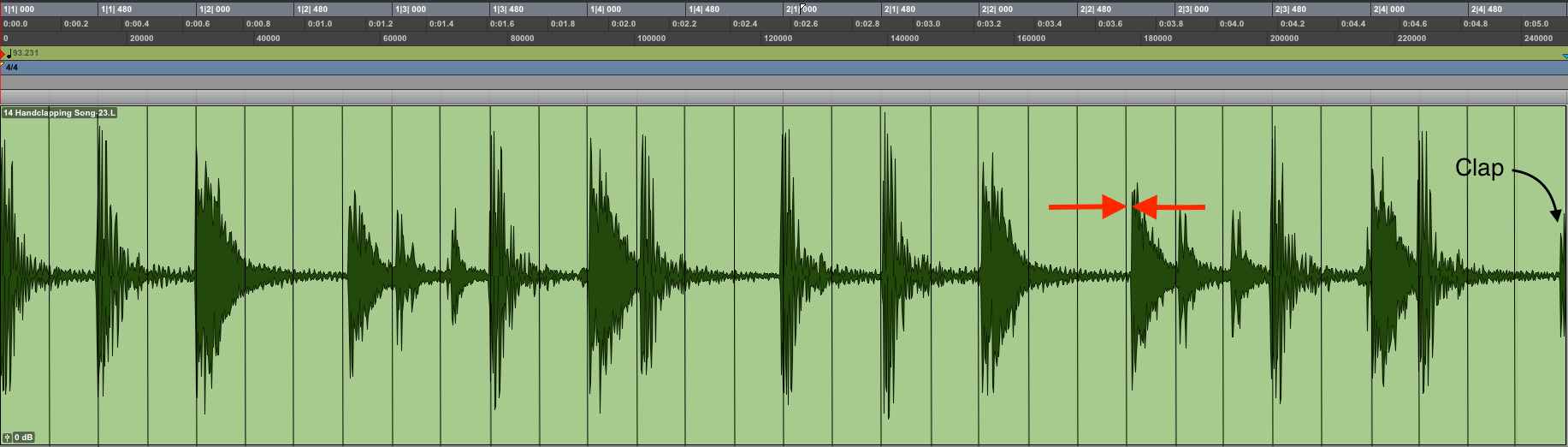
These advanced techniques—dragging, rushing, and mismatched swing—are powerful tools for creating the complex, dynamic, and often unsettling grooves found in experimental breakbeat and industrial music.
Application by Genre
The theory of swing becomes most useful when applied to your specific musical goals. Different genres of electronic music use swing in characteristic ways.
The blog post "Swing, Shuffle, and Humanization" provides an excellent genre-specific guide.
Swing, Shuffle, and Humanization: How To Program Grooves
This article from the Samplefocus Blog offers practical advice for applying groove in different production contexts.
Study the table under the heading "Groove Techniques by Genre." Pay special attention to the recommendations for: House and Techno: Often feature a tight, driving foundation with minimal swing on the main kick/snare. The groove comes from applying subtle swing or micro-timing shifts to hi-hats, shakers, or other percussion. Breakbeat: Thrives on syncopation and off-kilter feels. Swing is often more pronounced and can even vary from bar to bar to create unpredictability. Hip-Hop / Neo-Soul (Dilla-style): The home of heavy dragging and unusual swing grids based on quintuplets or septuplets, as we discussed in the last lesson. Drum & Bass: Can vary dramatically. Some styles, like Neurofunk, rush elements to create forward momentum, while others are looser.
As a practical exercise, create a simple 4/4 beat in your DAW with a kick on every beat and a 16th-note hi-hat pattern. Experiment with your DAW's global swing control. Start at 50% (or 0%) and slowly increase it, listening to how the feel changes. Then, try applying swing only to the hi-hat track, keeping the kick perfectly straight. This contrast is a cornerstone of many electronic grooves.
Conclusion
Today we have deconstructed the concept of swing, moving from its basic definition to its mathematical and physical underpinnings, and finally to its creative application in electronic music.
Key Takeaways:
- Swing is the systematic delay of off-beat notes to create a "bouncing" feel. Shuffle is a specific, triplet-based swing with a 2:1 rhythmic ratio.
- Swing can be quantified as a ratio or percentage, but you must be aware of how your specific DAW implements these values.
- A more dynamic model suggests that swing ratio often varies with tempo, potentially explained by a near-constant off-beat duration of ~100 ms.
- Advanced techniques pioneered by producers like J Dilla involve micro-timing individual notes (dragging/rushing) and layering elements with mismatched swing values.
- The application of swing is highly genre-dependent, ranging from the subtle hi-hat grooves of techno to the complex, off-kilter rhythms of breakbeat.
In our next lesson, we will expand on the idea of micro-timing by exploring rhythmic displacement. While today we focused on shifting notes within the beat, next time we will look at shifting entire rhythmic patterns forward or backward relative to the bar line, a powerful technique for creating large-scale syncopation and rhythmic tension.