Introduction
Welcome back to our module on Advanced Clinical Management with Swasthawritta. In the previous lesson, you successfully designed a comprehensive lifestyle plan for a patient with Type 2 Diabetes (Madhumeha). The core of that exercise was to move beyond generic advice and architect a personalized intervention by analyzing the patient's unique Samprapti (pathogenesis) and integrating classical Ayurvedic wisdom with modern chronobiology.
Today, we will apply this same rigorous, case-based methodology to another prevalent lifestyle disorder. Our learning outcome is to develop a Swasthawritta-based management protocol for a case of Essential Hypertension (Raktachapa Vriddhi). You will again step into the role of the clinician, analyzing the deep-seated causes of the condition and formulating a plan that addresses the patient's entire being—diet, activity, and mind.
Let's begin by examining the case.
Case Study: Mrs. Gupta
- Patient: Mrs. Sunita Gupta, 52-year-old female, senior marketing executive.
- Presenting Complaints:
- Recurrent dull headaches (Shirahshoola), especially during stressful periods at work.
- Occasional spells of dizziness (Bhrama) and palpitations.
- Reports feeling irritable (Krodhaprachurata), having a short temper, and experiencing disturbed sleep for the last year.
- History: Diagnosed with Stage 1 Essential Hypertension (BP 150/95 mmHg) during a routine check-up. Her physician has recommended immediate lifestyle changes, with a plan to start medication in one month if there's no improvement. She is anxious about starting lifelong medication and seeks an Ayurvedic approach for management.
- Personal History:
- Diet (Ahara): High intake of salty and spicy foods; loves pickles (Amla-Lavana), chips, and processed snacks. Consumes coffee 3-4 times a day to manage work pressure. Meal timings are often irregular, with lunch frequently delayed.
- Lifestyle (Vihara): Highly stressful and competitive job. Mostly sedentary, with long hours of sitting. Has no structured exercise routine.
- Sleep (Nidra): Finds it difficult to "switch off" her mind at night. Sleeps around 11:30 PM - 12:00 AM and often wakes up 1-2 times, feeling unrefreshed.
- Mind (Manas): Acknowledges high levels of work-related stress (Chinta) and a tendency towards anger (Krodha).
- Ayurvedic Examination:
- Prakruti: Pitta-Vata
- Vikruti: Significant aggravation of Pitta (especially Sadhaka Pitta) and Vata (especially Prana and Vyana Vata). Clear signs of Rakta Dhatu Dushti.
- Agni: Tikshnagni (sharp but variable digestion) impaired by stress.
- Srotas Involvement: Vitiation of Rasavaha, Raktavaha, and Manovaha Srotas.
- Lab Reports:
- Blood Pressure: 150/95 mmHg
- Lipid Profile: Total Cholesterol 210 mg/dL, LDL 135 mg/dL.
- Other parameters within normal limits.
1. Analyzing the Case: The Ayurvedic Pathogenesis (Samprapti)
Unlike Madhumeha, there is no single classical disease named "Hypertension." However, its pathophysiology is well-described through the functions of Doshas, Dhatus, and the concept of Avarana. To build an effective protocol, we must first construct a robust Ayurvedic understanding of the condition.
To start, let's explore how blood pressure is physiologically regulated according to Ayurvedic principles and how this correlates with modern physiology.
Understanding hypertension in the light of Ayurveda - PMC
The research paper 'Understanding hypertension in the light of Ayurveda' provides an excellent conceptual bridge. It details the specific roles of Dosha subtypes and Dhatus in maintaining and disrupting blood pressure.
Please read the section titled 'Physiological aspects of blood pressure in Ayurveda'. Focus on how the functions of Vyana Vata, Prana Vata, Sadhaka Pitta, and Avalambaka Kapha are mapped to the components of blood pressure regulation like systole, heart rate control, and peripheral resistance.
From this reading, we can see a clear correlation:
- Systolic Pressure: Driven by the propulsive force of Vyana Vata, which is responsible for circulation.
- Heart Rate & Vasomotor Tone: Controlled by Prana Vata (located in the head, governing the heart) and Sadhaka Pitta (regulating emotional and cardiac function).
- Peripheral Resistance: Influenced by the structural integrity and elasticity of blood vessels, which is a function of Kapha Dosha.
Now, let's trace Mrs. Gupta's Samprapti:
-
Nidana Sevana (Indulgence in Causative Factors):
- Ahara: Excessive intake of Lavana, Amla, Katu rasa (salty, sour, spicy food) and Ushna (hot potency) substances like coffee directly vitiates Pitta and Rakta.
- Vihara: Psychological stress (Chinta), anger (Krodha), and lack of proper rest disturb Prana Vata and overheat Sadhaka Pitta.
These factors are highlighted in the article LINK as key Nidanas for Rakta Dusti and Pittaja Hridroga.
-
Dosha-Dhatu Dushti (Vitiation): The causative factors lead to a pathological increase of Vata and Pitta. This vitiated duo then affects the Rasa and Rakta Dhatus, making the blood more Ushna (hot) and Tikshna (sharp/penetrating) and impairing its normal flow. Mrs. Gupta's symptoms of headache, irritability, and palpitations are classic signs of this process.
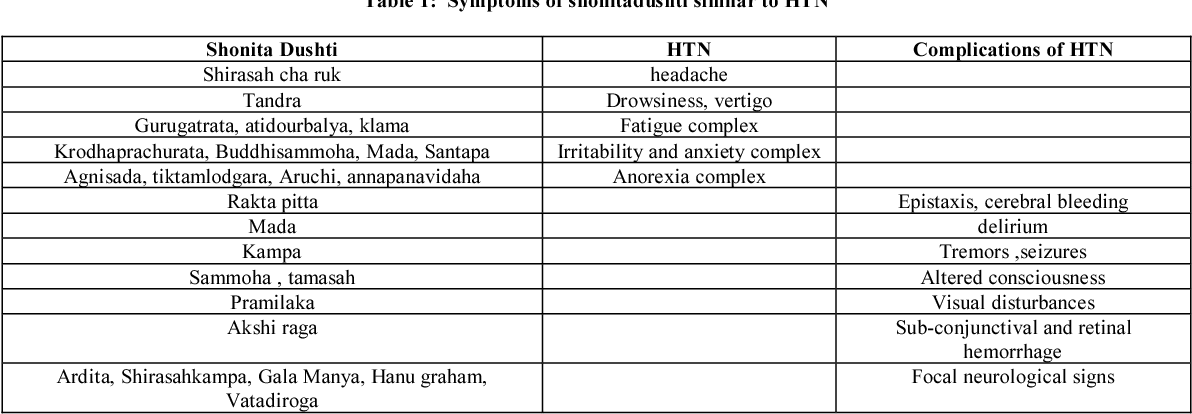
- Samprapti Ghataka (Key Pathological Events):
- Prasara Avastha: The vitiated Doshas are in a state of overflow, circulating throughout the body via the Rakta, qualifying hypertension as a systemic condition or a risk factor, rather than a localized disease. This is described as the Prasarvastha in the Shad Kriyakala (six stages of disease).
- Avarana (Occlusion): This is a crucial "deep concept" in understanding chronic hypertension. Here, the aggravated, liquid, and hot qualities of Pitta obstruct the normal, free-flowing nature of Vata. This is a state of Pittavrita Vata. This obstruction forces Vata to move erratically, increasing pressure within the vessels. This explains the combination of high pressure with symptoms like dizziness and palpitations.
2. The Intervention Strategy: A Multi-pronged Swasthawritta Approach
Our management strategy must be aimed at Samprapti Vighatana (breaking the pathogenic chain). Based on our analysis, the key therapeutic goals are:
- Pitta-Vata Shamana: Pacifying the aggravated Doshas.
- Rakta Prasadana/Shodhana: Purifying and calming the vitiated blood tissue.
- Vatanulomana: Restoring the normal, unobstructed flow of Vata.
- Manasika Shanti: Directly targeting mental stress, a primary Nidana.
These goals are primarily achieved through meticulous lifestyle and dietary modifications, which form the bedrock of Swasthawritta. To see how such a plan is structured in practice, let's review a published case study.
A CASE STUDY ON HYPERTENSION (HTN) AND ITS ...
The article 'A CASE STUDY ON HYPERTENSION (HTN) AND ITS MANAGEMENT...' provides a practical template for a Swasthawritta-based intervention. It integrates modern dietary advice (DASH diet) with core Ayurvedic principles.
Please review the 'Management Plan' section to understand the four pillars of intervention: Diet, Physical Activity, Stress Management, and Cessation of adverse habits. Then, study 'Table No. 6 Dash Diet for Hypertension' for specific food recommendations that we will adapt for Mrs. Gupta.
Now, let's use these principles and practical examples to design a personalized protocol for Mrs. Gupta.
3. Designing the Comprehensive Swasthawritta Plan
This plan is tailored for a Pitta-Vata individual, emphasizing cooling, calming, and regularizing interventions.
A. Ahara Niyantrana (Dietary Intervention Plan)
Principle: Adopt a Pitta-Vata Shamaka diet low in sodium and high in potassium and magnesium. We will integrate the evidence-based DASH (Dietary Approaches to Stop Hypertension) diet into an Ayurvedic framework.
| Timing | Meal | Rationale & Specific Recommendations |
|---|---|---|
| Morning | Soaked Raisins & Warm Water | Start the day with 10-15 soaked black raisins (Draksha) to support Rakta Dhatu and have a pacifying effect on Pitta. Avoid coffee. Switch to a cooling herbal tea like mint or rose petal. |
| Breakfast (8:00 AM) | Grounding & Nourishing | A bowl of oatmeal porridge with sweet spices like cardamom and a stewed apple. Or a moong dal cheela (lentil crepe) with mint chutney. Avoid: Skipping meals, which aggravates Vata. |
| Lunch (12:30 PM) | Main Meal, Cooling & Balanced | Grains: Whole wheat roti or barley (Yava). Small portion of aged basmati rice. Vegetables: Focus on sweet and bitter tastes. Bottle gourd (Lauki), cucumber, leafy greens. Pulses: Green gram (Mudga). A glass of fresh buttermilk (Takra) spiced with cumin and coriander. AVOID: Pickles, excess salt, fried foods. |
| Evening Snack (4:00 PM) | Sweet & Hydrating | A ripe sweet fruit like a pear or a small bowl of pomegranate (Dadima), which is an excellent cardio-protective and Pitta-pacifying fruit. |
| Dinner (By 7:00 PM) | Light, Soupy, & Early | A bowl of light vegetable soup (e.g., mung bean and vegetable) or a small portion of khichdi. This ensures easy digestion before the Pitta time of night begins at 10 PM. |
| General | Spices, Oils, and Fluids | Use cooling spices: coriander, cumin, fennel, mint. Use ghee or coconut oil in moderation. Strictly limit salt to <1500mg/day. Avoid all processed/packaged foods. Drink plenty of room-temperature water. |
B. Vihara Parivartana (Lifestyle & Activity Plan)
Principle: Introduce regular, calming movement to balance Vata without aggravating Pitta. Establish a routine (Dinacharya) to create stability.
| Aspect | Recommendation | Rationale & Specifics |
|---|---|---|
| Waking | Aim for 6:00 AM | Establishing a consistent wake time helps regulate the body's rhythms and pacifies Vata. |
| Exercise | Morning (6:30 AM) or Evening (6:00 PM): 30-40 minutes daily. | Moderate, calming exercise. A mindful walk in nature (especially near grass or water), swimming, or gentle cycling. Avoid: High-intensity workouts during the hottest part of the day, which would severely aggravate Pitta. |
| Yoga Asanas | Cooling & Grounding Poses: Shashankasana (Child's Pose), Marjaryasana (Cat-Cow), Paschimottanasana (Seated Forward Bend), Viparita Karani (Legs-up-the-wall Pose). | These poses calm the nervous system, release tension from the back and shoulders, and promote relaxation. Surya Namaskar should be done slowly and mindfully, not as a vigorous exercise. |
| Pranayama | 15 minutes daily: Anulom Vilom (10 mins), Sheetali/Sheetkari (3 mins), Bhramari (2 mins). | Anulom Vilom (Alternate Nostril Breathing) is excellent for balancing the sympathetic/parasympathetic nervous systems. Sheetali (Cooling Breath) directly pacifies Pitta. Bhramari (Humming Bee Breath) is profoundly calming for the mind. Strictly avoid heating pranayamas like Bhastrika or Kapalbhati. |
| Sleep | In bed by 10:00 PM. No screens after 9:30 PM. | This is non-negotiable for a Pitta-aggravated condition. The 10 PM to 2 AM window is the Pitta period of the night, crucial for metabolic and psychic detoxification. Sleeping through it prevents Pitta from overflowing into the system and creating agitation and heat. A gentle foot massage with warm sesame oil can aid sleep. |
Test your understanding!
In the previous lesson for the Kapha-dominant diabetes patient, we recommended vigorous exercise and stimulating pranayamas like Bhastrika. Why is the Vihara prescription for Mrs. Gupta, a Pitta-Vata individual, fundamentally different?
Show answer
The Vihara must be Dosha-specific. The Kapha patient required stimulating, heating, and vigorous activity to overcome sluggishness, heaviness, and obstruction. Mrs. Gupta, with her Pitta-Vata imbalance, requires the opposite. Her system is already over-stimulated, hot, and light/mobile. Therefore, her Vihara focuses on calming, cooling, and grounding activities to pacify Pitta and stabilize Vata, preventing further aggravation. Prescribing vigorous exercise or heating pranayama would worsen her condition.
C. Manasika Shanti (Mental Well-being Plan)
Principle: Address the root cause by actively managing stress and pacifying Sadhaka Pitta. This is not an optional add-on but a central pillar of treatment.
- Mindful Disengagement: Schedule "no-work" buffer zones at the beginning and end of the day. A 15-minute period of quiet sitting or listening to calm music before starting work and after finishing.
- Stress-Response Training: When feeling anger or stress rising, practice a "pause": take three slow, deep breaths before reacting. This interrupts the neuro-hormonal cascade that spikes blood pressure.
- Meditation: 10-15 minutes of daily guided meditation focusing on cooling visualizations (e.g., a serene lake) or simple breath awareness.
- Sadvritta (Ethical Conduct): Counsel on the importance of Dhee, Dhairya, Atmadi Vijnanam (cultivating intellect, courage, and self-knowledge) to manage professional ambitions without sacrificing health. The practice of consciously letting go of anger (Krodha Vega Nigrahana) is direct therapy.
Conclusion
You have successfully constructed a detailed, personalized Swasthawritta protocol for a patient with essential hypertension. This plan demonstrates how a modern diagnosis can be effectively managed through a purely Ayurvedic lens that is both profound in its theoretical basis and practical in its application.
Key Takeaways:
- Hypertension as a Dosha Imbalance: Essential hypertension is not just a number; it is a systemic state of Pitta-Vata aggravation affecting the Rasa, Rakta, and Manovaha Srotas.
- Avarana as a Key Concept: Understanding hypertension as a form of Avarana (occlusion) provides a deeper rationale for therapies aimed at restoring the normal flow of Vata (Vatanulomana).
- The Primacy of Mind: In Pitta-driven disorders like hypertension, managing the mind through stress reduction and emotional regulation is as critical as managing the diet.
- Personalization is Paramount: The cooling and calming plan for the Pitta-Vata patient stands in stark contrast to the stimulating and lightening plan for the Kapha patient in our last lesson, highlighting the necessity of individualized care.
Preview of the Next Lesson:
We will continue to build on your clinical formulation skills. In the next lesson, we will address a condition that is a direct consequence of a modern lifestyle: "Create an integrated Swasthawritta plan for managing Obesity (Sthaulya), addressing Ahara, Vihara, and psychological factors."