Introduction
Welcome to the first lesson of our module on Advanced Clinical Management. In the previous module, we honed your ability to critically appraise and synthesize evidence from both classical texts and modern research. You learned to construct a robust, multi-layered rationale for Swasthawritta practices by integrating the "what" of Ayurveda with the "why" of contemporary science, such as chronobiology.
Today, we put that synthesized knowledge into practice. This lesson is entirely case-based and targets our learning outcome: Design a comprehensive Swasthawritta-based lifestyle intervention plan for a case of Type 2 Diabetes (Madhumeha). You will act as the clinician, taking a patient from initial assessment to the creation of a detailed, personalized lifestyle plan. This process will require you to draw upon your understanding of Dinacharya, Ritucharya, Aharavidhi, and the foundational principles of Swasthya to formulate a plan aimed at Samprapti Vighatana—breaking the pathogenic process at its root.
Let's begin by meeting your patient.
Case Study: Mr. Sharma
- Patient: Mr. Anand Sharma, 45-year-old male, software project manager.
- Presenting Complaints:
- Feeling increasingly tired and lethargic for the past 6-8 months, especially post-lunch.
- Reports frequent urination (Prabhuta Mutrata) and excessive thirst (Trishna).
- Has gained approximately 10 kg over the last year, primarily around the abdomen.
- Experiences recurrent boils (Pidaka) on his back.
- History: Recently diagnosed with Type 2 Diabetes Mellitus during a routine corporate health check-up. His physician has advised lifestyle modification for three months before considering medication. He is seeking an Ayurvedic approach to manage his condition.
- Personal History:
- Diet (Ahara): Irregular meal times. Often skips breakfast or has just coffee. Lunch is typically a heavy meal from the office cafeteria around 2 PM. Dinner is his largest meal, often eaten after 10 PM, and includes rich, oily, and sweet foods. He craves sweets and snacks on biscuits and chips while working late.
- Lifestyle (Vihara): Sedentary job involving 10-12 hours of screen time. No regular exercise. He describes his work as highly stressful with tight deadlines.
- Sleep (Nidra): Sleeps late, usually after midnight, and wakes up around 7:30-8:00 AM feeling unrefreshed. Often experiences daytime sleepiness (Divaswapna).
- Ayurvedic Examination:
- Prakruti: Kapha-Pitta
- Vikruti: Predominant Kapha and Pitta aggravation, with secondary Vata vitiation due to obstruction (Avarana).
- Agni: Mandagni (sluggish digestion), evident from post-meal lethargy and Ama formation.
- Mala: Irregular bowel movements, often feeling incomplete.
- Dhatu involvement: Rasa (improper nourishment), Meda (excessive and vitiated adipose tissue), Kleda (vitiated bodily fluids).
- Srotas involvement: Udakavaha (thirst), Annavaha (impaired digestion), Medovaha (central obesity).
- Lab Reports:
- Fasting Blood Sugar (FBS): 145 mg/dL
- Post-Prandial Blood Sugar (PPBS): 220 mg/dL
- HbA1c: 7.8%
- Lipid Profile: Total Cholesterol 240 mg/dL, Triglycerides 200 mg/dL.
1. Analyzing the Case: The Ayurvedic Pathogenesis (Samprapti)
Before designing a plan, we must first understand the root cause. Mr. Sharma's case is a classic example of Santarpanottha Vyadhi (a disease born from over-nutrition and a sedentary lifestyle).
To grasp the core Ayurvedic understanding of Madhumeha, it's essential to review the classical definitions and aetiology.
management of metabolic disorders
The document 'Standard Treatment Guidelines in Ayurveda on Metabolic Disorders' by the Central Council for Research in Ayurvedic Sciences provides a concise summary of Madhumeha's pathogenesis. This will help you formalize your analysis of Mr. Sharma's case.
Please read the sections titled 'CASE DEFINITION', 'INTRODUCTION', 'Aetiology and risk factors as per Ayurveda', and 'Samprapti/Pathogenesis'. Focus on how the patient's history aligns with the described Nidanas (causative factors) and the development of the disease.
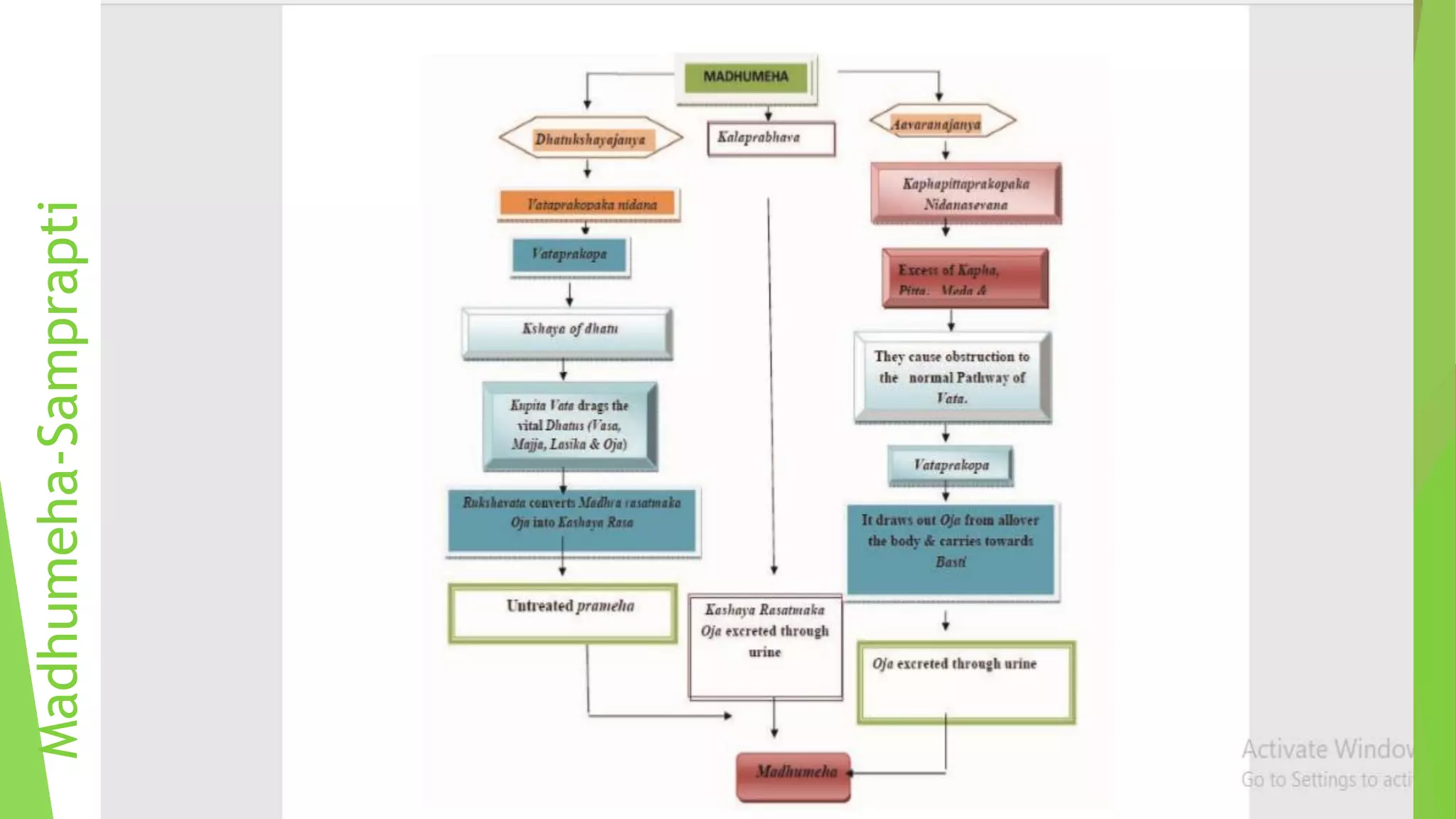
Based on this reading and the case details, we can trace the Samprapti:
- Nidana Sevana (Indulgence in Causative Factors): Excessive intake of Guru (heavy), Snigdha (oily), and Madhura (sweet) foods, combined with a sedentary lifestyle (Avyayama) and daytime sleep (Divaswapna).
- Dosha Dushti: This leads to the aggravation of Kapha Dosha primarily.
- Dhatu Dushti: The vitiated Kapha impairs Agni (Mandagni), leading to the formation of Ama (metabolic toxins). This, in turn, vitiates Meda Dhatu and increases Kleda throughout the body.
- Srotorodha (Channel Obstruction): The excessive Meda, Kleda, and Kapha obstruct the channels (Srotas), particularly impeding the normal movement of Vata Dosha.
- Manifestation of Madhumeha: This obstructed Vata then abnormally draws the essence of vitality, Ojas, into the urinary system, leading to its excretion. This is the hallmark of Madhumeha.
This specific pathway is known as Avaranajanya Madhumeha, where the pathology is driven by obstruction.
Test your understanding!
Based on the case details and your reading, identify at least five specific Nidanas (causative factors) from Mr. Sharma's lifestyle that directly contribute to the Avaranajanya Samprapti of Madhumeha.
Show answer
- Asya Sukham (Sedentary pleasure): His desk job with long hours of sitting.
- Swapna Sukham / Divaswapna (Pleasure of sleep / Daytime sleep): Daytime sleepiness and a generally sluggish routine.
- Adhyashana / Vishamashana (Irregular eating): Skipping breakfast and having heavy, late dinners.
- Guru, Snigdha, Madhura Ahara (Heavy, oily, sweet food): His dietary choices, especially for dinner and snacks.
- Avyayama (Lack of exercise): No regular physical activity.
2. The Intervention Strategy: Integrating Ayurveda and Modern Science
Our goal is Samprapti Vighatana. The line of treatment for a strong, obese (Sthula) diabetic patient like Mr. Sharma is Apatarpana (de-pleting/lightening therapies) and Shodhana (purification), as opposed to Brumhana (nourishing therapies) for a lean patient. A Swasthawritta plan is fundamentally an Apatarpana approach, aiming to reduce the pathogenic load and rekindle Agni.
We will structure the plan around three pillars:
- Ahara Niyantrana (Dietary Control)
- Vihara Parivartana (Lifestyle Modification)
- Manasika Shanti (Mental Well-being)
To make this plan compelling and effective, we will integrate the principles of chronobiology you learned in the last module, providing a powerful rationale for our recommendations.
How Sleeping on Time Reverses Type 2 Diabetes Natur
The article 'How Sleeping on Time Reverses Type 2 Diabetes' provides an excellent bridge between Ayurvedic principles and modern chronobiology, specifically for diabetes. It explains the 'why' behind the 'what' of our recommendations.
Please read the sections 'What is Circadian Fasting...', 'The Link Between Sleep, Eating Timing, and Blood Sugar', 'The Ayurvedic Perspective...', and 'How Syncing with Your Natural Clock Can Reverse Insulin Resistance'. Pay close attention to how it connects meal timing, sleep, insulin sensitivity, and Dosha-specific tendencies.
Now, let's use the insights from this article and the Ayurvedic guidelines to build a concrete plan for Mr. Sharma.
3. Designing the Comprehensive Swasthawritta Plan
This plan must be practical, personalized, and progressive. We will use the specific recommendations from our resources to tailor it to a Kapha-Pitta individual.
Resource for Specific Recommendations:
For detailed lists of foods, herbs, and yoga postures, we will refer back to the "management of metabolic disorders" (ID: LINK) guideline, specifically sections on Pathya/Apathya and Yoga. We will also use the practical routines from the "How Sleeping on Time..." (ID: LINK) article.
A. Ahara Niyantrana (Dietary Intervention Plan)
Principle: Shift from a Kapha-aggravating, Agni-suppressing diet to one that is Kapha-Pitta Shamaka (pacifying), Lekhana (scraping), and Agni-Deepana (kindling digestive fire). Align meal timings with the body's natural circadian rhythm to improve insulin sensitivity.
| Timing | Meal | Rationale & Specific Recommendations |
|---|---|---|
| Morning | Warm Water with Lemon/Herbal Tea | Upon waking, to stimulate metabolism and aid elimination. For his Kapha nature, a tea of Trikatu (ginger, black pepper, long pepper) or cinnamon would be excellent to boost Agni. |
| Breakfast (8:00 AM) | Light & Warm | A small bowl of vegetable dalia (broken wheat porridge), moong dal cheela (lentil crepe), or oats. Avoid: Skipped meals. This sets a stable metabolic rhythm for the day. |
| Lunch (12:30 PM - 1:00 PM) | Main Meal of the Day | Grains: 1-2 rotis made from Yava (barley) or a mix of whole wheat and chickpea flour. Small portion of old, unpolished rice. Vegetables: Focus on bitter and astringent tastes like bitter gourd (Karavellaka), fenugreek (Methika), and leafy greens. Pulses: Mudga (green gram), Kulattha (horse gram). AVOID: Curd, heavy meats. |
| Evening Snack (4:00 PM - 5:00 PM) | Light & Hydrating | A handful of roasted chickpeas (Chana) or a small bowl of buttermilk (Takra) with cumin and rock salt. Avoid: Sugary biscuits, fried snacks. |
| Dinner (By 7:00 PM) | Lightest Meal | A bowl of warm vegetable or lentil soup. Sautéed or steamed vegetables. Strictly Avoid: Heavy grains, non-veg, sweets, and oily foods. This aligns with declining Agni and insulin sensitivity in the evening. This single change is crucial for reducing overnight Ama formation. |
| General | Spices, Oils, and Fluids | Use spices like turmeric (Haridra), cinnamon (Tvak), and garlic (Lashuna) in cooking. Use minimal oil (mustard or sesame oil). Drink warm water throughout the day. Avoid cold drinks and excessive fruit juices. |
B. Vihara Parivartana (Lifestyle & Activity Plan)
Principle: Transition from a sedentary (Kapha-aggravating) lifestyle to an active one. Synchronize the daily routine (Dinacharya) with the Dosha Kala to promote hormonal balance and vitality.
| Aspect | Recommendation | Rationale & Specifics |
|---|---|---|
| Waking | 5:30 AM - 6:00 AM | Wake up before sunrise, during the end of the Vata period, to feel light and energetic. This prevents the sluggishness of the morning Kapha period (6 AM-10 AM). |
| Exercise | Morning (6:30 AM - 7:15 AM): 45 minutes daily. | For his Kapha constitution, vigorous exercise is needed. Brisk walking, jogging, or cycling. This improves glucose uptake by muscles. |
| Yoga | Asanas: Surya Namaskar (7-10 rounds), Paschimottanasana, Ardha Matsyendrasana, Bhujangasana, Halasana. | These postures massage abdominal organs, including the pancreas, improve flexibility, and aid in fat redistribution. Refer to Table 12 in the LINK resource for a full list. |
| Pranayama | Bhastrika (Bellows Breath) & Kapalbhati (5 minutes each). Anulom Vilom (Alternate Nostril Breathing) (10 minutes). | Bhastrika and Kapalbhati are heating and stimulating, ideal for countering Kapha and boosting metabolism. Anulom Vilom balances the nervous system and reduces stress. |
| Sleep | In bed by 10:00 PM. No screens after 9:00 PM. | This is critical. Sleeping by 10 PM aligns with the body's natural release of melatonin and allows for the crucial metabolic repair and hormonal reset that occurs between 10 PM and 2 AM (the Pitta period of the night). It directly combats insulin resistance. This is a non-negotiable part of the plan. |
C. Manasika Shanti (Mental Well-being Plan)
Principle: Manage stress (Chinta), a key contributor to metabolic disease via the cortisol pathway. Cultivate mindfulness and emotional equilibrium as part of Sadvritta (code of good conduct).
- Mindful Breaks: Take a 5-minute break every hour at work to stretch and practice deep diaphragmatic breathing.
- Digital Detox: No work-related screen time after 9:00 PM. Create a relaxing wind-down routine (e.g., reading, listening to calm music).
- Meditation: Practice 10-15 minutes of guided meditation or simple breath awareness meditation before sleep to calm the mind and lower cortisol levels.
- Counseling: Advise the patient on the importance of detaching from work-related stress and cultivating a balanced perspective, which is the essence of applying Sadvritta in modern life.
Conclusion
You have now designed a comprehensive, multi-faceted Swasthawritta plan for a patient with Type 2 Diabetes. This plan is not just a list of 'dos and don'ts'; it is a strategic intervention designed to reverse the disease process at its root.
Key Takeaways:
- Holistic Assessment is Key: A successful plan begins with a thorough analysis of the patient's Prakruti, Vikruti, Nidanas, and Samprapti.
- Integration is Power: The most effective interventions blend the timeless wisdom of Ayurveda (e.g., Pathya-Apathya, Dosha Kala) with modern scientific understanding (e.g., chronobiology, insulin sensitivity).
- Timing is Therapy: For metabolic disorders like Madhumeha, when you eat and sleep is as important as what you eat and how you exercise.
- Personalization is Essential: The plan was specifically tailored to Mr. Sharma's Kapha-Pitta constitution, focusing on vigorous exercise and stimulating, light foods, which might be different for a Vata-dominant individual.
Preview of the Next Lesson:
We will continue our case-based exploration of advanced clinical management. In the next lesson, you will apply the same principles to another common lifestyle disorder: "Develop a Swasthawritta-based management protocol for a case of Essential Hypertension (Raktachapa Vriddhi)."