Introduction
Welcome to your next lesson on the principles of Dinacharya. In our previous session, we analyzed Pratimarsha Nasya, establishing its role as a daily practice for nourishing the supraclavicular organs via the nasal route, which the classics describe as the "gateway to the head." We carefully distinguished it from the therapeutic Marsha Nasya used in Panchakarma.
Today, we continue our exploration of practices for the head and sense organs by focusing on the oral cavity, the gateway to the gastrointestinal tract. Our learning outcome is to analyze the classical principles, methods, and benefits of Gandusha and Kavala for oral hygiene and systemic health.
These ancient practices, which include what is popularly known as "oil pulling," are cornerstones of Ayurvedic oral care. We will dissect their fundamental differences, explore their therapeutic classifications, and understand their profound impact not just on the mouth, but on the entire body. This analysis will integrate classical wisdom with perspectives from modern biomedical science, aligning with your goal to develop a deep, evidence-informed understanding.
1. Differentiating Gandusha and Kavala
The terms Gandusha and Kavala are often used interchangeably, but they represent two distinct procedures. A precise understanding of their differences is the foundation for correct clinical application.
The primary distinction lies in the quantity of liquid used and whether it is held stationary or moved around in the mouth.
To begin, let's turn to a comprehensive review paper that clearly outlines these differences.
A Holistic Review Of Kavala & Gandusha And It’s Potential...
Please read the section 'DIFFERENCE BETWEEN GANDUSHA AND KAVALA' in the paper 'A Holistic Review Of Kavala & Gandusha And It’s Potential...' by Ravi Sharma et al. The table provided offers a concise summary of the key distinctions.
Focus on 'TABLE NO. 1' which contrasts the two procedures based on definition, type of substance, movement, and quantity. This table is the most critical part of this section.
As you've seen in the resource, the differences can be summarized as follows:
| Feature | Gandusha | Kavala |
|---|---|---|
| Definition | Holding medicated liquid in the mouth to its full capacity without movement. | Holding a comfortable amount of medicated liquid or paste with movement (gargling/swishing). |
| Movement | Asanchari (Immobile) | Sanchari / Chalanasheela (Mobile) |
| Substance | Primarily liquid (Dravadravya) | Can be liquid (Dravadravya) or a paste (Kalka) |
| Quantity | Filled to capacity, making movement impossible. | A smaller quantity that facilitates easy movement within the oral cavity. |
In essence, Gandusha is a passive holding process, while Kavala is an active gargling or swishing process. This fundamental difference influences the choice of procedure for specific therapeutic goals.
2. Classical Principles and Therapeutic Types
Ayurvedic classics categorize Gandusha and Kavala based on their primary therapeutic action (Karma) and their effect on the Doshas. This classification system is essential for selecting the appropriate formulation for a patient. There are four main types.
A Holistic Review Of Kavala & Gandusha And It’s Potential...
Now, let's explore the four therapeutic types. Please read the sections discussing these classifications in both of the provided resources. The first resource provides a clear overview, and the second connects these types to specific indications from the Sharangadhara Samhita.
Study 'TABLE NO 2: TYPES OF KAVALA/GANDUSHA'. Note the name of the type, the targeted Dosha, the required properties (Dravya Guna), and the example substances (Dravya).
Kavala and Gandusha – Need for Oral Health
This resource provides additional clinical context by linking the types of Gandusha to their specific indications.
Review 'Table 3', which details the indications for each type of Gandusha according to Sharangadhara Samhita. This will help you connect the therapeutic type to a clinical condition.
Synthesizing the information from these resources, here are the four principal types:
-
Snehana (Oleating):
- Dosha: Pacifies Vata Dosha.
- Properties: Made with substances that are Madhura (sweet), Amla (sour), Lavana (salty), Snigdha (unctuous), and Ushna (warm).
- Indications: Dryness of mouth (Mukhashosha), roughness, cracked lips, and neurological conditions of the head and neck related to Vata.
- Dravyas: Medicated oils (like Tila Taila), ghee, milk, meat soup (Mamsarasa).
-
Shamana / Prasadana (Palliative / Soothing):
- Dosha: Pacifies Pitta Dosha.
- Properties: Formulated with drugs that are Tikta (bitter), Kashaya (astringent), Madhura (sweet), and Sheeta (cold).
- Indications: Burning sensation (Daha), mouth ulcers (Mukhapaka), thirst (Trishna), and inflammatory conditions.
- Dravyas: Decoctions of herbs like Yashtimadhu, Jambu, Amra, or substances like milk, ghee, honey, and sugarcane juice.
-
Shodhana (Purificatory / Cleansing):
- Dosha: Pacifies Kapha Dosha.
- Properties: Uses substances that are Katu (pungent), Amla (sour), Lavana (salty), Ushna (hot), and Tikshna (sharp/penetrating).
- Indications: Excess salivation (Kaphotklesha), heaviness (Jadya), anorexia (Aruchi), and accumulation of toxins.
- Dravyas: Decoctions of Trikatu, fermented liquids (Shukta, Kanji), cow's urine (Gomutra), and honey.
-
Ropana (Healing):
- Primary Action: Promotes wound healing (Vranaghna).
- Properties: Primarily Kashaya (astringent) and Tikta (bitter) tastes, which aid in tissue repair and cleansing.
- Indications: Healing of oral ulcers and wounds, stomatitis.
- Dravyas: Decoctions of Triphala, Daruharidra, or substances like honey and ghee.
This framework is your primary tool for clinical decision-making when prescribing Gandusha or Kavala.
3. Procedure (Vidhi) and Assessment
Proper administration is key to achieving the desired effects and avoiding complications. The classics provide a clear protocol.
A Holistic Review Of Kavala & Gandusha And It’s Potential...
Let's review the procedural details. Please read the section on the procedure and the signs of proper, inadequate, and excessive application in the 'A Holistic Review...' paper.
Read the sections 'PROCEDURE OF GANDUSHA AND KAVALA', 'Symptoms indicative of proper effects', 'Symptoms indicative of inadequate effects', 'Symptoms indicative of Excessive effects', and 'Contraindication'. This will provide a complete picture of the clinical application.
Procedure Summary:
- Position: The person should sit upright in a calm place with exposure to morning sunlight.
- Purvakarma (Preparatory Procedure): Gentle massage (Abhyanga) and fomentation (Swedana) should be applied to the cheeks, forehead, and neck. This helps to liquefy and mobilize Doshas.
- Dharana (Holding): The person should slightly tilt their head up and hold the prescribed liquid/paste.
- Duration: The liquid should be held until the mouth fills with secretions (Kapha accumulation) or until secretions appear from the nose and eyes.
- Nisthivana (Spitting): The contents are then spit out. The process can be repeated 3, 5, or 7 times, depending on the therapeutic need.
Assessment of Effects:
Your ability to assess the outcome is crucial for adjusting treatment.
- Samyak Yoga (Proper Effects): Alleviation of the disease, clarity of the sense organs (Indriyaprasada), lightness in the mouth (Vaktralaghava), and a feeling of freshness (Tushti).
- Heena Yoga (Inadequate Effects): Feeling of heaviness (Jadya), excessive salivation (Kaphotklesha), and impaired taste perception (Aruchi).
- Atiyoga (Excessive Effects): Mouth ulceration (Mukhapaka), dryness (Shosha), thirst (Trishna), and fatigue (Klama).
Contraindications:
These procedures should be avoided in individuals suffering from poisoning (Visha), fainting (Murcha), intoxication (Madarta), severe emaciation (Shosha), and bleeding disorders (Rakta-pitta).
4. Benefits for Oral and Systemic Health
The Ayurvedic view has always been that oral health is a mirror to systemic health. Modern medicine is increasingly validating this connection. Poor oral hygiene is now a known risk factor for several systemic diseases.
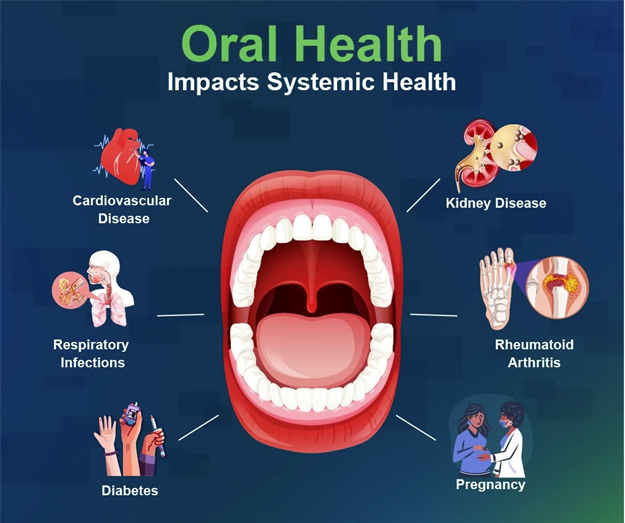
The benefits of Gandusha and Kavala extend far beyond the mouth. To understand how, let's explore their mode of action from both classical and modern viewpoints. The "Discussion" section of the "Holistic Review" paper is particularly insightful here.
Local Action:
- Mechanical Cleansing: The act of holding (Gandusha) or swishing (Kavala) mechanically dislodges food debris and microbial plaque.
- Salivary Stimulation: The procedure stimulates salivary glands. Saliva contains crucial antimicrobial components like Immunoglobulin A (IgA) and lysozyme, which act as a natural defense.
- pH Regulation: An acidic oral environment promotes bacterial growth. The medicated liquids help to neutralize the oral pH, creating a healthier environment.
Systemic Action:
This is where the practice demonstrates its deeper, systemic impact.
- Transmucosal Absorption: The mucous membrane under the tongue is extremely thin and highly vascular. This allows the active, lipid-soluble components (Veerya) of the medicated oils and herbs to be absorbed directly into the systemic circulation.
- Bypassing First-Pass Metabolism: Unlike drugs taken orally that are metabolized by the liver, substances absorbed through the oral mucosa enter the bloodstream directly. This results in higher bioavailability and a more potent systemic effect.
- Antimicrobial and Anti-inflammatory Effects: Many herbs used in these formulations, such as Haritaki, Amalaki, and those containing essential oils, have proven antimicrobial and anti-inflammatory properties. When absorbed, these properties can have a systemic influence. The phenolic compounds in many of these herbs, as mentioned in the resource, can denature bacterial proteins and alter cell membranes, similar to modern antiseptic mouthwashes but from a natural source.
Test your understanding! (Clinical Case)
A 35-year-old male patient with a Pitta-Vata constitution presents with recurrent canker sores (Mukhapaka), a mild burning sensation in the mouth, and sensitive teeth (Dantaharsha). He reports significant work-related stress.
- Which procedure would be more appropriate: Gandusha or Kavala?
- Which therapeutic type(s) would you choose to address his symptoms?
- Suggest a simple formulation based on the principles we've discussed. Explain your rationale.
Show answer
-
Procedure: Gandusha would be more appropriate. Since the primary issues are ulcers and burning (Pitta aggravation), the gentle, passive holding of a soothing liquid is preferable to the active, potentially irritating movement of Kavala.
-
Therapeutic Types:
- Shamana (Palliative): This is the primary choice to pacify Pitta and alleviate the burning sensation and inflammation.
- Ropana (Healing): This is essential for promoting the healing of the canker sores.
- Snehana (Oleating): A mild oleating action will help with the tooth sensitivity, which is often related to Vata.
-
Formulation and Rationale:
- Formulation: A Gandusha with lukewarm Yashtimadhu Ghrita (licorice-infused ghee) or simply plain ghee with a pinch of licorice powder.
- Rationale:
- Ghee (Ghrita): It is an excellent Pitta-shamana (Pitta-pacifying) and Ropana (healing) agent. Its Snigdha (unctuous) quality will also help with the Vata-related tooth sensitivity. It is a classic medium for Shamana and Snehana actions.
- Licorice (Yashtimadhu): It has Madhura Rasa (sweet taste), Sheeta Veerya (cold potency), and potent anti-inflammatory and ulcer-healing (Vranaropana) properties, making it ideal for treating canker sores and pacifying Pitta.
Conclusion
In this lesson, we have conducted a detailed analysis of Gandusha and Kavala, moving beyond the popular notion of oil pulling to understand their precise classical basis and profound therapeutic potential.
Key Takeaways:
- Gandusha is the immobile holding of a full mouth of liquid, while Kavala is the active swishing of a smaller quantity of liquid or paste.
- They are classified into four types—Snehana, Shamana, Shodhana, and Ropana—based on their action on the Doshas, allowing for targeted therapy.
- The procedure involves specific preparatory steps (Purvakarma) and requires careful assessment of its effects (Samyak/Heena/Atiyoga Lakṣaṇa) for safe and effective outcomes.
- The benefits are both local (cleansing, pH balance) and systemic, achieved through direct transmucosal absorption of active herbal principles into the bloodstream. This validates the Ayurvedic concept of the mouth's role in overall health.
Preview of the Next Lesson:
Our journey through the practices of Dinacharya continues. In the next lesson, we will explain the principles, types, and procedure of Dhoomapana as part of Dinacharya, including its indications and contraindications. This practice of inhaling medicated smoke serves to clear and strengthen the respiratory passages and organs of the head, offering another layer of daily maintenance for the Urdhvajatru region.