Hello! In our previous lesson, you defined the Ideal Customer Profile (ICP) for your new venture. This crucial step gave you a clear picture of who your perfect client is—their industry, size, challenges, and goals. Now that you know your audience, it's time to decide what you will sell them and for how much.
This lesson is about developing your service packages and a value-based pricing strategy. We will move away from the traditional creative agency model of trading time for money and into a pricing structure that reflects the strategic value and transformation you deliver. This is one of the most critical steps in positioning yourself as a high-level consultant, especially one leveraging AI to create immense efficiency and impact.
By the end of this lesson, you will have a concrete framework to define your offerings and confidently price them based on the results they generate for your clients.
1. The Mindset Shift: From Selling Hours to Selling Outcomes
For someone with your background running a creative studio, you're likely familiar with hourly rates or fixed-project fees based on estimated effort. This model has a fundamental flaw, especially for the AI-augmented consultancy you're building: it punishes efficiency. If you use AI to complete a strategic analysis in four hours instead of forty, the traditional model says you should earn ten times less. This is completely backward.
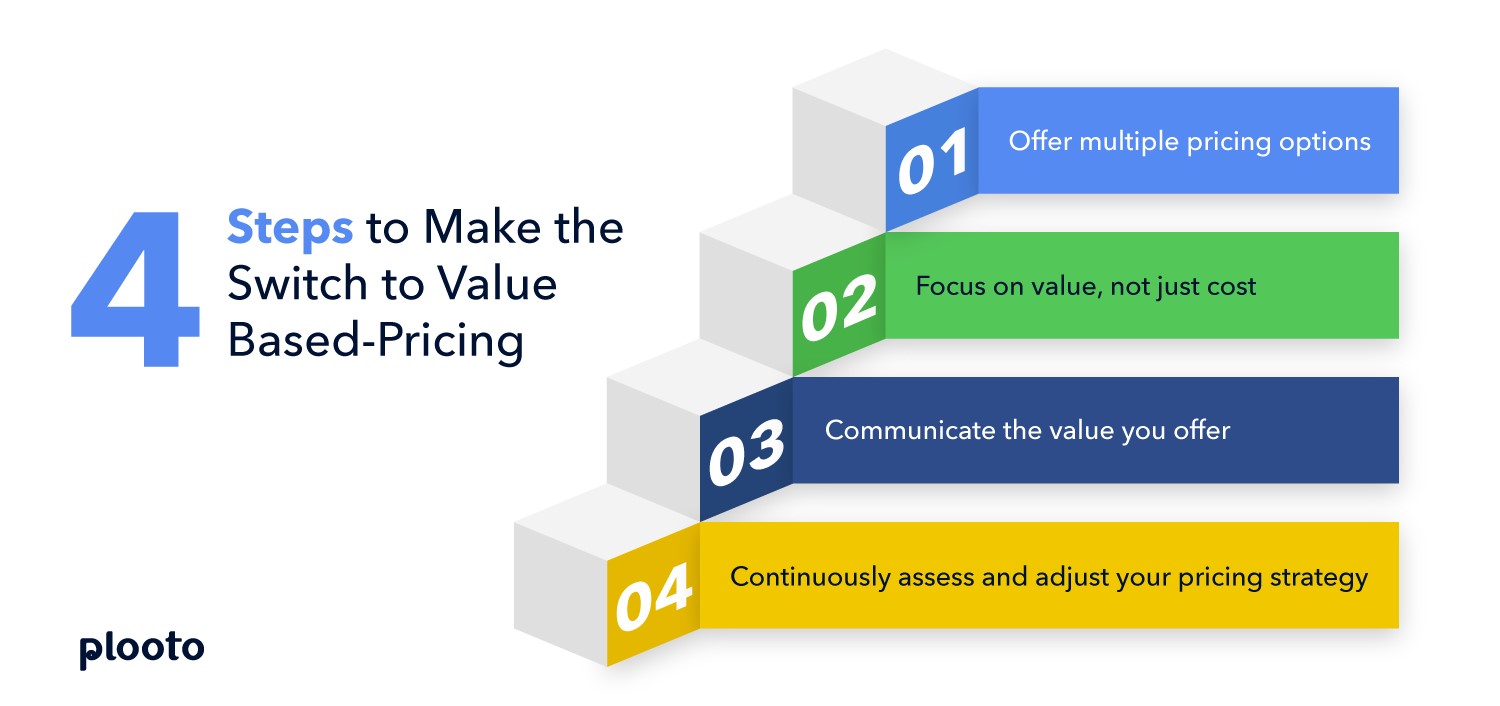
The solution is to adopt value-based pricing, where your fee is tied not to your time, but to the outcome you create for the client.
How to Price AI Workflows (Without Losing Clients)
To start, watch this short segment from Nate Herk of AI Automation. He clearly articulates the core mindset shift required.
Pay close attention to the first minute where he explains the difference between charging for inputs (your time) and charging for outcomes (saving money, saving time, reducing error). Watch from the beginning.
As he explains, businesses don't pay for your time; they pay for outcomes. Your ability to confidently walk a client through the math of their return on investment (ROI) is what transforms your price from an "expense" into a "strategic investment."
This is the foundational principle for everything that follows. To go deeper, let's explore a comprehensive guide on this topic.
From Hourly to Value-Based Pricing For The Modern Consultant
This article by Michael Zipursky from Consulting Success is a masterclass in this transition. It perfectly captures why hourly billing is an outdated "hamster wheel."
Read the introduction, "The Hourly Billing Trap That’s Killing Your Business," and the section "How AI Validates (and Demands) Value Pricing." You can find these at the beginning of the article and further down the page.
The key insight here is that AI amplifies, rather than replaces, your expertise. Therefore, the value you deliver increases, and your pricing should reflect that.
2. How to Uncover and Quantify Value
Value-based pricing sounds great in theory, but how do you determine what a project is "worth" to a client? The process begins with the "value conversation." This is a structured way of asking questions during your discovery calls to help the client articulate the financial and strategic impact of solving their problem.
From Hourly to Value-Based Pricing For The Modern Consultant
Let's return to the article from Consulting Success. The next section provides a script for these crucial conversations.
Read the section titled The Strategic Questions That Unlock Value. Focus on how the questions shift from tactical ("What's your budget?") to strategic ("What's the cost of the status quo?").
These questions help you uncover two types of value:
- Tangible Value: Increased revenue, reduced costs, time saved, new market opportunities. These are things you can put a number on.
- Intangible Value: Peace of mind, enhanced brand reputation, confidence in decision-making, reduced stress for the CEO. These are harder to quantify but are often powerful drivers for a purchase.
Once you've had this conversation, you can use a simple formula to calculate a price range.
The ROI Calculation
Several resources outline a similar method. Digital Applied suggests Project Price = Annual Value Created x Value Capture Rate (10-25%). Consulting Success offers ROI + Annual Impact + Intangibles = Your Fee Range, suggesting a 3-10x ROI for the client. Nate Herk in his video uses a simple "10x return" rule.
Let's consolidate this into one clear, procedural method:
- Identify Annual Value: During the value conversation, quantify the annual financial impact. This could be cost savings (e.g., fewer freelance hours) or revenue gains (e.g., faster lead conversion).
- Apply the 10x Rule: As a starting point, aim to price your solution so that the client receives a 10x return on their investment in the first year.
- Calculate Your Price: Your price is simply 10% of the Annual Value you identified.
How to Price AI Workflows (Without Losing Clients)
Let's watch Nate Herk walk through a tangible example of this calculation.
Watch the segment from where he calculates the price for a customer support automation workflow. He maps out the manual process, calculates the annual savings, and applies the 10x rule to arrive at a starting price.
This simple, defensible math is the "concrete procedure" that allows you to present a five-figure price with confidence, because you're not just presenting a cost—you're presenting a business case.
3. Productizing Your Service: From "Doer" to "Architect"
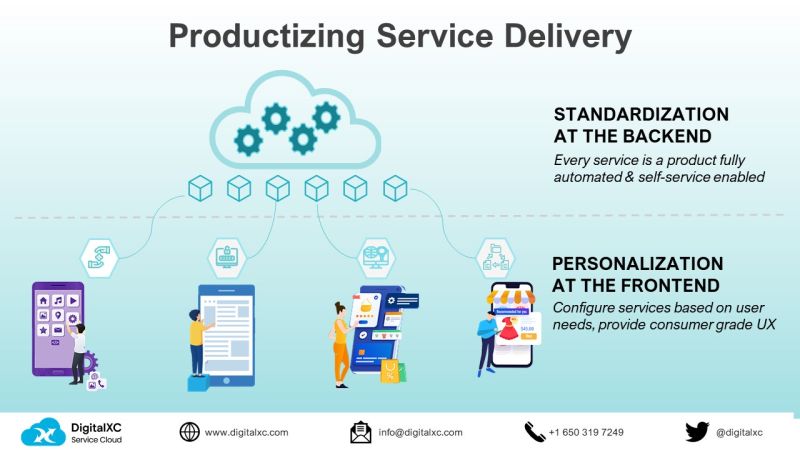
Your goal is to stop being a "doer" of bespoke tasks and become the "architect" of a scalable system. This means "productizing" your expertise—packaging your services into clear, repeatable offerings with defined scope and outcomes.
This approach standardizes the "backend" (your process) while allowing for personalization on the "frontend" (the client's specific needs), which is a concept you'll be familiar with from web development.
The most effective way to productize is to offer tiered packages. This leverages a psychological principle called "anchoring." By presenting three options, you change the client's decision from "Should I hire you?" to "Which way should I hire you?"
From Hourly to Value-Based Pricing For The Modern Consultant
The Consulting Success article provides an excellent, easy-to-follow framework for creating these tiers.
Read the section Why Options Multiply Your Revenue. Pay attention to the "Foundation, Transformation, Revolution" structure.
4. Designing Your Service Packages
Let's now apply this framework to your unique AI-augmented consultancy. Your packages should guide a client from discovery to full implementation. A powerful entry point, especially for a new and complex service like AI strategy, is a paid diagnostic or audit.
Don't Sell AI Workflows, Sell AI Audits (Massive Opportunity)
In this video, Andrew Dunn makes a compelling case for selling a strategic "AI Audit" instead of just "workflows." This perfectly aligns with your pivot to high-level strategy.
Watch the segment from where he reframes the service from a technical task to a strategic engagement, dramatically increasing its perceived value. Then, watch his description of the "AI Audit" entry-point offering from here.
Using this "audit-first" approach and the tiered structure, here is a blueprint for your service packages.
Package 1: The AI Brand Readiness Audit (Foundation)
- What it is: A focused, high-value strategic engagement. This is your foot-in-the-door offer.
- Core Activities:
- Brand Discovery Workshop (pulling from your upcoming modules).
- Brand & Marketing Systems Audit (analyzing their current processes for creating and deploying assets).
- AI Opportunity Analysis (identifying the top 3-5 areas where an AI Brand System would deliver the most ROI).
- Deliverable: A strategic "AI Transformation Roadmap" document.
- Pricing: This is a fixed-price project. Based on the value of preventing costly mistakes and providing a clear path forward, this could be priced between $5,000 - $15,000.
Package 2: The AI Brand System Design (Transformation)
- What it is: Your core offering. This is for clients who have completed the audit (or are already strategically mature) and are ready to build the system.
- Core Activities:
- Everything in Package 1 (if not done already).
- Crafting the Core Brand Strategy (Positioning, Mission, Vision, Personality, Tone of Voice).
- Designing the Modular Brand System (defining the explicit rules for typography, color, imagery, layout for AI).
- Documenting the rules in a transferable format (your "AI prompt book").
- Deliverable: A comprehensive Brand Strategy & AI System Guide.
- Pricing: This is a significant project priced on value. If this system saves them $200,000 annually in production costs and agency fees, a price of $25,000 - $50,000 is easily justified.
Package 3: The AI Brand Engine & Partnership (Revolution)
- What it is: The all-in solution for clients who want a long-term strategic partner.
- Core Activities:
- Everything in Package 2.
- Building the "AI Content Engine" (setting up the tools, workflows, and prompt libraries).
- Creating the Client Execution Manual & Video Tutorials.
- An ongoing retainer for system updates, quality control, and strategic guidance.
- Deliverable: A fully operational AI Brand Engine plus an ongoing advisory partnership.
- Pricing: This is a major investment combining a project fee and a retainer.
- Project Fee: Can range from $60,000+, depending on complexity.
- Monthly Retainer: For ongoing support, this could be $2,500 - $10,000+ per month, based on the level of service defined. The video on pricing AI workflows provides a good framework for calculating retainer margins (
retainer math ).
This tiered structure allows you to meet clients where they are, prove your value with a smaller upfront engagement, and then naturally upsell them into a larger, more profitable partnership.
Conclusion
Shifting to value-based pricing and creating productized service packages is the cornerstone of your business transformation. It moves you out of the commoditized "production" world and into the high-value "strategy" space.
Key Takeaways:
- Price Outcomes, Not Inputs: Your fee should be based on the value you create (e.g., cost savings, revenue growth), not the hours you work. This is essential for an AI-powered consultancy where efficiency is a feature, not a bug.
- Master the Value Conversation: Learn to ask strategic questions that help clients quantify the financial impact of their problems.
- Use the 10x Rule: A simple and powerful way to calculate your initial price is to aim for a 10x return on investment for your client in the first year.
- Productize Your Expertise: Structure your services into tiered packages (e.g., Foundation, Transformation, Revolution) to simplify client decisions and create clear paths for upselling.
- Lead with an Audit: An "AI Readiness Audit" is a perfect entry-level offering. It positions you as a strategist, reduces initial client risk, and naturally leads to larger implementation projects.
You now have a complete framework for defining and pricing your services. In our next lesson, we will conclude this module by taking a closer look at the different business models these packages can support—project-based, retainer, and AI-system licensing—to determine the most profitable and scalable path for your new consultancy.