Hello! In our last lesson, we designed your service packages and a value-based pricing strategy, shifting the focus from selling time to selling outcomes. You now have a tiered structure—Audit, System Design, and Partnership—that can guide a client from initial discovery to a full-scale transformation.
This lesson is the final, crucial piece of your business architecture. We will examine the underlying business models that power these packages: project-based work, retainers, and the AI-system licensing model that is central to your vision. By understanding how these models work and, more importantly, how they work together, you will have a complete blueprint for your new AI-augmented consultancy.
This will conclude our first module on defining your service. With this foundation, we will be ready to move into the practical execution of delivering that service, starting with the client discovery process.
1. The Spectrum of Engagement Models
In your ten years running a creative studio, you are undoubtedly familiar with project-based work. It's the traditional agency model: a client has a need, you scope a solution, quote a price, and deliver the work. While effective, this model has limitations on scalability—something your pivot to an AI-powered consultancy is designed to overcome.
Your new business will operate across a spectrum of models, each serving a different purpose in the client relationship. Think of it as a journey:
- Project-Based: The entry point to demonstrate value and build trust.
- Retainer: The transition to a long-term, strategic partnership.
- AI-System Licensing: The scalable end-state where you provide a productized system.
Let's break down each model, looking at its pros, cons, and its specific role in your business strategy.
AI Agency Business Model: How They Make Money - Articsledge
To get a comprehensive overview of the core revenue models, we'll start with an analysis from Articsledge. This article provides a clear, balanced view of the advantages and disadvantages of each approach.
Please read the section titled Pros and Cons of Different Revenue Models. As you read, compare the descriptions of project-based, retainer, and SaaS/subscription models to your own experiences and future business goals.
2. Model 1: Project-Based Engagements — Your On-Ramp
The reading confirmed what you likely know from experience: project-based work is excellent for clarity and for closing a deal, but it provides no recurring revenue. In your new model, projects are not the end-goal; they are the strategic on-ramp for acquiring clients.
- Your "AI Brand Readiness Audit" is a perfect foot-in-the-door project. It's a low-risk, high-value offering for the client that establishes your strategic credibility.
- Your "AI Brand System Design" is the second, larger project. This is where you deliver the core strategic value and build the foundation for the final, most scalable phase of your partnership.
The key is to treat these projects as a way to build trust and gather the necessary strategic inputs for the next stage. As consultant Ben AI explains, starting with smaller, well-defined projects is the best way to establish a relationship before moving to a larger commitment.
The Simple AI Pricing Strategy That Made Us $2.4M
In this video, "The Simple AI Pricing Strategy That Made Us $2.4M," Ben AI explains his strategy of using small, initial projects to build trust and de-risk the relationship for the client, with the explicit goal of converting them to a long-term retainer.
Watch the segment from the client case study, where he describes breaking down a large, risky project into a small, quick win. This is the exact strategy you should employ with your "Audit" package.
By successfully delivering on these initial projects, you earn the right to propose a more integrated, long-term partnership.
3. Model 2: Retainer Agreements — The Strategic Partnership
After proving your value through project work, the next step is to transition the client to a retainer. A retainer moves you from a one-off vendor to an ongoing, indispensable partner. It provides you with predictable revenue and gives the client continuous access to your strategic oversight.
The Articsledge article highlighted the pros (predictable revenue, long-term relationships) and cons (scope boundary issues). The key to a successful retainer is a clear definition of its purpose. Here, it's useful to distinguish between two types of retainers:
- Maintenance Retainer: Focused on keeping an existing system running. This involves basic support, monitoring, and minor updates.
- Growth Retainer: Focused on continuously improving and expanding the system. This involves proactive optimization, new feature development, and ongoing strategic guidance.
For your "AI Brand Engine & Partnership" package, you will be offering a growth retainer. The client isn't just paying to keep the lights on; they are paying for a partner who will ensure their AI brand engine continually evolves and delivers increasing value. This justifies a higher price point and solidifies your role as a strategist.
4. Model 3: AI-System Licensing — Your "Executional Model"
This is the heart of your business pivot. The "AI-system licensing" model is where you fully productize your expertise. After you have used a project to design the client's brand strategy and AI-ready system, you then license that system back to them for their own use.
This model combines the best of all worlds:
- A one-time, high-value setup project: This is your "AI Brand System Design" package, where you do the heavy lifting of strategy and system architecture.
- A recurring, high-margin license fee: The client pays a monthly or annual fee for the right to use the system you've built. This fee covers the infrastructure, tool access, model updates, and the intellectual property of your prompts and workflows.
This is fundamentally a "System-as-a-Service" model, a powerful hybrid of consulting and SaaS.
The AI-First Agency Model YC Just Revealed (6 services to sell)
The final service model described in the video "The AI-First Agency Model" perfectly encapsulates this hybrid approach. The presenter outlines a "full AI first system build-out" service.
Watch the section from this model's breakdown. Pay close attention to the pricing structure he describes: an initial setup fee of $5,000-$15,000, plus a monthly retainer of $2,000-$4,000 for ongoing optimization and maintenance. This is a real-world example of the licensing model you're aiming to build.
To understand the strategic differences between a standard subscription and a licensing model, let's look at a direct comparison.
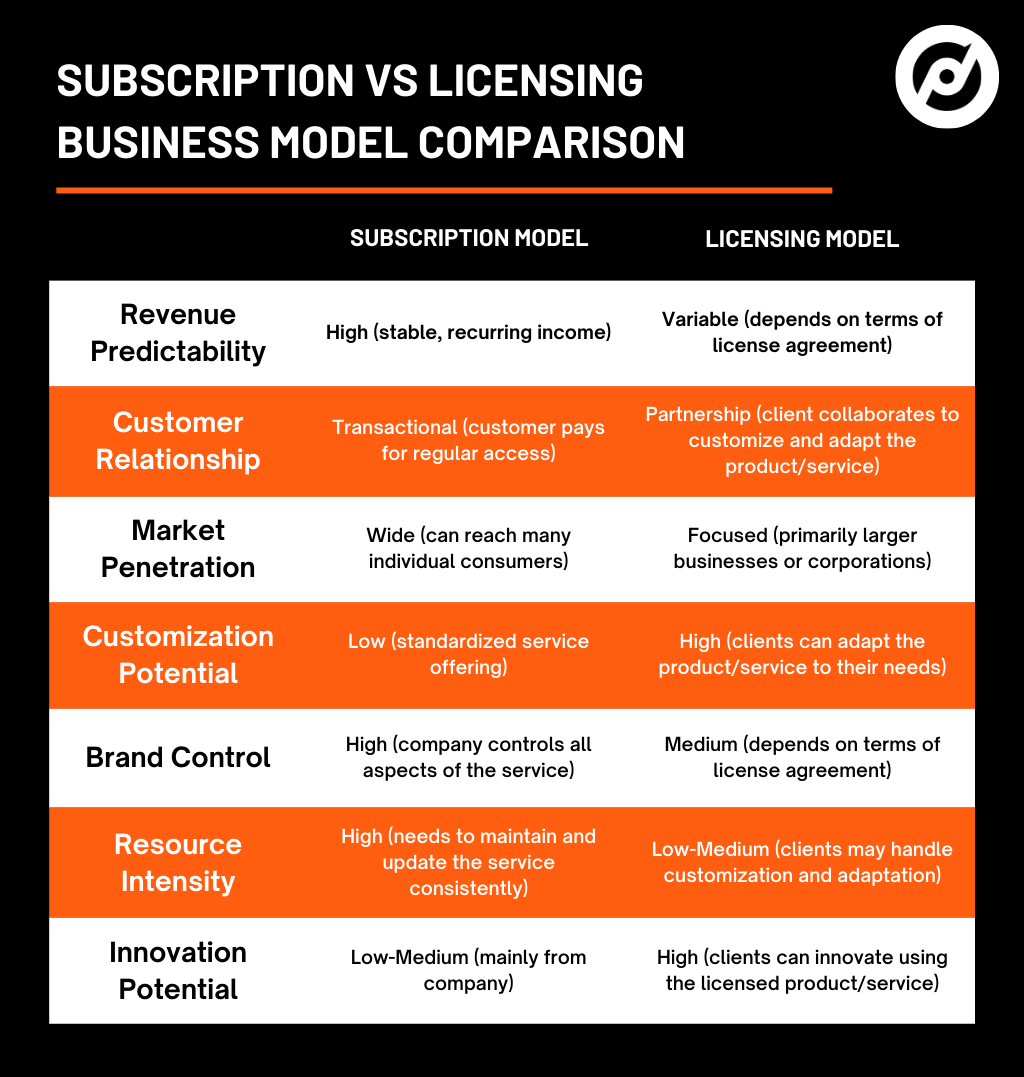
As the table shows, the licensing model is perfectly suited for your goal. It allows for high customization (each client's brand system is unique) and focuses on a partnership where the client can innovate using the licensed product (your AI engine).
5. Bringing It All Together: Your Hybrid Business Model
You are not choosing one model, but orchestrating all three into a single, seamless client journey. This hybrid approach allows you to meet clients where they are and guide them toward the most valuable, scalable partnership.
Here is the blueprint:
- Acquire with a Project: A client engages you for the fixed-price "AI Brand Readiness Audit."
- Deepen with a Project: Based on the audit, they hire you for the larger "AI Brand System Design" project.
- Scale with a License + Retainer: Upon completion, they subscribe to the "AI Brand Engine." This subscription includes:
- A license fee for the use of the prompt libraries, workflows, and AI toolchain.
- A growth retainer fee for your strategic oversight, performance monitoring, system updates, and quality control.
This journey is a powerful progression that builds on itself. To visualize where this positions you in the market, consider this evaluation framework for AI agencies.
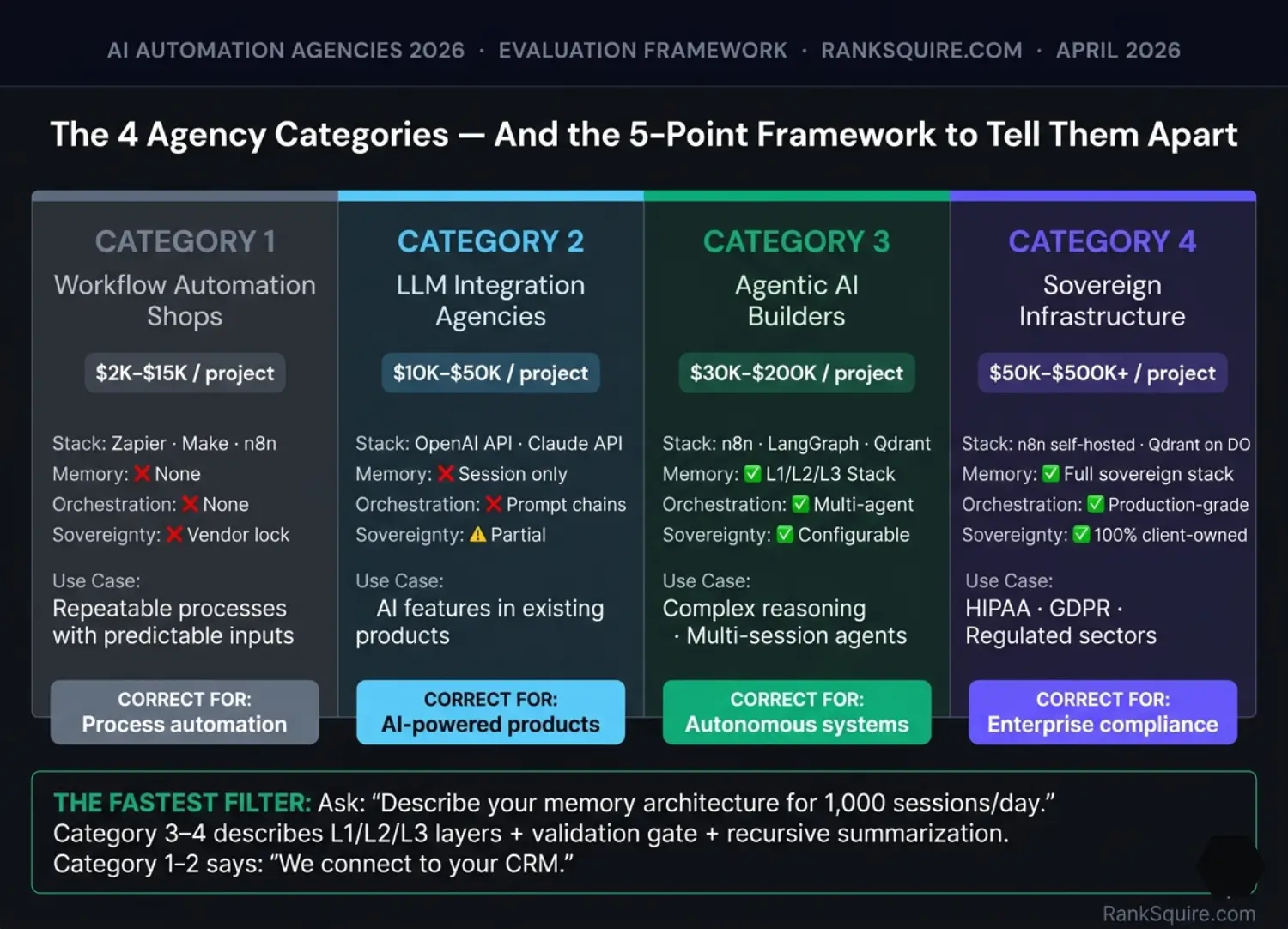
You are creating a Category 3 offering. You're not just connecting existing tools (Category 1) or integrating simple AI features (Category 2). You are building complex, multi-agent systems (your AI Brand Engine) that enable autonomous content creation for your clients. This positions you at the high-value end of the consulting market.
Conclusion
You now have a complete, sophisticated business model that aligns perfectly with your goals. It combines the strengths of different approaches to create a scalable, high-margin consultancy.
Key Takeaways:
- Projects are for Acquisition: Use fixed-price projects like the "AI Readiness Audit" to win clients and prove your strategic value.
- Retainers are for Partnership: Transition clients to a "growth retainer" to establish a long-term, stable relationship focused on continuous improvement.
- Licensing is for Scale: The "AI-System Licensing" model, combining a setup fee with a recurring license, is your scalable end-game. It productizes your expertise and delivers on your "Executional Model" vision.
- Your Strength is the Hybrid Model: Your business won't use just one model; it will expertly guide clients through a journey that starts with a project and culminates in a scalable licensing and retainer partnership.
This lesson concludes the first module. We have established the what and the why of your new business: the value proposition, the ideal client, the service packages, the pricing, and the business model.
In the next module, "Facilitating Strategic Discovery Workshops," we'll begin to build the how. You will learn to design and lead the powerful brand discovery workshop that serves as the entry point for your entire client journey.