Welcome to your fourth lesson. In our last meeting, we used the STEEPLE framework to map the complex external environment in which actuaries operate. We identified the key social, technological, economic, environmental, political, legal, and ethical forces that shape the industry. Today, we will bridge the gap between observing these forces and putting that knowledge into practice.
This lesson directly addresses how actuaries translate their understanding of the external world into the core components of their work: setting actuarial assumptions and designing financial products. This process of moving from a qualitative assessment of the environment to quantitative, actionable decisions is a fundamental part of the Actuarial Control Cycle and a hallmark of a forward-thinking practitioner.
From Observation to Action: The Dynamic Approach
Traditional actuarial work often relied heavily on extrapolating historical data. However, in a rapidly changing world, the past is an increasingly unreliable guide to the future. Modern actuarial practice, therefore, emphasizes a dynamic approach, one that actively incorporates anticipated changes in the external environment.
This means we don't just look at historical claim patterns; we ask why they look that way and, more importantly, how external trends might cause them to change. To explore this mindset, we'll turn to a classic paper that advocates for this forward-looking perspective.
[PDF] The Actuary As Product Manager In A Dynamic Product Analysis ...
This paper by Richard Stein, though written some time ago, brilliantly articulates the shift from static to dynamic thinking in ratemaking (pricing). Its principles are central to our topic today.
Please read the following two parts from the "DYNAMIC RATEMAKING" section: The paragraph beginning "As theoretically precise...". Note the list of external forces that challenge even the most robust plans. The subsection "An Evaluation of Traditional Ratemaking Techniques." Focus on the second limitation identified by the author, which criticizes traditional methods for overlooking changes in the business environment and oversimplifying market forces.
As Stein argues, relying on historical averages "unrealistically posit[s] the existence of an equilibrious or steady-state insurance environment." Your task as an actuary is to challenge this steady-state assumption by understanding how external forces will disrupt it. Let's examine how this plays out in assumption setting and product design.
How the External Environment Shapes Actuarial Assumptions
Actuarial assumptions are the numerical expression of an actuary's view of the future. They are educated guesses about variables like mortality, expenses, and investment returns. A change in the external environment can ripple through these assumptions, profoundly affecting pricing and reserving.
The "Hypothesis Paradigm"
Instead of blindly extrapolating trends, the dynamic approach involves forming explicit hypotheses about the future. Given your background in research, you'll recognize this as a more scientific method: observing trends, forming a hypothesis about their impact, and then translating that into a quantifiable assumption.
Let's see how the paper we just looked at describes this.
[PDF] The Actuary As Product Manager In A Dynamic Product Analysis ...
This paper's concept of the "Hypothesis Paradigm" is a powerful tool for structuring your thinking about the future.
Please read these two sections: In "The Hypothesis Paradigm," read from the introduction to understand the core idea. Then, read the section "Hypotheses and Projections of the Future." This section provides excellent examples of future-oriented issues (demographics, technology, competition) that must be modeled.
Using this mindset, let's connect the STEEPLE factors from our last lesson to specific assumptions:
-
Economic Factors: This is the most direct link.
- Interest Rates: Directly inform the discount rate used to value future liabilities and the investment return assumption used in pricing. Persistently low rates, for example, force actuaries to assume lower future returns, making long-term guarantees more expensive.
- Inflation: Drives the expense inflation assumption for administrative costs and the claim inflation assumption for future claim costs. In general insurance, this could be the rising cost of car parts; in pensions, it could be the assumption for salary growth.
-
Social & Demographic Factors:
- Longevity: An ageing population and medical advances lead actuaries to build mortality improvement assumptions into their models. For a pension scheme, this increases liabilities; for a term life insurer, it reduces them.
- Lifestyles: Higher rates of smoking or obesity would affect morbidity assumptions for health and critical illness insurance. Conversely, a trend towards healthier living could lower them.
-
Technological Factors:
- Medical Advances: These have a direct impact on mortality and morbidity assumptions. A cure for a specific type of cancer would dramatically alter the assumptions for critical illness products.
- Vehicle Safety: The adoption of autonomous driving features or advanced driver-assistance systems (ADAS) would lead to a hypothesis of lower claim frequencies, affecting pricing assumptions for motor insurance.
-
Legal & Political Factors:
- Tort Reform: A change in the law that caps personal injury awards would lead an actuary to reduce the claim severity assumption for liability insurance.
- State Pension Age: A government decision to increase the state pension age would change the retirement rate assumptions used in a corporate pension plan valuation, as people may choose to work longer.
How the External Environment Drives Product Design
The same external forces that shape assumptions also create the needs and opportunities that drive product innovation. Just as your experience in design involves understanding a person's needs to create a specific garment, financial product design involves understanding societal trends to create a product that meets a specific financial need.
The Digital Revolution in Insurance
Nowhere is the influence of external factors on product design more apparent than in technology. The rise of digitalization is fundamentally reshaping what an insurance product is and how it is delivered.
Let's explore how new technologies are enabling a new generation of products.
[PDF] The Impact of digital Technologies on Insurance Industry - Aqaba Conf
This paper provides a fantastic overview of how digital transformation is affecting the entire insurance value chain, especially product development and pricing.
Please read the following sections to get a broad view of technology's impact: Read the subsection "What is digitalization..." to see the three main ways technology is changing the industry. In Table 2, focus on the "Product development" row (product development impacts). Read the summary in section 1/3, which starts "Insurers’ operating and business models...". Pay attention to the shift towards personalized, usage-based, and on-demand insurance. Finally, skim the subsections on Product, Underwriting pricing, and Policies to see how these trends translate into specific product features.
Here are some concrete examples of how STEEPLE factors drive product design:
-
Technological:
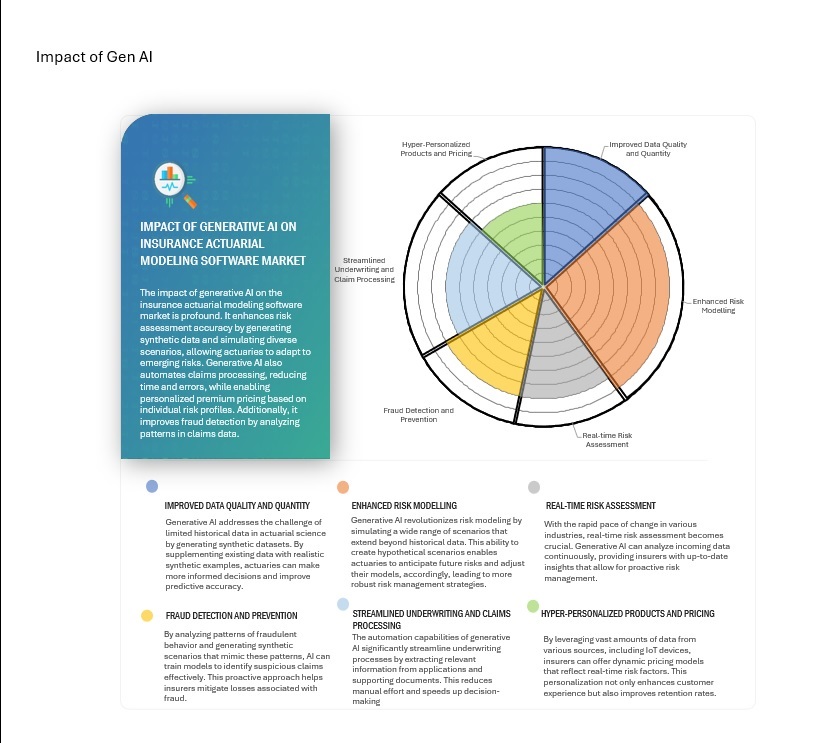
- IoT & Telematics: Has given rise to Usage-Based Insurance (UBI) for cars, where premiums are linked to driving habits. This is expanding into "Pay-as-you-live" health insurance and smart home insurance that rewards proactive risk management.
- Big Data & AI: Enables hyper-personalization and micro-insurance. An insurer could offer on-demand travel insurance via a smartphone app the moment a customer enters an airport, with the price based on their specific destination and duration.
-
Social & Demographic:
- The "Gig Economy": The decline of lifelong employment creates demand for flexible, portable pension and income protection products that are not tied to a specific employer.
- Changing Family Structures: As societal norms evolve, there is a growing need for products that can accommodate more complex beneficiary structures. For example, a life insurance policy might need to be designed to recognize multiple partners in a polyamorous relationship, or to provide for children from various relationships. This requires a move away from rigid, traditional definitions of 'dependant'.
-
Economic:
- Low Interest Rate Environment: Has made it very difficult for insurers to offer traditional guaranteed savings products. This has driven a massive shift towards unit-linked and investment-linked products, where the policyholder bears the investment risk.
-
Environmental:
- Climate Change: The increased focus on sustainability has led to the development of "green" insurance products. This could include discounts on home insurance for energy-efficient homes or specialized insurance for renewable energy projects like wind farms. Parametric insurance, which pays out based on a trigger (e.g., wind speed exceeding a certain threshold) rather than an assessment of actual loss, is also becoming more common for climate-related risks.
-
Legal & Political:
- Auto-Enrolment Legislation: Government mandates requiring employers to enroll their employees in a pension scheme (like in the UK) created a massive market for low-cost, simple workplace pension products.
- Tax Incentives: The design of products like ISAs (UK) or 401(k)s (US) is almost entirely driven by the tax benefits offered by the government to encourage saving.

Your Cheatsheet: Connecting the Environment to Actuarial Work
This table summarizes the connections we've discussed, providing the condensed reference you find helpful for revision.
| STEEPLE Factor | Influence on Actuarial Assumptions | Influence on Product Design |
|---|---|---|
| Social | Mortality/Morbidity: Trends in lifestyle, health, and family structures affect longevity and sickness assumptions. | New Needs: An ageing population drives demand for annuities and long-term care. The gig economy requires flexible savings products. |
| Technological | Claim Frequency/Severity: Safer cars/homes (IoT) can reduce claim assumptions. Medical advances impact mortality/morbidity assumptions. | New Products & Delivery: Enables usage-based insurance (UBI), on-demand policies, and direct-to-consumer digital platforms. |
| Economic | Investment Return & Discount Rates: Interest rates and economic growth are key inputs. Inflation: Drives expense and claim cost assumptions. | Risk-Sharing: Low interest rates make guarantees expensive, leading to a shift from guaranteed products to unit-linked products where the customer takes the risk. |
| Environmental | Catastrophe Risk: Climate change models inform assumptions about the frequency and severity of natural disasters for property insurance. | Green Products: Creates a market for insurance for renewable energy projects and products that reward sustainable behavior. Parametric insurance for weather events. |
| Political | Retirement & Lapse Rates: Changes to state pension benefits or tax policy can alter assumptions about policyholder behavior. | Mandated Markets: Government actions, like mandatory auto-enrolment in pensions, can create vast new markets and product categories. |
| Legal | Claim Severity & Underwriting: Changes in tort law or anti-discrimination rules directly affect claim cost assumptions and the data used for segmentation. | Product Structure: Regulation dictates contract terms, capital requirements, and sales practices, defining the "rules of the game" for product designers. |
| Ethical | Segmentation: Societal views on fairness can limit the use of certain data for setting assumptions, leading to broader risk pools. | Fairness & Transparency: Pushes for simpler, more transparent products. Ethical considerations (e.g., data privacy) become key design constraints. |
Conclusion
In this lesson, we have connected the abstract forces of the external environment to the concrete, daily work of an actuary. We have seen that a proactive and effective actuary does not simply project the past forward, but forms explicit, evidence-based hypotheses about how the world is changing and what that means for their models and products.
Key Takeaways:
- Changes in the external environment are the primary drivers for updating actuarial assumptions and innovating in product design.
- A dynamic approach, which anticipates future trends, is superior to a static approach that relies only on historical data.
- Technological change is a particularly powerful force, enabling hyper-personalized, usage-based, and on-demand products that are transforming the industry.
- Each element of the STEEPLE framework has a tangible impact on the pricing, reserving, and design of financial products.
In our next lesson, we will dive deeper into one of the most powerful external forces we've touched upon: regulation. We will explore the different purposes and types of regulation and see how the regulatory framework acts as a critical boundary condition for all actuarial work.