Welcome to your sixth lesson. Last time, we explored the fundamental "why" and "how" of financial regulation, distinguishing between the certainty of prescriptive rules and the flexibility of principles-based approaches. We established that regulation is a core feature of the external environment in which actuaries work.
Today, we move from the abstract to the concrete. This lesson will introduce the specific institutions that create and enforce these rules, and, most importantly, we will analyze their direct and tangible impact on core actuarial practice. Our goal is to answer the questions: "Who are the regulators?" and "How do their decisions shape the work an actuary does every day in pricing, product design, and risk management?"
The Architecture of a Regulatory Framework
Before we meet the regulators themselves, it's useful to understand the structure of the tools they use. Regulation is not a single document but a complex hierarchy of legal and administrative instruments. This structure ensures that high-level laws passed by a government are translated into workable rules for the financial industry.
The diagram below illustrates this hierarchy, showing how a broad legislative 'Act' at the top cascades down into more specific regulations, requirements, and finally, detailed guidance for firms.
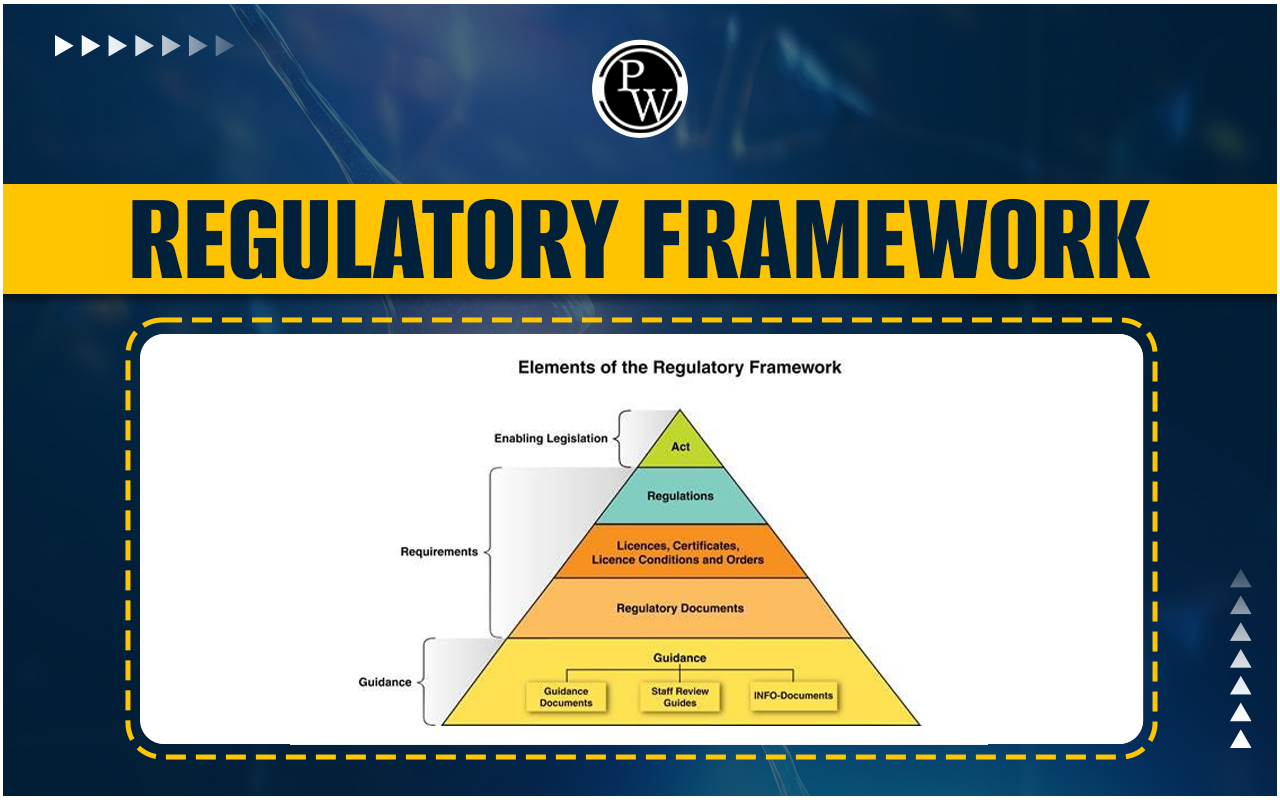
Let's break down these layers:
- Act: This is the primary legislation passed by a parliament or legislative body (e.g., the Financial Services and Markets Act 2000 in the UK). It establishes the regulatory bodies, grants them their powers, and sets out their fundamental objectives.
- Regulations: These are more detailed, legally binding rules issued by the regulator under the authority of the Act. They specify how firms must comply with the broad principles laid out in the legislation.
- Licences, Certificates, and Orders: These are the permissions a firm needs to operate. A regulator's power to grant, attach conditions to, or revoke a license is a primary tool of enforcement.
- Guidance Documents: These are not strictly legally binding but represent the regulator's interpretation of the rules and their expectations of what constitutes good practice. In a principles-based system, ignoring regulatory guidance is a significant risk, as it indicates how a regulator will likely judge a firm's actions.
The Regulators: A Real-World Example
To understand the roles of these bodies, let's examine the UK's regulatory structure, which was reformed after the 2008 financial crisis. It is a well-known example of a "twin peaks" model and provides a clear illustration of the different focuses of regulation we discussed in the last lesson.
The following video provides an excellent overview of the three key bodies that oversee the UK financial sector.
Regulators of Financial Markets - FPC, PRA & FCA
This video from EconplusDal clearly explains the UK's tripartite regulatory system, breaking down the distinct roles of the Financial Policy Committee (FPC), the Prudential Regulation Authority (PRA), and the Financial Conduct Authority (FCA).
Please watch the entire video. As you watch, focus on the distinct mission of each body: The FPC's role in managing systemic risk across the entire economy. The PRA's role as the prudential regulator, focused on the financial soundness of individual firms like banks and insurers. The FCA's role as the conduct regulator, focused on how firms treat their customers and the integrity of the markets.
As the video explains, the responsibilities are divided to ensure specialist focus:
-
Financial Policy Committee (FPC): Housed within the Bank of England, this is the macro-prudential regulator. Its concern is not with any single firm but with the stability of the entire financial system. It looks for and tries to mitigate systemic risks—the kind of domino effects that could lead to a widespread crisis. Actuaries interact with the FPC's work indirectly, as its directives (e.g., on mortgage lending limits or capital buffers) shape the economic environment.
-
Prudential Regulation Authority (PRA): Also part of the Bank of England, the PRA is the micro-prudential regulator for banks, building societies, and insurance companies. Its primary objective is to promote the safety and soundness of these firms. For an insurer, this means the PRA is focused on ensuring the company has adequate capital, robust risk management, and is able to meet its promises to policyholders. Much of an actuary's work in valuation, capital management, and risk reporting is done to satisfy PRA requirements.
-
Financial Conduct Authority (FCA): This is the second "peak" of the twin peaks model. The FCA is the conduct regulator for all financial services firms. Its mission is to protect consumers, enhance market integrity, and promote competition. The FCA is concerned with how firms design, market, and sell their products. It sets rules on advertising, disclosure, and complaints handling, and is the driving force behind the "Treating Customers Fairly" (TCF) agenda. Actuaries involved in pricing and product design must be acutely aware of FCA principles to ensure products are fair and not misleading.
Principles in Practice: The FCA's Approach
In our last lesson, we discussed the shift towards principles-based regulation. The FCA is a prime example of a regulator that puts this philosophy into practice. Instead of relying solely on thousands of prescriptive rules, it sets out high-level principles that firms are expected to follow.
The following article explains this approach and lists the core principles that guide the FCA's oversight.
Principles based regulation – do we know how it will work? - ACM ...
This article from ACM Compliance provides a concise summary of the principles-based approach and, crucially, lists the FCA's 11 "Principles for Business."
First, read the brief introductory section explaining the rationale for this approach. Then, carefully review the table listing the 11 Principles.
These principles, particularly numbers 6 ("Customers' interests") and 7 ("Communications with clients"), are the foundation of conduct regulation. They move beyond a simple "tick-box" compliance exercise and force firms—and the actuaries within them—to ask fundamental questions: "Is this product truly in the customer's best interest?" and "Have we explained the risks and benefits clearly and fairly?"
The Impact on Actuarial Practice: Equity vs. Equality
Now we come to the critical point: how do these rules and principles affect the technical work of an actuary? Regulations often create a tension between social or political goals (like fairness) and core insurance principles (like risk-based pricing).
A superb paper from the American Academy of Actuaries explores this tension through the concepts of equality and equity.
- Equality suggests that all individuals should be treated the same—for example, everyone pays the same price for the same level of cover.
- Equity, in an insurance context, means that the price a person pays should reflect their level of risk. An equitable price for a group of policyholders is one that is sufficient to cover their expected claims.
When regulation mandates equality over equity, it can have significant and sometimes unintended consequences.
Life Insurance and Annuities: The Impacts of Regulatory ...
This issue brief provides a masterclass in how regulatory mandates interact with insurance principles. It uses simple cases to illustrate complex market dynamics.
Please read the following sections: First, read the section on Equality and Equity to grasp this core distinction. Next, review the hypothetical cases (particularly Case 4 and Case 5). Focus on how consumer choice in a regulated market can lead to antiselection and a rate spiral. Finally, look at the specific examples of mandates under the heading Mandates That Limit Risk Classification. Pay close attention to the discussions on unisex rates and genetic testing.
As the reading demonstrates, when a regulator prevents an insurer from using a known risk factor (like age, gender, or genetic information), a crucial market dynamic called antiselection (or adverse selection) occurs.
- Antiselection: This is the tendency for individuals who know they are at a higher risk to be more likely to purchase insurance. If the insurer cannot charge them a higher, risk-reflective (equitable) price, the "pooled" price becomes a bargain for them.
- Rate Spiral: Lower-risk individuals, realizing they are subsidizing the higher-risk group, may choose not to buy the insurance, viewing it as poor value. As low-risk people leave the pool, the average risk of the remaining group increases, forcing the insurer to raise the price. This higher price drives away even more low-risk individuals, leading to a "rate spiral" that can make the product unsustainable.
The mandate for unisex pricing is a classic actuarial example:
- Life Insurance: Women have a longer life expectancy than men. If an insurer must charge the same (unisex) rate, this rate will be a bargain for men and overpriced for women. Men will be more likely to buy, and women less so, leading to antiselection.
- Annuities: The situation reverses. An annuity pays out for as long as you live. The unisex rate will now be a bargain for longer-living women and overpriced for men. Women will be more likely to buy, and men less so.
These examples show that a regulator's decision has a direct mathematical consequence on pricing, profitability, and even the viability of a product line—all of which are the professional domain of the actuary.
Your Cheatsheet: Regulatory Roles and Impacts
Here are the key frameworks from this lesson to aid your revision.
The UK Regulatory Bodies: A Snapshot
| Regulatory Body | Type | Primary Focus | Impact on Actuaries |
|---|---|---|---|
| FPC | Macro-Prudential | Stability of the entire financial system. | Shapes the economic environment and systemic risk buffers. |
| PRA | Micro-Prudential | Safety and soundness of individual insurers. | Drives work on valuation, solvency, and capital management. |
| FCA | Conduct | Fair treatment of customers; market integrity. | Drives work on pricing, product design, and customer communication. |
Regulatory Mandates vs. Insurance Principles
| Concept | Description | Actuarial Consequence |
|---|---|---|
| Equality vs. Equity | A mandate for an equal price for all can conflict with the insurance principle of an equitable (risk-based) price. | Actuaries must model the impact of this pricing restriction. |
| Antiselection | High-risk individuals are more likely to buy if they are not charged a higher premium. | Leads to higher-than-expected claims and financial losses if not priced for. |
| Rate Spiral | Low-risk individuals leave the pool, forcing prices up and making the product unsustainable. | Can lead to product withdrawal; actuaries must analyze this risk. |
| Risk Classification | The process of grouping risks to set premiums. Mandates often limit this (e.g., banning gender or genetic data). | Limits the actuary's toolkit for equitable pricing, forcing the use of broader, less accurate assumptions and higher risk margins for everyone. |
Conclusion
In this lesson, we have put a face to the concept of regulation. We've seen that specific bodies like the FPC, PRA, and FCA have distinct but complementary roles in maintaining a stable and fair financial system. We also established that principles-based regulators, such as the FCA, use high-level objectives to guide firm behaviour.
Most importantly, we have connected these high-level structures to the granular work of actuaries. The tension between regulatory mandates for equality and insurance principles of equity creates significant challenges and risks—like antiselection and rate spirals—that actuaries must identify, model, and manage. A regulator's decision is not just a legal directive; it is an input into an actuarial model that can fundamentally alter a product's price, profitability, and viability.
Key Takeaways:
- Regulatory frameworks are hierarchical, translating high-level laws into specific rules and guidance.
- Regulatory bodies have specialized roles: macro-prudential (FPC), micro-prudential (PRA), and conduct (FCA).
- Mandates that limit an insurer's ability to classify risk can force equality over equity, leading to antiselection.
- Antiselection by high-risk customers and the departure of low-risk customers can trigger a rate spiral, threatening product sustainability.
- The work of a regulator directly impacts the core actuarial functions of pricing, underwriting, product design, and risk management.
Now that we understand the regulatory landscape that financial products inhabit, we can turn our attention to the customers themselves. In our next lesson, we will begin Module 2 by exploring the fundamental human needs that drive the demand for these products in the first place.