Introduction
Welcome back. In our last lesson, we explored the world of the Early Vedic people through the lens of the Rigveda, discovering a religion deeply intertwined with nature. Their worship was a direct, often transactional, relationship with deified natural forces, conducted through relatively simple fire rituals (yajnas) aimed at securing material well-being.
Today, we move forward in time to the Later Vedic period (c. 1000–600 BCE), a time of profound societal transformation. As the Vedic people migrated east into the Gangetic plains and transitioned from a semi-nomadic, pastoral lifestyle to a settled agricultural one, their religious life underwent a parallel and dramatic shift.
This lesson addresses the learning outcome: Explain the shift to complex, ritual-centric Brahmanical traditions (yajnas) in the Later Vedic period and their social significance. We will investigate why these rituals became so elaborate and, more importantly, analyze the immense impact this ritual-centric system had on the political, economic, and social fabric of ancient India.
The Rise of Complex Ritualism
The relatively simple, often private, fire offerings of the Rigvedic age evolved into highly complex, public, and expensive ceremonies. This transformation wasn't arbitrary; it was a direct response to the needs of a more complex, settled society. The Yajurveda, one of the later Vedas, emerged as a detailed "manual" for these new, elaborate rituals.
To understand the nature of this shift, let's start with a video that frames the emergence of the Yajurveda as a cultural "software update" for a new way of life.
What Yajurveda Knew (The Blueprint of Ancient India)
The video 'What Yajurveda Knew' by India in Pixels offers a creative and insightful perspective on why a new religious framework was needed for a settled agricultural society.
Please watch the first 1 minute and 27 seconds. Notice how it connects the shift to agriculture with the need for new systems, rules, and rituals to establish social order.
As the video suggests, the yajna became the central organizing principle of the Later Vedic world. But what did this complexity look like in practice?
The key changes were:
- From Private to Public: Grand rituals moved from the household to the public sphere, often sponsored by a king or chieftain.
- From Simple to Intricate: The number of steps, the precision of chants, and the variety of offerings multiplied enormously.
- From Inexpensive to Costly: These ceremonies required significant resources, including cattle, grains, precious metals, and the services of numerous specialized priests.
- From Lay Practice to Priestly Monopoly: The complexity meant that only a trained class of priests, the Brahmins, could correctly perform the rituals, giving them immense authority.
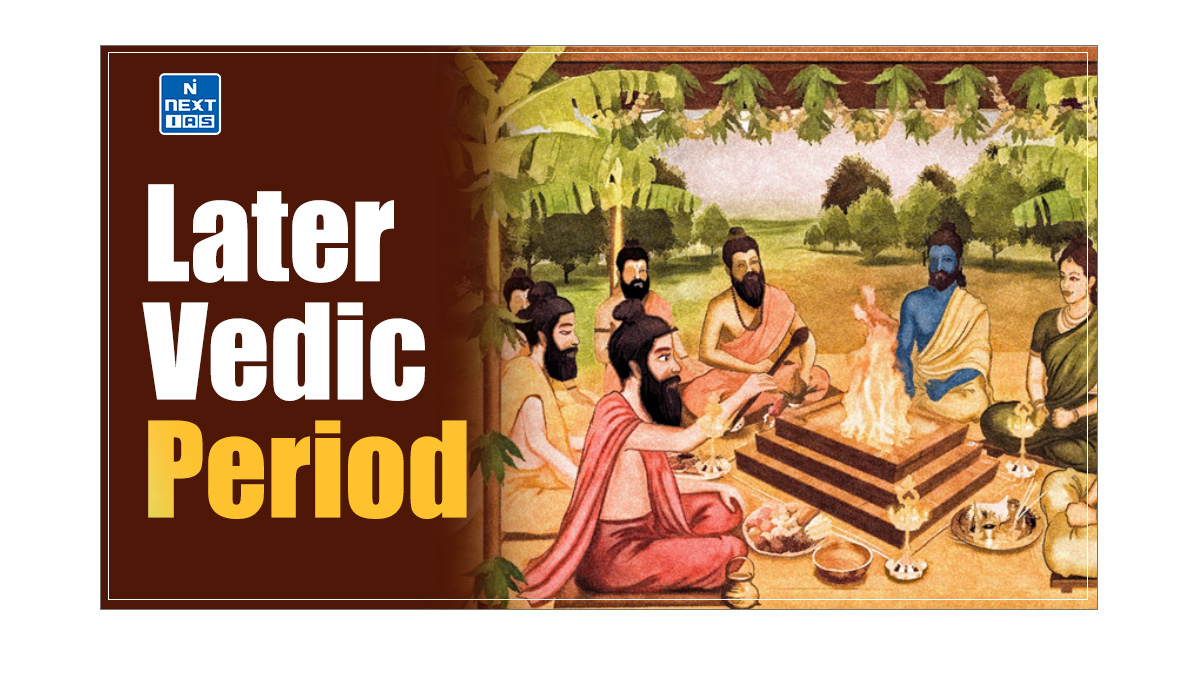
This next video segment explains this transition and introduces the public rituals that became hallmarks of the era.
Ancient Indian History Lecture 17: Later Vedic Age | UPSC History Optional 2025 | Vishal sir
The 'Ancient Indian History Lecture' on the Later Vedic Age details how religion transformed from a simple affair into a highly regimented and ritualized system.
Watch the segment from 46:16 to 59:39. Pay close attention to: The introduction of the 16 Sanskara (life-cycle rituals). The purpose of public rituals like Ashvamedha and Rajasuya in legitimizing kings. How ritual complexity led to priestly domination and made religion more exclusive and expensive.
The Anatomy of Yajna: A Systematized Ritual Framework
The details of these complex yajnas were meticulously compiled and explained in a new genre of texts called the Brahmanas. These texts are essentially prose commentaries on the Vedas, focused on the theory and practice of ritual. They provide a systematic classification of yajnas, revealing a highly structured religious worldview.
A foundational text for this topic will help us understand this classification.
[PDF] From Simple Offerings to Complex Yajnas in the Brahmanas
The paper 'From Simple Offerings to Complex Yajnas in the Brahmanas' provides an excellent, structured overview of the different types of yajnas codified in the Brahmanas. This framework is key to understanding the multifaceted role of ritual in Later Vedic life.
Please read section 4.1, 'Types of Yajnas in the Brahmanas: Classification, Structure, and Significance'. It starts on page 42 and ends on page 44. Focus on understanding the definitions and purposes of the four main categories: Nitya (obligatory daily sacrifices) Naimittika (occasional, conditional rites) Kāmya (desire-driven sacrifices) Śrauta (grand, public, state-sponsored rituals)
As you've read, the Brahmanas organized rituals to address every facet of life, from the daily cosmic cycle to grand political ambitions. The Śrauta rituals, in particular, were immense public spectacles. Let's add some color to two of the most significant ones:
- Rājasūya: A royal consecration ceremony. The India in Pixels video memorably notes a compulsory part of this yajna: a ritual dice game that the king had to win, symbolically proving that cosmic luck was on his side. This echoes the fateful dice game in the Mahabharata, highlighting the deep cultural roots of this practice.
- Aśvamedha: The horse sacrifice. This year-long ritual was the ultimate assertion of imperial sovereignty. A consecrated horse was set free to wander, followed by the king's army. Any territory the horse entered unchallenged was claimed by the king. The ritual culminated in the sacrifice of the horse and was an unambiguous display of power.
The video you watched earlier also describes these rituals, including some of their more controversial and explicit elements, which historical analysis must acknowledge to form a complete picture.
The Social Significance of the Yajna System
The yajna was far more than a religious act; it was the engine that shaped Later Vedic society. Its significance can be understood through several interconnected themes, which align with your interest in systemic analysis.
1. Political Legitimation: The King-Priest Nexus
The grand Śrauta rituals were a potent tool for state formation.
- Kings (Kshatriyas) sponsored these elaborate, expensive sacrifices to legitimize their rule, transforming from tribal chieftains into divinely-endorsed monarchs. The performance of an Aśvamedha was a declaration of being a chakravartin (universal ruler).
- Priests (Brahmins) were the sole custodians of the complex ritual knowledge required. By performing the yajna, they publicly validated the king's authority. In return, they received immense wealth in the form of dakshina (fees or gifts), land, and royal patronage. This symbiotic relationship formed the political bedrock of the era.
2. Economic Redistribution and Social Hierarchy
Given your background in finance and economics, the concept of the "gift economy" that powered these rituals is particularly relevant. The system of Dan (donations) and Dakshina (priestly fees) was a major driver of the Later Vedic economy.
Ancient Indian History Lecture 17: Later Vedic Age | UPSC History Optional 2025 | Vishal sir
Let's return to the 'Ancient Indian History Lecture'. This final segment provides a sharp analysis of the 'gift economy' of the Later Vedic period, breaking down its economic and social functions.
Watch from 01:02:28 to 01:20:12. This is a deep dive, and you can think of it in terms of a modern economic model. Focus on how the 'gift economy' functioned to: Redistribute wealth: From patrons (kings, wealthy individuals) to priests. Stimulate the economy: Priestly consumption and the demand for ritual goods generated employment for artisans and laborers. Formalize social hierarchy: The nature and direction of the flow of gifts reinforced the varna system, with Brahmins as the primary recipients.
This economic system was inextricably linked to the hardening of the Varna system. The exclusivity and high cost of major yajnas automatically excluded the lower varnas and the poor, solidifying the social hierarchy with the Brahmins and Kshatriyas at the top.

3. Social Integration and Cultural Transmission
While yajnas reinforced hierarchy, they also paradoxically served as a powerful tool for social integration. A critical perspective on the term yajña itself can broaden our understanding. The word is often translated as "sacrifice," but its root 'yaj' more accurately means "to worship, adore, honor."
[PDF] REINTERPRETING YAJÑA AS VEDIC SACRIFICE
This final reading from the paper 'Reinterpreting Yajña as Vedic Sacrifice' presents a nuanced argument. It challenges the reductionist view of yajna as mere sacrifice and explores its role as a socio-political activity for building community.
Please read the sections starting from the paragraph 'To this already established conclusion...' (on page 3), through 'YAJÑA AS SOCIO-POLITICAL ACTIVITY' (page 4), and concluding with the paragraph that begins 'Further Driver cites Victor Turner’s twin concepts...' (on page 5). Focus on the argument that yajnas functioned as large-scale communal worship events that: Brought together disparate groups and fostered social solidarity (communitas). Served as a mechanism to integrate or 'Vedicize' non-Aryan populations into the expanding cultural fold. Acted as public performances to transmit and propagate Vedic ideology.
4. Catalyst for Scientific Knowledge
The religious demand for precision in ritual had an unintended but significant consequence: the development of early mathematics and astronomy. The construction of complex fire altars (vedis) of specific shapes and sizes, as required by the yajnas, led to the formulation of geometric principles documented in the Shulbasutras. These texts, which are appendices to the Vedas, contain geometric constructions and calculations, including an early statement of the Pythagorean theorem, predating Pythagoras by centuries.
Conclusion
The shift to complex, ritual-centric Brahmanical traditions in the Later Vedic period was a defining feature of the age. It was a direct consequence of the move to a settled, agrarian society and became the primary mechanism for structuring that society.
Key Takeaways:
- Shift in Practice: Religion evolved from simple, private worship to complex, public, and expensive yajnas monopolized by a specialized priestly class (Brahmins). This is codified in texts like the Yajurveda and the Brahmanas.
- Systematized Ritual: Yajnas were classified into different types (Nitya, Naimittika, Kāmya, Śrauta) to address all aspects of life, from daily duty to imperial ambition.
- Socio-Political Engine: Yajnas were not merely religious acts. They served critical functions:
- Political: Legitimizing the authority of kings through a priest-king nexus.
- Economic: Driving a "gift economy" (dan and dakshina) that redistributed wealth and stimulated demand.
- Social: Reinforcing the varna hierarchy while also acting as a tool for cultural integration and community building.
- Spur for Knowledge: The rigorous demands of ritual precision catalyzed early advancements in geometry and mathematics.
Preview of the Next Lesson:
The intense focus on external ritual and the growing dominance of the priestly class did not go unchallenged. A profound intellectual and spiritual counter-movement began to brew, questioning the ultimate efficacy of sacrifice. Thinkers began to turn inward, seeking knowledge (jñāna) over ritual (karma). In our next lesson, we will explain the emergence of Upanishadic philosophy, focusing on profound concepts like Brahman and Atman, which marked a contemplative reaction to the very ritualism we have just explored.