Introduction
In our last lesson, we concluded our analysis of the Mauryan Empire by examining the complex web of factors that led to its decline. We moved beyond simplistic, single-cause explanations and saw how the empire's highly centralized structure—its key strength under powerful rulers—became its Achilles' heel under their weaker successors, leading to administrative decay and fiscal crisis.
Today, we transition from the empire's fall to its enduring shadow. The collapse of a political entity does not erase its influence. This lesson addresses the final learning outcome for this module: to assess the long-term legacy of Mauryan centralization on subsequent Indian polity. We will explore how the Mauryan model of a unified, bureaucratic state served as a blueprint—an ideal to be emulated, a structure to be adapted, and a cautionary tale to be heeded—for centuries of Indian rulers.
The Mauryan Blueprint for Empire
Before we can trace its legacy, we must first clearly define the "Mauryan blueprint" for state-building. It was the first truly imperial political structure on the subcontinent, and its key features set a new standard for governance.
To refresh our understanding of this sophisticated system, let's revisit its core components.
The following video, 'Mauryan Polity', provides an excellent overview of the empire's administrative structure. As you watch, focus not just on the details but on the underlying principles of organization and control that subsequent rulers would inherit.
Please watch the following segments: The Structure of the Empire (05:33 - 09:15): Pay attention to the division into metropolitan, core, and peripheral zones. This demonstrates a nuanced approach to central control, not a monolithic one. Administrative Hierarchy (09:15 - 15:09): Note the roles of high-ranking officials (Amartyas, Mahamatras) and the concept of a professional, tested bureaucracy. Provincial & Local Administration (15:09 - 22:18): Focus on the system of provincial governors (Kumaras) and district-level officials (Rajukas, Pradeshikas). Urban Administration (22:18 - 26:48): Observe the highly organized committee-based administration of the capital, Pataliputra, as described by Megasthenes. This will remind you of the scale and complexity of the Mauryan state machine.
Based on this and our previous discussions, we can summarize the Mauryan blueprint as follows:
- The Imperial Ideal: The very conception of a pan-Indian empire (samrajya) ruled by a universal sovereign (chakravartin) was a powerful political idea established by the Mauryas.
- Centralized Bureaucracy: A complex hierarchy of salaried officials (amatyas), superintendents (adhyakshas), and provincial governors created a "steel frame" of administration directly accountable to the emperor.
- Economic Integration: The state unified a vast territory through standardized coinage, weights, and measures, and asserted control over key economic activities like mining and trade.
- State-Sponsored Ideology: Ashoka’s use of rock and pillar edicts demonstrated that the state could be a powerful instrument for propagating a cohesive ideology (Dhamma) across diverse populations.
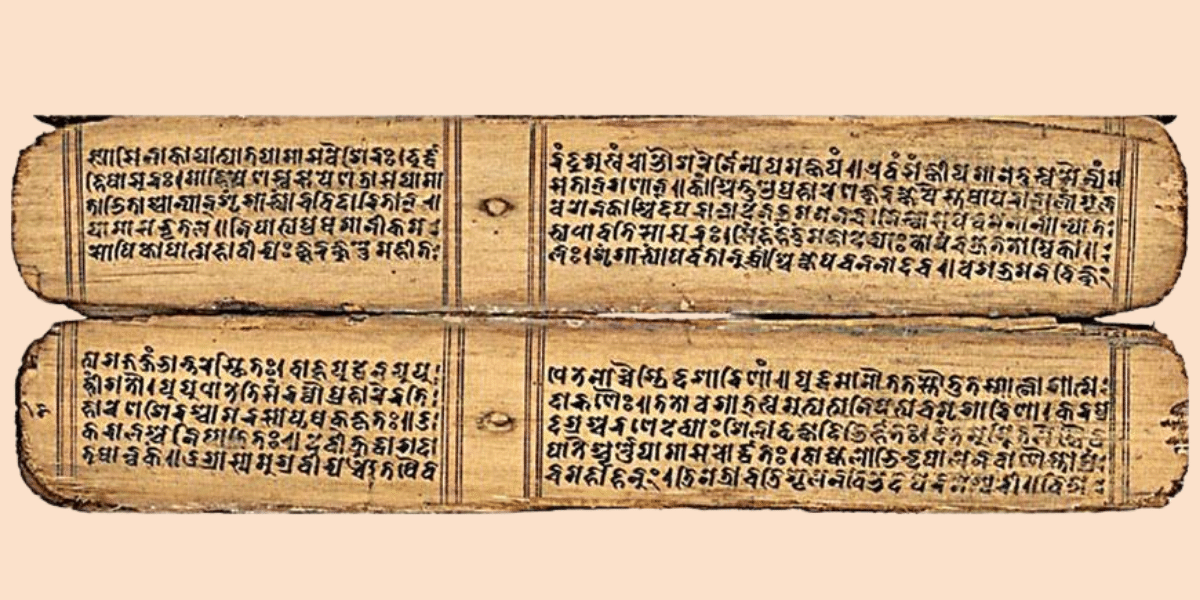
- A Canon of Statecraft: The principles of governance, espionage, and foreign policy, famously codified in Kautilya's Arthashastra, provided an intellectual and practical guide to running an empire.
The Enduring Legacy: Continuity and Discontinuity
The Mauryan Empire's disintegration did not create a political vacuum. Instead, subsequent dynasties built their states upon the ruins—and the memory—of this imperial predecessor. The legacy was complex, marked by both direct continuity and deliberate divergence.
Chandragupta Maurya and the Foundations of the Mauryan Empire
To understand how this legacy played out, please read the following excerpts from the research paper 'Chandragupta Maurya and the Foundations of the Mauryan Empire'. The author directly addresses the long-term influence of the Mauryan model.
Please read the sections titled 'Socio-Cultural Integration and Legacy' and 'Final Reflections on State-Building under Chandragupta'. Focus on the author's argument that the 'Mauryan blueprint of state-building continued to influence Indian polity, bureaucracy, and strategic thinking for centuries.'
As the paper highlights, the legacy can be seen in several key areas.
1. The Persistence of the Imperial Ideal
While no empire reached the Mauryan territorial extent for over a thousand years, the ideal of a unified subcontinent under a single ruler became a recurring ambition in Indian political history. Dynasties like the Guptas consciously adopted imperial titles and performed rituals that evoked this Mauryan precedent. The Mauryas had demonstrated that such unity was possible, transforming it from a myth into a political goal.
2. The Legacy of Kautilyan Statecraft
The Arthashastra survived the empire that it helped build. It became the foundational text of Indian political science and diplomacy. Its theories were studied, debated, and adapted by later kingdoms. Your background in strategy and geo-politics will make these theories particularly interesting.
Decoding Mauryan Empire PYQs: Ancient History for UPSC CSE Prelims
This video from INSIGHTS IAS, though designed for civil service aspirants, provides a sharp analysis of the key Kautilyan theories that form this enduring intellectual legacy.
Watch the following clips explaining the core theories of the Arthashastra: Saptanga Theory (00:46:57 - 00:48:30): The seven essential 'limbs' or elements of the state (King, Minister, Territory, Fort, Treasury, Army, Ally). Mandala Theory (01:12:31 - 01:15:58): A geopolitical model of foreign policy based on concentric circles of friends and enemies. Note the principle: 'your neighbor is your natural enemy, and your neighbor's neighbor is your natural friend.' Shadguna Theory (01:15:58 - 01:17:46): The six-fold policy for dealing with other states (peace, war, neutrality, marching, alliance, and double policy). The Four Upayas (01:17:46 - 01:18:58): The four tactical approaches to statecraft: Sama (conciliation), Dama (gifts/bribes), Bheda (sowing dissent), and Danda (force).
These sophisticated theories on internal administration and external relations provided a ready-made toolkit for state-building that remained relevant for centuries.
3. Administrative Adaptation and the Shift to Feudalism
This is where we see a crucial element of both continuity and change.
- Continuity: Later kingdoms, from the Shungas to the Guptas, did not reinvent administration from scratch. They inherited Mauryan administrative divisions (vishayas or districts), retained some official titles, and continued the practice of state control over key economic sectors.
- Discontinuity: The most significant departure was the move away from the Mauryan model of a centrally paid, salaried bureaucracy. The fiscal strain of this system, which we discussed in the last lesson, likely proved unsustainable. Instead, post-Mauryan polities increasingly relied on land grants to pay officials and support religious institutions (agraharas). This gradually decentralized power, as the grantees became local power centers, laying the groundwork for the feudal structures of early medieval India. This represents a direct reaction to the perceived failure of the hyper-centralized Mauryan model.
From Mauryan Polity to Modern India
The influence of the Mauryan state doesn't stop in the ancient or medieval periods. Its legacy is woven into the fabric of modern India, often in surprising ways.
[PDF] THE MAURYAN AND PRESENT SYSTEMS OF ADMINISTRATION
The paper 'THE MAURYAN AND PRESENT SYSTEMS OF ADMINISTRATION' offers a direct comparative analysis, drawing fascinating parallels between Mauryan statecraft and the structures of the modern Indian republic.
Please read the sections titled 'Mauryan Administration in a Comparative Perspective', 'Administration, Governance, Economy and Foreign Policy in a Comparative Perspective', and the 'Conclusion'. Focus on the specific comparisons the author makes for each element of the Saptanga theory and how Mauryan principles are seen as both precursors and counterpoints to modern Indian governance.
As the paper discusses, this legacy is visible everywhere:
- National Symbols: The official emblem of the Republic of India is a direct adoption of the Lion Capital from an Ashokan pillar at Sarnath. This was a conscious choice by the nation's founders to ground the new republic in the legacy of India's first great empire.
- Administrative Parallels: The idea of a unified civil service, the "steel frame" of India, echoes the Mauryan concept of a professional, centrally managed bureaucracy.
- Foreign Policy: Kautilya's Mandala theory is still frequently invoked in strategic circles to analyze India's relationships with its neighbors in South Asia.
- Welfare State: Kautilya's assertion that "in the happiness of his subjects lies the king's happiness" is an ancient precursor to the modern concept of a welfare state, where the government holds responsibility for the well-being of its citizens.
Conclusion
The Mauryan Empire's legacy is not a simple story of imitation. It is a dynamic interplay of continuity, adaptation, and reaction. While its extreme centralization proved unsustainable, the political and administrative precedents it set were profound and long-lasting.
Key Takeaways:
- A Persistent Ideal: The Mauryas established the ideal of a pan-Indian empire, an ambition that would echo through Indian history.
- An Intellectual Blueprint: Kautilya's Arthashastra provided an enduring intellectual framework for statecraft, influencing Indian political thought for centuries with theories like the Mandala and Saptanga.
- A Structural Template: Mauryan administrative units and terminology provided a template for subsequent states, even as they shifted away from a salaried bureaucracy towards a more decentralized, land-grant-based system.
- A Symbolic Foundation: The legacy of Mauryan polity remains alive in modern India, most visibly in its national emblem, but also in enduring principles of administration and strategic thought.
Preview of the Next Lesson:
The fall of the Mauryas ushered in an era of political fragmentation, but this was far from a "dark age." It was a vibrant period of new regional dynasties and, crucially, intense cross-cultural interaction. In our next lesson, we will begin Module 5, "Post-Mauryan India: Cross-Cultural Encounters," by examining the dynasty that rose directly from the Mauryan ashes: the Shungas. We will explore their political significance and their complex relationship with the Brahmanical and Buddhist traditions they inherited.