Introduction
Welcome to our first lesson in Module 5. In our previous lesson, we analyzed the enduring legacy of the Mauryan state, noting how its imperial ideal and administrative framework served as a blueprint—and a cautionary tale—for subsequent Indian polities. We saw that its collapse led to a move away from hyper-centralization.
Today, we pick up the historical thread precisely where the Mauryan Empire unraveled. We will examine the dynasty that rose directly from its ashes in the Gangetic heartland. This lesson addresses the learning outcome: Describe the political and cultural significance of the Shunga and Kanva dynasties, including their patronage of Brahmanical and Buddhist traditions. We will explore how these dynasties navigated the new political landscape, defended their territory, and presided over a period of significant cultural and religious realignment.
The Shunga Dynasty: A New Power in an Old Heartland
The end of the Mauryan dynasty was not a gradual decay but a dramatic public coup. This event set the stage for a new political and cultural era.
Shunga And Kanva Dynasty | Rajvansh: Dynasties Of India | Full Episode | Indian History | Epic
To understand the origins of the Shunga dynasty, let's watch a brief clip from the 'Rajvansh' series by The EPIC Channel. It vividly portrays the transfer of power and Pushyamitra Shunga's immediate challenges.
Watch the segment from the beginning until 02:07. Focus on how Pushyamitra Shunga established his rule and his initial actions as the new king of Magadha, particularly his response to foreign invasions.
As the video explains, in 185 BCE, the Mauryan commander-in-chief, a Brahmin named Pushyamitra Shunga, assassinated the last Mauryan emperor, Brihadratha. This act established the Shunga dynasty, which would rule over the core of the former Mauryan territories for over a century.

Political Significance of the Shungas
The Shungas' primary political achievement was stabilizing the Magadhan heartland after the Mauryan collapse and defending it against external threats.
- Guardians of the Gangetic Valley: As mentioned in the video, Pushyamitra successfully repelled invasions from the Indo-Greeks (Yavanas) who were pushing into northern India. This role as a defender against foreign powers was crucial in legitimizing their rule.
- A Decentralized Administration: Unlike the Mauryas, the Shungas adopted a more decentralized administrative structure. This was likely a practical response to the fiscal unsustainability of the Mauryan salaried bureaucracy, a theme we touched upon in our last lesson. Local governors and feudatories were granted more autonomy.
- Notable Rulers:
- Pushyamitra Shunga (c. 185–149 BCE): The dynasty's founder and a formidable military leader.
- Agnimitra (c. 149–141 BCE): Pushyamitra's son, whose reign is immortalized in the famous Sanskrit play Malavikagnimitram by the great poet Kalidasa.
- Bhagabhadra: A later ruler significant for his diplomatic relations with the Indo-Greeks. The Heliodorus Pillar in Vidisha, erected by a Greek ambassador in his court, stands as a testament to this cross-cultural interaction.
To delve deeper into the political and, more importantly, the cultural dynamics of the Shunga period, please read the following text.
Post Mauryan Age: Shunga, Kanva & Chedi Dynasties
The article 'Post Mauryan Age' from NextIAS provides a structured overview of the Shunga dynasty, paying close attention to the cultural and religious shifts that define this era.
Please read the section titled 'Shunga Dynasty'. Focus on the sub-sections on Religion, Society, Literature, and Art and Architecture. This will form the basis for our discussion on the dynasty's cultural significance.
Cultural Significance: A Brahmanical Revival and Buddhist Art
The cultural legacy of the Shungas is complex and fascinating. It is often characterized as a period of Brahmanical revival, but the archaeological evidence tells a more nuanced story.
The Revival of Brahmanism
The Shunga rulers were Brahmins, and their reign marked a significant resurgence of Brahmanical traditions that had been somewhat eclipsed by the Mauryan patronage of Buddhism.
- Vedic Sacrifices: Pushyamitra is famously recorded to have performed two Ashvamedha yajnas (horse sacrifices). This was a powerful public statement of a return to Vedic ritual and the assertion of his sovereign status.
- Patronage of Sanskrit: Sanskrit, which had been overshadowed by Prakrit in Mauryan edicts, regained its status as the language of the court and literature. This period saw the work of the great grammarian Patanjali, who wrote the Mahabhasya.
- Legal and Social Codes: The consolidation of Brahmanical social norms is reflected in texts like the Manusmriti, which is thought to have been compiled or finalized around this period.
The Buddhist Patronage Paradox
While Buddhist texts portray Pushyamitra as a persecutor of their faith, the archaeological record presents a powerful counter-narrative. The Shunga period witnessed some of the most significant developments in Buddhist art and architecture.
- Renovation of Stupas: The great Buddhist stupas at Sanchi and Bharhut were not destroyed but were in fact renovated and expanded during Shunga rule.
- Artistic Flourishing: The Shungas replaced the earlier wooden railings and gateways of these stupas with more permanent and elaborately carved stone. These new additions featured intricate reliefs depicting scenes from the Buddha's life and Jataka tales.
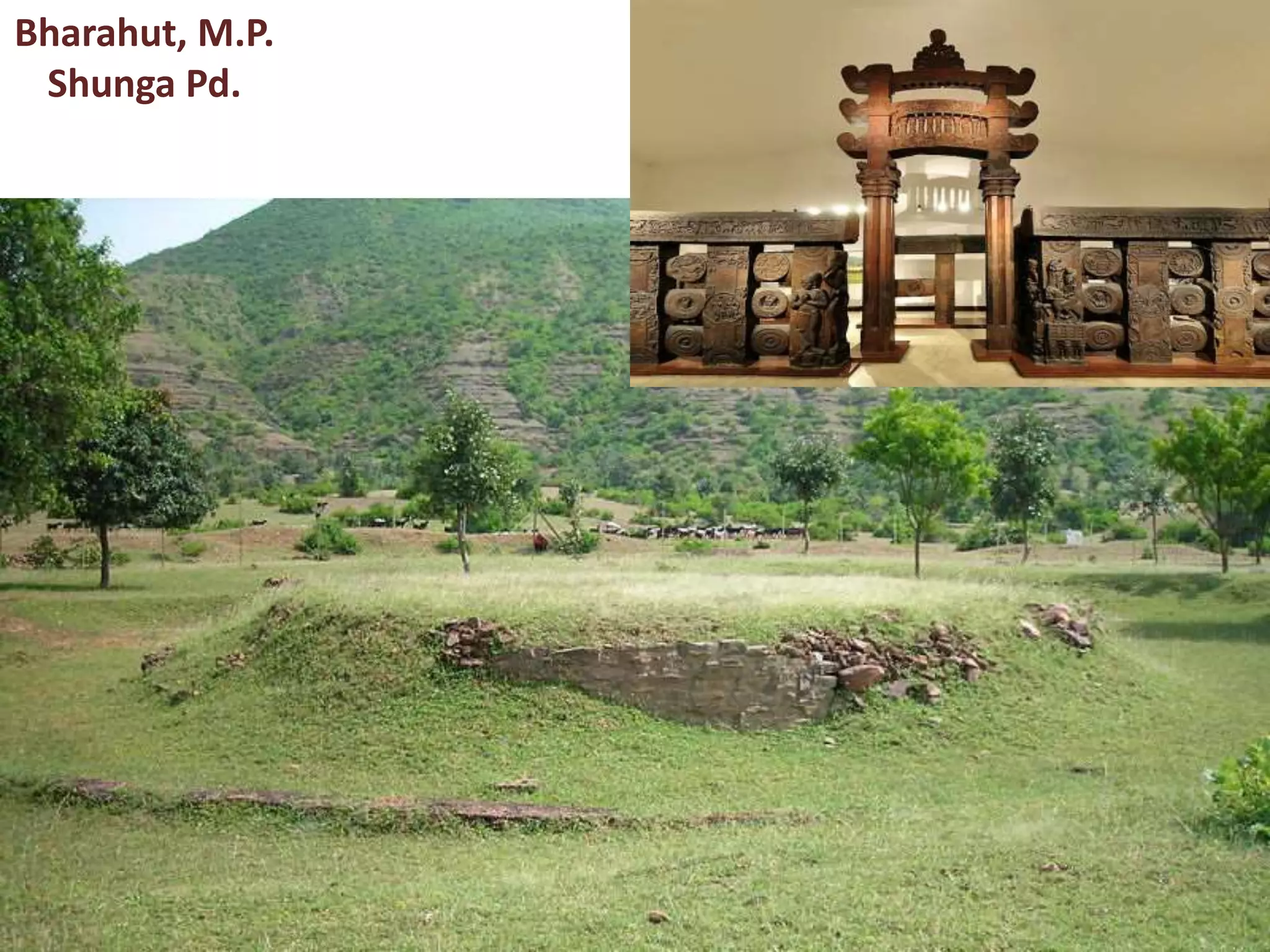
This paradox—a Brahmin dynasty reviving Vedic rites while simultaneously overseeing the embellishment of major Buddhist monuments—highlights the complex reality of the period. The Shungas' personal faith did not necessarily translate into a hostile policy against a popular and well-funded religion like Buddhism.
The Kanva Dynasty: A Brief Succession
The Shunga dynasty, like the Mauryan one it replaced, ended with the assassination of a weak ruler.
Shunga And Kanva Dynasty | Rajvansh: Dynasties Of India | Full Episode | Indian History | Epic
Let's return to the 'Rajvansh' series to see the swift transition from the Shungas to the Kanvas.
Please watch the segment from 02:59 to 04:53. This clip covers the decline of the Shungas and the rise and fall of their successors, the Kanva dynasty.
Around 73 BCE, the last Shunga king, Devabhuti, was killed by his minister, Vasudeva Kanva, who then established the Kanva dynasty.
The Kanvas were also Brahmins. Their political and cultural significance lies primarily in their continuity with the Shungas, rather than in any major innovations.
- Political Significance: The Kanva dynasty was short-lived, lasting only about 45 years with just four rulers (Vasudeva, Bhumimitra, Narayana, and Susharman). They ruled over a much-diminished Magadhan kingdom and were eventually swept away by the rising powers in the Deccan. Their rule represents the final phase of Magadha's pre-eminence before the political center of gravity shifted elsewhere for several centuries.
- Cultural Significance: They continued the Shunga policy of upholding Brahmanical traditions. However, their brief and politically unstable reign left little in terms of significant artistic or architectural legacy.
To round out your understanding, please read the brief section on the Kanvas from the NextIAS article.
Post Mauryan Age: Shunga, Kanva & Chedi Dynasties
This section provides a concise summary of the Kanva dynasty's administration and religious policies.
Read the section titled 'Kanva Dynasty' down to (but not including) the heading for the Chedi Dynasty. Note the continuity in administration and religion from the Shungas.
Conclusion
The Shunga and Kanva dynasties represent a crucial transitional phase in Indian history. They managed the political vacuum left by the Mauryas in the Gangetic plains, defending the region and establishing a new, more decentralized model of kingship.
Key Takeaways:
- Political Role: The Shungas restored stability to the Magadhan heartland, defending it from Indo-Greek invasions. The Kanvas were a short-lived successor dynasty marking the end of Magadha's long-held imperial status.
- Brahmanical Revival: Both dynasties were Brahmin and actively promoted the revival of Vedic rituals, such as the Ashvamedha sacrifice, and the prominence of the Sanskrit language.
- Nuanced Buddhist Patronage: Despite the personal faith of the rulers and narratives of persecution, the Shunga period was a golden age for Buddhist art, with major stupas at Sanchi and Bharhut being significantly enhanced.
- Cultural Shift: This era marks a definitive move from the Mauryan state's patronage of heterodox faiths towards a renewed prominence of Brahmanical traditions in the political sphere, even as popular religious art continued to flourish.
Preview of the Next Lesson:
In this lesson, we noted that the Shungas fought against the "Yavanas," or Indo-Greeks. Who were these people? In our next lesson, we will turn our attention to the northwest of the subcontinent to analyze the profound and lasting impact these Hellenistic kings had on Indian polity, coinage, and art, leading to the creation of the celebrated Gandhara school.