Introduction
Welcome to your next lesson on the transformation of post-independence India. In our last session, we discussed the economic and political shifts of the post-Nehruvian era, focusing on the Green Revolution and the 1975 Emergency. We saw how the state-led economic model, while achieving some successes like food security, was characterized by extensive controls under the "Licence Raj," which led to significant inefficiencies and growing fiscal pressures.
This lesson addresses a pivotal turning point in modern Indian history. We will focus on the learning outcome: Explain the causes and consequences of the 1991 economic liberalization reforms. This was the moment the old economic model collapsed under its own weight, forcing a radical shift towards a market-oriented system.
We will proceed in three parts:
- The Anatomy of the 1991 Crisis: We'll explore the long-term structural weaknesses and immediate triggers that pushed India to the brink of default.
- The LPG Reforms: We'll examine the core components of the new economic policy—Liberalisation, Privatisation, and Globalisation.
- A New Trajectory: We will analyze the profound and multifaceted consequences of these reforms, assessing both their successes and their social costs.
Given your background in finance and economics, you will recognize many of the macroeconomic concepts at play, such as the balance of payments, fiscal deficits, and capital flows.
Part 1: The Anatomy of a Crisis
The 1991 crisis was not a sudden event. It was the culmination of decades of macroeconomic mismanagement, brought to a head by a "perfect storm" of external shocks and political instability.
To begin, let's watch a video that provides a compelling narrative of how dire the situation was and the historical context of the "Licence Raj" that created the underlying vulnerabilities.
The 1991 Crisis: The Week India Changed Forever
The video 'The 1991 Crisis: The Week India Changed Forever' by Behind Asia excellently captures the drama of the crisis and explains the long-term causes rooted in India's post-independence economic model.
Please watch the beginning of the video, from 00:00 to 10:33. As you watch, focus on identifying: The immediate problem: A severe Balance of Payments (BoP) crisis, dwindling foreign exchange reserves, and the pledging of gold. The long-term cause: The 'Licence Raj' and its stifling effect on competition and growth, leading to the 'Hindu rate of growth'. The medium-term causes: Rising fiscal deficits and external debt during the 1980s. The immediate triggers: The 1990 Gulf War, the collapse of the Soviet Union, and domestic political instability leading to a credit rating downgrade.
The video effectively paints a picture of a "cascade failure." Now, for a more technical economic analysis of these imbalances, the paper by Arvind Virmani, a key economist involved in the reforms, provides an excellent deep dive.
[PDF] INDIA'S BOP CRISIS AND EXTERNAL REFORM
This paper, 'INDIA'S BOP CRISIS AND EXTERNAL REFORM,' offers a rigorous, data-driven analysis of the macroeconomic factors that led to the crisis.
Please read the sections 'II. PRELUDE TO CRISIS: THE EIGHTIES' and 'C. RESULT: BOP CRISIS OF 1990-91' (pages 3-28). Focus on the author's analysis of: Macroeconomic Imbalance (Section B, page 5): How 'fiscal profligacy,' a rising current account deficit, and the pattern of external borrowing created deep-seated vulnerability. The Trigger (Section C, page 26): How the external shocks interacted with the underlying imbalances, particularly the overvalued exchange rate, to precipitate the crisis. The paper notes the jump in the short-term debt to foreign currency reserve ratio as a key indicator.
In summary, the causes of the 1991 crisis can be broken down into:
- Structural Weaknesses: A centrally planned, inward-looking economy that discouraged efficiency and competition (Licence Raj).
- Macroeconomic Imbalances: Persistent high fiscal deficits of the central and state governments throughout the 1980s, financed by borrowing, which led to a widening current account deficit and a build-up of external debt.
- Proximate Triggers: A series of severe shocks in 1990-91, including the spike in oil prices from the Gulf War (which increased the import bill), the loss of remittances from the Gulf, the collapse of the Soviet Union (a major trading partner), and intense political instability at home. This shattered international confidence, leading to a credit downgrade and the drying up of foreign capital.
Part 2: The Reform Package – LPG
Faced with an imminent default, the new government led by Prime Minister P.V. Narasimha Rao, with Dr. Manmohan Singh as Finance Minister, had no alternative but to launch a comprehensive program of economic stabilization and structural reform. This is famously known as the LPG model.
Let's return to the video to see how this unlikely political duo initiated the reforms and what the three pillars of their strategy were.
The 1991 Crisis: The Week India Changed Forever
The same video details the key players and the core principles of the reform package unveiled in the historic 1991 budget.
Please watch from 10:33 to 15:55. This section covers: The political masterstroke of appointing a technocrat, Dr. Manmohan Singh, as Finance Minister. The three pillars of the new policy: Liberalisation, Privatisation, and Globalisation (LPG). The specific initial steps, such as dismantling industrial licensing, reducing the scope of the public sector, devaluing the rupee, slashing tariffs, and welcoming Foreign Direct Investment (FDI).
The reforms represented a fundamental paradigm shift away from the state-led model toward a market-based one. For a consolidated overview of the key policy changes enacted between 1991 and 1993, you can refer to Table 2 in the paper by Shankar Acharya, "1991-2000 Economic Reforms Spur Growth" (resource ID LINK, page 6).
The core of the LPG reforms included:
- Liberalisation: Systematically dismantling the 'Licence Raj' by abolishing industrial licensing for most industries. This freed private enterprise from bureaucratic control over investment and production decisions.
- Privatisation: Reducing the role of the state in the economy by disinvesting government equity in Public Sector Undertakings (PSUs) and opening sectors previously reserved for the government to private competition.
- Globalisation: Integrating the Indian economy with the global economy. This was achieved through:
- Trade Reforms: Drastically reducing import tariffs and eliminating quantitative restrictions (import quotas).
- Financial Integration: Allowing Foreign Direct Investment (FDI) and Foreign Institutional Investment (FII) into the country.
- Exchange Rate Reform: Moving from a fixed, government-managed exchange rate to a market-determined exchange rate and making the rupee convertible on the current account.
Part 3: A New Trajectory – Consequences of Reform
The 1991 reforms unleashed forces that have reshaped India's economic, social, and political landscape. The consequences were immediate, far-reaching, and complex.
Positive Economic Outcomes
The reforms were incredibly successful in their immediate goal of averting the crisis and stabilizing the economy. They also kickstarted a period of high growth.
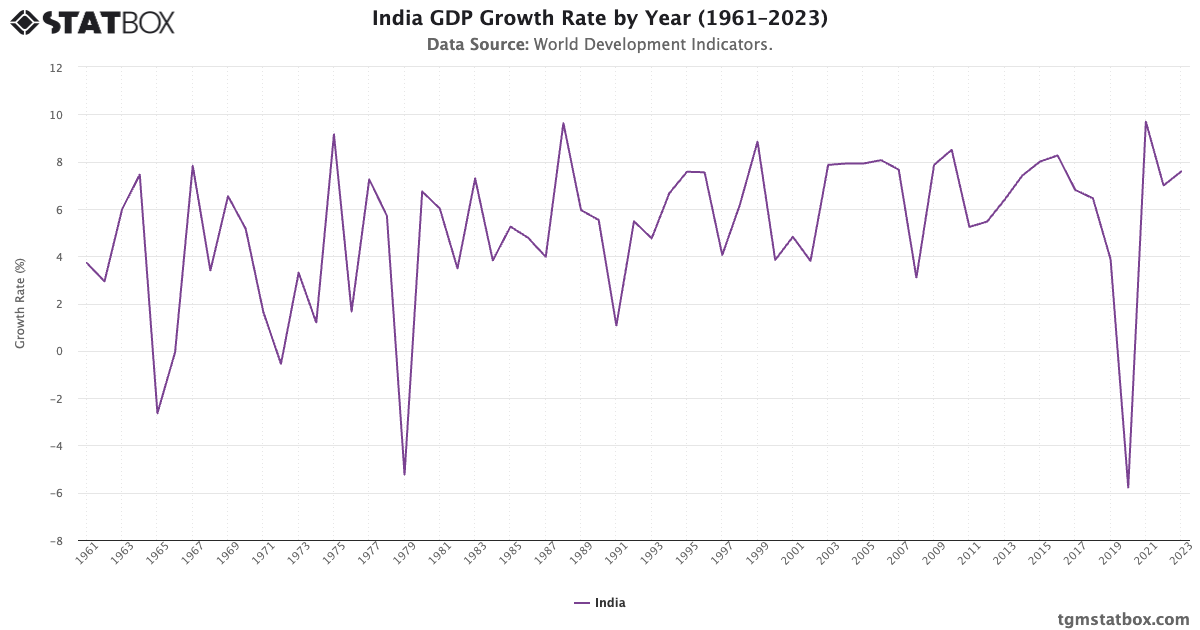
Let's watch the final segments of the video, which discuss both the positive and negative consequences.
The 1991 Crisis: The Week India Changed Forever
First, let's focus on the remarkable economic turnaround that followed the reforms.
Watch the segment from 15:55 to 17:12. Note the immediate positive impacts: A dramatic surge in GDP growth. A flood of foreign investment (FDI). Rebuilding of foreign exchange reserves. The emergence of new sectors, especially the IT and software services industry.
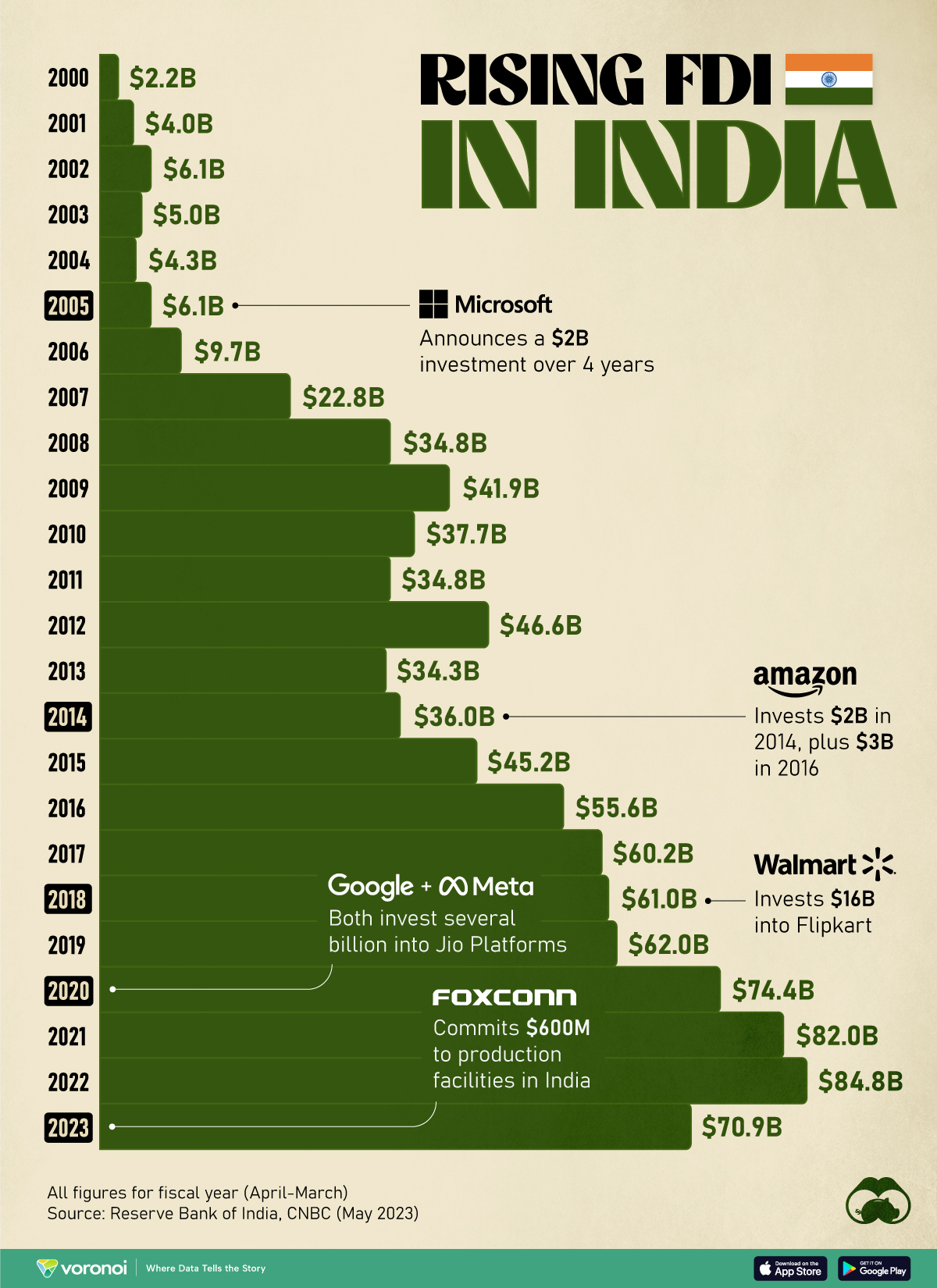
The opening of the economy to foreign investment was a key driver of this transformation. The following chart illustrates the long-term legacy of this policy shift, showing the massive increase in FDI inflows into India in the decades following the reforms.
Social Costs and Critical Perspectives
The story of the 1991 reforms is not, however, one of unqualified success. The "shock therapy" approach that saved the macro-economy also created deep social and economic fissures. For a balanced understanding, it is crucial to analyze the negative consequences.
The 1991 Crisis: The Week India Changed Forever
Now, let's examine the critiques and social costs associated with the reforms, which is a critical part of the story.
Please watch the segment from 17:12 to 22:02. This is a crucial section that discusses the 'other side' of liberalization. Focus on: The rise of massive economic inequality, with the 'Billionaire Raj' replacing the 'Licence Raj'. The agrarian crisis, as reduced public investment in agriculture and exposure to global price volatility led to widespread farmer distress and suicides. The phenomenon of 'jobless growth', where GDP grew rapidly but the formal manufacturing sector failed to create sufficient employment. The stagnation in public spending on social sectors like health and education, leading to increased privatization and deepening inequality.
To explore the impacts with more academic depth, the paper by Shankar Acharya (resource ID LINK) details the boom in the external sector and investment in the first half of the 1990s, while the paper by Arvind Virmani (resource ID LINK) quantifies the impact on trade, capital flows, and the current account. These resources confirm the dual narrative: a successful macroeconomic turnaround coupled with significant, and in some cases unresolved, social and structural challenges.
Conclusion
The 1991 economic reforms were arguably the most significant turning point in India's history since independence. They were not undertaken by ideological choice, but out of the sheer necessity of a "There Is No Alternative" (TINA) situation.
Key Takeaways:
- Causes: The 1991 BoP crisis was caused by a combination of long-term structural inefficiency from the Licence Raj, unsustainable fiscal deficits in the 1980s, and a series of immediate external and political shocks.
- Reforms: The response was a fundamental shift from a state-controlled to a market-oriented economy through Liberalisation, Privatisation, and Globalisation (LPG).
- Positive Consequences: The reforms successfully stabilized the economy, averted default, built up foreign reserves, and ushered in an era of high GDP growth, driven by foreign investment and the rise of new sectors like IT.
- Negative Consequences: The benefits of growth were not evenly distributed. The reforms are criticized for increasing economic inequality, triggering a severe agrarian crisis, failing to create enough formal jobs ('jobless growth'), and leading to the underfunding of public social services.
The India of today—a major global economic player—is a direct product of the changes set in motion in 1991. Yet, it continues to grapple with the profound social questions that these reforms left in their wake.
Preview of the Next Lesson:
The economic earthquake of 1991 also sent tremors through the political landscape. The decline of the old economic order, the rise of new entrepreneurial classes, and the deepening of regional and social inequalities all influenced political behavior. In our next lesson, we will analyze the shift from one-party dominance to an era of coalition politics and the rise of regional parties, a political transformation that ran parallel to the economic one we have just discussed.