Introduction
Welcome to your next lesson in our journey through modern Indian history. In our last session, we analyzed the Nehruvian model, characterized by a state-led mixed economy and a foreign policy of non-alignment. We noted that while this model built a strong industrial base, its relative neglect of agriculture and the inefficiencies of the "License-Permit Raj" created significant challenges, particularly chronic food shortages.
Today, we will explore the pivotal and often turbulent period that followed, largely under the premiership of Indira Gandhi. This lesson directly addresses the learning outcome: Describe major post-Nehru political and economic shifts, including the Green Revolution and the 1975 Emergency. We will examine two defining events of this era:
- The Green Revolution: A technological and economic response to India's food crisis.
- The 1975 Emergency: A profound political crisis that tested the foundations of Indian democracy.
These two developments, though distinct, were intertwined aspects of a period marked by increasing state centralization and intervention.
Part 1: The Green Revolution - A Solution to Scarcity
By the mid-1960s, India was in the grip of a severe food crisis. Two consecutive droughts, coupled with population growth, led to a "ship-to-mouth" existence, heavily dependent on food aid (primarily wheat from the US under the PL-480 program). This dependency was not only economically precarious but also politically compromising. Achieving food self-sufficiency became a matter of national security.
The government's response was a massive, technology-driven agricultural overhaul known as the Green Revolution. To understand its key components and objectives, let's watch an educational video that breaks it down clearly.
Green Revolution | Components of Green Revolution | Achievements & Problems | BA/Bcom 3rd Year EDPI
The video 'Green Revolution' by Ecoholian provides an excellent, structured overview of this pivotal economic shift. We'll start with what the Green Revolution entailed.
Please watch from 03:32 to 09:10. As you watch, focus on: The stated purpose: to increase food production and eliminate hunger. The key components of this new strategy: High-Yielding Variety (HYV) seeds (especially for wheat and rice), chemical fertilizers and pesticides, mechanization (tractors, threshers), and the development of infrastructure like irrigation, credit facilities (NABARD), and marketing.
As the video explains, the Green Revolution was a package deal. The new HYV seeds could produce much higher yields, but only with a corresponding increase in inputs like controlled water supply, fertilizers, and pesticides. This approach marked a significant shift from traditional, subsistence farming towards a more intensive, commercial, and technology-dependent agricultural model.
Analyzing the Impacts: Achievements and Criticisms
The Green Revolution was undeniably successful in its primary objective, but its legacy is complex. It brought about profound economic, social, and ecological changes. Let's continue with the same video to analyze its multifaceted impact.
Green Revolution | Components of Green Revolution | Achievements & Problems | BA/Bcom 3rd Year EDPI
Now, let's look at the consequences of the Green Revolution. The same video offers a balanced perspective, outlining both its remarkable achievements and its significant drawbacks.
Please watch from 09:10 to 20:40. Focus on a cost-benefit analysis of the revolution: Achievements: Note how it led to self-sufficiency in food grains, transformed India from a food-deficit to a food-surplus nation, stabilized food prices, and spurred commercial farming. Problems: Pay close attention to the critiques. The revolution was limited to certain crops (wheat, rice) and regions (Punjab, Haryana, Western UP), leading to regional disparities. It increased personal inequalities, as wealthier farmers who could afford the inputs benefited far more than small and marginal farmers. Finally, note the serious environmental damage caused by the overuse of chemical fertilizers and the depletion of groundwater.
The following image provides a concise visual summary of the interconnected impacts we've just discussed.
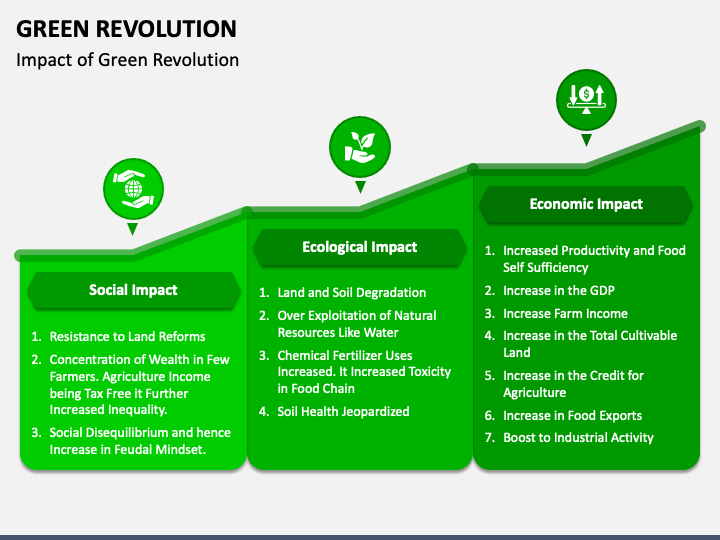
In essence, the Green Revolution was a powerful policy intervention that solved one major crisis (food scarcity) but, in doing so, created new, long-term challenges related to equity and environmental sustainability.
Part 2: The Emergency - A Test of Democracy
While the Green Revolution was transforming the economy, India's political landscape was becoming increasingly volatile. The early 1970s saw Indira Gandhi at the peak of her popularity following the victory in the 1971 Bangladesh Liberation War. However, this was soon followed by a period of severe economic and political stress.
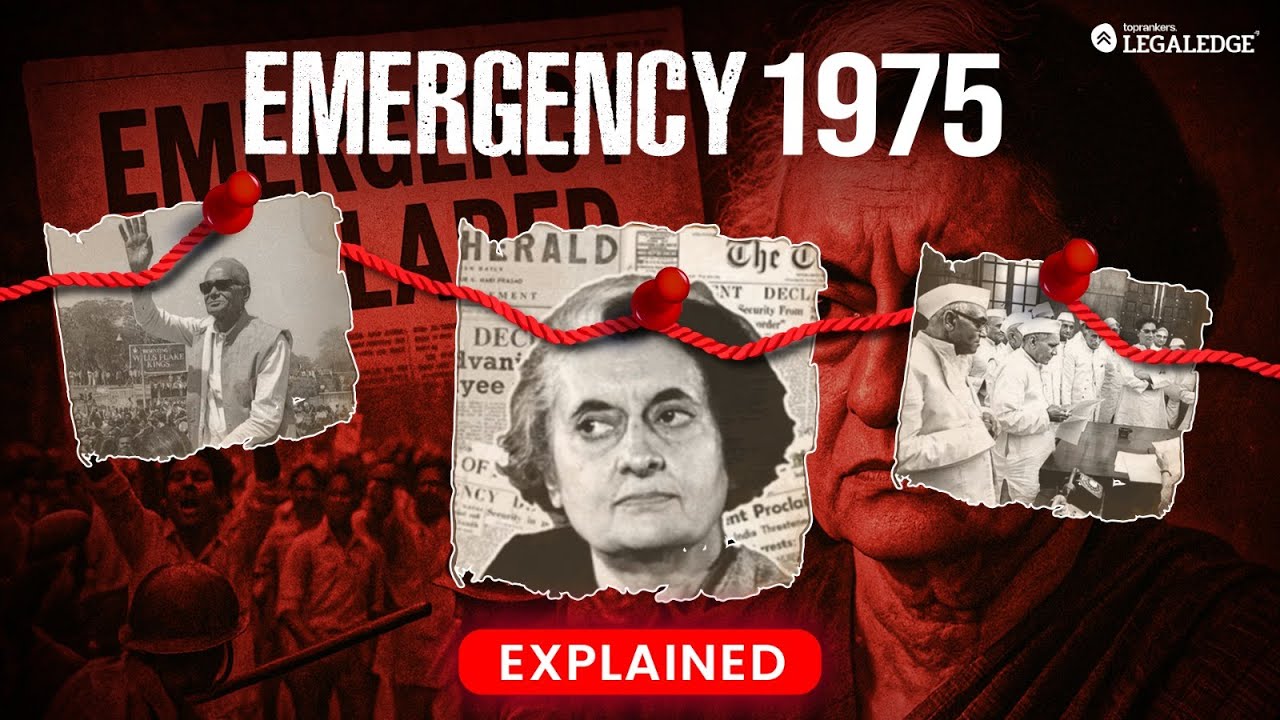
To understand the confluence of factors that led to this unprecedented step, we will turn to a detailed analysis of the crisis.
The National Emergency in India (1975–1977)
Why was a National Emergency declared in a democratic country like India? The article 'The National Emergency in India (1975–1977)' by Dr. Neela Kamat & Mr. Pradeep V. Kamat provides a thorough explanation of the triggers.
Please read the sections titled 'Economic and Political Pressures' and 'The Trigger: A Chronicle of Constitutional Crisis'. As you read, identify the three main streams of pressure on Indira Gandhi's government: Economic Crisis: The impact of the 1973 global oil shock, soaring inflation, industrial unrest (e.g., the massive 1974 railway strike). Political Challenge: The widespread anti-corruption student movements in Gujarat and Bihar, which consolidated into a national movement for 'Total Revolution' under the leadership of veteran Gandhian socialist Jayaprakash Narayan (JP). Legal/Constitutional Crisis: The monumental verdict of the Allahabad High Court on June 12, 1975, which found Indira Gandhi guilty of electoral malpractice and invalidated her election to the Lok Sabha.
Faced with mounting pressure to resign, Indira Gandhi responded by advising the President to declare a National Emergency on the grounds of "internal disturbance" on the night of June 25, 1975. This began a 21-month period that represents the most significant challenge to India's democratic history.
Let's examine what happened during this period and how the constitution itself was altered to concentrate power.
The National Emergency in India (1975–1977)
The declaration of Emergency led to a systematic suspension of the democratic process. The same article details the key features of this authoritarian period.
Please read the sections 'Decision to Declare Emergency,' 'The Proclamation,' 'Life Under the Emergency,' and 'Constitutional Subversion.' Focus on the following aspects: Suspension of Fundamental Rights: The right to move courts for the enforcement of fundamental rights, including the Right to Life and Personal Liberty (Article 21), was suspended. This was infamously upheld by the Supreme Court in the ADM Jabalpur case. Repression and Censorship: Note the mass arrests of political opponents under the Maintenance of Internal Security Act (MISA), strict censorship of the press, and the rise of an extra-constitutional center of power around Sanjay Gandhi, known for forced sterilization programs and slum demolitions. Constitutional Amendments: Understand how the 38th, 39th, and especially the 42nd Amendment ('mini-Constitution') were used to curtail judicial review, extend the life of Parliament, and centralize power in the executive.
The Aftermath: Democratic Redemption
In a surprise move, Indira Gandhi called for general elections in March 1977, ending the Emergency. The opposition parties, many of whose leaders had just been released from jail, united to form the Janata Party. The election result was a landslide victory for the Janata Party, a clear popular verdict against the authoritarianism of the Emergency.
The new Janata government's most lasting contribution was the 44th Amendment (1978). This was a systemic response designed to undo the damage of the Emergency and build safeguards to prevent its recurrence. Key changes included:
- Replacing the vague term "internal disturbance" with "armed rebellion" as a ground for declaring an Emergency.
- Making the President's decision to declare an Emergency subject to the written advice of the Cabinet.
- Making the Right to Life and Personal Liberty (Article 21) absolute, meaning it cannot be suspended even during an Emergency.
Conclusion
The post-Nehruvian era, particularly under Indira Gandhi, was a period of dramatic shifts. It saw the state successfully intervene to solve a crisis of survival through the Green Revolution, while also demonstrating the capacity of the state to subvert the democratic process during the Emergency.
Key Takeaways:
- The Green Revolution was a techno-managerial success that ensured India's food security. However, it created long-term social and environmental imbalances, including regional and personal inequalities.
- The 1975 Emergency was a dark chapter in Indian democracy, where constitutional provisions were used to suspend civil liberties and centralize power in response to a convergence of political, economic, and legal crises.
- Both events reflected a trend of a powerful, centralized state, but the Emergency was a direct assault on the democratic framework itself.
- The decisive electoral defeat of the Congress in 1977 and the subsequent passing of the 44th Amendment demonstrated the resilience of India's democratic ethos and created constitutional safeguards against future abuse of power.
Preview of the Next Lesson:
The Janata Party government was short-lived, and the 1980s saw the return of the Congress party. However, the economic model of state control, which had defined India since independence, was running into severe limitations. In our next lesson, we will examine the balance of payments crisis of the late 1980s and explain the causes and far-reaching consequences of the 1991 economic liberalization reforms, which would fundamentally reshape the Indian economy.