Introduction
Welcome back. In our previous lesson, we examined the twin crises that confronted India at its birth: the horrific aftermath of Partition and the monumental task of integrating over 500 princely states into the Union. By navigating these challenges, leaders like Sardar Patel forged a territorially unified state. With the physical map of India largely secured, the next, and arguably more profound, challenge was to define its political, social, and economic character.
This lesson addresses the learning outcome: Explain the guiding principles of the Indian Constitution and the process of its formation. We will explore how the Constituent Assembly, a body representing the aspirations of a newly free people, embarked on the historic task of drafting a constitution. We will dissect the complex process of its creation and, most importantly, analyze the foundational principles that became the bedrock of the Indian republic.
Part 1: The Making of the Constitution – The Constituent Assembly
The creation of the Indian Constitution was not a sudden event but the culmination of decades of nationalist aspiration for self-determination. The idea that Indians should frame their own constitution gained momentum throughout the freedom struggle, finding early expression in documents like the Nehru Report of 1928.
To understand the context and the key milestones of this process, let's begin with a look at the historical background and formation of the Constituent Assembly.
Constituent Assembly, Historical Background, Composition
The article 'Constituent Assembly, Historical Background, Composition' from Vajiram & Ravi provides a concise, fact-based overview of the timeline and structure of the constitution-making body.
Please read the following sections: 'Constituent Assembly Historical Background': Focus on the timeline table, which traces the demand for a Constituent Assembly from M.N. Roy's proposal in 1934 to the Cabinet Mission Plan in 1946. 'Constituent Assembly Composition': Note how the Assembly was a 'partly elected and partly nominated body'. Understand the allocation of seats between British India and the Princely States. 'Making of the Indian Constitution Timeline': This is the most crucial section. Follow the key events from the first meeting on December 9, 1946, to the final adoption on November 26, 1949. Pay close attention to the introduction of the 'Objective Resolution'.
This timeline provides the "what" and "when." To appreciate the "how" and the atmosphere of the time—filled with both high hopes and deep anxieties—the documentary series Samvidhaan offers a compelling narrative.
This segment from 'Samvidhaan' by Sansad TV brings the historical process to life, capturing the political tensions and aspirations of the era.
Please watch from 09:10 to 43:38. This extended clip covers the critical early phase: The Cabinet Mission (09:10 - 29:39): Observe the intense negotiations between the Congress and the Muslim League and the deep disagreements that set the stage for Partition. The First Assembly (29:39 - 43:38): Witness the convening of the first Constituent Assembly on December 9, 1946. Note the boycott by the Muslim League and the election of Dr. Rajendra Prasad as its President. This section visually represents the start of the journey you just read about.
From these resources, we can consolidate the key aspects of the constitution-making process:
- Formation and Sovereignty: The Constituent Assembly was formed based on the Cabinet Mission Plan of 1946. Its members were indirectly elected by the provincial assemblies. Initially, it was not a fully sovereign body. However, the Indian Independence Act of 1947 changed this, declaring the Assembly a fully sovereign body, free to frame any constitution it pleased. It also began to function as the first provisional Parliament of India.
- The Objective Resolution: On December 13, 1946, Jawaharlal Nehru moved the historic 'Objective Resolution'. This resolution was not a mere formality; it was the philosophical soul of the future constitution. It laid down the fundamental principles: to proclaim India as an independent, sovereign republic; to guarantee justice, equality, and freedom to its citizens; and to provide adequate safeguards for minorities and backward classes. This resolution was unanimously adopted and its modified version ultimately became the Preamble of the Constitution.
- A Deliberative Process: The Assembly worked through numerous committees to handle the vast and complex task. The most significant of these was the Drafting Committee, chaired by Dr. B.R. Ambedkar, who is widely regarded as the chief architect of the Indian Constitution. The draft constitution was then subject to intense public debate and discussion, with thousands of amendments proposed before the final version was adopted on November 26, 1949.
Part 2: Guiding Principles of the Constitution
The Indian Constitution is more than just a legal document; it is a social charter that embodies a vision for a new India. Its guiding principles are most powerfully articulated in the Preamble and are given practical shape through the trinity of Fundamental Rights, Directive Principles, and Fundamental Duties.
The Philosophy of the Preamble
The Preamble is the key to understanding the minds of the framers. It declares India to be a Sovereign, Socialist, Secular, Democratic Republic and outlines the core objectives of the state:
- Justice: Social, Economic, and Political.
- Liberty: Of thought, expression, belief, faith, and worship.
- Equality: Of status and of opportunity.
- Fraternity: Assuring the dignity of the individual and the unity and integrity of the Nation.
To delve into the profound meaning of these terms, we will watch a detailed lecture that breaks down this philosophy.
The Philosophy of Indian Constitution - Lecture 3 | Indian Polity | DD Basu Series | UPSC
The video 'The Philosophy of Indian Constitution' by StudyIQ IAS is an in-depth analysis of the guiding principles, starting from the Objective Resolution and moving through the Preamble. It connects these ideals to specific constitutional provisions and court judgments, which will be valuable for your analytical approach.
This is a long video, so we will focus on specific segments that explain the core principles: Objective Resolution (00:03 - 03:34): Understand its role as the foundation. Sovereignty & Republic (03:34 - 12:06 & 19:49 - 22:04): Learn the meaning of sovereignty and what makes India a republic (elected head of state). Justice, Liberty, Equality (12:06 - 19:49): Grasp the comprehensive vision for these three pillars. The Preamble's Structure (27:13 - 37:04): See how the final Preamble is structured and what the terms added by the 42nd Amendment (Socialist, Secular, Integrity) mean. Democracy & Political Justice (43:22 - 1:02:57): This explains that Indian democracy is more than just voting; it's about values and ensuring political participation for all. Social & Economic Justice (1:02:57 - 1:24:38): This section connects these principles to the idea of a welfare state and explains the Indian brand of 'Socialism' and 'Secularism'.
Innovative Strategies: Constitutional Incrementalism
As you can imagine, reaching a consensus on these principles in a country as diverse and divided as post-partition India was incredibly difficult. The framers had to manage deep disagreements on issues like national language and the role of religion in law. They did so using a set of innovative strategies that can be termed "constitutional incrementalism."
This academic concept will help you understand why the constitution is designed the way it is, with its unique blend of firm commitments and flexible guidelines.
The Indian Founding: a comparative perspective
The paper 'The Indian Founding: a comparative perspective' by Hanna Lerner provides an excellent academic analysis of the strategies used by the framers to navigate conflict.
Please read these sections to understand the core argument: 'Strategies of Constitutional Incrementalism': This introduces the key concept – that the Assembly deferred or used ambiguity to manage explosive conflicts, creating a flexible constitution. 'Deferral': Read this case study on the national language debate. Note how the Munshi–Ayyangar formula made Hindi the 'official language' (not 'national language') and allowed English to continue, effectively postponing a final decision. 'Ambiguity': This section explains how the contentious issue of a Uniform Civil Code (UCC) was handled. Instead of making it a mandatory right, it was placed in the Directive Principles as a goal for the state to 'endeavor to secure'. 'Non-Justiciability': This discusses the Directive Principles of State Policy (DPSP). Understand Dr. Ambedkar's argument that while these principles are not enforceable in court ('non-justiciable'), they are 'fundamental in the governance of the country' and lay down the ideal of 'economic democracy'.
This strategy gave birth to the unique structure of the Indian Constitution, where we have both legally enforceable rights and guiding, non-enforceable principles.

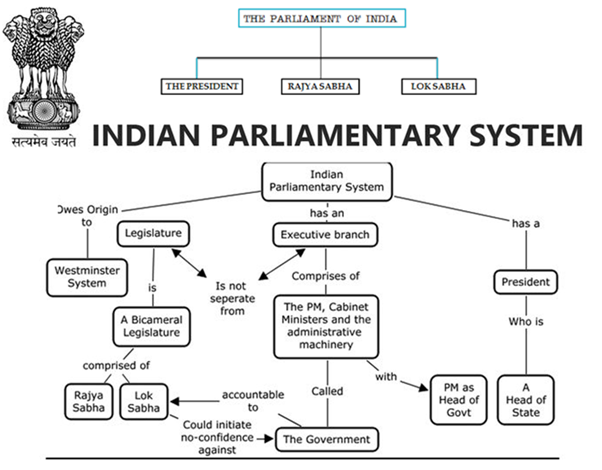
The principles of democracy and republicanism were implemented through a specific structure of government: the Parliamentary System.
Conclusion
The framing of the Indian Constitution was a remarkable act of nation-building, undertaken in the shadow of immense challenges. The Constituent Assembly, through a process of rigorous debate and pragmatic compromise, created a document that was both idealistic and practical.
Key Takeaways:
- Process: The Constitution was framed by a sovereign Constituent Assembly between December 1946 and November 1949. The process was highly deliberative, with Nehru's Objective Resolution setting the philosophical direction and Dr. Ambedkar's Drafting Committee giving it legal form.
- Guiding Principles: The Preamble encapsulates the core vision of India as a Sovereign, Socialist, Secular, Democratic Republic, committed to securing Justice, Liberty, Equality, and Fraternity for all its citizens.
- Constitutional Incrementalism: To manage deep disagreements over sensitive issues like language and religion, the framers employed strategies of deferral, ambiguity, and non-justiciability. This is most evident in the creation of the Directive Principles of State Policy, which act as a flexible, long-term guide for social and economic policy.
- A Social Revolution: The Constitution was not just a political framework; it was a charter for a social revolution, aiming to dismantle age-old hierarchies and build a modern, inclusive, and equitable society.
Preview of the Next Lesson:
With the Constitution in place, the task shifted to implementation. In our next lesson, we will analyze the Nehruvian era and examine how these constitutional ideals were translated into policy through the Nehruvian model of economic development (five-year plans, mixed economy) and its distinct approach to foreign policy through the Non-Aligned Movement.