Introduction
Welcome back. In our previous lesson, we grappled with the enigmatic reign of Muhammad bin Tughlaq, a ruler whose visionary ideas were tragically undermined by catastrophic execution. His story illustrated how political and administrative turmoil at the highest level could destabilize the Sultanate.
Today, we shift our focus from the court of the Sultan to a parallel and arguably more enduring sphere of influence: the world of Sufism. While sultans came and went, Sufi mystics were embedding themselves into the very fabric of Indian society. They were not just religious figures; they were powerful social actors who created vast networks, shaped cultural norms, and offered spiritual solace to millions, from peasants to princes.
This lesson addresses your learning outcome: to describe the role of Sufi orders (Chishti and Suhrawardi) in society and their contribution to cultural synthesis. We will analyze these orders as organized social systems, each with a distinct philosophy and strategy for engaging with the world. For you, with your interest in systems and organizational structures, this is a fascinating look at how two different "models" of spiritual and social organization achieved widespread influence and became cornerstones of the Indo-Islamic cultural landscape.
The Essence of Sufism
Before diving into the specific orders, let's first establish what Sufism is. At its core, Sufism, or Tasawwuf, emerged as a mystical and ascetic dimension of Islam. It emphasized a direct, personal experience of God, prioritizing inner purity, love, and devotion over the rigid formalism of orthodox theology.
To get a foundational understanding of Sufism's origins, core philosophy, and key terminology, please watch the first part of the following video.
Complete Sufi Movement in One Shot | Philosophy, Silsilahs and Saints| History, Art & Culture #upsc
This video, 'Complete Sufi Movement in One Shot' from Sleepy Classes IAS, provides a clear and structured introduction to Sufism. This first segment will cover its origins as a reform movement and its fundamental tenets.
Watch from 00:00:54 to 00:07:27. Focus on understanding why Sufism emerged as a reaction to materialism and religious rigidity, and what its core goals were (e.g., inner purity, personal devotion to God).
Key Concepts and Terminology
Sufism has its own rich vocabulary. As you saw in the video, these terms are crucial for understanding how Sufi orders were structured and how they functioned. Let's do a quick-reference glossary of the most important terms.
- Silsila: Literally a "chain," referring to a Sufi order or spiritual lineage. This chain connects a living master back to the Prophet Muhammad, establishing the order's legitimacy.
- Khanqah: A Sufi hospice or lodge. This was the organizational heart of a silsila, serving as a residence for the master and his disciples, a community kitchen, a place for spiritual gatherings, and a shelter for travelers and the poor.
- Pir or Murshid: The spiritual guide or master.
- Murid: A "follower" or disciple of a Pir.
- Sama: Spiritual music and devotional singing, often including qawwali, used as a means to induce a state of spiritual ecstasy and draw closer to God.
- Ziyarat: A pilgrimage to the tomb (dargah) of a revered Sufi saint.
- Urs: The death anniversary of a saint, celebrated as the "marriage" or union of their soul with God.

The Great Divide: Two Orders, Two Strategies
When Sufism arrived in India, it wasn't a monolithic movement. Numerous silsilas took root, but two became dominant during the Delhi Sultanate: the Chishti and the Suhrawardi orders. While both were orthodox in their belief in Islamic law (Sharia), they adopted fundamentally different strategies for interacting with the state and society.
This can be understood as a strategic choice between two models of influence:
- The Chishti Model: Influence through political aloofness and mass appeal.
- The Suhrawardi Model: Influence through political engagement and elite patronage.
The following video segment explains this crucial distinction and introduces the main categories of Sufi orders.
Complete Sufi Movement in One Shot | Philosophy, Silsilahs and Saints| History, Art & Culture #upsc
Let's return to the Sleepy Classes video to understand how Sufi orders are classified, particularly the distinction between those who adhered to Sharia ('Ba-sharia') and those who didn't ('Be-sharia'), and the differing political stances within the Ba-sharia orders.
Watch from 00:15:39 to 00:20:04. Pay close attention to the concepts of 'liberal' vs. 'conservative' Ba-sharia orders, as this sets the stage for our comparison of the Chishtis and Suhrawardis.
Now, let's analyze each of these two dominant orders in detail.
The Chishti Order: Influence Through Aloofness
The Chishti order, established in India by Khwaja Moinuddin Chishti in Ajmer, became the most popular and influential silsila in Northern India.
Philosophy and Social Role:
The Chishtis believed that association with the state and worldly power corrupted the soul. They maintained a principled distance from the Sultan and his court, refusing government posts, titles, and often even land grants (jagirs).
Their power came from the people. Key features of their approach included:
- Austerity and Poverty: They lived simple, ascetic lives, relying on unsolicited gifts (futuh) from followers, which were quickly distributed.
- Open-Door Khanqahs: Their hospices were open to everyone, regardless of caste, creed, or social status. They ran large community kitchens (langar) that fed the poor daily.
- Use of Sama: They were famous for their use of devotional music (
sama) to create an atmosphere of spiritual ecstasy and love for God. - Cultural Adaptation: They embraced a syncretic approach, conversing in local languages, engaging in dialogues with Hindu yogis, and adopting practices like breathing exercises.
This inclusive and egalitarian approach resonated deeply with the masses, particularly lower-caste Hindus and recent converts to Islam, who found a space of dignity and spiritual solace in the Chishti khanqahs.
Prominent Chishti saints after Moinuddin Chishti include Qutbuddin Bakhtiyar Kaki, Baba Farid, and the incredibly influential Nizamuddin Auliya in Delhi.
Complete Sufi Movement in One Shot | Philosophy, Silsilahs and Saints| History, Art & Culture #upsc
This segment from the Sleepy Classes video details the Chishti order's beliefs, their relationship with the state, and their most prominent saints.
Watch from 00:20:04 to 00:28:16. Focus on how the Chishtis' philosophy translated into their social practices (simple living, tolerance, service) and their distinct 'principled distance' from political power.
The Suhrawardi Order: Influence Through Engagement
In stark contrast to the Chishtis, the Suhrawardi order, established in India by saints like Bahauddin Zakariya in Multan, believed that it was necessary to engage with the ruling elite to guide them toward just governance and serve the people.
Philosophy and Social Role:
The Suhrawardis did not shun wealth or state patronage. They accepted large land grants and held important state positions.
Key features of their approach included:
- Political Association: They actively participated in politics, maintaining close ties with sultans and nobles, and acting as political intermediaries and advisors.
- Accumulation of Wealth: They amassed considerable wealth, which they used to run their well-organized and hierarchical
khanqahs. - Strict Adherence to Sharia: While the Chishtis were more flexible, the Suhrawardis were generally more conservative, opposing practices like
samawhich they felt were not strictly Islamic. - Elite Focus: Their influence was strongest in the frontier provinces of Punjab and Sindh, and their followers were often from the upper echelons of society.
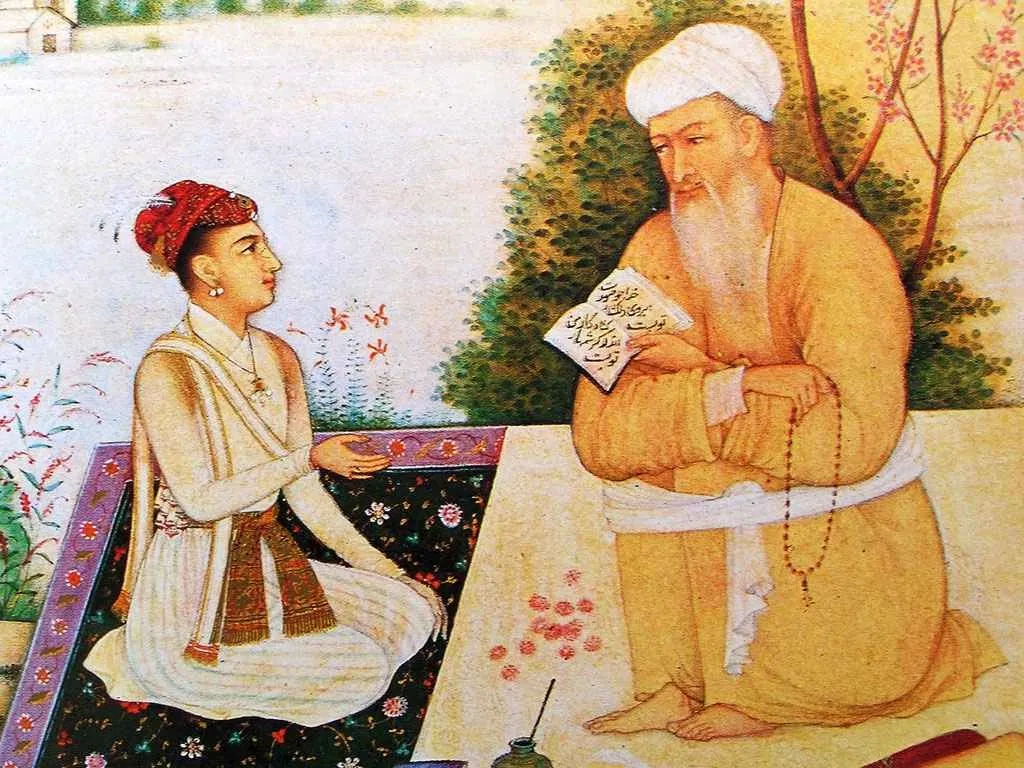
The Suhrawardi model shows a pragmatic approach where spiritual authority and political power could reinforce each other, especially in volatile frontier regions where the Sultan's authority needed local support.
To get a more detailed, academic perspective on the Suhrawardi strategy, please read the following sections from a research paper.
An Analytical Study of Suhrawardi Order in Delhi Sultanate
The paper 'An Analytical Study of Suhrawardi Order in Delhi Sultanate' provides an excellent analysis of the Suhrawardi strategy. These selected sections contrast their approach directly with the Chishtis.
Please read two sections from this paper. Start with the heading 'Baha-ud-Din Zakariya’s Political Engagement' and read through to the end of the subheading 'Relationship with Sultan Iltutmish'. This details his direct cooperation with the state. Then, read the section under the heading 'Comparison with Chishti Order’s Political Aloofness'. This provides a direct analytical contrast between the two orders' strategies. Focus on how the Suhrawardi engagement served both the state and their own order's interests.
Contribution to Cultural Synthesis
Both orders, despite their different methods, were powerful agents of cultural synthesis—the process of blending and integrating different cultural and religious traditions.
-
The Chishtis fostered a "bottom-up" synthesis. Their inclusive
khanqahsbecame melting pots where Hindu and Muslim devotional traditions met. The use of vernacular languages, the incorporation of local customs, and the popularity ofsama(qawwali) created a shared spiritual and cultural language that transcended religious divides. This popular, syncretic culture was their greatest contribution. -
The Suhrawardis facilitated a "top-down" synthesis. By engaging with the state, they influenced the administration and legal system, embedding Islamic ethical principles within the framework of governance. They helped legitimize the Sultanate's rule, creating political stability that was essential for the flourishing of art, architecture, and literature—the hallmarks of a composite high culture.
The following reading explains how Sufi khanqahs functioned as centers of social inclusion and fostered interfaith dialogue, which was central to this process of cultural synthesis.
[PDF] SUFI CONTRIBUTIONS TO HUMAN DEVELOPMENT AND PEACE
This paper, 'SUFI CONTRIBUTIONS TO HUMAN DEVELOPMENT AND PEACE', further explores the social impact of Sufism. These sections highlight their role in promoting equality and building bridges between communities.
Read the sections titled 'Sufis and the Ruling Elite,' 'Interfaith Engagement and Cultural Adaptation,' and 'Sufi Shrines as Centers of Social Inclusion.' These passages will consolidate your understanding of how Sufi practices directly led to cultural mixing and social harmony.
Conclusion
In this lesson, we have seen that Sufism was far more than a personal spiritual quest; it was a dynamic social force that profoundly shaped the Delhi Sultanate.
Key Takeaways:
- Sufism as a Social System: Sufi orders, or
silsilas, were highly organized networks centered aroundkhanqahs, which acted as crucial hubs for spiritual guidance, social welfare, and cultural activity. - Two Competing Strategies: The two most prominent orders, the Chishtis and Suhrawardis, adopted opposite strategies. The Chishtis practiced political aloofness, gaining immense grassroots popularity through their asceticism, inclusivity, and use of music (
sama). The Suhrawardis practiced political engagement, aligning with the ruling elite to gain influence and resources. - Agents of Cultural Synthesis: Both orders were instrumental in creating a unique Indo-Islamic culture. The Chishtis fostered a popular, syncretic culture from the bottom up by bridging Hindu-Muslim devotional traditions. The Suhrawardis contributed from the top down by integrating their principles with state governance, creating stability for elite culture to flourish.
Preview of the Next Lesson:
The cultural synthesis fostered by the Sufis found its most visible and enduring expression in stone and mortar. In our next lesson, we will explore the key features of Indo-Islamic architecture during the Sultanate period, analyzing how a new, composite architectural style emerged from the fusion of Indian and Islamic traditions.