Introduction
Welcome back. In our last lesson, we analyzed Alauddin Khalji's radical economic policies—a system built on brutal pragmatism and coercion, designed for the singular purpose of funding his military. We concluded that while his command economy was a temporary success, it was politically and economically unsustainable.
Today, we shift our focus to his successor dynasty and encounter a ruler of a completely different temperament: Muhammad bin Tughlaq. An intellectual and a visionary, Tughlaq was brimming with grand, innovative ideas for administrative and economic reform. Yet, his reign is famously remembered as a series of spectacular failures that destabilized the Sultanate.
This lesson will evaluate Muhammad bin Tughlaq's most significant administrative experiments. We will analyze the strategic vision behind his policies and critically assess the reasons for their disastrous outcomes. For someone with your background in finance and economics, these experiments serve as fascinating medieval case studies in large-scale project management, monetary policy, and fiscal strategy, highlighting the immense gap that can exist between a brilliant idea and its practical execution.
The Man of Contradictions: Muhammad bin Tughlaq
Muhammad bin Tughlaq (r. 1325-1351 CE) stands as one of the most enigmatic and controversial figures in Indian history. He was a polymath—well-versed in philosophy, mathematics, logic, and medicine, and fluent in multiple languages. Unlike most preceding sultans, he was a rationalist who engaged in religious and philosophical debates. This intellectual curiosity drove him to devise ambitious, often revolutionary, policies. However, his impatience, authoritarian streak, and apparent disregard for practical realities often led his grand schemes to ruin, earning him the famous label of the "wisest fool."
Let's begin by watching an introduction to his character and the major experiments that defined his reign.
Complete Medieval History | Muhammad Bin Tughluq: A Wise Fool | L-8 | History for UPSC 2026
This video from StudyIQ IAS provides an excellent overview of Muhammad bin Tughlaq, his reputation as an 'ill-fated idealist,' and the five major experiments he undertook.
Watch from 00:01:43 to 00:06:49. This section will set the stage by introducing Tughlaq's personality and the historical context of his accession to the throne.
Now, let's dissect two of his most infamous experiments: the transfer of the capital and the introduction of token currency.
Experiment 1: The Capital Transfer (1327)
One of Tughlaq's first major projects was the decision to move the imperial capital from Delhi to Deogiri in the Deccan, which he renamed Daulatabad ("City of Fortune").
The Vision:
From a strategic perspective, the idea was sound.
- Centralization: The Sultanate had expanded deep into South India. Daulatabad was more centrally located than Delhi, theoretically allowing for better administrative control over the vast empire.
- Security: Delhi was perennially exposed to Mongol invasions from the northwest. Daulatabad was a safe distance away from this threat.
- Cultural Integration: The move was intended to foster a common elite culture by bringing the administrative and cultural heart of the empire to the Deccan.
The Execution & Consequences:
The problem lay not in the idea, but in its brutal and poorly planned execution.
Complete Medieval History | Muhammad Bin Tughluq: A Wise Fool | L-8 | History for UPSC 2026
Let's return to the StudyIQ IAS video for a detailed account of how this transfer was carried out and why it failed so catastrophically.
Watch from 00:07:53 to 00:13:39. Focus on the methods of implementation (forced migration) and the logistical and environmental reasons for the experiment's failure.
As the video explains, instead of just moving the administrative apparatus, Tughlaq ordered the entire elite population of Delhi to migrate over 1,400 kilometers to the new capital.

The results were catastrophic:
- Human Cost: The journey was arduous, and thousands perished from fatigue and hardship.
- Logistical Failure: Despite arrangements like rest houses (sarai), the resources in Daulatabad, particularly water, proved inadequate for the new population.
- Strategic Miscalculation: While the Sultan was in the south, control over the northern territories weakened, inviting both rebellions and renewed threats.
Within a few years, Tughlaq realized his mistake and ordered a return march to Delhi, causing further death and misery. Delhi, once a prosperous metropolis, was left depopulated and in ruins for years.
Evaluation: The capital transfer is a classic example of a project with sound strategic rationale undermined by catastrophic execution. It demonstrates a profound failure in project management, particularly in logistics and human resource planning.
Experiment 2: Token Currency (1329-30)
Tughlaq's next great experiment was in monetary policy. Facing a global shortage of silver in the 14th century and needing to finance his ambitious projects, he introduced a "token" currency.
The Vision:
The concept was revolutionary and remarkably modern, paralleling today's fiat currency.
- Conservation of Bullion: Tughlaq sought to replace expensive silver coins (tanka) with bronze or copper coins that would have the same legal tender value. This would conserve the state's precious metal reserves.
- Inspiration: He was inspired by the use of paper money under the Mongol ruler Kublai Khan in China and in Persia.
The Execution & Consequences:
The Sultan decreed that bronze coins would be treated as equal in value to the existing silver coins for all transactions.
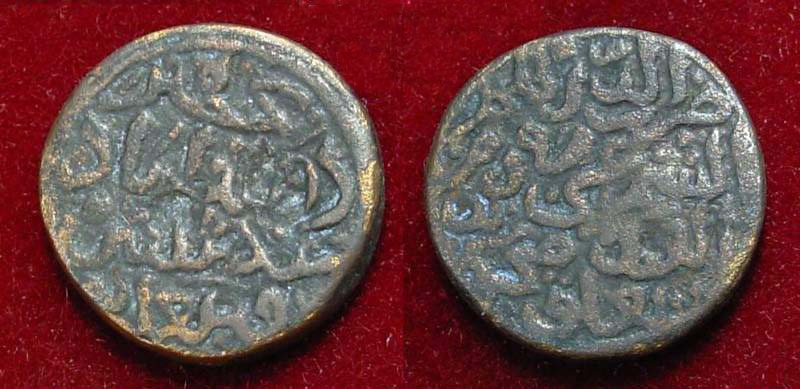
Let's examine why this brilliant idea led to economic chaos.
Complete Medieval History | Muhammad Bin Tughluq: A Wise Fool | L-8 | History for UPSC 2026
The StudyIQ IAS video explains the fatal flaw in the token currency experiment that led to its rapid collapse.
Watch from 00:13:39 to 00:17:18. Pay close attention to the reason why the currency was so easily forged and the resulting economic impact.
The experiment failed due to a single, critical oversight: the state's inability to maintain a monopoly on minting. The design of the bronze coins was simple, and the government failed to implement any kind of complex engraving or security feature that couldn't be replicated by common artisans.
The consequences were immediate and devastating:
- Mass Counterfeiting: As the chronicler Ziauddin Barani noted, "the house of every Hindu became a mint." Citizens began forging the coins in their own homes.
- Hyperinflation: The market was flooded with fake currency. Foreign merchants refused to accept the bronze coins, bringing trade to a halt.
- Economic Collapse: With the value of money destroyed, the economy plunged into chaos.
- Treasury Bankruptcy: In a desperate bid to restore order, Tughlaq had to repeal his edict. He promised to exchange all bronze coins—both genuine and counterfeit—for silver coins from the royal treasury. This act of fiscal responsibility, while restoring some trust, effectively bankrupted the state.
Evaluation: From a modern financial perspective, the token currency failed due to a complete lack of "security features," leading to a loss of public trust and uncontrolled inflation. It highlights that the value of fiat money rests not just on government decree (legal tender), but on the public's confidence and the issuer's ability to prevent counterfeiting.
A Pattern of Ambitious Failures
The capital transfer and token currency were not isolated incidents. They were part of a larger pattern of grand schemes that were visionary in concept but disastrous in outcome.
| Experiment | Vision | Execution & Consequence |
|---|---|---|
| Khurasan Expedition (1329) | Conquer Central Asia by exploiting political weakness in the Mongol Ilkhanate. | Formed a massive army of 370,000, paying them a year's salary in advance. The political situation changed, the plan was abandoned, and the treasury was drained. |
| Taxation in Doab (c. 1326) | Increase land tax revenue from the fertile Ganga-Yamuna region to fund other projects. | The tax hike coincided with a severe famine. Peasants were unable to pay, fled their lands, and rebelled. It caused immense suffering and economic disruption. |
| Karachil Expedition (c. 1330) | Secure the northern borders against Chinese/Mongol incursions by capturing Himalayan regions. | The army was sent into the mountains during the monsoon season. It was routed by local resistance and the harsh weather, with most of the army perishing. |
These projects, detailed in the StudyIQ video from 17:18 to 41:06, reinforce the image of a ruler whose ambition consistently outstripped his practical judgment and luck.
Analysis: Innovator or "Wisest Fool"?
This consistent pattern of failure begs the question: was Muhammad bin Tughlaq simply an arrogant tyrant, or was he a genuine innovator, a man ahead of his time who was misrepresented by history? Contemporary chroniclers like Ibn Battuta and Ziauddin Barani were deeply critical, and their accounts have largely shaped his negative image. However, some modern historians argue for a more nuanced view.
Let's explore this revisionist perspective.
Mohammad-Bin-Tughluq: The right side of the wrongly presented innovator
This academic paper, 'Mohammad-Bin-Tughluq: The right side of the wrongly presented innovator', challenges the traditional narrative. It argues that Tughlaq was a visionary leader whose failures were due to poor execution and bad luck, and that he was unfairly judged by biased chroniclers.
First, read the 'Abstract' and 'Introduction' to understand the author's main argument. Then, read the section that starts 'It is just hard luck that no official record of his rule exists...' and continues to the end of that page. This part critically examines the accounts of chroniclers like Ibn Battuta and Isami, highlighting their potential prejudice.
This paper suggests we must consider:
- The bias of sources: Chroniclers like Isami dedicated their work to rebels who fought against Tughlaq, giving them a clear motive to portray him negatively.
- The nature of innovation: Many revolutionary ideas fail before they succeed. Tughlaq was one of the first rulers to think of the subcontinent as a single political unit and to experiment with concepts like fiat currency.
- The role of bad luck: The devastating famine that coincided with the Doab tax hike was an external shock that no ruler could control.
Ultimately, Muhammad bin Tughlaq's legacy is a complex one. He was undoubtedly a brilliant thinker and visionary. However, a great leader must be more than a great thinker; they must also be a great implementer, capable of translating vision into reality. It was in this crucial step that Tughlaq consistently and catastrophically failed.
Conclusion
In this lesson, we have evaluated the major administrative experiments of Muhammad bin Tughlaq. We moved beyond a simple narrative of failure to analyze the vision behind his policies and the precise reasons for their collapse.
Key Takeaways:
- Visionary Ideas, Flawed Execution: Tughlaq's major projects, like the capital transfer to Daulatabad and the introduction of token currency, were often conceptually brilliant and far ahead of their time.
- Catastrophic Consequences: His failures were a result of poor planning, logistical incompetence, impatience, and a brutal disregard for the human cost of his schemes. The token currency failed due to a lack of security against counterfeiting, while the capital transfer failed due to logistical and resource miscalculations.
- A Legacy of Contradiction: Muhammad bin Tughlaq remains a paradoxical figure. He was an innovator whose failed innovations bankrupted his treasury, weakened his empire, and earned him the title of the "wisest fool" in Indian history. His reign serves as a powerful lesson on the difference between strategic vision and effective governance.
Preview of the Next Lesson:
Despite the turmoil under rulers like Muhammad bin Tughlaq, the Sultanate period was a time of significant economic and cultural activity. In our next lesson, we will "Analyze the impact of the Sultanate on trade, urbanization, and the Indian Ocean commercial network," looking at the broader economic structures that persisted and evolved throughout this dynamic era.