Hello! Welcome back to our series on fundamental analysis.
In our last few lessons, we've focused on the quantitative side of a company—the hard numbers like revenue, net income, and Earnings Per Share (EPS). These metrics are essential, but they don't tell the whole story. To make a truly informed investment decision, you also need to understand the qualitative aspects: What does the company actually do? How does it make money? Who is it competing against?
This lesson is all about becoming a financial detective. We're going to the primary source for company information: the Investor Relations website. Your goal is to learn how to use a company's investor relations website to find information about its business model and competitors. Mastering this practical skill will allow you to look beyond the summary statistics on financial websites and understand the story behind the numbers.
What is an Investor Relations Website?
Every publicly traded company is required to communicate with its investors. To do this, they maintain a special section on their website called Investor Relations (IR). This is a central hub for all the financial and strategic information an investor might need.
What are investor relations websites? What information can I find?
To start, let's get a clear definition of what IR websites are and what kind of information they contain. This article from SNHU provides a perfect overview.
Please read the entire article. Focus on the sections 'What are Investor Relations websites?', 'What Information Can I Find...', and 'How do I Find Investor Relations Websites?'. This will give you a complete map of what to expect before we dive in.
As the article explains, finding these pages is straightforward: simply search for a company's name followed by "investor relations."
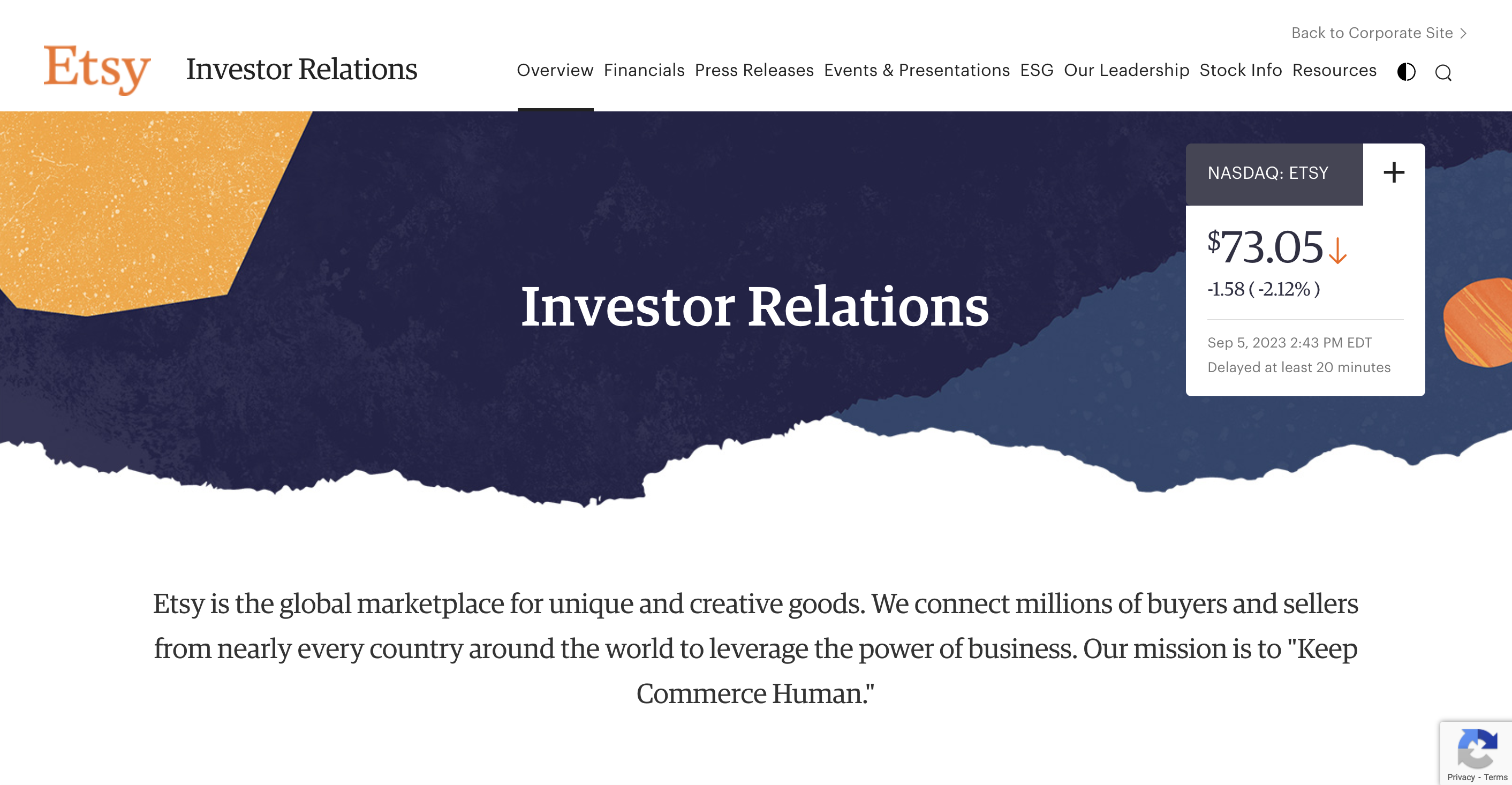
The Treasure Chest: The 10-K Annual Report
While IR websites contain many useful documents like press releases and shareholder presentations, the single most important document for deep-dive research is the Annual Report, also known as the Form 10-K.
The 10-K is a comprehensive report filed annually by a public company about its financial performance. It's legally required by the U.S. Securities and Exchange Commission (SEC) and contains a wealth of detailed information. Our main mission today is to find this document and extract key details from it.
Let's watch how to find a 10-K and start analyzing it.
How to Analyze an Annual Report (10-K) Like a Hedge Fund Analyst
The video 'How to Analyze an Annual Report (10-K) Like a Hedge Fund Analyst' by Investor Center gives a great walkthrough. We'll start by seeing how to locate the 10-K and then dive into the most important section for understanding a company's operations.
Watch the two clips from 01:21-01:49 and 02:08-03:42. The first clip shows you how to find the 10-K on a company's IR site. The second clip explains how to analyze the 'Business Section' to understand what the company does and how it makes money, using Apple as an example.
Deconstructing the Business Model
As you just saw, the "Business" section (usually labeled "Item 1") of the 10-K is your first stop. This is where the company explains, in its own words:
- Its main products and services.
- The markets it operates in.
- How it generates revenue (its business segments).
- Its distribution channels (how it sells to customers).
Let's look at another example from a completely different industry to see how the same principles apply.
How To Read An Annual Report (10-K)
In this video, 'How To Read An Annual Report (10-K)' by Hamish Hodder, you'll see a breakdown of the business section for Texas Roadhouse, a restaurant chain. This reinforces the concepts with a different type of company.
Watch from 03:30 to 07:16. Pay attention to the specific details the presenter pulls out, like the cost to open a new restaurant and the different brands the company owns. This is the kind of detail that helps you build a full understanding of the business.
Identifying the Competition
Understanding a company also requires understanding its competitive landscape. A great business often has a strong advantage over its rivals. The 10-K explicitly discusses this in a section typically titled "Competition."
This section answers questions like:
- Who does the company consider its main competitors?
- Is the industry highly competitive?
- On what basis do companies in this industry compete (e.g., price, innovation, brand reputation)?
Let's return to our Apple example to see how to find and interpret this information.
How to Analyze an Annual Report (10-K) Like a Hedge Fund Analyst
We'll go back to the 'How to Analyze an Annual Report (10-K) Like a Hedge Fund Analyst' video to learn about the competition section.
Watch the clip from 05:56 to 07:21. The presenter explains how to use the 'Competition' section to understand the industry's dynamics. Notice how he identifies that Apple's competitors often compete on price, while Apple focuses on innovation.
Pro Tip: 10-K reports can be hundreds of pages long. Don't try to read them cover to cover at first. Use the search function (Ctrl+F on Windows, Cmd+F on Mac) to quickly find sections like "Business," "Competition," and "Risk Factors."
How to Read a 10-K: A Beginner's Guide
This article, 'How to Read a 10-K: A Beginner's Guide,' offers some excellent practical tips for reading these long documents efficiently.
Read the sections 'Business Section' and 'Tips for Reading a 10-K Efficiently.' This will reinforce what we've learned and give you a smart strategy for tackling these reports.
Once you've gathered information on competitors, it's useful to organize it. A simple table or matrix can help you compare your target company against its rivals side-by-side.

Test your understanding!
Now it's your turn to be the analyst.
- Pick a large, publicly traded company you are interested in (e.g., Nike, Coca-Cola, Netflix).
- Using a search engine, find its Investor Relations website.
- On the IR website, navigate to the SEC Filings or Annual Reports section and open the latest 10-K report.
- Find Item 1: Business. Read the first few paragraphs and, in your own words, write one sentence describing how the company makes money.
- Now, use the search function (Ctrl+F or Cmd+F) to find the "Competition" section. List one or two of the main competitors the company mentions.
Show answer
The answer will depend on the company you chose. Let's use Nike (NKE) as an example:
- How it makes money: Nike makes money primarily by designing, developing, and selling athletic footwear, apparel, and equipment to customers and wholesale partners around the world.
- Competitors: In its 10-K, Nike often lists competitors like Adidas, Under Armour, Puma, and Lululemon, as well as a wide range of other global and regional athletic and casual footwear and apparel companies.
The key is to successfully navigate the IR site, locate the 10-K, and extract these specific pieces of information.
Conclusion
Congratulations! You've just learned one of the most fundamental skills of a serious investor: how to go to the primary source to understand a business. You now know that beyond the ticker symbol and stock price, there's a detailed story waiting to be uncovered on the company's Investor Relations website.
Key Takeaways:
- Investor Relations (IR) websites are the central hub for official company information, created for investors.
- The Form 10-K (Annual Report) is the most comprehensive document for understanding a company's operations and finances.
- The "Business" section (Item 1) of the 10-K explains a company's business model: what it sells, who it sells to, and how it makes money.
- The "Competition" section identifies key rivals and describes the competitive dynamics of the industry.
A Look Ahead:
In our previous lessons, we learned how to find a company's Earnings Per Share (EPS). In this lesson, we learned how to understand the qualitative story behind the company. Now, we are ready to combine these concepts. In our next lesson, we will dive into one of the most famous valuation metrics in all of investing: the Price-to-Earnings (P/E) ratio. You'll learn how to calculate it and use it to begin answering the critical question: "Is this stock cheap or expensive?"