Welcome to the second module of our course, "The Rise of Political Hindutva: From Margin to Dominance." In our previous module, we laid the ideological and organizational groundwork, exploring the concepts of Hindutva, the structure of the RSS, and the complex, symbiotic relationship between the Sangh and its political affiliate, the BJP. You learned that this is a dynamic of strategic interdependence, not simple control.
Now, we shift our focus to the political journey itself. This lesson traces the very origins of the BJP, a story that begins not in 1980, but three decades earlier with the formation of its predecessor, the Bharatiya Jana Sangh (BJS). We will follow its path from its founding in 1951, through a pivotal merger during the Janata Party experiment in 1977, to its eventual rebirth as the party that holds power today. Understanding this history is crucial to grasping the BJP's long-term objectives and ideological commitments.
The Genesis of the Jana Sangh (1951)
In the immediate aftermath of independence and Partition, Indian politics was dominated by the Indian National Congress. The first major political expression of the Hindu nationalist movement emerged from a confluence of two key events.
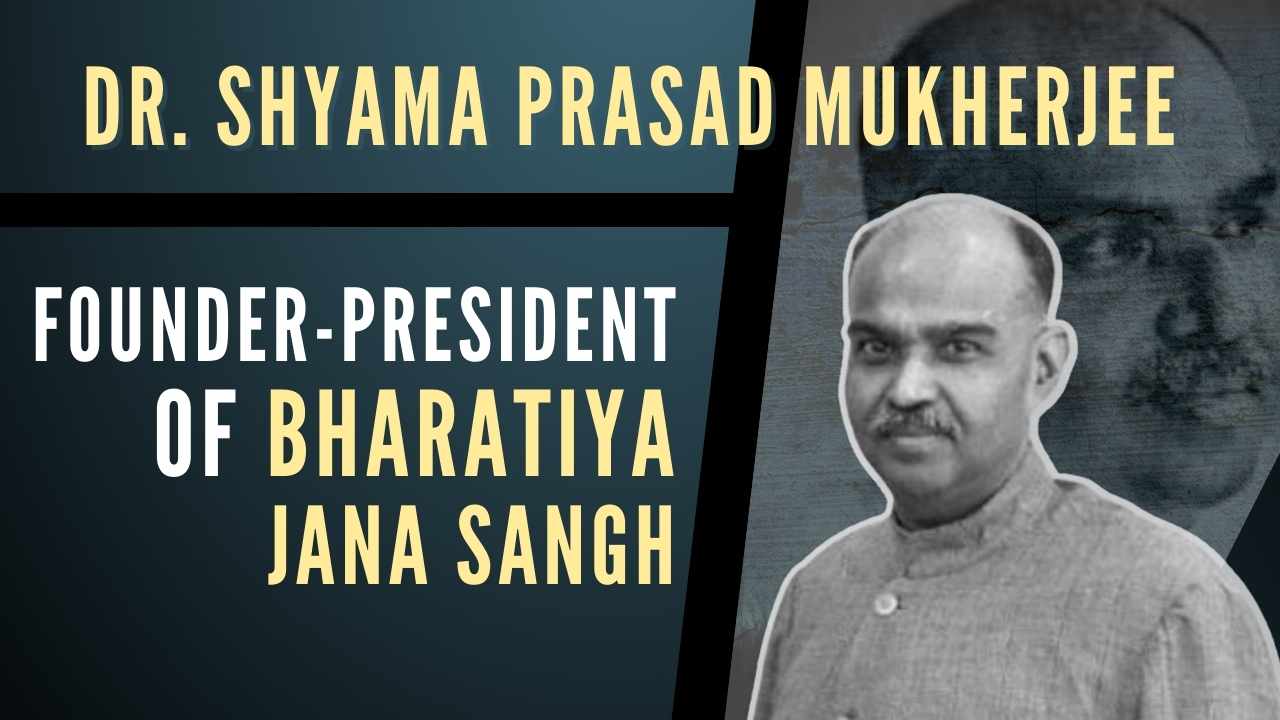
First, there was high-level dissent within the government itself. Dr. Shyama Prasad Mookerjee, a respected minister in Jawaharlal Nehru's first cabinet, grew deeply dissatisfied with the government's handling of the post-Partition violence and the Nehru-Liaquat Pact, which he felt failed to protect the rights of Hindus in East Pakistan.
Second, the Rashtriya Swayamsevak Sangh (RSS), which we studied in the last module, faced a ban following Mahatma Gandhi's assassination. This experience convinced its leadership of the necessity of having a dedicated political front to represent its interests in the electoral arena.
These two streams converged, leading to the formation of the Bharatiya Jana Sangh. The following research paper provides a concise account of its founding.
[PDF] analytical-exposition-of-bharatiya-jan-sangh-and-bjp-focus-on ...
This paper outlines the key events and motivations behind the creation of the Jana Sangh.
Please read the "INTRODUCTION" and the section "Formation of Bharatiya Jana Sangh." Focus on: Mookerjee's resignation from Nehru's government and his rationale. The two primary reasons for the party's formation: the Nehru-Liaquat Pact and the RSS ban. The crucial meeting where the strategy was devised between Mookerjee and the then-RSS chief, M.S. Golwalkar. The core ideological platform the party adopted from its inception, including its stance on a Uniform Civil Code, cow slaughter, and Article 370.
As you've read, the BJS was launched on October 21, 1951, with the 'deepak' (oil lamp) as its symbol. From day one, it championed causes that remain central to the BJP's agenda today. Its very first major campaign was for the full integration of Jammu and Kashmir, opposing the special status and permit system then in place. This campaign led to Mookerjee's arrest and subsequent death in custody in 1953, an event that established a foundational narrative of martyrdom for the party.
After Mookerjee's death, the party's intellectual and organizational leadership passed to figures like Deendayal Upadhyaya, who formulated the party's guiding philosophy.
Ideology of Bharatiya Janata Party
This paper explains the official doctrine that shaped the Jana Sangh's worldview.
Read the first half of the paper to understand the Jana Sangh's core philosophy. Focus on the description of Deendayal Upadhyaya's Integral Humanism, which was adopted as the party's official doctrine, and its emphasis on concepts like value-based politics and swadeshi (self-reliance).
Integral Humanism sought to provide an indigenous socio-economic and political model, distinct from both Western capitalism and Soviet communism, rooting its principles in what it considered traditional Indian values. For over two decades, the Jana Sangh operated as a marginal but persistent voice in Indian politics, with its influence largely confined to the Hindi-speaking states of North India.
The Janata Party Experiment (1977-1980)
The political landscape was dramatically altered in 1975 when Prime Minister Indira Gandhi imposed a state of Emergency, suspending civil liberties and imprisoning opposition leaders. The Jana Sangh, along with socialists and dissident Congress factions, was at the forefront of the resistance.
When elections were called in 1977, these disparate groups made a pragmatic decision to unite under a single banner to defeat the Congress. This coalition was the Janata Party.
This short video explains the formation and subsequent collapse of this unique political experiment.
The Rise and Fall of Janata Party Government | Milestone | Making of Modern India
This clip from Peepul Tree World's "Milestone" series provides a clear overview of the Janata period.
Please watch the following segments: First, see how the Janata Party was formed as a "rag tag collection" of opposition groups, including the Jana Sangh, united by the common goal of ousting Indira Gandhi. Then, watch the section detailing the internal conflicts that doomed the government, particularly the demand that Jana Sangh ministers like Vajpayee and Advani sever ties with the RSS.
The Janata Party's victory in 1977 was historic, marking the first time a non-Congress government took power at the Centre. Key Jana Sangh leaders assumed major cabinet roles: Atal Bihari Vajpayee became the Minister of External Affairs, and L.K. Advani became the Minister of Information and Broadcasting.
However, as the video and the following text explain, the coalition was plagued by ideological infighting from the start.
[PDF] analytical-exposition-of-bharatiya-jan-sangh-and-bjp-focus-on ...
We return to the first paper to examine the precise issue that broke the Janata coalition.
Read the section titled "The Genesis of Bharatiya Janata Party." Focus on the conflict over dual membership. This was the core issue: the socialist and secular factions of the Janata Party demanded that the former Jana Sangh members renounce their lifelong membership in the RSS.
The "dual membership" issue proved irreconcilable. For the Jana Sangh leaders, their connection to the RSS was non-negotiable; it was their ideological and organizational wellspring. For their coalition partners, the RSS represented a sectarian ideology incompatible with the Janata Party's platform. This fundamental conflict, coupled with leadership rivalries, led to the government's collapse in 1979.
The Birth of the BJP (1980)
The Janata Party, a fractured entity, went into the 1980 general election and was decisively defeated by Indira Gandhi's Congress. In the aftermath, the party executive passed a resolution formally banning its members from having any association with the RSS. This was the final straw.

The former Jana Sangh contingent broke away to chart a new course.
[PDF] analytical-exposition-of-bharatiya-jan-sangh-and-bjp-focus-on ...
This final reading selection describes the formal creation of the BJP.
Read the section titled "A Decisive Offshoot of Former Janata Party." Note the date and location of the BJP's founding and the appointment of Vajpayee as its first president.
On April 6, 1980, at the Feroze Shah Kotla ground in Delhi, the Bharatiya Janata Party was born. While it inherited the cadre, ideology, and leadership of the Jana Sangh, its leaders initially sought to project a more moderate image, a lesson learned from the Janata experience.
Ideology of Bharatiya Janata Party
Returning to the second paper, let's look at the BJP's initial ideological positioning.
Read the section that begins "With the emergence of the BJP..." Pay attention to how Vajpayee, in his inaugural address, stressed that the BJP was not just a new name for the Jana Sangh. He proposed Gandhian socialism as the party's creed, consciously attempting to broaden its appeal.
This initial phase of moderation, with its adoption of "Gandhian socialism," represented an attempt to create a more inclusive political platform. However, as we will see in subsequent lessons, this strategy would soon give way to a more assertive and ideologically distinct form of political mobilization.
Conclusion
In this lesson, we have charted the political lineage of the BJP, tracing its journey from a marginal nationalist party to the corridors of power and back to the drawing board.
Key Takeaways:
- The BJP's roots lie in the Bharatiya Jana Sangh (BJS), founded in 1951 by Shyama Prasad Mookerjee as a political alternative to the Congress, with the organizational and ideological backing of the RSS.
- From its inception, the BJS championed core ideological tenets like the abrogation of Article 370, a Uniform Civil Code, and a ban on cow slaughter.
- The Janata Party experiment (1977-1980) was a pivotal moment. It brought BJS leaders to national power for the first time but ultimately collapsed over the issue of "dual membership"—the non-negotiable link between its leaders and the RSS.
- The Bharatiya Janata Party (BJP) was formed on April 6, 1980, directly out of the ashes of the Janata Party, with Atal Bihari Vajpayee as its first president.
This history of formation, merger, and rebirth is not merely academic. It reveals the deep-seated ideological commitments and the organizational resilience that have defined the party's long march to political dominance.
In our next lesson, we will begin to explore the events that catalyzed the BJP's transformation from a minor player to a national force. We will analyze how the tragic 1990 Kashmiri Pandit exodus was integrated into the narrative of Hindu victimhood, providing powerful new fuel for political mobilization.