Introduction
In our previous lesson, we constructed the argument for "democratic consolidation" in India, examining how historic electoral mandates, a new model of welfare delivery, and a narrative of resurgent national pride form the pillars of this perspective. We now turn to the other side of the coin to address the final major theme of our course. Today, we will explore the powerful counter-narrative of "democratic backsliding."
This lesson directly addresses the learning outcome: to synthesize arguments supporting the 'democratic backsliding' narrative, focusing on institutional erosion, minority rights, and a shrinking civic space. This perspective, shared by many international democracy watchdogs and scholars, argues that despite the vibrancy of its elections, the substantive quality of India's democracy is eroding.
We will deconstruct this narrative by examining its three core components. First, we will analyze claims of institutional decay, focusing on how key "referee institutions" like the judiciary and the Election Commission have allegedly been weakened. Second, we will investigate the charge of rising majoritarianism and its impact on the rights and security of minority communities. Finally, we will explore the evidence for a shrinking civic space, where dissent, free expression, and the work of independent media and civil society are increasingly constrained. This will complete the two-sided analysis you requested, preparing you for the final task of the course: weighing these competing narratives.

The First Pillar: Institutional Erosion
The democratic backsliding narrative argues that while elections remain competitive, the institutions that are supposed to ensure a level playing field and hold the executive accountable are being systematically weakened. Scholar Milan Vaishnav terms these the "referee institutions" of a democracy. The argument is that under a dominant single-party government, these umpires are no longer neutral, leading to a state that is more of an "elections-only" democracy.
This erosion is allegedly happening through three main patterns:
- Deference: Institutions willingly decline to take up controversial matters that would put them in conflict with the government.
- Interference: The executive actively intervenes in the functioning of institutions, from appointments to day-to-day operations.
- Neglect: The executive purposefully weakens institutions by failing to fill vacancies or provide necessary resources, causing them to atrophy.
Let's examine how this applies to some of India's most critical institutions.
[PDF] Backsliding in India? The Weakening of Referee Institutions
Milan Vaishnav's analysis for the Carnegie Endowment provides a detailed, evidence-based account of how India's key democratic institutions have fared in recent years. This reading forms the backbone of the institutional erosion argument.
Please read the following sections to understand the specific claims of institutional decay: Start with the introductory section, "evaluating india’s referee institutions," which explains how these bodies flourished during the coalition era but face new pressures under a single-party majority. Read from this point to get the overall framework. Next, read the subsection on the Supreme Court. Focus on the examples of alleged judicial deference, such as the delayed hearings on the abrogation of Article 370 and the electoral bonds scheme. Then, read the subsection on the Election Commission of India (ECI). Pay close attention to the cases cited to show its declining credibility, including the retribution against dissenting commissioner Ashok Lavasa. Finally, review the section on Accountability Institutions. This part explains how the anti-corruption ombudsman (Lokpal) and the Central Information Commission (CIC) have been weakened through calculated neglect, while agencies like the Central Bureau of Investigation (CBI) have been subject to active political interference.
The evidence presented by Vaishnav paints a picture of systemic decline. The Supreme Court is seen as delaying or sidestepping politically sensitive cases. The ECI, once revered for its independence, is accused of accommodating the ruling party's electoral calendar. Critical accountability bodies are either starved of resources and leadership or, in the case of investigative agencies, allegedly "weaponized" against political opponents. As you would have studied in the module on civil liberties, this weaponization of agencies like the Enforcement Directorate (ED) and CBI is a central charge made by the opposition.
Scholar Maya Tudor reinforces this point, arguing that the loss of "horizontal accountability"—the checks and balances between branches of government—is a core feature of India's democratic decay. She notes the sharp decline in the number of bills sent to parliamentary committees for scrutiny, from 71% in the 2009-14 parliament to just 13% since 2019, suggesting a deliberate bypassing of legislative oversight.
The Second Pillar: A Majoritarian State and Minority Rights
The second key argument of the backsliding narrative is that the secular, multicultural fabric of the Indian state is being replaced by a majoritarian one, effectively turning religious minorities into second-class citizens. This process is not just about political rhetoric; it involves both de facto societal changes and de jure legal transformations.
Acclaimed political scientist Christophe Jaffrelot provides a clear framework for understanding this shift.
Indian Democracy and Hindu Nationalism
In this discussion, "Indian Democracy and Hindu Nationalism," Dr. Christophe Jaffrelot explains how the project of turning India into a majoritarian state operates, affecting the status of minorities.
Please watch the segment from this timestamp. Focus on how Jaffrelot distinguishes between de facto majoritarianism (driven by vigilante groups and cultural policing) and de jure majoritarianism (enacted through new laws).
As Jaffrelot explains, the transformation happens on two fronts:
-
De Facto Majoritarianism: This is the on-the-ground reality created by non-state actors, often with tacit or explicit state support. It includes cultural policing by vigilante groups, violence like mob lynchings over issues like cow protection, and increasing social segregation in housing. The argument is that the state, instead of protecting all citizens equally, has subcontracted law enforcement to these groups or at least turns a blind eye to their actions, creating a climate of fear for minorities.
-
De Jure Majoritarianism: This involves changing the laws themselves. The most cited example is the Citizenship Amendment Act (CAA) of 2019, which, for the first time, introduced a religious criterion into India's citizenship law. Critics argue that when combined with a potential National Register of Citizens (NRC), it could be used to disenfranchise Muslims who lack legacy documentation. Other examples include state-level laws that make inter-religious marriage and religious conversion extremely difficult, disproportionately affecting minority communities.
This process, critics argue, fundamentally alters the nature of Indian citizenship from a secular concept to one tied to the ethno-religious identity of the majority.
The Third Pillar: Shrinking Civic Space
The final pillar of the backsliding argument is the progressive closure of the space for free expression, dissent, and civil society action. The claim is not that dissent is formally banned, but that the state uses a variety of legal and administrative tools to intimidate, harass, and silence its critics, leading to widespread self-censorship.
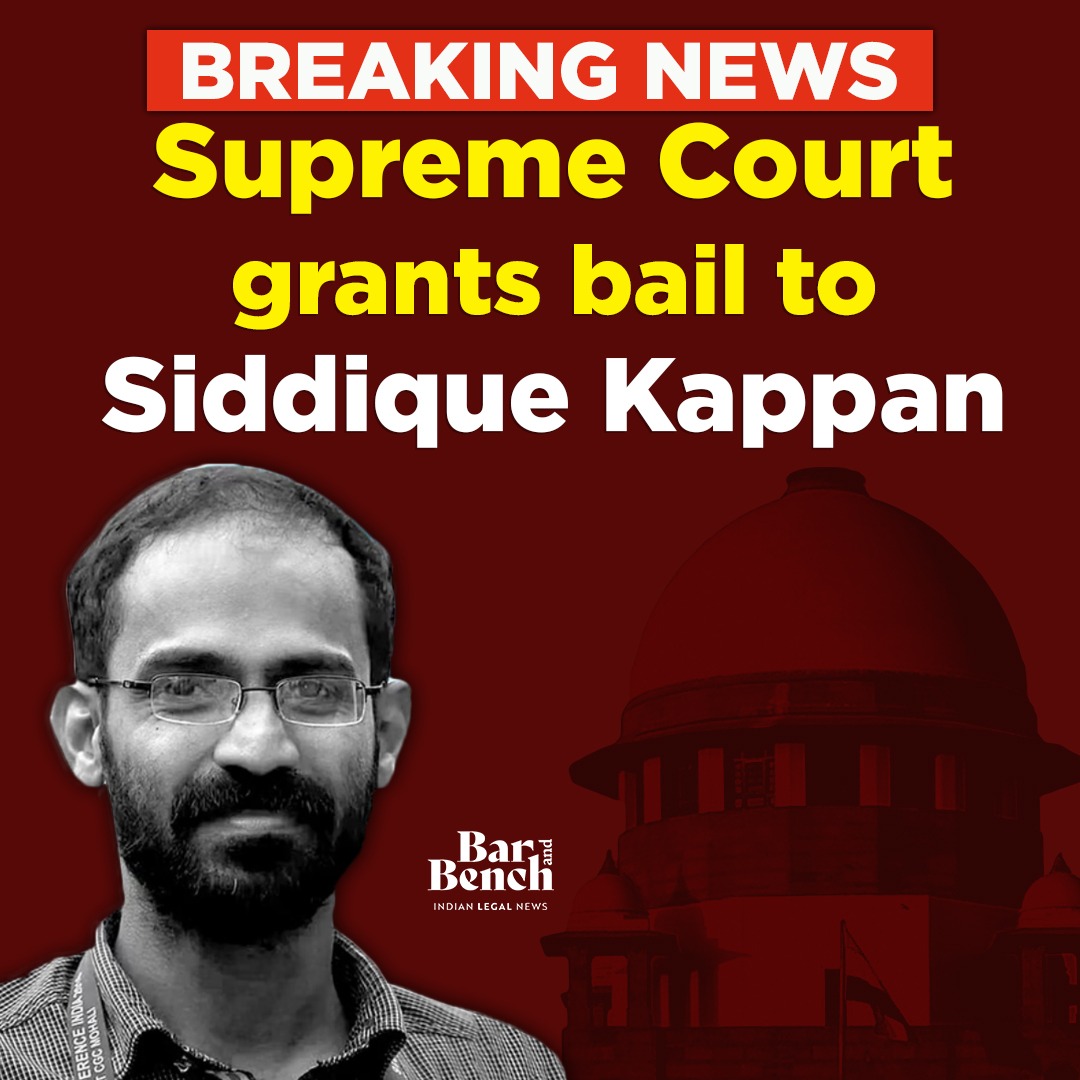
Maya Tudor's article "Why India's Democracy Is Dying" provides a comprehensive catalog of the methods allegedly used to shrink this civic space.
Why India's Democracy Is Dying
This article from the Journal of Democracy details the various ways in which civil liberties and the space for dissent have been curtailed in India.
Please read the following sections to understand the specific tactics discussed: First, read the section on civil liberties. This part explains the increasing use of colonial-era sedition laws and the powerful Unlawful Activities Prevention Act (UAPA) to target dissenters, activists, and journalists. Next, read the two paragraphs on freedom of assembly and administrative harassment of civil society. They describe how the government uses internet blackouts and financial regulations (like the Foreign Contribution Regulation Act, or FCRA) to impede protests and choke the funding of non-governmental organizations. Finally, read the section on media independence. It details how India's press freedom ranking has plummeted and describes the combination of intimidation, government-affiliated ownership (citing the Adani group's takeover of NDTV), and financial pressure that have silenced critical media voices.
As you requested at the start of the course, these analyses use concrete cases like the arrests of journalists to illustrate the legal concepts. The use of laws like UAPA—where getting bail is notoriously difficult—and the sedition law against critics is presented as evidence of a "legalized lawlessness," where the letter of the law is used to violate its spirit. The systematic targeting of independent media and NGOs through financial audits, tax raids, and funding restrictions is seen as a way to eliminate alternative power centers that can hold the government accountable.
Conclusion
Today, we have assembled the counter-narrative of "democratic backsliding." It presents a sobering picture of a democracy where vibrant elections coexist with decaying institutions, marginalized minorities, and a constricted public square.
Key Takeaways:
- Institutional Erosion: "Referee institutions" like the Supreme Court, Election Commission, and other accountability bodies have been weakened through a combination of executive interference, deference, and neglect, compromising the system of checks and balances.
- Rising Majoritarianism: A political and ideological project is underway to redefine India as a Hindu nation, transforming minorities into second-class citizens through both vigilante action (de facto) and discriminatory laws (de jure).
- Shrinking Civic Space: The state increasingly uses stringent laws (UAPA, sedition), administrative harassment (FCRA), and media control (ownership concentration) to silence dissent and create a climate of fear, leading to widespread self-censorship.
The core argument is that democracy is dying not with a bang, but with a thousand cuts—an incremental erosion of the norms, rights, and institutions that give it substance. The 2024 election results, where the ruling party lost its single-party majority, have led some analysts like Pratap Bhanu Mehta to suggest India has "walked back from the brink." However, he also cautions that a "wounded tiger" can be more dangerous, and the underlying institutional and societal shifts may be difficult to reverse.
In our final session, we will bring both narratives—democratic consolidation and democratic backsliding—together. Your task will be to step into the role of the analyst, weigh the evidence and arguments we've studied throughout this course, and formulate your own reasoned conclusion on the state of Indian democracy today.