Hello! Welcome to your third lesson.
In our first two lessons, we built the foundation for our inquiry from the ground up. We started with the basic physics and chemistry, understanding the unique physical properties that set gold and silver apart from other elements. Then, we moved to geology, exploring how their cosmic origins and terrestrial distribution make them fundamentally scarce.
Today, we will build a bridge from the natural world to the world of economics. We will synthesize these physical and geological facts into a coherent economic framework. Your learning outcome for this lesson is to define the economic principles of sound money (durability, portability, divisibility, fungibility, and scarcity). By the end of this lesson, you will have a clear, formal definition for each of these essential characteristics and understand why they are the bedrock upon which monetary value is built.
Why Money At All? The Problem with Barter
Before we can define what makes money sound, we need to be clear on what money does. As you know from your economics background, money's primary role is to solve the immense inefficiencies of a barter economy.
The central problem of barter is the "double coincidence of wants"—for a trade to occur, you must find someone who not only has what you want, but also wants what you have. This friction makes complex trade, specialization, and large-scale economic coordination nearly impossible.
Money is the technology that solves this problem. It is an institution that separates the act of selling from the act of buying.
The Importance of Sound Money (Robert P. Murphy - Acton Institute)
To start, let's watch a segment from a lecture by economist Robert P. Murphy. He provides a concise and clear explanation of money's fundamental role in enabling economic coordination and how it spontaneously emerges from the market process, a concept pioneered by Carl Menger.
Please watch from 07:22 to 34:37. As you watch, focus on three key ideas: How money overcomes the limitations of barter and enables the division of labor. The concept of subjective value and how it drives exchange. Menger's theory of 'salability' (or marketability) and how the most marketable commodity can spontaneously evolve into money without any central planning.
Murphy’s explanation of Menger's theory is crucial: money wasn't an invention decreed by a king or a state. It was a discovery—a spontaneous order that emerged from countless individuals acting in their own self-interest. People naturally gravitated towards accepting certain goods not for their own use, but because they knew they would be easily accepted by others later. This property of being widely accepted is what Menger called "salability." The goods with the highest salability became money.
What Makes a Commodity "Salable"? The Principles of Sound Money
So, which properties make a commodity highly "salable" and thus a good candidate for money? Over centuries, the market process has identified a key set of characteristics. We refer to these as the principles of sound money.

Let's formally define the five most critical principles.
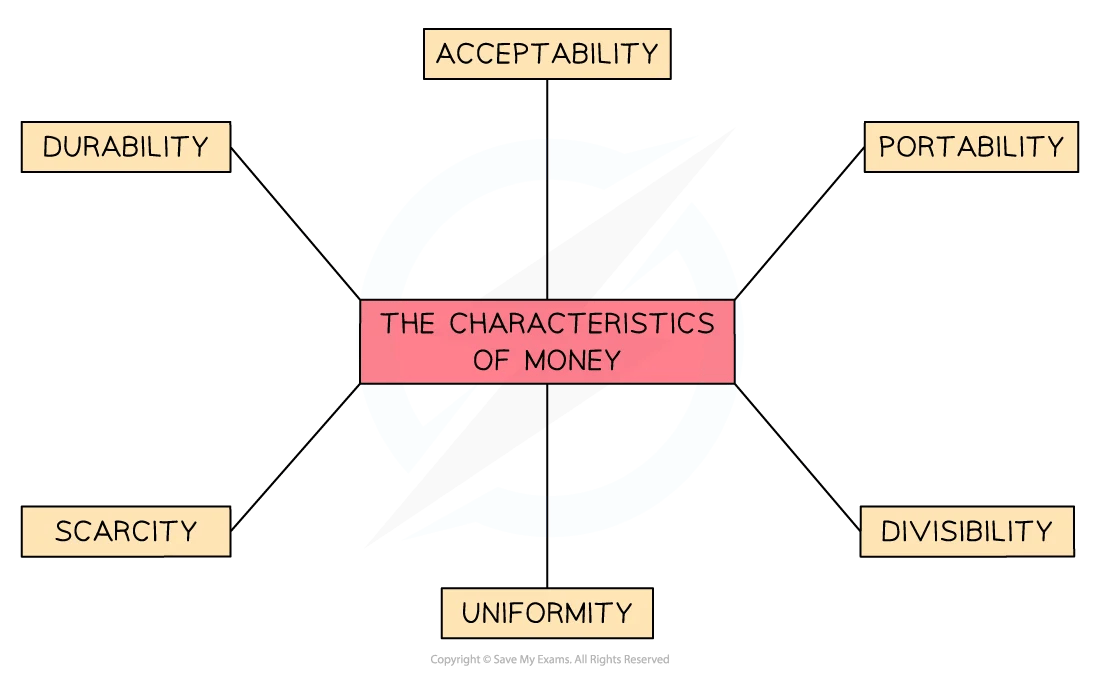
To get a rigorous, modern definition of these properties, we'll turn to a working paper from Sveriges Riksbank (the central bank of Sweden). While its ultimate focus is on digital currencies, it provides excellent, precise definitions of the classical properties of money first outlined by economists like Jevons and Menger.
[PDF] Revisiting the Properties of Money - Working paper nr
The paper 'Revisiting the Properties of Money' by Hull and Sattath offers a detailed framework for analyzing money. We will use it to get precise definitions for our key principles.
Please skim through the following sections of the paper, focusing on the definitions of the properties marked with a dagger (†), which indicates they were part of the original Jevons-Menger framework. Section 2.A (Medium of Exchange Function): Find and read the definitions for Portability and Divisibility. Section 2.C (Store of Value Function): Find and read the definitions for Durability and Scarcity. Section 2.D (Unit of Account Function): Find and read the definition for Fungibility. You don't need to read the entire text, just locate and understand these specific definitions.
Now, let's consolidate those definitions and connect them back to our previous lessons.
1. Durability
- Definition: The ability of a substance to resist physical degradation and decay over time.
- Why it matters: Money is often held for long periods between transactions. If it rots, rusts, or evaporates, it fails as a store of value. You must be confident that the money you accept today will still be valuable tomorrow, next year, or next decade.
- Connection: In Lesson 1, we saw that gold's supreme resistance to corrosion is one of its defining chemical properties. It doesn't react with air or water, allowing it to survive for millennia, even underwater or buried in the earth. Silver tarnishes but is also highly durable. In contrast, commodities like wheat, salt, or cattle are not durable.
2. Portability
- Definition: A high value-to-weight (and value-to-volume) ratio. A useful money must be easily transportable for trade.
- Why it matters: If your money is too heavy or bulky, it restricts the scale and distance of trade. Carrying a fortune shouldn't require a fleet of ships.
- Connection: In Lesson 1, we learned that gold is one of the densest elements. A small, easily carried coin or bar can represent a significant amount of purchasing power. Metals like copper or iron are far less dense and less valuable per unit of weight, making them impractical for large transactions.
3. Divisibility
- Definition: The ability to be divided into smaller units to facilitate transactions of various sizes, without losing its intrinsic value. An associated property, as the Riksbank paper notes, is mergeability—the ability to be recombined into larger units.
- Why it matters: An economy needs a medium of exchange that can pay for both a house and a loaf of bread. A money that cannot be easily divided (like a cow or a large diamond) is inefficient.
- Connection: Metals excel here. Gold and silver can be divided into coins or dust of any size, and these smaller units can be melted back together into a larger bar, with the total value being conserved. This property is crucial and is highlighted in the paper
[PDF] The Preeminence of Gold and Silver as Moneyas a key reason for their success.
4. Fungibility (Uniformity)
- Definition: The property that each unit of the money is identical and interchangeable with any other unit of the same denomination.
- Why it matters: Fungibility eliminates the need to assess the quality of each individual unit of money in a transaction. An ounce of pure gold is an ounce of pure gold, period. This dramatically reduces transaction costs.
- Connection: Commodities like diamonds or cattle are not fungible. Each diamond is unique in its cut, color, and clarity; each cow is unique in its health and age. This requires expert appraisal for every transaction, making them poor forms of money. Refined gold and silver, however, are perfectly uniform.
5. Scarcity
- Definition: The supply of the substance is limited and, crucially, the cost of producing new units is high and non-trivial.
- Why it matters: This is perhaps the most important principle for maintaining value over the long term. If money can be created easily and cheaply, its supply will inevitably be inflated, destroying its purchasing power and its usefulness as a store of value.
- Connection: This principle directly links to Lesson 2. The geological rarity of gold and silver means their supply cannot be expanded quickly. The "cost of production" is high, requiring significant investment in mining and refining. This natural constraint ensures the existing stock of money retains its value.
To reinforce this crucial point about scarcity, let's look at it through the lens of the stock-to-flow ratio, which you'll encounter again in a later lesson.
Gold Standard Explained | Saifedean Ammous and Lex Fridman
In this clip, author and economist Saifedean Ammous explains to Lex Fridman why commodities with a low stock-to-flow ratio (i.e., 'easy money'), like copper, are terrible forms of money, precisely because their supply can be easily inflated in response to increased demand.
Watch from 04:57 to 08:38. Notice how he defines 'hard money' as money that is difficult to produce more of, and listen to his thought experiment about what would happen if everyone decided to use copper as money.
Ammous's example perfectly illustrates why scarcity is paramount. Any commodity whose supply can be flooded in response to rising prices will fail as money, impoverishing those who hold it. Gold and silver's naturally high stock-to-flow ratio is their ultimate defense against this failure mode.
Conclusion
In this lesson, we have moved from the physical to the economic, establishing a formal framework for what makes money "sound." You now have a working definition for the five key principles that the market spontaneously identified as essential for a reliable medium of exchange.
Key Takeaways:
- Money is a market-driven solution to the "double coincidence of wants" inherent in barter.
- A good money must possess five key properties:
- Durability: It must last over time.
- Portability: It must be easy to carry and transact with.
- Divisibility: It must be usable for transactions of all sizes.
- Fungibility: Its units must be uniform and interchangeable.
- Scarcity: Its supply must be difficult to increase, ensuring it holds value.
- These principles are not arbitrary but are direct consequences of the physical and geological properties we studied in the first two lessons.
We've now defined the ideal properties of money. In the next lesson, we will analyze why gold and silver satisfied these principles of sound money more effectively than other commodities. We will take this theoretical framework and apply it to a historical "competition," comparing gold and silver to their rivals (like salt, cattle, and shells) to see exactly why they emerged as the preeminent forms of commodity money across the globe.