In our previous session, we established the power of Kidlin's Law: clearly articulating a problem is the first and most critical step toward solving it. You now have a method for transforming vague discomfort—whether in a bra fit or a relationship dynamic—into a set of specific, actionable problem statements. But this clarity can create a new challenge: a long list of problems all demanding your attention. Which do you tackle first?
This lesson provides the answer with the Eisenhower Matrix. Your learning objective is to apply this classic time-management tool to prioritize tasks in a lingerie production schedule and to triage competing needs and requests within your Vee relationship structure. This is the logical next step after defining your problems: deciding their order of importance.
From List to Action: The Eisenhower Matrix
The Eisenhower Matrix is a decision-making framework that sorts tasks based on two criteria: urgency and importance. Its power lies in forcing a distinction between what is merely loud and what is truly valuable. For a concise overview of the tool and its origins, the following article is an excellent starting point.
How To Get Stuff Done: The Eisenhower Matrix (a.k.a. The Urgent ...
This Forbes article by Mark Nevins provides a practical introduction to the Eisenhower Matrix, explaining its four quadrants and the strategic thinking behind them.
First, read the introduction to understand the core concept. Next, study the diagram and the explanation of how the matrix is structured. Finally, read through the descriptions of each of the four quadrants, paying close attention to the distinction between the seductive "urgent but not important" tasks and the strategically vital "important but not urgent" ones. This is the core insight of the framework.
As the article makes clear, the matrix organizes your tasks into four distinct categories with four corresponding actions:
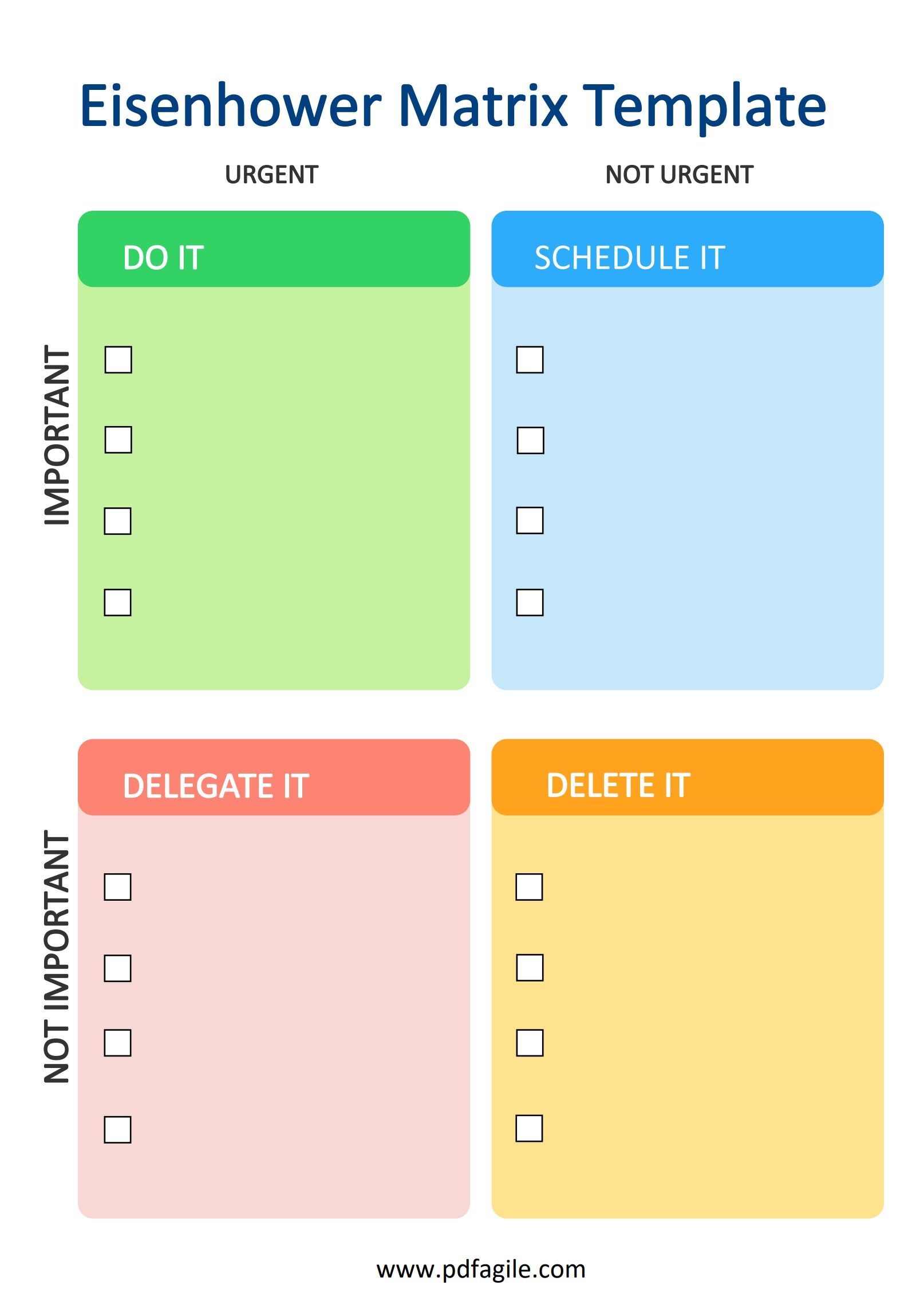
- Do (Urgent & Important): Crises, pressing problems, and deadline-driven projects. These are the fires you must put out immediately.
- Schedule (Not Urgent & Important): Strategic planning, relationship building, new opportunities, and personal development. This is where long-term success is forged. The goal is to spend most of your time here.
- Delegate (Urgent & Not Important): Interruptions, some meetings, many emails. These tasks feel productive but often serve others' goals, not your own.
- Delete (Not Urgent & Not Important): Trivial tasks, time-wasting activities, and unnecessary distractions.
The key to effective prioritization is to consciously shift your focus from the "urgent" to the "important," preventing tasks in the "Schedule" quadrant from becoming crises in the "Do" quadrant.
Application 1: Prioritizing a Lingerie Production Schedule
Imagine you are two months away from launching your new lingerie collection. You've used Kidlin's Law to create a clear list of everything that needs to be done. Now, you must decide where to focus your energy today.
Here is a sample task list:
- Finalize the pattern for the new "Eclat" push-up bra (production deadline is next week).
- Respond to an urgent-sounding email from a fabric supplier about a potential shipping delay on a non-critical material.
- Research new biodegradable textiles for next year's eco-friendly collection.
- A seamstress just reported that her sewing machine is jamming, halting work on a sample.
- Organize the digital folder of last season's design sketches for archival purposes.
- Schedule a 6-month strategic review meeting with your business partner.
- Pay the quarterly business tax bill, which is due tomorrow.
- A client is asking for a custom alteration on a piece, a service you don't typically offer but which would make her happy.
Let's sort this list using the Eisenhower Matrix:
| Urgent | Not Urgent | |
|---|---|---|
| Important | DO • Pay tax bill (due tomorrow). • Finalize "Eclat" pattern (deadline next week). |
SCHEDULE • Research biodegradable textiles. • Schedule strategic review. |
| Not Important | DELEGATE • Handle sewing machine jam (delegate to a technician). • Respond to supplier email (delegate to an assistant to get details). • Respond to custom alteration request (delegate to a standard policy response). |
DELETE • Organize old sketch folder. |
Analysis:
The matrix immediately clarifies your priorities. The tax bill and the "Eclat" pattern are non-negotiable and must be done now. The sewing machine jam is urgent because it's stopping work, but you, the designer, are not the best person to fix it; it should be delegated. Strategic work like fabric research and planning has no immediate deadline but is crucial for the future of your business; it must be scheduled to ensure it happens. Finally, tasks like organizing old files provide a feeling of tidiness but have no real impact on your bottom line and can be eliminated when time is tight.
Without this framework, it's easy to get derailed by the "Urgent & Not Important" tasks—like the supplier email or the alteration request—which demand immediate attention but distract from the core work that drives the business forward.
Application 2: Triaging Competing Relationship Needs
The same principles of finite resources (time, emotional energy) and competing demands apply directly to polyamorous relationships. As a social researcher in this field, you know that managing expectations around time is a central challenge. The following article provides excellent context for this problem.
Polyamorous Time: Needs and Expectations
This article from Ready for Polyamory breaks down the concept of "Polyamorous Time," emphasizing the need to move from assumptions about passive time to explicit negotiation of "intentional time." This is the foundational context for our prioritization exercise.
Read the introduction to understand the core tension between monogamous time assumptions and polyamorous realities. Focus on the section that defines intentional time. Notice how its definition is subjective and must be negotiated. Review the advice for nesting partners, especially the emphasis on scheduling intentional time and releasing claims on passive time. Finally, read the summary list of key takeaways, which serves as a set of principles for managing relationship time.
Now, let's place the hinge partner (the wife) in our Vee relationship. She is facing a list of needs, requests, and obligations from herself, her husband, and her lover. Before using the matrix, she would ideally use a tool like the Non-Escalator Relationship Menu to clarify what is "Important" to each person.

Here is her list of pending items for the week:
- Husband has requested a "State of the Union" talk to review their 5-year financial plan.
- Lover's birthday is next week, and she needs to plan and buy a meaningful gift.
- The weekly scheduled date night with her husband is tonight.
- Lover is feeling insecure after a small misunderstanding yesterday and needs reassurance.
- Her best friend is texting her now, needing urgent advice on a personal crisis.
- She feels burned out and knows she needs to schedule a solo-care activity for herself this week.
- Lover has just proposed a spontaneous, fun outing for tonight, which conflicts with her husband's date night.
- The kitchen is a mess, and her husband mentioned it needs a deep clean soon.
Let's triage these using the matrix:
| Urgent | Not Urgent | |
|---|---|---|
| Important | DO • Attend scheduled date night with husband (protecting a prior, core commitment). • Reassure insecure lover (addressing an emotional crisis that impacts relationship stability). |
SCHEDULE • Plan/buy lover's birthday gift. • Schedule "State of the Union" with husband. • Schedule solo-care activity. |
| Not Important | DELEGATE • Respond to friend's text (Delegate to a later time: "In the middle of something, can I call you in an hour?"). • Spontaneous outing request (Needs to be declined/rescheduled due to a prior important commitment). |
DELETE • Deep-clean the kitchen (This is a household task, not a relationship-critical one. Can be deferred, done jointly, or ignored for now). |
Analysis:
This matrix helps the hinge partner navigate the "tyranny of the urgent" in her relationships. The spontaneous outing, while exciting, is urgent but not important relative to a pre-existing commitment. Addressing the lover's insecurity is both urgent and important because unresolved emotional distress can destabilize a relationship quickly. The date night with the husband is also in the "Do" quadrant because it represents the consistent investment required to maintain the foundational relationship.
Critically, the most important long-term activities—celebrating a birthday, financial planning, self-care—are not urgent. Without the "Schedule" quadrant, they would likely be postponed indefinitely in favor of constant fire-fighting. The matrix provides a clear mandate to put them on the calendar, protecting them from being crowded out by less important, but louder, demands.
Conclusion
In this lesson, you have learned to apply the Eisenhower Matrix as a powerful tool for prioritization. It provides the crucial link between identifying your problems with Kidlin's Law and taking effective, structured action.
Key Takeaways:
- The Eisenhower Matrix sorts tasks by urgency and importance, allowing you to Do, Schedule, Delegate, or Delete.
- Its primary function is to help you distinguish between what is merely urgent and what is truly important, protecting your focus for high-value activities.
- In a professional context like lingerie design, it ensures that strategic work isn't sacrificed for minor operational issues.
- In a personal context like a Vee relationship, it helps manage the finite resources of time and emotional energy, ensuring that all partners' core needs—and your own—are met intentionally rather than reactively.
- The ultimate goal is to spend most of your time in the "Schedule" quadrant (Not Urgent & Important), as this is where sustainable growth and long-term success are built.
You now have tools to define your problems and to prioritize them. But what happens when a single problem is so complex that its solution isn't obvious? In our next lesson, we will explore the Ishikawa Diagram, a visual tool for systematically diagnosing the multiple root causes of a complex problem.