Good to see you again. Last lesson turned your broad commitments into weekly priorities: a small set of Must do outcomes, followed by realistic Should-do and Could-do work. Now the question is practical: when a weekday gives you about four usable hours, how can you use them without treating your brain as if it can solve GATE numericals, learn new Python, and finish a lab report at full intensity without interruption?
For your current semester, the temptation will often be to place every important item in one long evening: Control Systems practice, Python/DSA, a Digital Communications assignment, and perhaps a VHDL task. The problem is not ambition; it is task sequencing. This lesson gives you a repeatable weekday template that protects two meaningful deep-work periods while placing recovery and lighter work between them.
By the end, you will have a four-hour weekday structure that you can move around your changing class timetable.
Four hours available does not mean four hours of maximum intensity
Treat your four available hours as a four-hour study window, not as four uninterrupted hours of difficult problem solving. The window needs to include breaks, food, movement, transitions, and a small buffer. Otherwise, the timetable looks productive on paper but collapses after a few days.
A useful distinction is between three kinds of blocks.
| Block type | What it feels like | Examples from your plan |
|---|---|---|
| Deep / high-demand | Requires sustained concentration, reasoning, or creating something new | Solving unfamiliar GATE Control Systems questions; learning a Python loop; implementing a DSA solution; debugging a VHDL design; working through a Digital Communications numerical |
| Consolidation / medium-demand | Strengthens material you have already encountered | Reviewing today’s lecture notes; correcting an attempted problem; practising familiar Python syntax; recalling formulas; completing a short set of known exercises |
| Light / administrative | Useful, but does not require deep reasoning | Recording deadlines; organizing files; updating an error log; submitting completed work; listing questions for a teacher; deciding tomorrow’s first task |
The labels depend on your current familiarity, not the name of the subject. For example, active recall of a topic you know reasonably well may be medium-demand; active recall of a completely unclear Control Systems derivation is high-demand.
The planning rule for this lesson is:
Do not place two different high-demand tasks next to each other. A five- or ten-minute phone break between them is usually not enough separation.
A short break can occur inside one deep session. But “solve GATE numericals” followed immediately by “learn Python functions” is still two demanding tasks back-to-back, even if you paused briefly for tea.
Build around your energy, not just your clock
Your most difficult work should go in the part of the day when you are most alert. For some students, that is an early free period between classes; for others, it is the first hour after dinner. Do not assume that every evening hour has the same quality.
How to plan your exam study schedule (from a serial procrastinator)
Watch “How to plan your exam study schedule (from a serial procrastinator)” by Ginny for a short example of matching task difficulty to energy level rather than forcing the same kind of work all day.
Watch energy mapping. Notice the distinction between high-focus problem solving and lower-energy review work. Identify your likely weekday peak: an early class-free slot, immediately after returning from college, or later in the evening.
You are not trying to discover a perfect, permanent “productivity time.” Instead, make an initial estimate and revise it after a week:
- If you repeatedly stare at Python code without progressing at 10:30 p.m., do not schedule new programming concepts then.
- If the first hour after returning from college is sluggish, use it for food, a walk, a lecture review, or deadline administration—not a difficult GATE problem set.
- If you have a clear one-hour gap between lectures, reserve it for a contained task: reviewing the previous lecture, starting an assignment, or doing one known Python exercise.
This keeps your best mental energy for the work with the greatest long-term leverage: GATE concepts and beginner-level coding/DSA foundations.
Use a real study-session structure
A deep block needs a finish line. “Study GATE” is not a finish line; “solve four questions on feedback reduction and record errors” is.
STEM Learning Strategies - The Learning Center
Read “STEM Learning Strategies” from the University of North Carolina’s Learning Center. Its “Intensify your studying” section provides a compact structure for focused sessions: set a goal, work with focus, pause, review, and check your understanding.
In the section “Intensify your studying,” read the complete session model. Focus on two ideas: make the goal specific before starting, and finish with a brief review or self-test rather than simply stopping when time is up.
For a 60-minute deep anchor, use this internal pattern:
-
Set a goal — 5 minutes.
Write one visible outcome: “Implement and test a Python program that counts positive inputs,” or “Solve three transfer-function questions without seeing solutions.” -
Focused work — 40–45 minutes.
Keep the phone away. Attempt problems before checking notes or solutions. -
Retrieve and log — 5–10 minutes.
Close the notebook or IDE briefly. State what you learned, identify one mistake, and write the next action.
The short review belongs to the same deep block. It helps you retain and restart the work later; it is not an invitation to add a new difficult subject immediately afterward.
A four-hour weekday template
The following template assumes a contiguous four-hour evening window, such as 6:00–10:00 p.m. Shift the clock times to match your class schedule; preserve the order and purpose of the blocks.
| Time | Block | Cognitive load | What belongs here |
|---|---|---|---|
| 6:00–7:00 | Deep Anchor A | High | Your highest-priority task during your best available energy: GATE Control Systems practice, college test preparation, or a deadline-critical lab task |
| 7:00–7:30 | Real recovery | Recovery | Eat, walk, stretch, shower, or sit away from the screen |
| 7:30–8:00 | Consolidation block | Medium | Review the day’s lecture; correct earlier work; revise familiar formulas; practise known Python syntax |
| 8:00–8:30 | Second reset | Recovery | Dinner, movement, a household task, or a non-academic break |
| 8:30–9:30 | Deep Anchor B | High | A different priority stream: usually Python/DSA in a normal week, or urgent college work during a test week |
| 9:30–9:45 | Close the loop | Light | Write errors, record what is unfinished, set up tomorrow’s first task |
| 9:45–10:00 | Buffer | Flexible | Finish a small item, move an unfinished task, or stop early if the day was heavy |
The sequence matters more than the exact subjects:
This creates roughly 90 minutes between the two high-demand anchors. That interval is intentional. It prevents the common pattern of trying to push through difficult GATE work, difficult DSA, and difficult college work consecutively until all three become low-quality.
Here is how the template could look in a normal week for you:
| Block | Possible Monday version |
|---|---|
| Deep Anchor A | Control Systems: learn transfer-function rules and solve three related problems |
| Consolidation | Review today’s Digital Communications notes and create five recall prompts |
| Deep Anchor B | Python: practise if statements or loops and test two small programs |
| Close the loop | Record a Python mistake, note the next Control Systems question set, check tomorrow’s deadlines |
On a deadline-heavy week, the structure remains, but the content shifts:
| Block | Possible VHDL-lab week version |
|---|---|
| Deep Anchor A | Debug and test the VHDL simulation required for submission |
| Consolidation | Organize screenshots, write down unresolved questions, or review the relevant truth table |
| Deep Anchor B | A smaller GATE or Python maintenance block—one focused concept or one short coding exercise |
| Close the loop | Submit if ready; otherwise define the exact next debugging step and move it to the following day |
The key is not to abandon GATE or Python every time college becomes busy. Instead, reduce them deliberately to a smaller maintenance block when necessary.
Why breaks and subject switching are part of the work
Guidelines for Creating a Study Schedule – Learning Strategies Center
Read the selected guidance from Cornell’s Learning Strategies Center. It explains why study schedules need actual breaks, a change of subject or activity, and realistic time estimates.
In “Guidelines for Creating a Study Schedule,” find the paragraph beginning “Switch it up.” Read the switching rationale. Then read the next break guidance, beginning “Get up, stretch,” through planned breaks. Finally, in the later Pomodoro paragraph, read from timing and estimates. Use these ideas to make your first template realistic rather than overfilled.
A recovery block is not a reward you earn only after perfect concentration. It is the separator that allows the second deep anchor to be worthwhile.
Make it a real break:
- Stand up and move rather than remaining at the desk.
- Eat or drink water if you need it.
- Avoid beginning a high-stimulation activity that will be difficult to stop.
- Do not use the break to “half-start” another difficult task.
Likewise, a consolidation block should be genuinely lighter than deep work. It is not the place for a new unfamiliar DSA problem or a difficult GATE previous-year question. If you notice that the block repeatedly becomes mentally intense, reclassify it as deep work and move it to an anchor slot.
Put the template into your planner
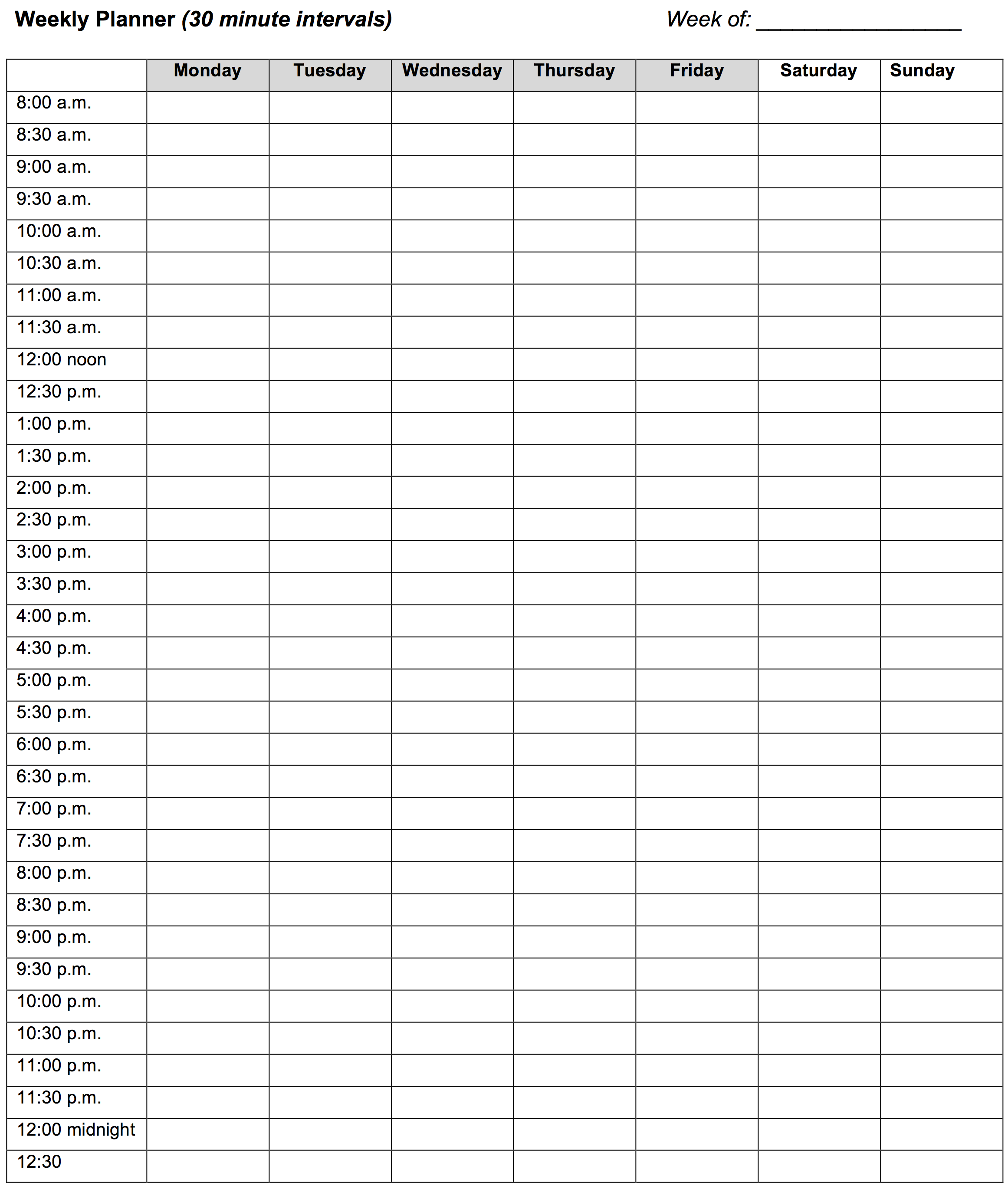
Use the planner in this order:
-
Mark fixed commitments first.
Add lectures, labs, commute, meals, sleep, and non-negotiable responsibilities. Do not hide these outside the plan. -
Choose the four-hour weekday window.
It does not need to be identical every day. For example, Monday may be 6:00–10:00 p.m., while Tuesday may use a one-hour afternoon gap and a three-hour evening window. -
Place two Deep Anchors only.
Label them by purpose, not a vague subject name:- “Control Systems: feedback reduction questions”
- “Python: loops practice and tests”
- “VHDL: debug multiplexer simulation”
-
Place recovery and consolidation between anchors.
On the planner, these should be visible blocks, not blank spaces you expect yourself to “use efficiently.” -
Keep the final 15 minutes flexible.
A buffer allows a difficult question, a late class, or a small submission issue without destroying the whole evening. -
Write only the next action for each block.
A task such as “GATE” is too broad. A task such as “attempt Questions 1–4 on sampling theorem; log errors” tells you exactly how to begin.
If your class schedule splits your available time, use the same logic rather than forcing a fake four-hour continuous session. For example:
- One-hour gap after class: medium-demand review or light administrative task.
- First evening hour: Deep Anchor A.
- Meal and reset: recovery.
- Later evening hour: Deep Anchor B.
- Final short slot: closing and buffer.
The important condition is that the two deep anchors are separated by recovery and a less demanding task—not merely by a quick scroll through social media.
A practical rule for difficult days
Some weekdays will be drained by labs, travel, surprise assignments, or fatigue. On those days, do not compensate by turning the remaining evening into three consecutive difficult blocks.
Instead, use a reduced version:
- one 45–60 minute Deep Anchor for the week’s most important task;
- one 20–30 minute consolidation task;
- a short closing note that decides when the deferred work will happen.
For instance, after a long lab day, you might complete only one Python practice block and a 20-minute Control Systems recall review. That is still better than planning four difficult tasks, doing none well, and carrying stress into the next day.
Key takeaways
A sustainable weekday plan is a sequence of different mental loads, not a list of important tasks crammed into an evening.
- Use at most two high-demand anchors in a four-hour weekday window.
- Separate those anchors with real recovery and a genuinely lighter consolidation task.
- Put your most important weekly Must-do work—usually GATE overlap, Python/DSA foundations, or an urgent college deadline—into the deep anchors.
- Give each block a concrete finish line before you start.
- Include a closing note and a small buffer so unfinished work becomes a planned decision rather than mental clutter.
- Adjust the clock times to your class timetable, but keep the cognitive sequence intact.
Next, you will extend this logic to weekends, where six to eight available hours create room for deeper revision, larger practice sets, and recovery without turning Saturday and Sunday into exhausting catch-up marathons.