Welcome back. Your weekday template established a key rule: use two demanding anchors, but separate them with real recovery and lighter consolidation. Weekends give you a longer runway, yet the aim is not to turn both days into an eight-hour catch-up marathon.
For your current balance of college, GATE 2027 preparation, and Python/DSA foundations, a weekend should do three jobs:
- Move one important area forward—usually GATE or coding.
- Consolidate the week through active revision and correction.
- Protect recovery, so Monday does not begin with exhaustion.
By the end of this lesson, you will have a default weekend template containing about six to eight hours of intentional work across Saturday and Sunday, with built-in meals, breaks, open space, revision, and personal time.
A weekend is for progress—not for filling every blank square
Weekdays are mainly about consistency: attend classes, keep up with lectures, do a small amount of GATE work, and maintain coding practice. Weekends are where you can complete a longer problem set, untangle a difficult concept, or build confidence with a Python topic. But “more available time” does not mean every hour should be scheduled.
A useful weekend plan has limited, clearly defined sessions. A vague item such as “GATE for three hours” creates resistance because there is no visible finish line. Instead, define a deliverable:
- “Solve and review six questions from this week’s Control Systems topic.”
- “Complete two Python loop exercises and test edge cases.”
- “Revise Digital Communications lecture notes using recall prompts.”
- “Finish and submit the VHDL simulation report.”
Choose one of these as your weekend win: the outcome that would make the weekend worthwhile even if other tasks take longer than expected. For a normal week, that win should usually be either a GATE-concept/practice block or a coding/DSA block—not a long list of unrelated small tasks.
How to make the PERFECT study timetable (for lazy students)
Watch How to make the PERFECT study timetable (for lazy students) by jspark for a compact framework for weekend scheduling. It distinguishes weekday consistency from weekend advancement and emphasizes specific goals, limited sessions, and intentional open space.
Start with the weekend framework, focusing on why a weekend should contain a few defined sessions rather than one enormous study promise. Then watch task ordering for the advice on assigning each block a single purpose and placing your hardest work during your own stronger-energy period. Finish with white space, which explains why buffers and one meaningful weekend goal make a plan more resilient.
The video’s important planning principle is worth stating carefully: place difficult work early in your own high-energy period, not necessarily at a universal clock time. If you think clearly at 9:30 a.m., make that your GATE problem-solving block. If Saturday mornings involve travel or household responsibilities, your best block may be later. Observe what actually happens for two weekends and adjust.
First schedule life, then schedule study
A weekend plan only works when it begins with reality. Sleep, meals, travel, exercise, family commitments, religious commitments, and time with friends are not failures of planning. They are part of the plan.
Creating A Sustainable, Flexible Weekly Routine: Structuring your Time
Read this Princeton McGraw Center guide for a concise set of principles behind a sustainable timetable: schedule essentials first, reserve catch-up space, protect rest, and adapt rather than abandoning the week when plans change.
Under the heading “Creating A Sustainable, Flexible Weekly Routine,” read the core routine principles. Notice the sequence: identify real commitments, add only work you can commit to, and leave open blocks. Then, near the end of the page, read the rest and rescheduling advice. Focus on the idea that personal time is designated deliberately and that a disrupted block can be traded for another block rather than treated as a failed weekend.
Use the planner in this order:
- Block non-negotiables. Put in sleep, meals, travel, family commitments, exercise, and any college event first.
- Reserve a stopping point. For example, decide that Saturday study ends by 5:00 p.m. or Sunday afternoon remains largely free.
- Place the weekend win in your best available slot.
- Add revision before adding more new material.
- Leave at least one open block. It can absorb an unfinished task, a surprise college requirement, or simply remain free.
That open block is not “wasted time.” It is what prevents one delayed assignment from forcing you to cancel revision, coding, rest, and your next week’s preparation.
A default 6¼-hour weekend template
The following template treats your stated six to eight weekend hours as intentional study/work time across both days, not as six to eight consecutive hours of maximum concentration. Breaks, meals, and free time are deliberately outside that total.
Saturday carries most of the advancement work. Sunday protects cumulative revision, a small catch-up option, and a light planning slot. Shift the clock times to fit your life; keep the pattern.
Saturday: advance two priorities, then consolidate
| Time | Block | Purpose | Example for your current semester |
|---|---|---|---|
| 9:30–11:00 | Deep Anchor A | Main weekend win | Learn and practise one GATE-overlap topic, such as Control Systems or Digital Communications |
| 11:00–11:30 | Recovery | Leave the desk; eat, walk, stretch | No “just checking” college messages |
| 11:30–12:45 | Deep Anchor B | Coding/DSA progression | Python practice: trace examples, write a small program, test it |
| 12:45–2:00 | Lunch and genuine downtime | Cognitive reset | Food, rest, conversation, short walk |
| 2:00–3:15 | College integration block | Keep current-semester work under control | VHDL task, Microcontroller lab preparation, notes for an upcoming quiz |
| 3:15–3:45 | Recovery | Reset before revision | Movement, tea, shower, or quiet rest |
| 3:45–4:30 | Revision block | Retrieve and correct the week’s learning | Recall formulas, correct errors, revisit difficult lecture points |
Saturday’s intentional work is 4 hours 45 minutes. It contains three advancement blocks, but they are separated by recovery and lunch. The final revision block is deliberately shorter and lower-pressure; it is not another session for learning a brand-new topic.
Sunday: secure retention and set up the week
| Time | Block | Purpose | Example |
|---|---|---|---|
| 10:00–11:00 | Cumulative retrieval and correction | Test what remains from the week | Attempt a few GATE questions, recall class concepts from memory, inspect Python mistakes |
| 11:00 onward | Open / recovery time | Protect rest or absorb an unexpected task | Social plans, exercise, family time, or a delayed college task |
| 5:00–5:30 | Light weekly preview | Reduce Monday decision-making | List unfinished tasks and identify Monday’s first Deep Anchor |
Sunday adds 1 hour 30 minutes, bringing the default total to 6 hours 15 minutes.
If you truly have more energy and closer to eight hours available, add one optional block on Sunday:
| Optional time | Block | Rule |
|---|---|---|
| 11:30–12:45 | Flexible progress block | Use only for one contained task: catch up on college work, complete a coding exercise, or finish a GATE question set |
With that optional block, the template becomes 7 hours 30 minutes of planned work. Do not add it automatically just because the calendar is empty. Add it when you are rested and there is a specific task worth doing.
If your “six to eight hours” actually means per day, not across the full weekend, keep Saturday’s structure and make Sunday lighter rather than duplicating four intense blocks. Use Sunday for one deep block, one revision block, one flexible college task, and substantial recovery. A sustainable schedule is more valuable than a heroic one-week schedule.
Make revision an active part of the template
Revision is not rereading notes until they look familiar. That can feel productive while hiding what you cannot yet retrieve. Instead, use the Saturday revision block and Sunday retrieval block to test yourself before consulting notes.

A practical 45-minute revision block can look like this:
-
Choose a small set of material from the week — 5 minutes.
For example: one Control Systems concept, one Digital Communications formula set, and one Python idea. -
Close the notes and retrieve — 15 minutes.
On paper, write what you remember: definitions, steps in a method, assumptions, or a short worked example. -
Check and correct — 15 minutes.
Compare with notes or solutions. Mark missing steps and misunderstandings. Do not simply copy the correct answer. -
Create the next action — 10 minutes.
Write a concrete follow-up such as “redo Question 4 without notes on Wednesday” or “practise two more loop problems next weekend.”
[PDF] A Simple, Effective Time Management System
Read the relevant guidelines from Cornell’s Learning Strategies Center to reinforce three parts of your template: concrete task labels, limits on continuous work in one subject, and regular cumulative review.
In the PDF’s “Follow These Time Management Guidelines” passage, first find the paragraph on avoiding vague entries such as “study.” Read the concrete scheduling advice and compare it with labels such as “GATE” or “DSA”—which are too broad to begin easily. Next, read the block and switching advice. Finally, read the weekly review guidance, focusing on the word “cumulative”: revision should connect to earlier material, not only the most recent lecture.
For you, this revision time can combine the three streams rather than competing with them:
- GATE: redo one previously attempted numerical or explain a concept without notes.
- College: turn lecture headings into questions and answer them from memory.
- Python/DSA: revisit one mistake, write the corrected version, and explain why the first version failed.
This is enough for now. Later in the course, you will build a fuller spaced-review system and a structured error log. At this stage, the essential habit is simple: every weekend contains at least one block for retrieving and correcting—not only consuming new material.
Recovery is a scheduled requirement
Recovery has two forms in your template.
Short recovery separates demanding blocks: a walk, snack, stretching, a shower, or sitting away from screens. Its purpose is to reset attention before you switch from GATE numericals to Python or college work.
Long recovery protects part of the weekend: an evening, half-day, social activity, sport, family time, or unstructured rest. Its purpose is to prevent the entire semester from becoming an endless sequence of unfinished tasks.
Avoid “fake breaks” that turn into uncontrolled scrolling. A short phone check is not automatically harmful, but it often makes restarting harder. Choose a break activity with a clear endpoint: walk around the block, make tea, eat lunch away from the desk, or call someone for ten minutes.
When plans change, trade blocks according to priority:
- An urgent college deadline may replace the optional Sunday flexible block.
- A Saturday family commitment may move the GATE weekend win to Sunday morning.
- If you are genuinely exhausted, keep the 45-minute revision block and remove an optional task rather than forcing an unfocused deep session.
- Do not remove sleep and meals to “recover” missed study time.
The objective is not perfect adherence to the timestamps. It is preserving the weekend’s functions: advance, revise, recover, and prepare.
Build your version for the coming weekend
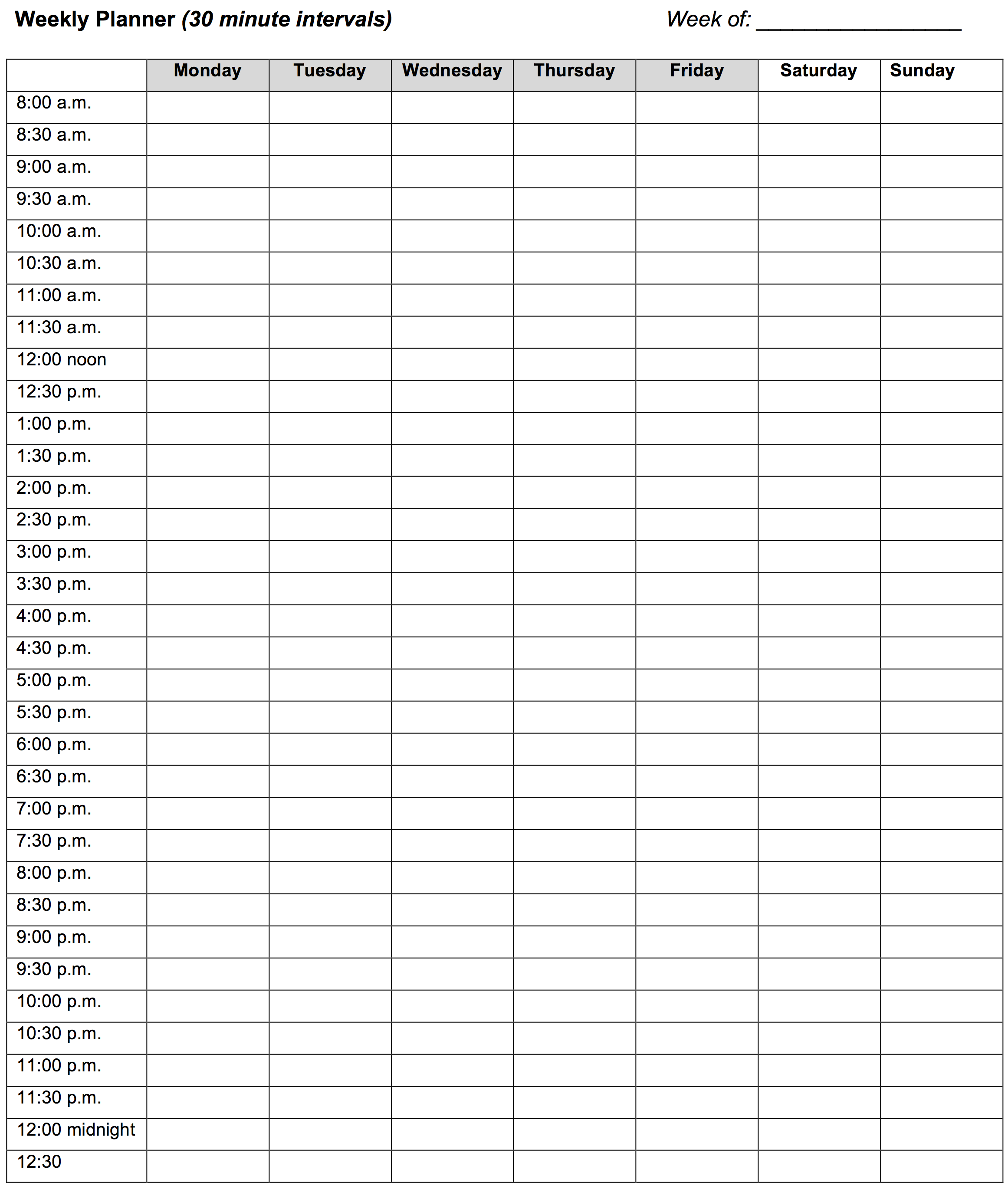
On the planner, write only the following first:
- Your fixed commitments and protected free time.
- One weekend win with a measurable finish line.
- A GATE block, a Python/DSA block, and one college-integrated block.
- A 45-minute active-revision block.
- At least two short recovery periods, one longer recovery period, and one open buffer.
- A short Sunday planning placeholder.
Do not fill every remaining square. Blank space is part of the design.
Key takeaways
A productive weekend is not a packed weekend. Your default plan should contain six to eight hours of intentional work spread across both days, with clear purposes:
- Put one high-value weekend win in your strongest available time.
- Use separate blocks for GATE, coding/DSA, and college work rather than multitasking.
- Keep demanding sessions to manageable lengths and separate them with actual recovery.
- Reserve a specific revision block for active retrieval and correction.
- Protect personal time and leave an open buffer so unexpected events do not destroy the whole plan.
- Use Sunday’s light preview to make Monday easier to start.
Next, you will create a minimum viable routine for days when classes, tests, travel, or fatigue make the full weekday or weekend template impossible.