Hello! Welcome to the final module of our course. In the last few lessons, we've focused on the practical skills of building and deploying a simple web application prototype, turning an AI-generated idea into a shareable reality. This is a powerful capability for both your professional work and your startup ambitions.
Now, we shift our focus from building to maintaining. The AI landscape evolves at an astonishing pace. To stay effective, you need a strategy to keep up without getting overwhelmed. This module, "Building a System to Stay Current in AI," is designed to give you that strategy.
Today's lesson addresses the learning outcome: Set up a curated information system (newsletters, YouTube channels, communities) to track AI tool developments. We will move from random discovery to a deliberate, structured approach for filtering and consuming information, ensuring you focus on what's most relevant to your goals in corporate finance and entrepreneurship.
1. The Mindset: From "Fear of Missing Out" to a Sustainable System
The first and most critical step is a mental one. The sheer volume of AI news, research papers, and new tools is impossible for any one person to follow completely. The goal is not to drink from the firehose, but to build a filtration system that delivers only the most relevant information to you.
This requires shifting from a reactive "fear of missing out" (FOMO) to a proactive, systematic approach. The following video provides an excellent framework for this mindset and the habits required to sustain it.
How to Stay Up-to-date in AI/ML Without Losing Your Mind
This video from Marina Wyss, 'How to Stay Up-to-date in AI/ML Without Losing Your Mind', outlines the essential strategies for managing information overload. It emphasizes mindset, curated sources, and consistent habits.
Please watch the following segments: The Mindset Shift (02:09 - 02:49): Pay attention to the core idea of finding a handful of high-quality, curated sources to act as your primary filter. Building Habits (03:35 - 05:38): This section is crucial. Focus on the concepts of designing your environment, understanding your energy patterns, and 'habit stacking' (e.g., linking AI news to your morning coffee). This is key to making your system sustainable. Finding a Community (05:38 - 06:03): Note the benefits of learning with others, which we'll touch on later.
As the video highlights, the key is to build a system that relies on habits, not willpower. By being selective about your sources and consistent in your consumption, you can stay informed without drowning in noise.
2. The Components of Your Information System
A robust information system typically has three layers: curated summaries, real-time feeds, and community discussions.
A. Curated Newsletters: Your First Filter
Newsletters are perhaps the most efficient tool for staying current. Editors and experts do the initial work of sifting through the noise to bring you the most important developments. They are perfect for getting a regular, high-level overview.
The resource below is a comprehensive guide to the best AI newsletters, helpfully categorized by audience and focus.
Best AI Newsletters: Your Complete Guide to Staying Ahead
This guide, 'Best AI Newsletters: Your Complete Guide to Staying Ahead', is an excellent starting point for finding sources that match your interests. It lists and describes dozens of top-tier newsletters.
Scan through this article to get a feel for the landscape. Pay close attention to these sections, which are most relevant to your goals: 'The Big Ones': These provide broad, daily market coverage (e.g., The Rundown AI). 'High-Growth Champions': Newsletters like Ben's Bites offer great insights for tech-savvy professionals. 'Business & Professional Focus' and 'Entrepreneurs & Startups': Look closely at the recommendations here, such as AI Disruptor, which is tailored for solopreneurs. 'Pro Tips for Maximum Value': This final section gives excellent advice on how to start without getting overwhelmed.
Based on your goals, I recommend starting with a mix:
- One broad, daily newsletter like The Rundown AI to cover major news.
- One weekly, business-focused newsletter like Exponential View for strategic insights or Ben’s Bites for startup and business use cases.
B. Real-time Feeds: For Breaking News
While newsletters are great, they often have a 12-24 hour delay. For real-time updates from primary sources (like company blogs), an RSS reader is invaluable. RSS (Really Simple Syndication) allows you to subscribe to websites and get their new content in a single, unified feed.
Feedley is a popular and powerful RSS reader that can serve as the core of your real-time feed.
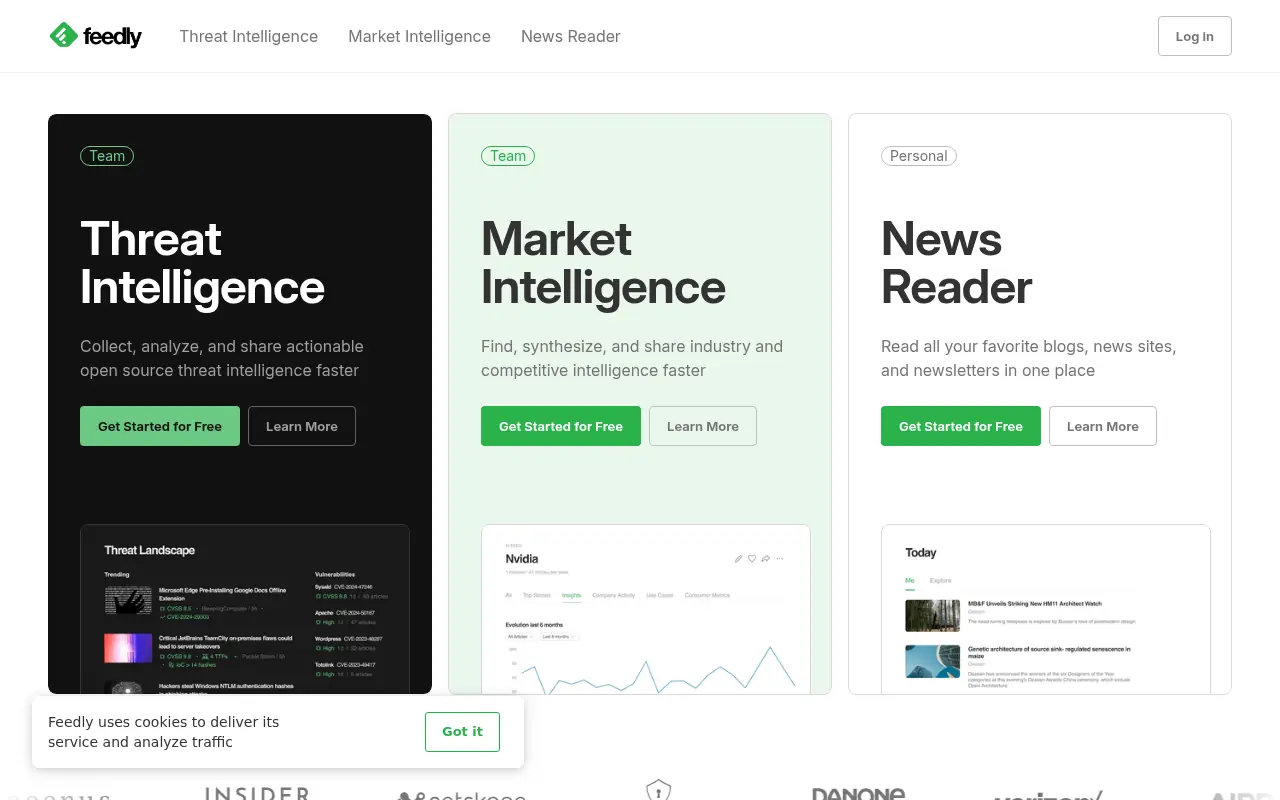
To get started, you can create a free Feedly account and add the official AI blogs from major companies (Google, Microsoft, Meta), along with a few key technology news sites like TechCrunch's AI section. This gives you direct access to announcements as they happen.
C. YouTube Channels and Communities
- YouTube Channels: Many experts and creators provide video-based tool reviews, tutorials, and news summaries. Channels like the one from the next video we'll see, Matt Wolfe, or channels dedicated to AI productivity tools can be very useful.
- Communities: Subreddits (e.g., r/ArtificialIntelligence, r/singularity), Discord servers, and professional groups on LinkedIn offer spaces for discussion, asking questions, and discovering niche tools that might not make it into major newsletters.
3. Advanced Technique: Automating Your Information Flow
Given your proficiency in Python and interest in using AI as a "capability multiplier," you can take this a step further by automating your information processing. Instead of just reading newsletters, you can build a system that reads them for you and synthesizes the key takeaways.
The following video shows a sophisticated, real-world example of such a system.
I Make $750K/Month With an AI YouTube Channel
In this clip from the '1of10 Podcast', AI content creator Matt Wolfe breaks down the automated system he built to stay on top of AI news. This is a fantastic example of applying your technical skills to information management.
Watch these segments to understand his two-part system: The Real-Time Layer (01:39 - 02:29): Notice how he uses Feedley to aggregate news from primary sources, which we just discussed. The Automated Summary Layer (03:20 - 08:53): This is the core of the advanced technique. Pay close attention to how he uses a tool called N8N to automatically pull newsletters from a dedicated Gmail account and uses Gemini Pro to summarize the news, extract tools, and even identify potential sponsors. Why He Uses Both (09:38 - 11:27): He explains how the real-time feed (Feedley) and the newsletter summary system work together to ensure he doesn't miss anything.
This automated workflow might seem complex, but the logic is straightforward and well within your grasp. It uses a visual automation tool (N8N) to connect different services (Gmail, Gemini) via APIs.
To make this concept even more concrete, N8N provides a public template that accomplishes a very similar goal. You don't need to build it now, but reviewing the template will demystify the process.
Personalized AI tech newsletter using RSS, OpenAI and Gmail - N8N
This is the N8N workflow template for a 'Personalized AI tech newsletter'. It shows exactly how you can connect RSS feeds, an AI model, and an email service to create your own summaries.
Briefly review the 'How it works' and 'How to use' sections. Note the key steps: fetching articles from RSS, converting them to embeddings for semantic search (a concept we've touched on), and using an LLM to summarize stories based on your interests. The template uses OpenAI, but you could easily substitute Gemini.
This automation approach is a perfect example of a solo founder's "capability multiplier." It's a project you could tackle to build a highly personalized, efficient system for tracking AI developments relevant to your specific startup or business ideas.
4. Your Action Plan
To put this all together, here is a simple, actionable plan to build your information system:
- Select Your Core Newsletters: Based on the "Best AI Newsletters" guide, subscribe to 2-3 newsletters. Aim for a mix of daily, high-level news and a weekly/niche publication focused on business or startups.
- Set Up Your Real-Time Feed: Create a free Feedley account. Add the RSS feeds for 3-5 key sources (e.g., Google AI Blog, TechCrunch AI, a major financial tech blog).
- Integrate into Your Routine (Habit Stack):
- Schedule 10-15 minutes with your morning coffee to scan your daily newsletter and Feedley.
- Dedicate a block of time once a week (e.g., Friday afternoon) to read your weekly, more in-depth newsletter.
- (Advanced) Bookmark for Later: Keep the N8N video and template as inspiration for a future project. This is a powerful way to leverage your technical skills.
Conclusion
You now have a complete framework for building a personal information system to track AI developments. By implementing this, you will move from being a passive consumer of information to an active curator, ensuring you stay ahead of the curve in a sustainable, efficient way.
Key Takeaways:
- Adopt a strategic mindset: The goal is to filter relevant information, not consume everything.
- Build a multi-layered system: Combine curated newsletters for summaries, RSS feeds for real-time news, and communities for discussion.
- Start small and be consistent: Choose a few high-quality sources and integrate them into your daily and weekly routines.
- Leverage automation: For a more advanced setup, use tools like N8N and Gemini to create a personalized summary service that works for you.
Next Up:
Having a system to find new AI tools is the first step. The next is knowing how to judge them quickly and effectively. In our next lesson, we will learn how to evaluate new AI tools quickly using a structured assessment framework, helping you decide which tools are worth adopting and which you can safely ignore.