Hello! Welcome back to our final module on building a sustainable system to stay current in AI.
In our last lesson, you created a plan to build a personal information system. By using curated newsletters, RSS feeds, and communities, you now have a structured way to discover new AI tools and developments that are relevant to your work in finance and your startup ambitions.
Discovering tools is the first step. The next, equally crucial step is knowing how to judge them. The AI market is noisy, with new tools launching daily. Without a method to assess them, you risk what the Bizzuka article calls "AI tool chaos"—wasting time and money on solutions that don't deliver.
Today's lesson addresses the learning outcome: Evaluate new AI tools quickly using a structured assessment framework. We will build a systematic process, much like a due diligence framework in finance, to help you analyze new AI tools, identify their true value, and assess their risks.
1. The First Filter: Is AI Even the Right Choice?
Before you invest time in a deep evaluation of a new tool, it's wise to perform a quick "triage." Is the task you have in mind even a good fit for generative AI?
The following video from Google provides a simple but effective set of guiding questions to start with.
Use AI Tools to Boost Productivity | Google AI Essentials
In this segment from 'Use AI Tools to Boost Productivity', Google introduces a high-level framework to determine if generative AI is suitable for a task. It's a great first-pass filter.
Please watch the segment from 00:17:41 to 00:20:53. As you watch, focus on the three guiding questions the presenter outlines. Think about how you could apply these to a task in your own work, like drafting a market analysis or creating a financial model template.
As the video explains, before diving into a specific tool, ask yourself:
- Is the task generative? Does it involve creating new content (text, images, code, analysis) rather than tasks requiring negotiation, relationship-building, or other uniquely human skills?
- Can the task be iterated on? AI often provides a "first draft." The process works best when you can refine the output through multiple prompts.
- Are there resources for human oversight? This is the "human-in-the-loop" principle. Do you or your team have the time and expertise to review, fact-check, and approve the AI's output? This is non-negotiable for professional work.
If the answer to all three is "yes," it's worth proceeding to a more detailed evaluation of potential tools.
2. A Comprehensive Framework for Business Evaluation
Once a task passes the initial filter, you need a more robust framework to evaluate specific tools. Given your background in finance and business strategy, you'll find this next resource very intuitive. It treats the adoption of an AI tool like a strategic investment.
The Best AI Tool Evaluation Framework for Businesses
The article 'The Best AI Tool Evaluation Framework for Businesses' from Bizzuka provides a superb, business-oriented model for assessing AI tools. It avoids getting lost in technical jargon and focuses on what truly matters for business impact.
Please read the section titled 'The Four Pillars of Smart AI Tool Evaluation'. This section details the core of the framework. You can find it about halfway down the page.
This framework is built on four pillars that are essential for making a sound decision. Let's summarize them in the context of your goals:
- 1. Strategic Alignment: Does this tool solve a high-priority problem for you? For your corporate role, this might be automating the summarization of quarterly reports. For your startup, it could be generating marketing copy. A "cool" tool that doesn't align with a core goal is a distraction.
- 2. Technical Integration & Security: This is paramount, especially given your concern about corporate data. Can the tool integrate with your existing software (e.g., Google Sheets)? More importantly, what are its data handling and privacy policies? We will do a deep dive on this next.
- 3. ROI Measurement & Success Metrics: Your finance background makes this second nature. What is the return on investment? Success isn't just about money; it can be measured in hours saved, reduction in errors, or the ability to perform analyses that were previously too time-consuming. You need to define what "success" looks like before you start.
- 4. Cultural Fit & Adoption Potential: For a solo founder, this means: "Will I actually use this? Is the learning curve too steep for the benefit it provides?" In a corporate context, it extends to the team. An intuitive tool that gets used is always better than a powerful one that collects digital dust.
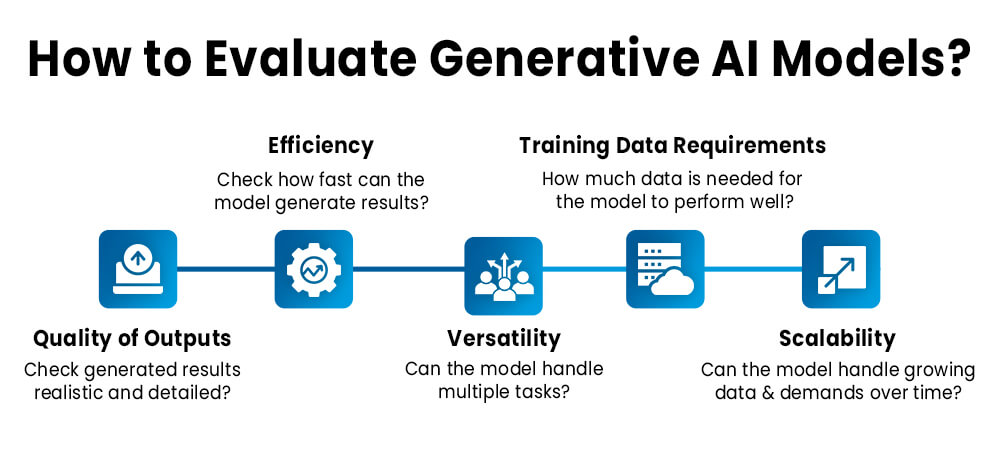
This image provides a great visual summary of a similar, comprehensive evaluation cycle used in enterprise settings.

3. Deep Dive: The Security and Compliance Gauntlet
For your corporate work, the "Technical Integration and Security" pillar is the most critical. Using an unvetted tool with sensitive company information is a non-starter. Fortunately, there's a highly structured way to audit a vendor's policies.
The next resource provides a "four-test" framework that is exceptionally practical.
Building a framework for corporate use of AI tools
The article 'Building a framework for corporate use of AI tools' from Civic.com offers a clear, actionable set of tests for vetting AI vendors on security and data rights. This is your go-to checklist for corporate use.
Please read the sections '3. Avoiding Common Pitfalls With the Four-Test Framework' and the follow-up section on the AI prompt. Focus on understanding the four tests: Test A: Limited License Rights Test B: Your Ownership Preservation Test C: No Training on Your Data Test D: Security Attestation Requirements (e.g., SOC 2 Type 2) Pay close attention to the sample AI prompt provided. This is a powerful tool you can use directly.
The key takeaway here is the actionable checklist and the accompanying prompt. When you discover a new tool, you can use Gemini Pro with a prompt modeled on the one from the article to analyze the vendor's Terms of Service and Privacy Policy.
Here is a simplified version of that prompt you can adapt:
You are a compliance analyst. Review the terms of service and privacy policy at [insert URL].
Apply the following four tests:
- Limited License: Does the vendor only receive the rights needed to operate the service?
- Customer Ownership: Does the vendor explicitly state that my company retains all IP rights to inputs and outputs?
- No Training: Is my company's data (inputs, outputs, etc.) ever used to train any AI model?
- Security Certification: Does the vendor state it has a current SOC 2 Type 2 certification or equivalent?
Produce a table summarizing the Pass/Fail result for each test, quoting the exact language from the document that justifies your conclusion.
This turns a tedious legal review into a structured, AI-assisted task, allowing you to quickly vet tools for security and compliance.
4. An Evaluation in Practice
Let's see how this looks with real-world examples. The following video evaluates several AI tools, including two we've discussed: Gemini and Perplexity.
The Ultimate Guide to AI Tools: What's Worth Your Money?
In 'The Ultimate Guide to AI Tools', presenter Rick Mulready offers his take on several popular tools. His evaluation criteria provide a great example of the four-pillar framework in action.
Watch the introduction (00:00:39 - 00:00:58) where he outlines his criteria. Then, watch his evaluation of Google Gemini (00:06:33 - 00:10:39) and Perplexity (00:10:39 - 00:13:20). As you watch, try to map his points back to the four pillars we discussed (e.g., when he discusses what a tool is 'good for,' that's Strategic Alignment; when he discusses privacy, that's Security).
Notice how his informal review still touches on all our key pillars:
- Strategic Alignment: "What I think each one is good for" (e.g., Gemini for brainstorming and large documents, Perplexity for fast search with citations).
- Technical & Security: "Privacy concerns, if any" (e.g., noting you have to opt-out of Gemini's data training).
- ROI / Success Metrics: "Limitations of the free versions" and "whether I think it's worth upgrading."
- Adoption: His discussion of Gemini's "dry" responses or Perplexity's lack of research "depth" speaks to the user experience and fit for a given user's taste.
5. Your Personal Evaluation Scorecard
To make this immediately useful, here is a template you can use as your personal scorecard for evaluating new AI tools. You can copy this into a note-taking app or a spreadsheet.
| Evaluation Criterion | Notes / Observations | Pass/Fail/Score |
|---|---|---|
| 1. Strategic Alignment | ||
| Primary Use Case(s) | Solves which specific problem for me? (e.g., market research, code generation) | |
| Quality of Output | How accurate, relevant, and useful are the results for my use case? | |
| 2. Security & Compliance | (Critical for Corporate Use) | |
| Data Ownership (Test B) | Do I own my inputs and outputs? | |
| No-Training Clause (Test C) | Is my data used for model training? | |
| Security Certification (Test D) | Does it have SOC 2 Type 2 or equivalent? | |
| 3. ROI & Cost | ||
| Pricing Model | One-time, subscription, usage-based? | |
| Free Tier Value | Is the free version sufficient for my needs? | |
| Time/Cost Savings | What is the estimated efficiency gain vs. the cost? | |
| 4. Adoption & Usability | ||
| Learning Curve | How easy is it to get started and use effectively? | |
| Integration | Does it fit into my existing workflow (e.g., works with Google Suite)? |
Conclusion
You are now equipped with a multi-layered framework to cut through the hype and evaluate AI tools systematically. This process protects you from security risks while ensuring you invest your time and money in tools that deliver real value.
Key Takeaways:
- Start with a quick filter: Before a deep dive, ask if the task is generative, iterable, and allows for human oversight.
- Use the Four Pillars for a business case: Evaluate tools based on Strategic Alignment, Technical/Security needs, ROI, and Adoption potential.
- Put security first for corporate use: Use the Four-Test framework (Ownership, No-Training, etc.) to vet vendors, and use Gemini to help you analyze their policies.
- Create a scorecard: Use a consistent template to compare tools objectively.
Next Up:
You can now find and evaluate tools. But when should you adopt a new one versus getting better with what you already have (like Gemini Pro)? Our final lesson will tackle this exact question: Identify when to adopt a new AI tool versus deepening expertise with existing ones.